Unlocking the Apocalypse: How Onyx Visual Effects Crafted the Emmy-Nominated Disaster Scale of Hulu’s Paradise Season 2

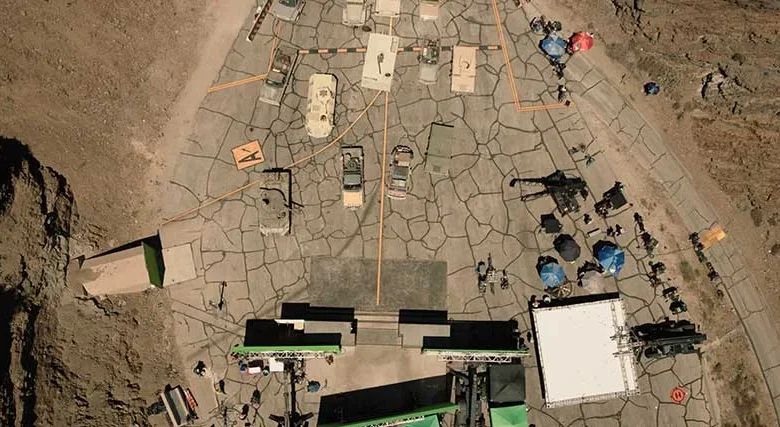
The intersection of high-stakes political intrigue and apocalyptic environmental catastrophe has long proven to be fertile ground for prestige television. Hulu’s acclaimed political-thriller and disaster hybrid series, Paradise, has captured the attention of both audiences and critics alike, earning a prestigious Primetime Emmy nomination for Outstanding Special Visual Effects in a Single Episode for its second-season finale, titled “Exodus.” At the heart of this monumental visual achievement is Onyx Visual Effects. Operating as the sole visual effects vendor for the entire production, the studio undertook the Herculean task of producing just under 1,000 distinct visual effects shots spread across eight adrenaline-fueled episodes.
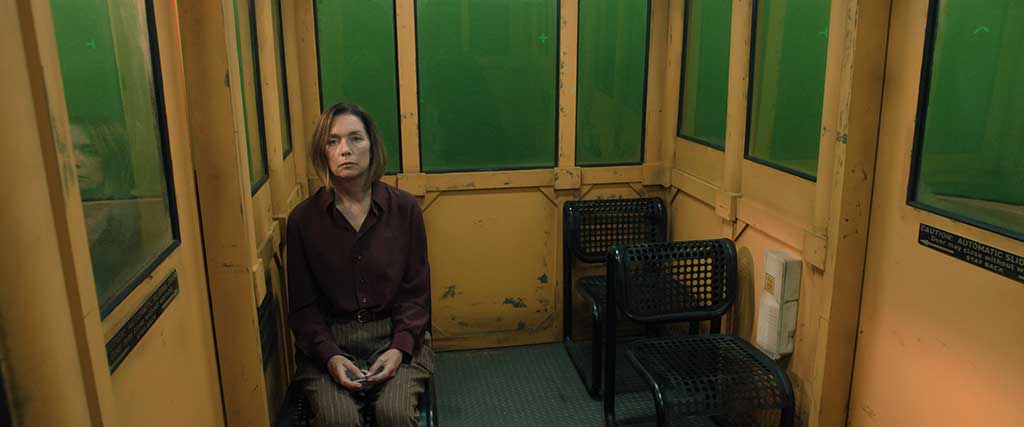
The scope of work required an intricate ballet of digital matte painting (DMP), complex computer-generated (CG) simulations, and seamless compositing. As streaming platforms continually raise the cinematic bar for serialized television, Paradise stands as a testament to what a dedicated boutique visual effects house can achieve under grueling episodic timelines and incremental script deliveries.
The Production Challenge: Incremental Scripts and High-Stakes Planning
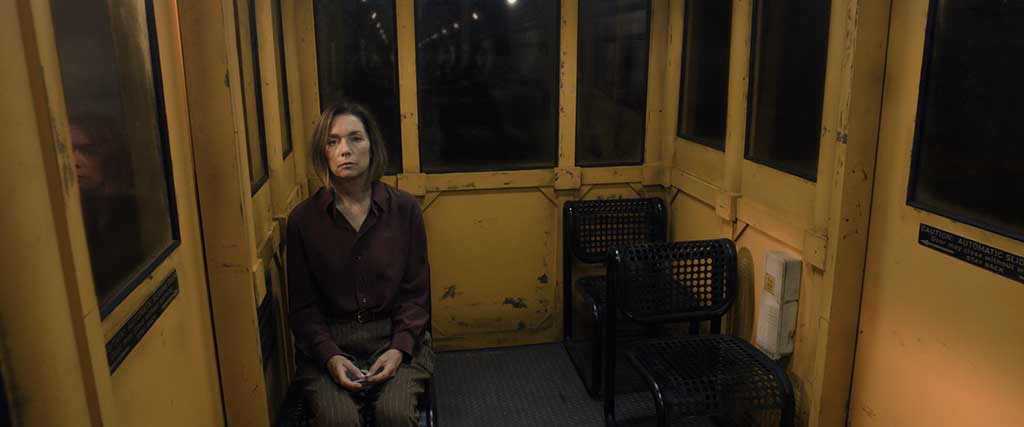
Working on a series that blends the claustrophobia of political assassination conspiracies with globe-spanning natural disasters presents unique logistical nightmares for a visual effects pipeline. According to John Weckworth, Visual Effects Supervisor at Onyx Visual Effects, the production methodology was defined by unpredictability. Because scripts arrived incrementally throughout the shooting schedule, the studio was consistently left in the dark regarding the ultimate trajectory of the narrative until moments before production began on specific blocks.
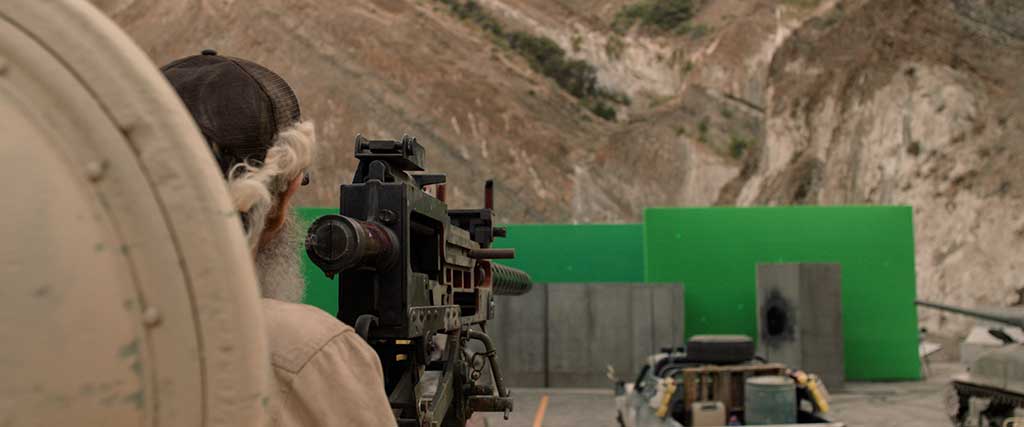
“We don’t know what we’re getting ourselves into until we get the next script, so it’s not like we can do a lot of forward planning,” Weckworth explains. This lack of a complete upfront blueprint meant that Onyx had to construct standalone set pieces and environmental assets on the fly, frequently without the luxury of revisiting or refining them in later episodes.
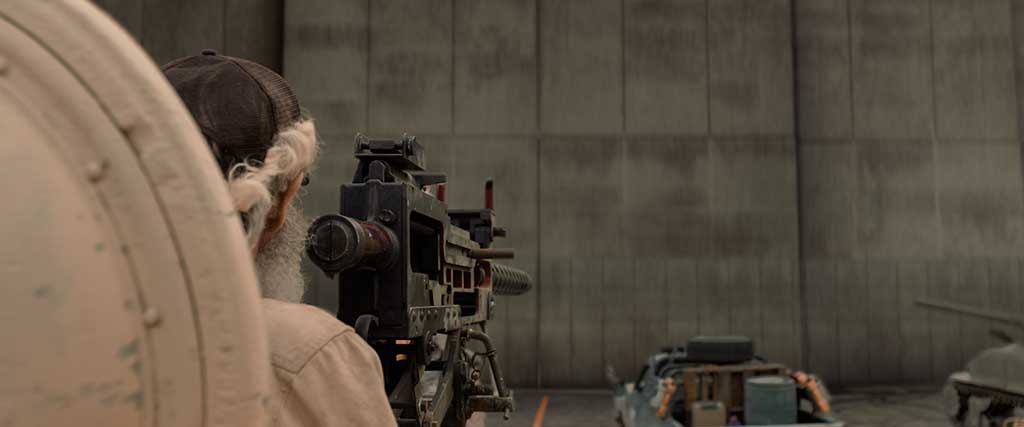
However, as the production of Season 2 crossed its midpoint, narrative hints began to accumulate, signaling that the showrunners were reserving the most explosive material for the final hours. By the time the scripts for the concluding episodes arrived, the team realized they were holding a treasure trove of cinematic potential. The finale, “Exodus,” featured massive, isolated set pieces—most notably the implosion of an entire mountain and a complex, sweeping Denver flyover—that would ultimately form the backbone of their Emmy submission reel.
Mastering the Denver Flyover: Tricks of Scale and Perspective
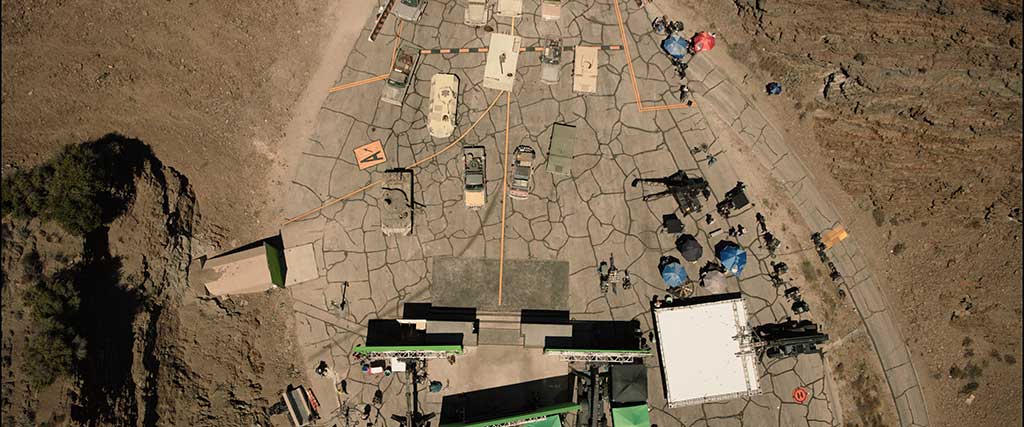
One of the most technically demanding sequences in the season finale was the Denver flyover, a continuous shot designed to bridge disparate geographical locations while maintaining relentless visual momentum. Directed by Hanelle Culpepper with detailed initial storyboards, the sequence required Onyx to construct a seamless journey starting from a forest campsite, moving over a ruined mountain crater, and terminating at the Denver airport.
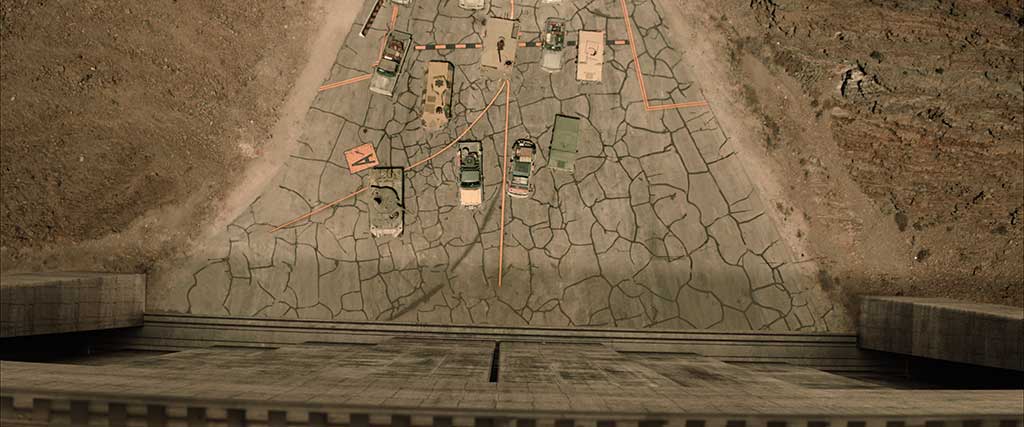
The primary hurdle, according to CG Supervisor Evan Underwood, was the compression of space. In the real world, covering the physical distance from a campsite to a mountain crater in the allotted screen time would be impossible without inducing motion sickness or feeling unnaturally accelerated. To solve this, the team deployed a subtle, cinematic illusion.
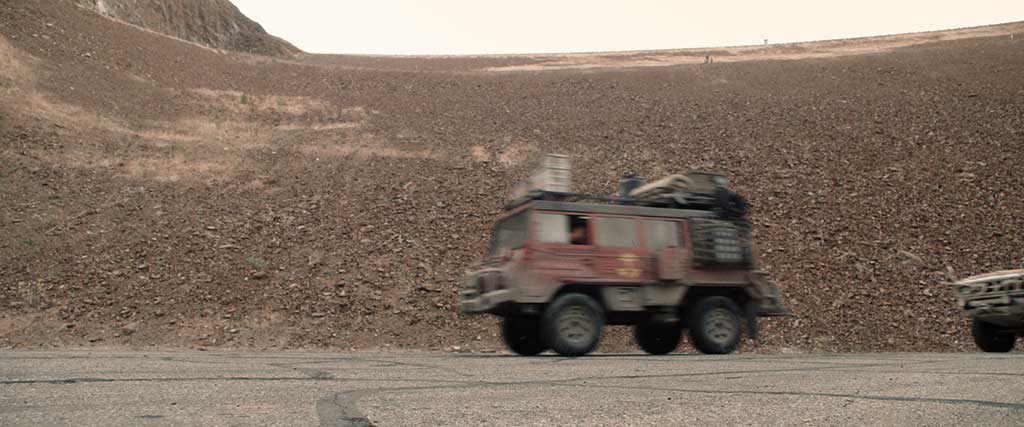
“We had to shrink the world without the viewer knowing it,” Underwood notes. “To do that, we tilted the campsite in CG, Inception-style, but you wouldn’t realize it because the camera is also tilted. Everything looks like it goes off to the horizon and the ground is flat.”
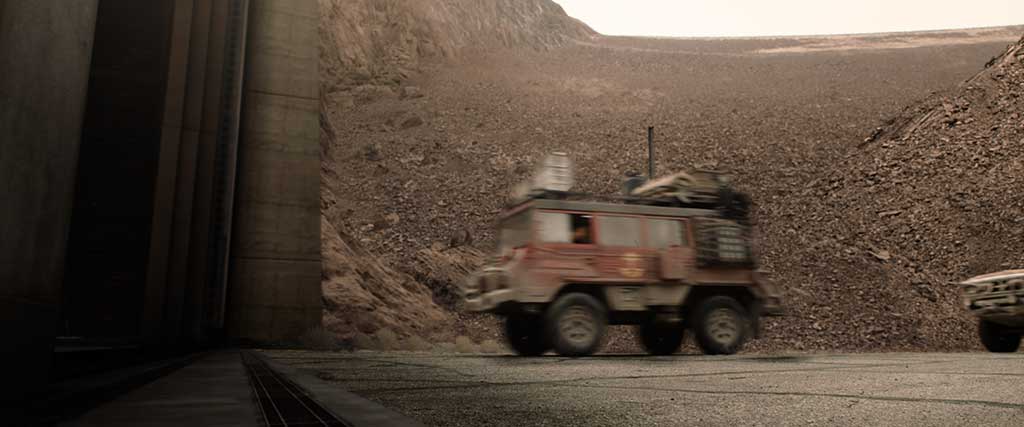
Using carefully calculated darkness and shadows to mask the geographical manipulation, Onyx guided the viewer’s eye over a treeline that was digitally elevated higher than the crater itself. Once the camera cleared the canopy, the audience was instantly, and seamlessly, thrust over the massive impact zone.
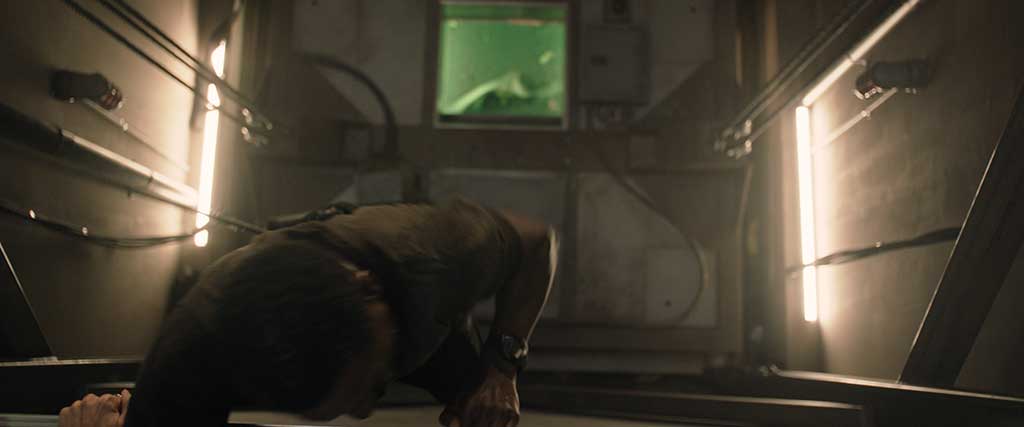
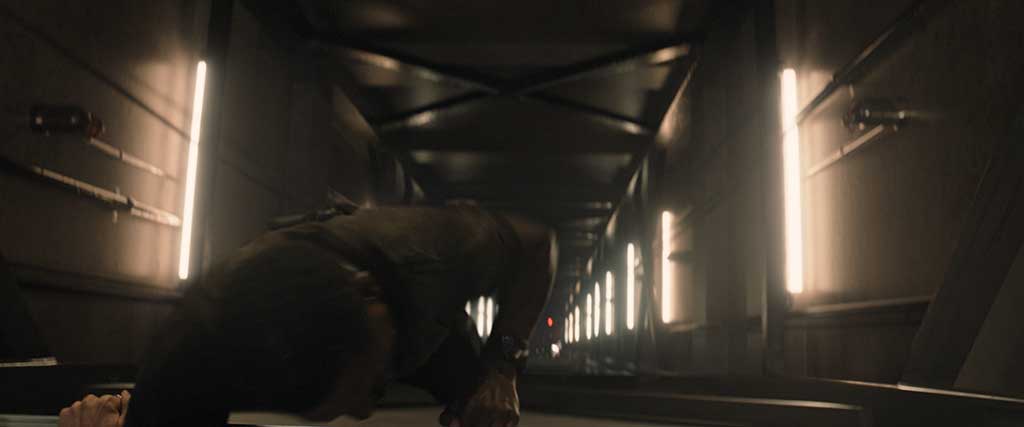
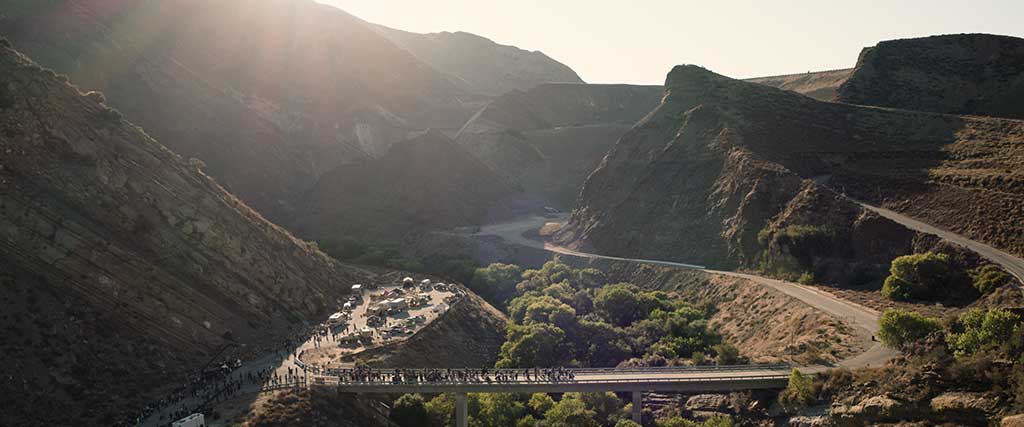
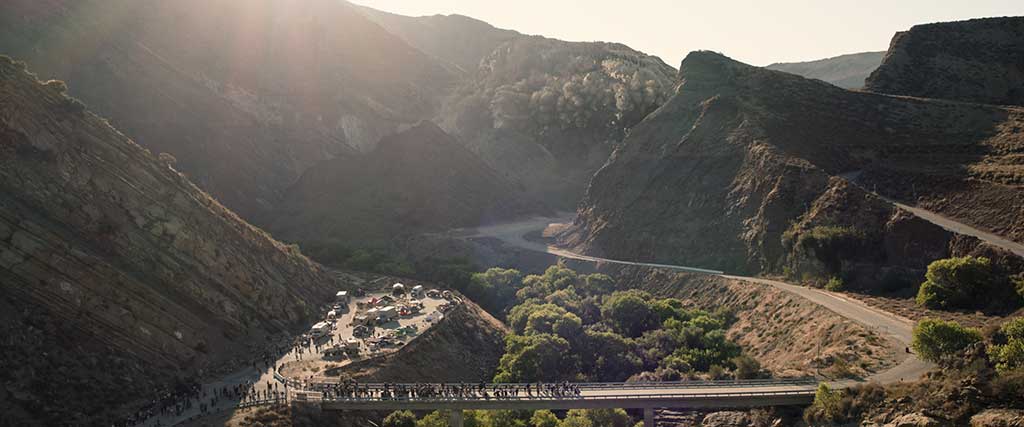
The middle of the sequence relied heavily on digital matte painting and 3D camera stabilization. Meliza Fermin, DMP Supervisor at Onyx, generated a staggering 30,000-pixel matte painting for the wide vista of the Denver airport. This asset had to withstand extreme camera zooms without losing fidelity, requiring extensive research and development to ensure that the transition from captured plate footage to full CG environment remained invisible to the viewer.
Engineering the Impossible Mountain Implosion
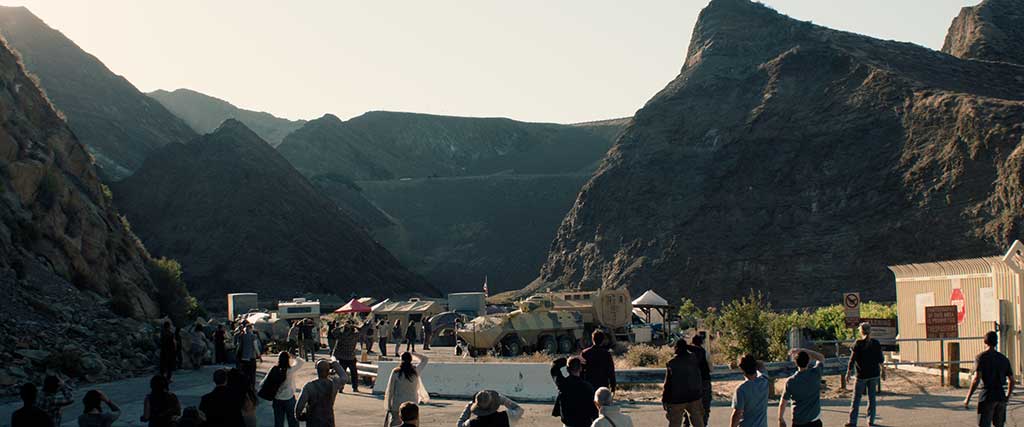
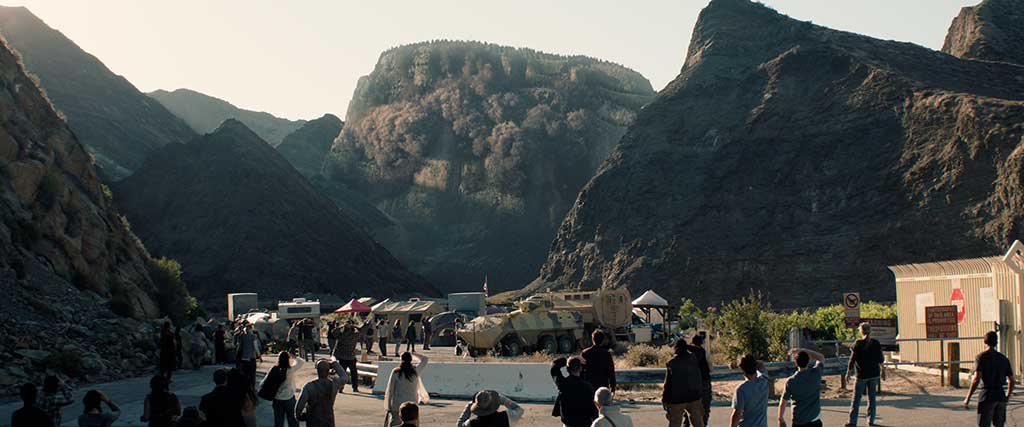
Perhaps the most visceral spectacle in “Exodus” is the catastrophic implosion of a massive mountain housing a vital bunker complex. Achieving a realistic sense of scale for such a cataclysmic event is notoriously difficult in computer graphics; if an explosion or collapse is rendered too quickly, the subject inevitably looks like a miniature model rather than a colossal geological formation.
The editorial lock for the sequence provided a mere 90-second window from the pre-explosion moments to the final settling dust and rolling debris over the hills. To prevent the mountain from appearing weightless, Underwood’s team had to artificially accelerate the collapse cycle by a factor of two or three while aggressively packing the frame with micro-details.
“We spent a lot of time figuring out how to speed up the mountain implosion while still making it look massive and realistic,” Underwood states. The final shot incorporates a complex sequence of structural failures: the initial mountain infrastructure begins to crumble inward, followed by a violent, radial shockwave of tons of dust and debris launching outward, culminating in the total structural collapse of the peak.
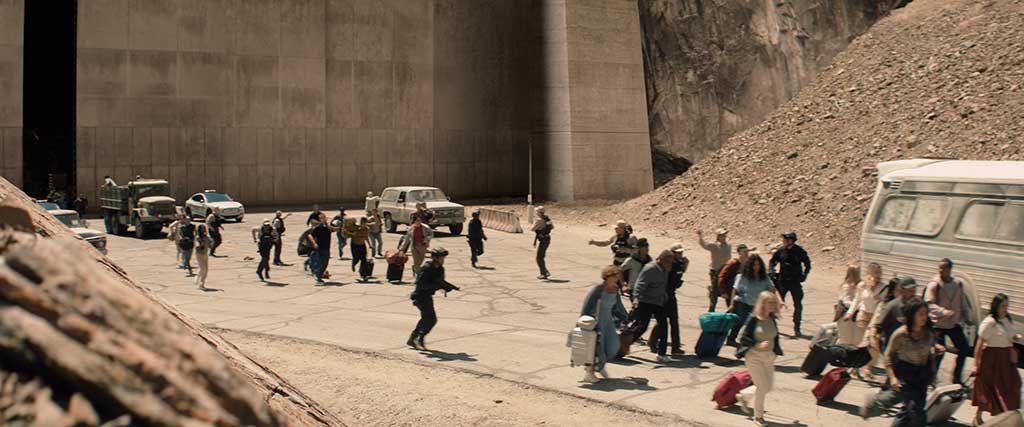
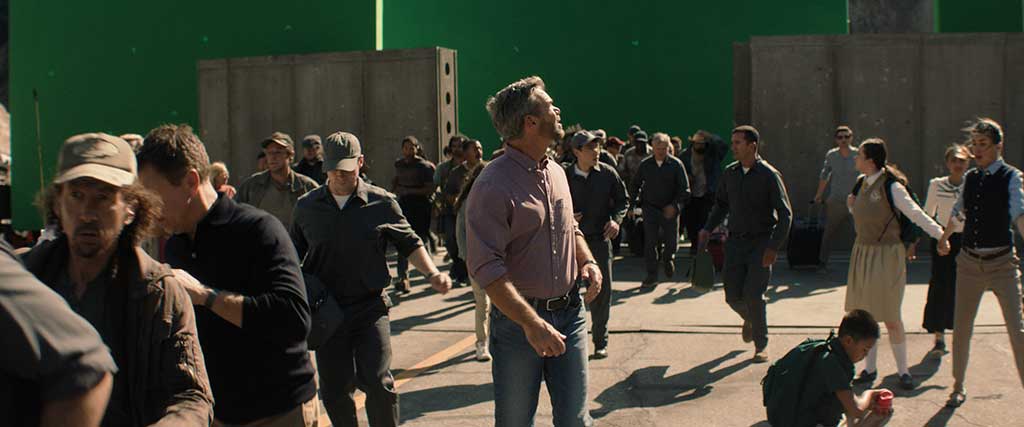
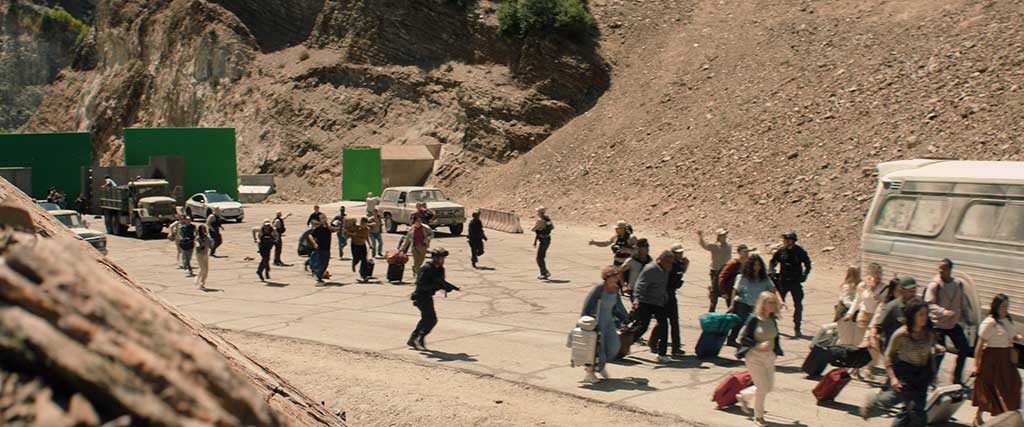
On the compositing side, John Brennick, Compositing Supervisor for Season 2, faced the challenge of integrating this massive CG destruction into live-action plates filmed under harsh, direct sunlight. Characters exiting a subterranean dome into blinding daylight created severe lens flares and blown-out highlights inherent to the original footage.
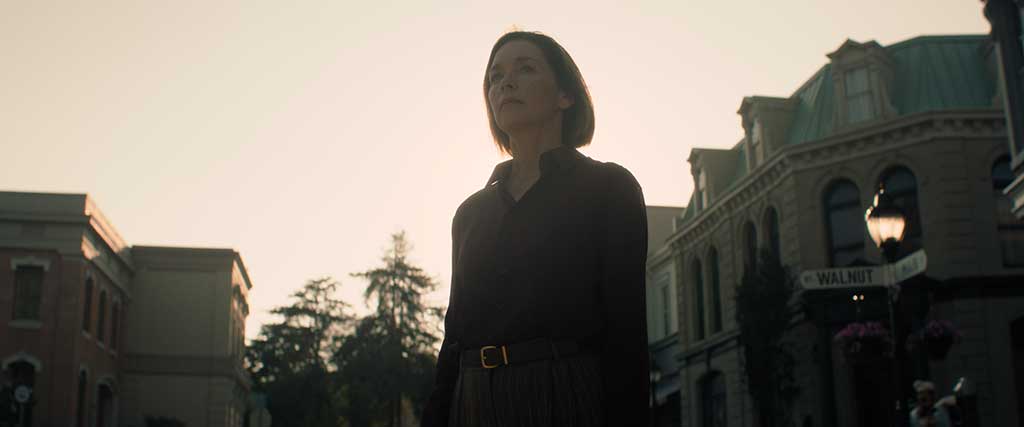
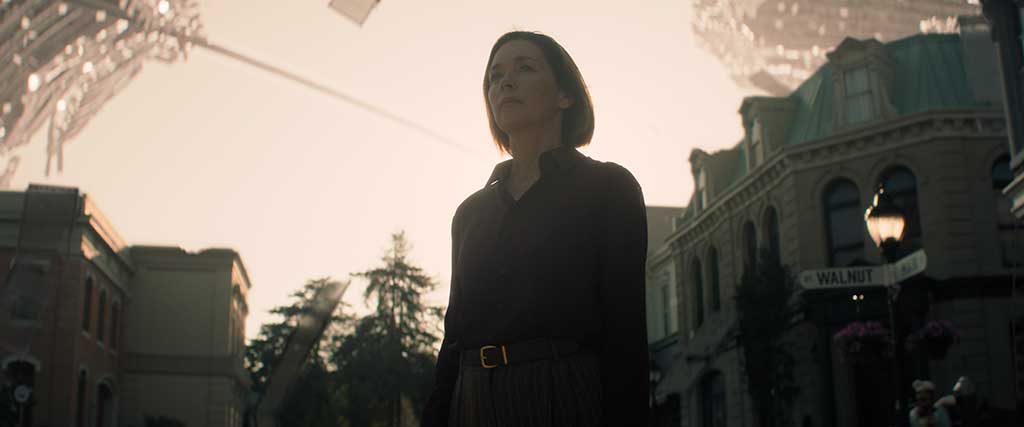
“We had a bright, hard sun, so we’re battling a lot of flares that were inherent to the footage,” Brennick recalls. Rather than simply fighting the anomalies, Onyx used the atmosphere, environmental flares, and localized lighting to their advantage, actively bash-composing previs elements to dictate the tone of the implosion while Houdini simulations were still undergoing heavy R&D.
Environmental World-Building Across Season 2
While the finale garnered the lion’s share of awards attention, Onyx’s environmental world-building permeated every corner of Season 2. In Episode 201, viewers are treated to a fleeting yet terrifying glimpse of an oncoming tornado viewed from the balcony of Graceland. Though onscreen for only a few frames, the sequence demanded exhaustive technical execution.
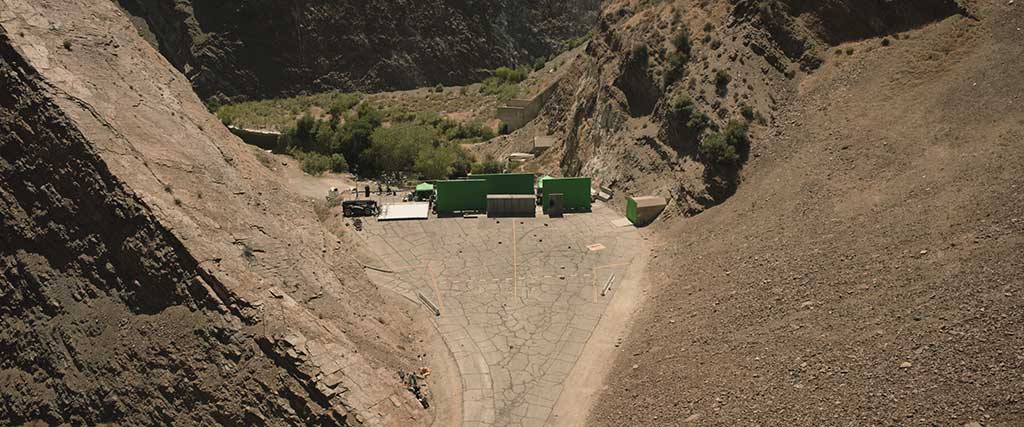
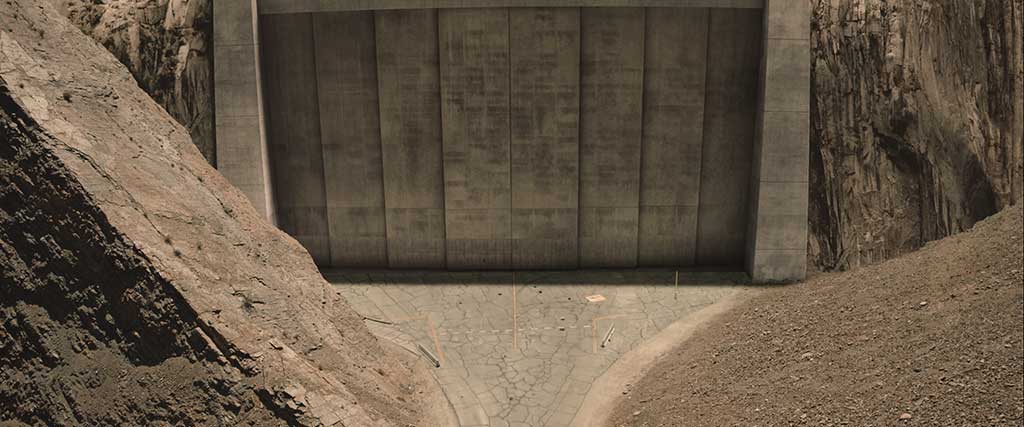
The tornado was initially constructed in a neutral daylight environment to calibrate its volumetric density and structural integrity. Once the visual parameters were locked, the asset was handed over to Brennick’s compositing team, who meticulously relit the scene for nighttime, utilizing independent passes for internal lightning strikes to illuminate the surrounding cloud formations dynamically.
Later in the season, a telescope point-of-view shot offers audiences a stark, macro-level perspective of global annihilation. This sequence required an intricate cross-departmental collaboration between matte painting, CG asset generation, and fluid simulations. Depicting a chemical plant explosion resembling a tactical nuclear detonation alongside a surging wall of water rushing up a city street, the team had to compress immense geographical features into a narrow, telescopic lens perspective.
Fermin’s matte painting department reconstructed Memphis, Graceland, and the intervening terrain from scratch. Meanwhile, Houdini fluid simulations generated the raging water surge, requiring precise technical alignment to ensure that the 3D-modeled buildings of the surrounding town reflected accurately in the violent, chaotic surface of the digital floodwaters.
A Masterclass in Episodic Visual Effects Execution
Reflecting on the sheer volume and diversity of the work completed for Paradise Season 2, John Weckworth emphasizes that the true triumph of Onyx Visual Effects lay in their ability to pivot constantly without the luxury of recurring, refined assets.
“It’s not like we’re building things that we are coming back to every episode that we get to refine,” Weckworth reflects. “We have this one moment in time to make whatever the effect is work for the story and be something that we’re proud of.”
When Paradise streams its episodes, the viewing experience offers the artists a rare chance to see their isolated, high-pressure contributions unified within a cohesive narrative framework. For an industry increasingly defined by compressed post-production windows and escalating audience expectations for feature-film-quality television, Onyx Visual Effects’ work on Hulu’s Paradise sets a formidable benchmark for disaster-genre storytelling.