Deconstructing the iPhone 18 Pro Variable Aperture: Technical Realities and Market Expectations

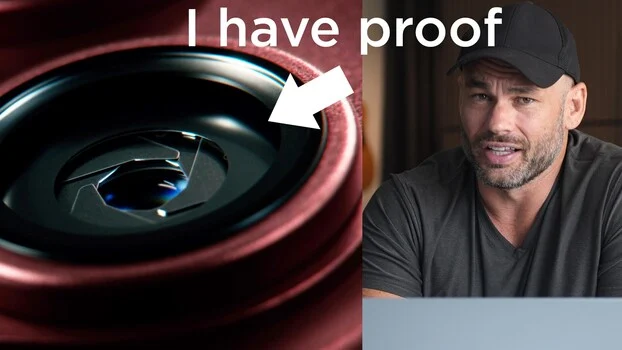
The introduction of a variable aperture lens on the Apple iPhone 18 Pro has ignited a significant debate within the photographic and videographic communities, prompting a rigorous technical re-examination of how mobile imaging hardware interacts with traditional exposure theory. Following the publication of an initial technical analysis four days ago, which subsequently became one of the most viewed reports of the year, a wave of feedback from industry professionals and enthusiasts emerged. The primary contention centered on whether the variable aperture mechanism was intended for still photography or if it served as a functional tool for mobile videographers. By conducting empirical field tests and applying established optical physics, it is possible to bridge the gap between marketing narratives and hardware performance.
The Physics of Mobile Optics and Aperture Scaling
To understand the utility of a variable aperture, one must first address the common misconception regarding focal length. In the smartphone industry, the term "24mm lens" refers to a 35mm equivalent field of view. When a manufacturer cites a 24mm equivalent focal length on a sensor with a significantly smaller physical footprint than a full-frame sensor, the actual focal length of the lens is often closer to 7mm.
The mathematical relationship defining aperture, known as the f-number, is calculated by dividing the focal length by the diameter of the entrance pupil. If the iPhone 18 Pro were utilizing a native 24mm lens at f/1.48, the entrance pupil would necessarily be 17 millimeters in diameter—an impossibility given the physical constraints of the compact camera module. With a real-world focal length of approximately 7mm, the entrance pupil at its widest setting is roughly 4.7 millimeters. This clarifies that while exposure values (shutter speed, ISO, and f-stop) are universal, the physical light-gathering characteristics differ drastically from professional full-frame equipment.
A full-frame sensor possesses approximately 12 times the surface area of a standard smartphone sensor. Consequently, to achieve identical exposure, a full-frame sensor requires significantly more total light. The variable aperture on the iPhone 18 Pro, while innovative for a mobile device, does not translate directly into the depth-of-field aesthetics associated with professional lenses. At its widest setting of f/1.48, the iPhone produces a depth-of-field effect roughly equivalent to f/5.2 on a full-frame camera. Stopping the aperture down to f/4 increases this equivalence to approximately f/14. This explains why software-based computational blur, rather than purely optical depth-of-field, remains the primary method for achieving subject isolation on mobile devices.
Diffraction Limits and Sensor Density
A frequent inquiry following the initial report concerned the aperture range. If the mechanism is capable of stopping down, why is it capped at f/4? The answer lies in the physics of diffraction. As an aperture closes, the entrance pupil shrinks, causing light waves to bend around the edges of the diaphragm. This phenomenon reduces image sharpness.
The impact of diffraction is exacerbated in smartphones due to the high pixel density required to reach 48-megapixel resolutions on a small sensor. Professional cameras, such as the Sony a7S III, utilize large photosites (pixels) on a 12-megapixel full-frame sensor, which are more resilient to diffraction-induced softening. In contrast, the iPhone 18 Pro’s significantly smaller photosites make it highly susceptible to image degradation at narrower apertures. Consequently, f/4 represents a practical limit; pushing the aperture further would result in a noticeable loss of resolution and contrast, compromising the image quality that Apple aims to maintain.
Videography Claims and Field Testing
The prevailing argument in favor of the variable aperture is its utility for professional videographers who prioritize the "180-degree shutter rule." This rule suggests that to achieve natural motion blur, the shutter speed should be set to double the frame rate. For a standard 24 frames per second (fps) video, this requires a shutter speed of 1/48 or 1/50 of a second.
In bright lighting conditions, achieving a 1/50 shutter speed often requires a very small aperture or a neutral density (ND) filter to prevent overexposure. Proponents argued that the variable aperture would negate the need for external filters. However, empirical field testing conducted under overcast, low-light conditions—ISO 100 at 1/50 of a second—indicated that a setting of f/8 was required to prevent highlight clipping. When the aperture was set to f/4, the image remained two stops overexposed.
This suggests that even in sub-optimal, overcast daylight, the variable aperture cannot fully replace neutral density filters in bright or direct sunlight, where light levels can be three to four stops higher than in the test conditions. While the feature offers a marginal degree of control, it does not fundamentally alter the requirements for professional-grade light management in outdoor environments.
Contextualizing the Evolution of Mobile Imaging
Apple’s inclusion of a physical aperture mechanism marks a notable shift in the trajectory of smartphone hardware. Historically, mobile photography has relied almost exclusively on computational photography—using algorithms to simulate hardware capabilities. The transition toward mechanical, variable apertures suggests that Apple is reaching the physical limits of what software can achieve alone, particularly in the realm of video.
This development follows a years-long trend of increasing sensor sizes and the adoption of larger, faster lenses. The integration of this mechanism, alongside advanced manual controls in the camera application, signals that Apple is catering to a demographic of "prosumer" creators who demand more granular control over the imaging pipeline.
Broader Implications and Industry Impact
The introduction of this hardware feature represents a maturation of the mobile camera ecosystem. While it does not render professional gear obsolete, it reduces the friction for creators who utilize their smartphones as primary video capture devices. For the average consumer, the feature may provide subtle improvements in exposure management; for the professional, it provides a functional tool that—while limited—is a step toward more sophisticated mobile cinematography.
The industry response suggests that while hardware specifications are being pushed to their physical limits, the "look" of a photograph remains dictated by sensor size and optical physics. As manufacturers continue to introduce complex mechanical features to small-form-factor devices, the balance between optical performance, diffraction limitations, and computational processing will define the next generation of mobile imaging.
Future Perspectives
As the industry moves forward, the reliance on external accessories like ND filters for mobile videography will likely persist, though perhaps with less frequency. Apple’s decision to implement this feature suggests a commitment to refining the manual control experience. While the variable aperture is not the transformative breakthrough that some marketing might suggest, it is a significant engineering achievement that enhances the utility of the device’s manual camera interface.
Beyond the hardware itself, the ongoing dialogue between manufacturers and the user base highlights an increasingly knowledgeable consumer market. Users are no longer satisfied with "black box" computational processing; there is a tangible demand for technical transparency and the ability to manually influence exposure parameters. As this trend continues, manufacturers will likely be forced to continue integrating professional-grade controls, even as they navigate the inherent physical limitations of the smartphone format.
The iPhone 18 Pro serves as a case study for the intersection of traditional optics and modern digital processing. While the variable aperture is a welcome addition for enthusiasts, the laws of physics—specifically regarding sensor area and diffraction—ensure that mobile devices remain distinct from dedicated cinema or mirrorless cameras. Understanding these boundaries is essential for any creator looking to leverage the full potential of modern mobile technology.
Related posts: