Beyond the Textbox: Reimagining Human-Centric AI Interaction in the Age of Automation

The current landscape of artificial intelligence is dominated by the monolithic paradigm of the text-based interface. From the release of ChatGPT in late 2022 to the rapid integration of large language models (LLMs) into enterprise software, the primary vehicle for human-machine interaction has been the cursor blinking in a box. This design choice, while familiar and highly functional, creates a transactional, sterile environment that often obscures the potential for genuine synergy between human creativity and algorithmic assistance. As generative AI tools like Midjourney, Dall-E, and Claude become ubiquitous, the design community is grappling with a profound existential question: How do we integrate increasingly powerful, autonomous technology without sacrificing the human-centric empathy and artistry that define meaningful digital experiences?
The urgency of this question stems from a rapid shift in the creative industries. Since the mainstreaming of generative AI, the digital art and design sectors have faced significant disruption. According to data from the Goldman Sachs Global Economics Analyst report, generative AI could potentially expose 300 million full-time jobs to automation, with creative and legal professions facing some of the highest levels of exposure. For designers, this shift has manifested as a dual-edged sword: the democratization of high-quality image generation has lowered the barrier to entry, but it has also prompted widespread concern regarding intellectual property rights and the ethical sourcing of training data. Many creative professionals now feel they are being forced to adapt to tools built on the back of their own work, often without consent or compensation.
The Evolution of the AI Interface: From Utility to Personality
The history of software interfaces has always trended toward greater abstraction. In the 1980s, command-line interfaces gave way to Graphical User Interfaces (GUIs), which relied on visual metaphors to simplify complex computing. We are currently witnessing a similar inflection point. The transition from command-based AI to agentic, proactive AI necessitates a shift in visual language.
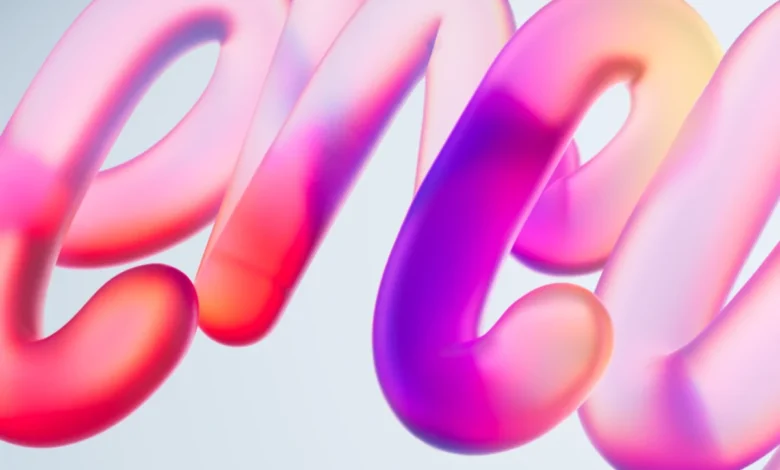
MacPaw, a software development company, recently initiated an internal research and development project to address this design gap. By conceptualizing "Eney," a proactive AI assistant, the team sought to break the "textbox" mold. The fundamental premise was that human beings are neurologically hardwired to connect with entities that exhibit character, temperament, and recognizable movement. By moving away from the static, utilitarian webpage format, the developers aimed to create a "digital companion" that exists within the user’s peripheral awareness, mirroring the way human colleagues might exist in a shared workspace.
Chronology of a Design Shift
The development of Eney serves as a case study in modern human-computer interaction (HCI) design. The project’s timeline highlights a deliberate, iterative process:

- Identification of the Problem (Early 2024): The team identified that existing AI tools were becoming "faceless" and purely transactional, contributing to user fatigue and a sense of detachment from the creative process.
- Conceptualization (Q1 2024): The team explored various visual metaphors. They determined that a circular form factor would provide the most approachable and neutral "canvas" for a character, avoiding the cognitive load of a humanoid avatar while maintaining a sense of presence.
- Emotional Mapping (Q2 2024): Designers mapped specific AI functions to physical gestures. A "loading" state was designed as a subtle, non-distracting animation, ensuring that the visual cues were functional rather than merely decorative.
- Color Theory and Branding (Q3 2024): To differentiate from the industry-standard "AI blue"—a color psychology choice intended to signal trust and intelligence but which has led to a visual homogenization of the tech sector—the team selected a vibrant, warm pink. This was intended to signal accessibility and distinctiveness in a crowded software market.
- Integration (Q4 2024): The final character was integrated as a proactive agent designed to assist in specific, high-context workflows rather than serving as a general-purpose chatbot.
The Necessity of Human Agency in AI Design
The move toward character-driven interfaces is not merely an aesthetic choice; it is a functional requirement for future-proofing human-AI collaboration. The core challenge in designing such systems is preventing the character from becoming a distraction. If an AI agent is too "animated," it triggers the "uncanny valley" effect, causing user discomfort. If it is too static, it loses the benefits of personality.
The design team at MacPaw employed a strategy of "intentional restraint." By limiting the character’s expressions to a defined set of gestures, they ensured that the AI remained an assistant rather than a primary focus of attention. This approach aligns with the principles of Calm Technology, a design philosophy that suggests technology should respect the user’s attention and only engage when necessary.
Data and Industry Implications

The broader industry implications of this design shift are significant. As AI moves from being a standalone tool to an embedded layer in operating systems and professional software suites, the user interface will become the primary battleground for user retention. According to a 2024 study by the Nielsen Norman Group, users are increasingly reporting "AI fatigue" caused by the repetitive, inconsistent, and often impersonal nature of current conversational agents.
Industry analysts suggest that the next wave of AI adoption will favor companies that successfully humanize their agents without compromising on utility. The "Eney" model suggests that personality—when used to convey state, intent, and feedback—can actually improve efficiency by reducing the time required for a user to interpret what the AI is doing.
Reactions and Ethical Considerations
The design community’s response to such developments has been cautious but engaged. Critics of character-based AI often point to the risk of "parasocial manipulation," where users might develop unhealthy emotional dependencies on software. However, proponents argue that a well-designed, empathetic interface can reduce the friction of complex workflows, acting as a "co-pilot" rather than an autonomous replacement.

Furthermore, the ethical dimension of this design cannot be ignored. The intentionality behind Eney’s creation highlights the fact that human designers remain the ultimate arbiters of how AI interacts with the world. While an AI can generate images or code in seconds, the "artistic direction"—the decision to prioritize empathy, warmth, and user-centered design—remains a strictly human endeavor.
The Future of Creative Workflows
As we look toward the next five years of digital development, the integration of AI will likely follow two distinct paths. The first is the "black box" path, where AI tools become increasingly powerful and efficient but also increasingly anonymous and standardized. The second is the "human-in-the-loop" path, where AI acts as an extension of the designer’s intent, guided by interfaces that are explicitly designed to foster collaboration and creative agency.
The lesson from projects like the Eney interface is clear: the rise of AI does not mark the end of human artistry, but rather a shift in the requirements of the artist. The most successful designers in the coming decade will be those who can leverage AI for research and execution while maintaining the high-level judgment, emotional sensitivity, and ethical integrity that machines cannot replicate.

Curiosity and the cultivation of personal "taste" will emerge as the ultimate competitive advantages. In an era where any user can generate a high-quality image with a prompt, the value of the creative process—the nuance, the context, and the human story behind the design—will only continue to rise. Technology is a tool, and like all tools, its value is determined entirely by the hand that wields it. By focusing on how we interact with these tools, and by demanding interfaces that respect our humanity, designers can ensure that the AI revolution serves to amplify, rather than replace, the essential human element of creativity.