Instagram Gives Users More Control Over Their Feeds with New Direct Grid-Display Feature for Tagged Posts

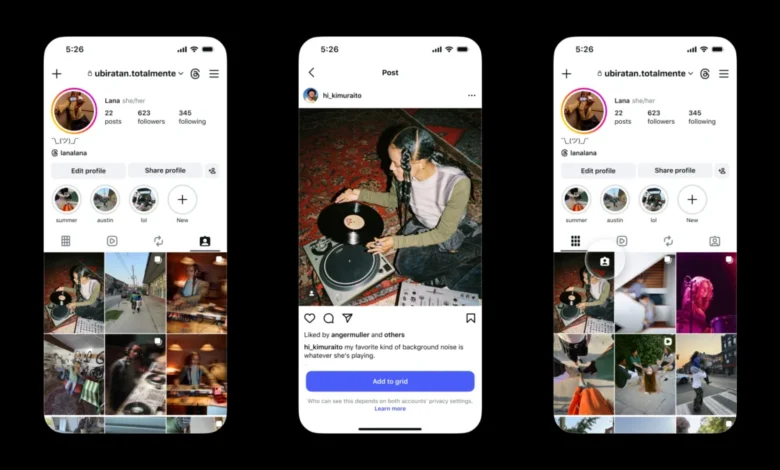
The landscape of social media curation is shifting once again as platforms increasingly prioritize user autonomy over rigid algorithmic presentations. Meta-owned Instagram has officially rolled out a highly requested feature designed to streamline profile management and enhance collaborative digital spaces. Starting today, users can seamlessly add posts in which they have been tagged directly to their primary profile grid, bypassing the traditionally tedious workaround of republishing identical content or navigating complex third-party tools.
This update addresses a common social dilemma faced by millions of daily active users worldwide. Whether returning from a weekend getaway, a live concert, a family gathering, or a professional networking event, users frequently find themselves in a situation where a companion has already posted a standout group photograph, tagging them in the process. Historically, individuals wanting that same visual representation on their main grid faced an awkward choice: either repost the exact same image—thereby cluttering follower feeds with duplicate content—or leave the photo solely relegated to the dedicated Tagged tab, where profile visitors are less likely to see it.
With the launch of this latest capability, Instagram has effectively eliminated that friction, offering a streamlined, flexible solution that keeps profiles looking curated and personalized without requiring redundant uploads.
Mechanics of the New Grid-Display Feature
Understanding how the new functionality operates reveals a focus on user convenience and digital safety. Instagram has integrated the option into multiple touchpoints across its application ecosystem. Users can now choose to promote a tagged post directly from the direct message (DM) notification they receive upon being tagged, straight from the post itself within the feed, or by navigating to their traditional Tagged tab on their profile page.
Crucially, the feature does not duplicate or re-upload the original media file. The underlying content remains hosted entirely on the original creator’s account. Adding a tagged post to a personal grid acts merely as a display preference; it pins or showcases the post on the user’s profile matrix without altering the original engagement metrics, comments, or likes tied to the publisher’s account.
Furthermore, Instagram has built-in flexibility for users who may second-guess their curation choices. If a user decides they no longer want a specific friend’s or brand’s post gracing their main grid, they can remove it instantly with a few taps. Doing so does not delete the post from the platform entirely, nor does it remove it from the user’s private or public Tagged tab. It simply withdraws the post from the primary grid view, returning the profile to its previous state.
Strategic Implications for Creators and Brand Campaigns
While casual users will undoubtedly appreciate the aesthetic control over party photos and social memories, industry analysts point out that the feature carries significant strategic value for digital creators, influencers, and corporate brand campaigns.
In the modern creator economy, collaborations are the lifeblood of audience growth. Previously, when two or more creators partnered on a joint project, they relied heavily on the "Invite Collaborators" feature to ensure the post appeared on both of their respective grids simultaneously. However, this option required coordination prior to publishing. If a collaboration was posted independently by one party, the other creator had limited options for displaying it prominently on their grid without resorting to a full republication.
This new tool resolves that bottleneck. Creators can now easily highlight user-generated content (UGC) or joint media appearances directly on their profiles after the fact. Similarly, large-scale brand campaigns involving multiple influencers and ambassadors can leverage this capability to curate a cohesive brand aesthetic. Companies can encourage participating creators to pin campaign-specific posts directly to their grids, amplifying visibility, driving cross-traffic, and establishing social proof without demanding that every participant manually upload identical files.

A Broader Push Toward Profile Customization and Aesthetic Control
This latest rollout does not exist in a vacuum. It represents a calculated, sequential effort by Instagram’s product and engineering teams to grant users granular control over their digital identities and profile architecture. Over the past several quarters, the platform has steadily introduced features aimed at moving away from strictly chronological or purely algorithmic feeds, placing the power of presentation back into the hands of the individual.
In June, Instagram made waves across the digital community by introducing the "Reorder Your Grid" feature. For years, users were locked into a strict reverse-chronological layout where the most recent post invariably occupied the top-left corner of the profile matrix. This limitation frustrated users who wanted to curate specific visual themes, highlight pinned accomplishments, or establish a distinct color palette without worrying about upload dates. The grid-reordering capability allowed users to manually shift posts around, signaling a clear philosophical pivot at Meta toward treating profiles as personal art galleries rather than static chronological logs.
Complementary Content Management Tools
In tandem with profile presentation updates, Instagram has deployed a suite of advanced content creation and management tools designed to reduce user fatigue and editing friction. These features collectively illustrate a holistic approach to improving the platform experience from creation to final presentation.
Among these recent additions is the "First Draft" feature, rolled out in August. Designed to streamline the often tedious process of editing short-form video content—specifically Reels—First Draft automatically analyzes selected video clips, strips away awkward pauses and dead air, and stitches together an initial cut of the best visual moments. This tool addresses the growing demand for rapid, low-friction video production in an era dominated by hyper-fast consumption habits.
Additionally, Instagram recently launched the "Replace Audio" tool. This functionality grants users the retroactive ability to swap out the background music on existing posts whenever they see fit. Whether navigating shifting copyright landscapes, updating content to reflect current audio trends, or simply changing personal taste over time, the tool ensures that archival posts remain dynamic and relevant long after their initial publication date.
Industry Context and Future Outlook
As social media platforms mature, competition for user attention remains fiercer than ever. Competitors like TikTok and YouTube Shorts have conditioned audiences to expect frictionless content discovery, while traditional powerhouses like Instagram must continually balance algorithmic content delivery with user-driven expression.
By introducing incremental, high-utility features like the ability to display tagged posts directly on the profile grid, Instagram demonstrates a keen listening ear toward community feedback. Rather than pushing disruptive, unrequested algorithmic overhauls, the platform is focusing on micro-improvements that solve everyday social friction points.
As these tools continue to roll out globally to mobile applications on iOS and Android, digital marketing experts expect to see a noticeable shift in how profiles are curated. The boundaries between individual accounts, collaborative spaces, and brand partnerships are becoming increasingly fluid. For the average user, the update simply means fewer awkward conversations about who posted what, and a much cleaner, more personalized space to showcase their digital lives.