The landscape of professional music production has shifted dramatically over the last decade, transitioning from high-cost, centralized recording facilities to a decentralized model of home-based creative hubs. As of 2026, the barriers to entry for high-fidelity audio production have reached an all-time low, driven by the democratization of powerful computing, advanced digital signal processing (DSP), and the proliferation of high-quality, accessible hardware. Setting up a home music studio is no longer a task reserved for industry veterans; it is a fundamental milestone for the modern musician, podcaster, and content creator. However, the abundance of choices—ranging from entry-level gear to boutique analog equipment—requires a disciplined, prioritized approach to avoid unnecessary capital expenditure.
The Evolution of the Personal Studio
Historically, recording music required access to multi-million dollar studios equipped with large-format analog consoles and specialized soundproofed rooms. The digital revolution, which accelerated in the late 2010s and matured in the early 2020s, flipped this model. Industry reports indicate that over 75% of commercially released music in 2026 is produced, at least in part, within a home studio environment. This shift has forced hardware manufacturers to pivot, focusing on compact, "all-in-one" solutions that provide studio-grade fidelity in a desktop form factor.
The Foundation: Absolute Essentials for Digital Production
The primary challenge for newcomers is distinguishing between "gear acquisition syndrome" and the functional requirements of a professional workflow. The bedrock of any modern studio is the computing environment. In 2026, a computer is not merely a tool; it is the central processing unit of the entire studio.
For optimal performance with modern Digital Audio Workstations (DAWs), industry standards suggest a minimum of 16GB of RAM, though 32GB is becoming the recommended baseline to manage memory-intensive virtual instruments and real-time processing plugins. Furthermore, the choice of OS remains critical; while Windows has made significant strides in audio stability, Apple’s Silicon architecture continues to dominate the high-end production market due to its proprietary hardware-software integration. The DAW acts as the virtual recording console, and while platforms like Ableton Live, Logic Pro, and FL Studio offer distinct workflows, the fundamental principles of signal flow remain identical across all software.
Curating the Signal Chain: Hardware and Connectivity
Once the digital environment is established, the focus shifts to hardware. The audio interface serves as the critical bridge between the analog and digital worlds. It is the component responsible for Analog-to-Digital (A/D) and Digital-to-Analog (D/A) conversion. For a solo producer, a two-input interface with high-quality preamps is sufficient. However, for those looking to record live instruments or ensemble pieces, scaling to an interface with four to eight inputs becomes necessary.
Monitoring is perhaps the most critical, yet frequently misunderstood, element of studio design. Headphones serve as the primary monitoring source for most home producers. While consumer-grade headphones often "color" the sound—boosting bass or treble to create a more pleasing listening experience—studio monitors are designed for transparency. Flat-frequency response is the industry benchmark, allowing engineers to hear the raw, unadulterated output of a mix. Investing in industry-standard monitoring headphones, such as those with open-back designs, provides the spatial accuracy required for professional mixing and mastering.
Ergonomics and the Physical Workspace
Professional production is a sedentary activity, often requiring hours of focused attention. Consequently, ergonomics plays a vital role in long-term career sustainability. The "studio desk" has become a specialized piece of furniture. A well-designed workstation should prioritize the placement of the "sweet spot"—the equilateral triangle formed by the listener and the studio monitors. Cable management systems are not merely for aesthetics; they are essential for reducing electromagnetic interference and maintaining a clean, distraction-free environment. A chair with adequate lumbar support is a non-negotiable asset, as repetitive strain injuries are a documented occupational hazard for audio engineers.
Intermediate Upgrades: Enhancing the Workflow
As a producer matures, the focus typically shifts toward "almost-essentials"—equipment that significantly improves efficiency. MIDI controllers, for instance, allow for a more intuitive, tactile approach to sound design and performance. By mapping software parameters to physical faders and knobs, producers can move away from mouse-based automation, which often leads to "stiff" or "robotic" sounding performances.
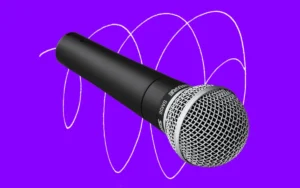
Microphone selection represents the next tier of investment. While modern smartphone technology is capable of surprising audio capture, it cannot replace the specialized transducers found in large-diaphragm condenser or dynamic microphones. The choice between these depends on the source material; condenser mics are highly sensitive and ideal for capturing the nuance of vocal performances or acoustic instruments, whereas dynamic microphones are better suited for loud sound sources, such as guitar amplifiers or percussion.
The Role of Acoustic Treatment
A common misconception among emerging producers is that "gear solves everything." In reality, the acoustic environment of the room is the most significant limiting factor in sound quality. Even the most expensive speakers will perform poorly in an untreated room due to standing waves, flutter echoes, and room modes.
Acoustic treatment does not necessarily require a professional architectural overhaul. Simple interventions, such as placing broadband absorption panels at primary reflection points and utilizing bass traps in corners, can neutralize the most problematic frequencies. Data-driven analysis of room acoustics often reveals that a $500 set of speakers in a treated room will outperform a $3,000 set in an untreated, reflective space.
Strategic Investment: Storage and Data Integrity
In 2026, the volume of high-resolution audio files has reached unprecedented levels. Modern sample libraries and multi-track sessions can easily exceed several terabytes. Relying on internal computer storage is a significant risk. The standard for professional studios is a redundant backup system: an external Solid State Drive (SSD) for active project files and a separate, off-site or cloud-based backup for long-term storage. The speed of NVMe-based SSDs is essential for streaming large orchestral libraries without latency, making the transition from traditional mechanical Hard Disk Drives (HDDs) to SSDs a high priority.
Implications for the Future of Music Creation
The decentralization of studio space has fundamentally altered the power dynamics of the music industry. Major labels no longer hold a monopoly on the means of production. This shift has fostered an era of unprecedented stylistic diversity, as artists from any geography can achieve professional-grade results from their bedrooms.
However, this saturation also places a higher burden on the individual producer to curate their sound. With the barrier to entry lowered, the "professional" standard has shifted from technical fidelity—which is now easily attainable—to artistic vision and unique sonic identity. As we look toward the remainder of the decade, the integration of Artificial Intelligence (AI) in mixing and mastering plugins suggests that the "technical" side of studio work will become even more automated, further empowering the creator to focus exclusively on composition and performance.
Ultimately, building a home studio is a continuous process of refinement. It begins with a core set of essentials—a computer, a DAW, and reliable monitoring—and expands outward based on the specific needs of the producer. Whether one is recording live jazz or programming complex electronic sequences, the goal remains constant: to construct an environment that removes friction between the imagination and the final, exported audio file. By prioritizing acoustic space, ergonomic health, and robust data management, producers can build a professional-grade facility that serves their creative needs for years to come.
Related posts: