Revitalizing Wedding Photography Through the Strategic Application of Tilt-Shift Lenses

For many professional wedding photographers, the repetitive nature of capturing ceremonies and receptions can eventually lead to a plateau in artistic output. The search for a fresh creative spark often requires moving beyond standard prime and zoom lenses to experiment with specialized optics. Among these, the tilt-shift lens—historically relegated to architectural and industrial photography—has emerged as a transformative tool for wedding professionals seeking to inject dynamism, depth, and a unique visual narrative into their work. By manipulating the plane of focus, photographers can move beyond the limitations of traditional depth-of-field settings, crafting imagery that stands out in a saturated market.

Technical Foundations of the Tilt-Shift Lens
A tilt-shift lens, also known as a perspective control lens, is a specialized optic that allows for physical movement of the lens elements relative to the image sensor. Unlike standard lenses, where the optical axis is fixed and the plane of focus remains strictly parallel to the camera’s sensor, these lenses offer two distinct mechanical movements: tilting and shifting.

The "shift" function allows the lens to move laterally or vertically, which effectively changes the perspective without requiring the photographer to tilt the camera body. This is essential for architectural photography, as it enables the user to keep the camera sensor perfectly vertical while capturing tall structures. By shifting the lens, the photographer can eliminate the "converging lines" effect, where buildings appear to lean inward or collapse toward the top of the frame.

The "tilt" function, conversely, pivots the lens at an angle relative to the sensor, which tilts the plane of focus. While a traditional lens creates a "slice" of focus parallel to the sensor, a tilted lens creates a wedge-shaped focus zone. This allows for the selective focus technique, where specific objects at different distances from the camera can be rendered in sharp detail while the surrounding areas fall into a soft, blurred transition.

Historical Context and Evolution
The lineage of the tilt-shift lens can be traced back to the early 1960s. In 1961, Nikon introduced the 35mm f/3.5 PC-Nikkor, marking the first time such technology was available for 35mm SLR cameras. The innovation was initially driven by the needs of industrial and military photographers who required precise geometry in their aerial reconnaissance and building surveys.

For decades, these lenses remained niche, strictly utilized for professional architectural documentation. However, the early 21st century saw a shift in how these optics were utilized. As digital sensor technology advanced and the wedding photography industry began to emphasize "fine art" aesthetics, professional photographers began repurposing these tools. By the mid-2000s, manufacturers like Canon and Nikon released updated iterations of their perspective control lines—such as the TS-E series—with improved ergonomics and glass quality, making them more accessible for handheld, on-location portraiture.

Practical Application in Wedding Environments
In the context of a high-pressure wedding day, the transition to a manual-focus, specialized lens requires a disciplined approach. Because most tilt-shift lenses lack autofocus capabilities, photographers often rely on Live View and focus-peaking features to ensure accuracy. The learning curve is substantial; the ability to visualize the tilted plane of focus requires an understanding of the Scheimpflug principle, which dictates the relationship between the lens plane, the image plane, and the plane of focus.

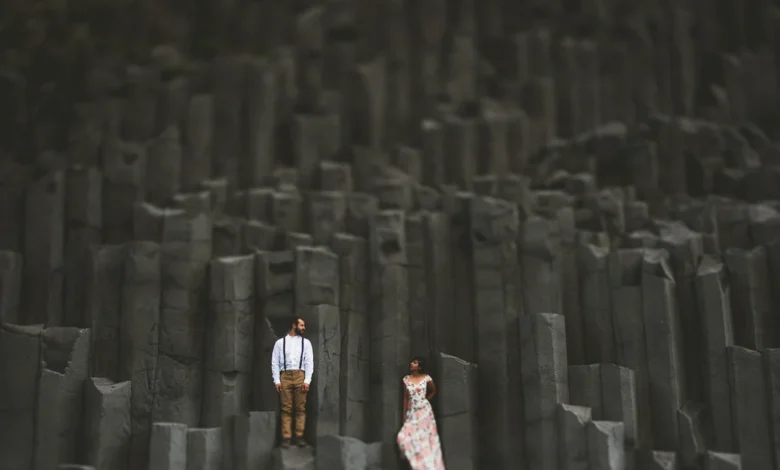
When used for portraiture, the tilt-shift lens provides a way to isolate subjects in a manner that feels more organic than digital post-processing blur. While mobile applications and basic editing software can simulate a "miniature effect" or linear blur, these digital approximations cannot replicate the true optical depth-of-field transition created by a high-quality lens. The resulting images possess a unique, dreamlike quality that emphasizes the subject while maintaining a natural transition between the in-focus and out-of-focus areas.

Data and Usage Trends
Surveys of professional wedding photographers indicate that while tilt-shift lenses remain a minority in the average gear bag, their adoption is correlated with photographers who position their brand as "creative" or "conceptual." According to industry retailers, demand for 24mm and 45mm tilt-shift optics saw a notable increase between 2015 and 2020, as photographers sought to differentiate their portfolios from those utilizing standard 35mm and 85mm prime lenses.

Despite their specialized nature, these lenses are increasingly being used for:

- Macro Detail Shots: Capturing rings, invitations, and jewelry with a unique plane of focus that highlights specific details while softening distracting backgrounds.
- Architectural Storytelling: Capturing the grand scale of ceremony venues or iconic city landmarks—such as theaters or historic estates—without perspective distortion.
- Environmental Portraits: Placing the wedding couple within a wide-angle scene while ensuring that only their faces are in sharp focus, thereby emphasizing their connection in a vast setting.
Challenges and Limitations
The integration of a tilt-shift lens into a wedding workflow is not without significant challenges. The primary obstacle is time. In a fast-paced wedding environment, the manual nature of the lens can be a detriment. Photographers must carefully calibrate the tilt angle and focus distance for every shot, a process that is significantly slower than using an automated system.

Furthermore, the "gimmick" factor remains a concern for many professionals. If overused, the selective focus effect can become a stylistic crutch rather than an enhancement. Critics of the technique often point to "blurred" portraits where essential details, such as the eyes or hands, fall outside the intended wedge of focus. Consequently, many successful photographers advocate for a "less is more" approach, limiting the use of the tilt-shift lens to specific artistic moments rather than the entire wedding day.

Broader Impact on Wedding Photography Aesthetics
The resurgence of the tilt-shift lens represents a broader trend in wedding photography: the move away from clinical, perfectly sharp images toward more atmospheric and intentional storytelling. By intentionally manipulating the optics, photographers are acknowledging that a photograph is not merely a record of an event, but an interpretation of it.

The implication for the industry is clear: equipment is increasingly being viewed as a tool for artistic expression rather than just a means of data collection. This shift has encouraged a higher degree of technical mastery among wedding professionals. Photographers who dedicate the time to master these complex tools often find that their ability to control light, focus, and perspective translates into a more refined eye, even when they return to using standard prime lenses.

Conclusion
The tilt-shift lens is undoubtedly a sophisticated tool that demands patience, practice, and a keen eye for geometry. While it is not a replacement for the workhorse lenses that define a standard wedding photography kit, it serves as a powerful instrument for those looking to push the boundaries of their creativity. As photographers continue to navigate the demands of a competitive market, the ability to produce imagery that feels distinct and intentional becomes a vital differentiator. For the photographer willing to embrace the technical rigor required, the tilt-shift lens offers a gateway to capturing the nuance and emotion of a wedding day in a way that is as unique as the couple being photographed.

The evolution of these optics—from military and industrial roots to the artistic stages of modern weddings—underscores a constant in the history of photography: technology, when placed in the hands of a creative practitioner, becomes the foundation for new visual languages. Whether used to straighten the lines of a grand cathedral or to isolate the subtle interaction of a bride and groom, the tilt-shift lens remains an enduring testament to the power of optical manipulation in the art of visual storytelling.