Samsung Galaxy Z Fold 8 vs. Galaxy S26: A Deep Dive into Samsung’s 2026 Foldable and Flagship Offerings

Samsung’s 2026 smartphone lineup has arrived, signaling a significant evolution in its foldable technology and a refinement of its flagship Galaxy S series. At the forefront of this year’s release is the entirely new Samsung Galaxy Z Fold 8, a device that, despite sharing its lineage with the previous year’s Galaxy Z Fold 7, presents a dramatically different design philosophy. This year, Samsung has opted for a more compact, stockier, and wider form factor for its latest foldable, a stark contrast to the more elongated profile of its predecessor. This fundamental shift in design immediately positions the Galaxy Z Fold 8 as a distinct proposition when compared to the conventional Galaxy S26, also launched earlier in 2026. For consumers navigating the premium smartphone market, understanding the nuanced differences between these two devices is crucial before making a substantial investment.
Display Technology: A Tale of Two Form Factors
The most immediate divergence between the Galaxy Z Fold 8 and the Galaxy S26 lies in their display configurations. The Galaxy S26 adheres to a more traditional smartphone design, featuring a single, conventional 6.3-inch Dynamic AMOLED 2X display. This screen is engineered for immediate usability and a familiar user experience. In contrast, the Galaxy Z Fold 8 embraces its dual-screen identity. It boasts a 5.5-inch cover display, offering full smartphone functionality when folded, and unfolds to reveal a significantly larger 7.6-inch internal display. This expansive internal screen transforms the device into a compact tablet, ideal for immersive content consumption and enhanced productivity.
Both devices share a common thread in their display technology, supporting an adaptive refresh rate of up to 120Hz. This ensures fluid scrolling, responsive gaming, and smooth animations across both the S26 and the Fold 8’s various screen configurations. However, the Fold 8’s transformative capability offers considerably more screen real estate when unfolded, providing a distinct advantage for multitasking and media consumption. The Galaxy S26, on the other hand, remains the more straightforward and perhaps pragmatic choice for individuals who prioritize a compact, easy-to-handle flagship experience without the complexities of a foldable mechanism. The decision between them hinges on whether the user values the versatility of a foldable or the simplicity of a traditional slab.
Design and Durability: Balancing Innovation with Robustness
The physical dimensions and weight of the Galaxy Z Fold 8 and Galaxy S26 further underscore their differing design intents. The Galaxy S26 exemplifies Samsung’s commitment to sleekness and portability, measuring a mere 7.2mm in thickness and weighing a light 167 grams. This makes it an exceptionally comfortable device to hold and operate with one hand. The Galaxy Z Fold 8, by its very nature, presents a more complex engineering challenge. When unfolded, it achieves an impressive thinness of just 4.5mm, a testament to advancements in hinge technology. However, when folded, it inevitably becomes thicker to accommodate the dual-screen setup, reaching a weight of 201 grams. This added bulk is a trade-off for the expansive screen real estate it offers.
Samsung has evidently placed a significant emphasis on addressing the historical durability concerns associated with foldable smartphones. For the Galaxy Z Fold 8, this has translated into a meticulously redesigned hinge mechanism, engineered for enhanced longevity and smoother operation. Furthermore, the foldable display is reinforced with two layers of titanium positioned underneath, providing structural integrity. The front of the device is protected by the latest Gorilla Glass Ceramic 3, promising improved scratch and drop resistance. The Fold 8 also carries an IP48 rating, indicating protection against dust ingress and water submersion up to a certain depth and duration.
Despite these advancements, the Galaxy S26 holds an advantage in terms of elemental protection. Its more robust IP68 rating signifies superior resistance to dust and water ingress, offering a higher degree of confidence for users who might expose their devices to more challenging environmental conditions. This distinction highlights a perennial challenge for foldables: achieving the same level of ruggedness as their conventional counterparts while incorporating complex moving parts and flexible displays.
Performance and Internals: Unifying Power Across Form Factors
Beneath their distinct exteriors, the Galaxy Z Fold 8 and Galaxy S26 share a common foundation in terms of raw processing power, at least for the U.S. market. Both devices are equipped with Qualcomm’s cutting-edge Snapdragon 8 Elite Gen 5 chip. This processor represents the pinnacle of mobile performance for 2026, delivering exceptional speed, efficiency, and advanced AI capabilities. This ensures that both the foldable and the flagship offer a top-tier user experience, capable of handling demanding applications, complex multitasking, and high-fidelity gaming with ease.
Storage and RAM configurations further differentiate the devices, catering to different user needs and budgets. The Galaxy S26 is available in two storage options: 256GB and 512GB. Both variants are paired with a substantial 12GB of RAM, providing ample memory for smooth operation. The Galaxy Z Fold 8, reflecting its premium positioning and versatility, offers a broader spectrum of storage choices, including 256GB, 512GB, and an expansive 1TB option. The 1TB variant is further distinguished by its allocation of 16GB of RAM, ensuring that even the most demanding users can operate multiple heavy applications simultaneously without performance degradation. The 256GB and 512GB Fold 8 models come with 12GB of RAM, mirroring the S26’s configuration. This tiered approach to RAM and storage allows consumers to select a device that precisely matches their usage patterns and storage requirements.
Camera Systems: Versatility Versus Specialization
The camera capabilities of the Galaxy Z Fold 8 and Galaxy S26 reveal a strategic divergence in Samsung’s approach to mobile photography. The Galaxy S26 features a traditional, yet highly capable, triple-camera setup. This array comprises a 50MP main sensor, a 12MP ultrawide lens for capturing expansive scenes, and a 10MP telephoto lens offering 3x optical zoom. This configuration provides a well-rounded photographic experience, adept at capturing a wide range of subjects and scenarios with impressive detail and clarity. The inclusion of optical zoom is particularly beneficial for maintaining image quality when capturing distant subjects.
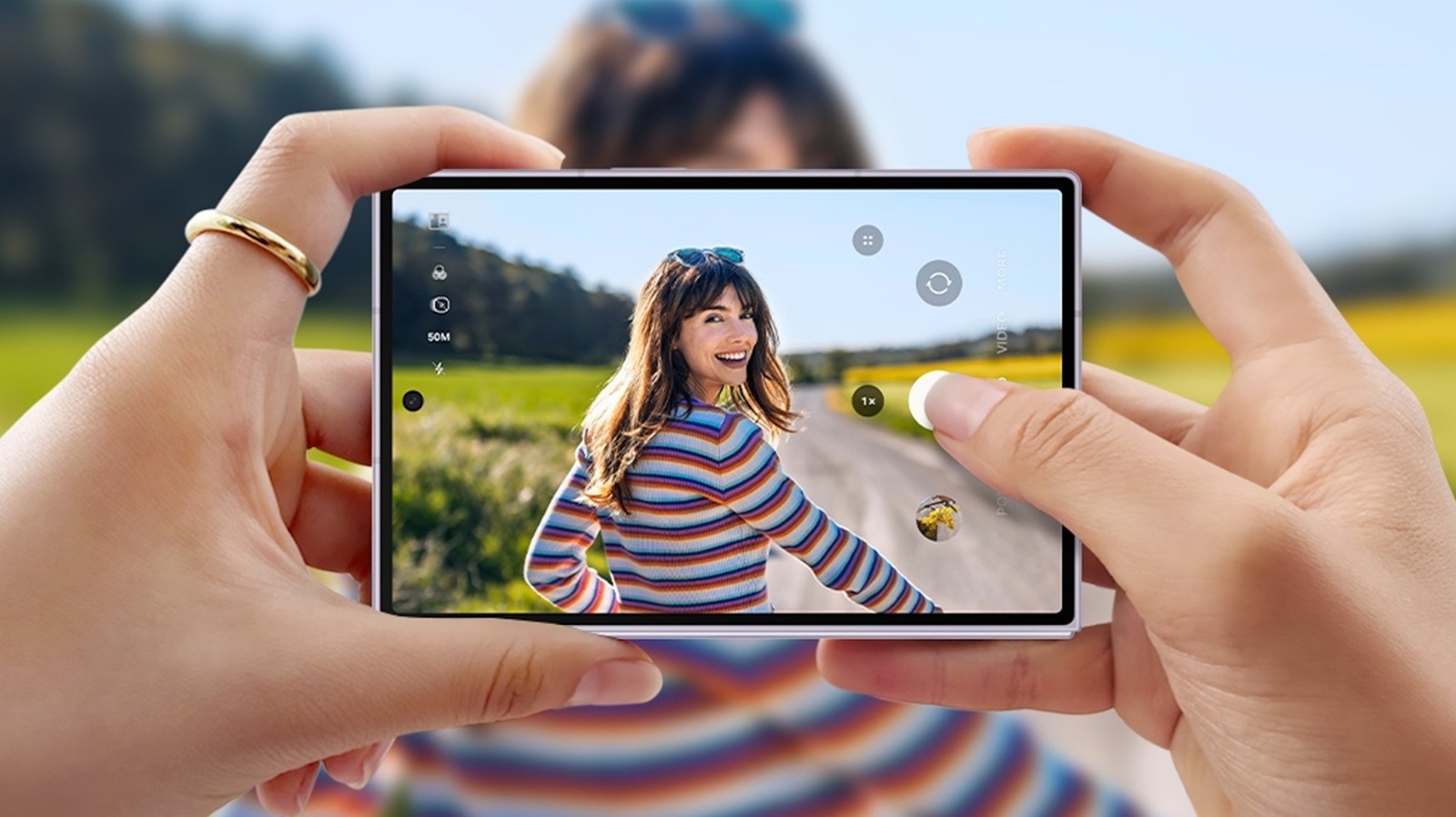
The Galaxy Z Fold 8, while also boasting impressive camera hardware, opts for a slightly different arrangement. It features dual 50MP cameras, one wide and one ultrawide, delivering excellent performance for everyday shots and broad vistas. However, it notably lacks a dedicated telephoto camera. Samsung advertises up to 10x digital zoom on the Fold 8. In comparison, the S26’s telephoto lens allows for 3x optical zoom and extends to up to 30x digital zoom. This disparity means that for users whose photography predominantly involves capturing distant subjects with high fidelity, the Galaxy S26 emerges as the more versatile and capable option. The Fold 8’s camera system is optimized for its form factor and general-purpose photography, while the S26 is geared towards a more comprehensive zoom experience.
Battery Life and Charging: Powering the Future
Battery capacity is another area where the two devices present an interesting comparison. The Samsung Galaxy Z Fold 8 is equipped with a substantial 4,800mAh battery, which is marginally larger than the 4,300mAh unit found in the Galaxy S26. However, a crucial caveat exists: the Fold 8’s battery must power two displays, including a significantly larger internal panel. This means that the actual real-world battery life may be more comparable than the raw mAh figures suggest.
Samsung rates the Fold 8 for up to 26 hours of video playback, a testament to its power management capabilities. The Galaxy S26, with its smaller and more conventional display, benefits from inherent efficiency advantages, though its exact battery longevity will vary based on usage patterns. Both devices are expected to support fast wired and wireless charging, aligning with industry standards for premium smartphones, although specific charging speeds have not been detailed in the initial launch information. The ability of the Fold 8 to manage power across its dual displays while offering a competitive battery life is a significant engineering achievement.
Pricing and Value Proposition: The $1,000 Question
The pricing of the Galaxy Z Fold 8 and Galaxy S26 immediately highlights their distinct market positions and target audiences. The feature-rich Galaxy S26 launched in the U.S. with a starting price of $899.99 for the 256GB model, a competitive figure for a flagship device in 2026. Retailers are expected to offer further discounts, making it an even more attractive proposition.
In stark contrast, the base 256GB variant of the Galaxy Z Fold 8 commands a significantly higher price tag, starting at a formidable $1,899.99. This represents a $1,000 premium over the S26 for the same storage capacity, even before considering any potential discounts, trade-in offers, or carrier subsidies. The price escalates further with higher storage tiers: the 512GB model is priced at $2,099.99, and the top-tier 1TB version reaches a staggering $2,499.99.
From a pure price-to-performance ratio perspective, the Samsung Galaxy S26 emerges as the clear victor. It offers the same flagship Snapdragon 8 Elite Gen 5 processor, 12GB of RAM, and a more versatile camera system, all while being lighter and more durable with its IP68 rating, and costing less than half the price. This makes it the sensible choice for the vast majority of consumers seeking a high-end smartphone experience without compromise on essential features.
However, the existence of the Galaxy Z Fold 8 is not without its justification. Its innovative foldable form factor is undeniably attention-grabbing and offers a unique user experience. The larger internal display is a significant advantage for multitasking, working with documents, browsing complex websites, watching videos, and running multiple applications side-by-side. Samsung has specifically optimized the Fold 8’s expansive screen for enhanced productivity, integrating features like Samsung DeX. Notably, S-Pen support, a feature eagerly anticipated by some users, remains absent from the Fold 8’s current specifications, a point of consideration for digital artists and note-takers.
Conclusion: A Choice Between Sensibility and Innovation
Ultimately, the decision between the Galaxy S26 and the Galaxy Z Fold 8 boils down to individual priorities and willingness to embrace cutting-edge, albeit more expensive, technology. For the pragmatic consumer, the Galaxy S26 represents the more sensible and financially astute choice. It delivers exceptional performance, a robust feature set, and a reliable user experience at a significantly more accessible price point.
The Galaxy Z Fold 8, conversely, is for those who seek a device that transcends the traditional smartphone. It offers the compelling proposition of a two-in-one device, capable of replacing both a conventional smartphone and, to a considerable extent, a small tablet. The transformative experience of unfolding a larger screen for enhanced productivity and immersive entertainment is its primary draw. The critical question for potential buyers is whether this innovative functionality, and the undeniable "cool factor" it brings, is worth the substantial $1,000 premium over a highly capable conventional flagship. Samsung’s 2026 offerings provide a clear illustration of the company’s dual strategy: to refine its established flagship line while continuing to push the boundaries of foldable technology, catering to diverse market segments with distinct needs and desires.