Armando Cabral and USM Unveil NKYINKYIM A CASA a Fusion of West African Heritage and Swiss Rationalist Design

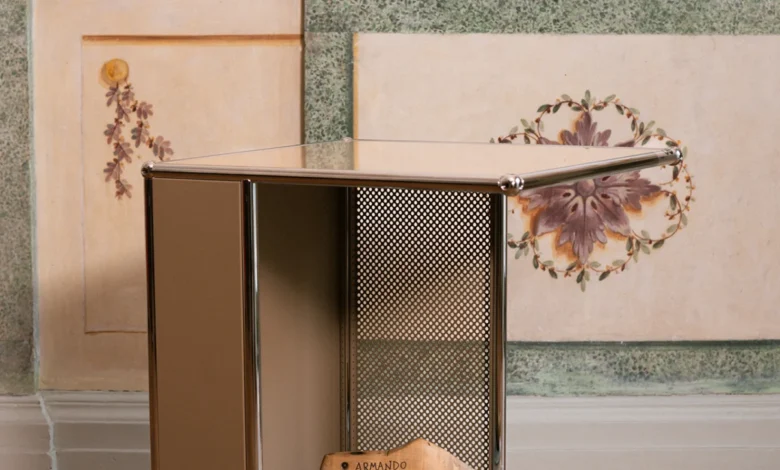
The intersection of industrial precision and artisanal heritage has found a new expression in the collaboration between lifestyle entrepreneur Armando Cabral and the Swiss modular furniture pioneer USM. The recently expanded NKYINKYIM A CASA collection represents a significant evolution in the USM Haller System, integrating the centuries-old weaving traditions of Portugal’s Alentejo region with the hyper-rationalist architecture of Swiss design. Comprising eight distinct pieces—including a daybed, the Bassarel love chair, the Uno bookcase, a side table, and a valet wardrobe—the collection serves as a physical manifestation of cross-cultural exchange and personal narrative.
For Cabral, a former top-ranked fashion model who transitioned into a successful entrepreneur, this partnership is more than a commercial venture; it is a reflection of a life lived across borders. The collection’s title, NKYINKYIM A CASA, blends two distinct linguistic and cultural worlds. "Nkyinkyim" is derived from the Adinkra visual language of the Akan people in Ghana and Côte d’Ivoire, symbolizing the "intertwining paths" of progress and the resilience required to overcome life’s challenges. "A Casa" is the Portuguese phrase for "at home," anchoring the collection in the domestic sphere and Cabral’s own upbringing in Portugal.
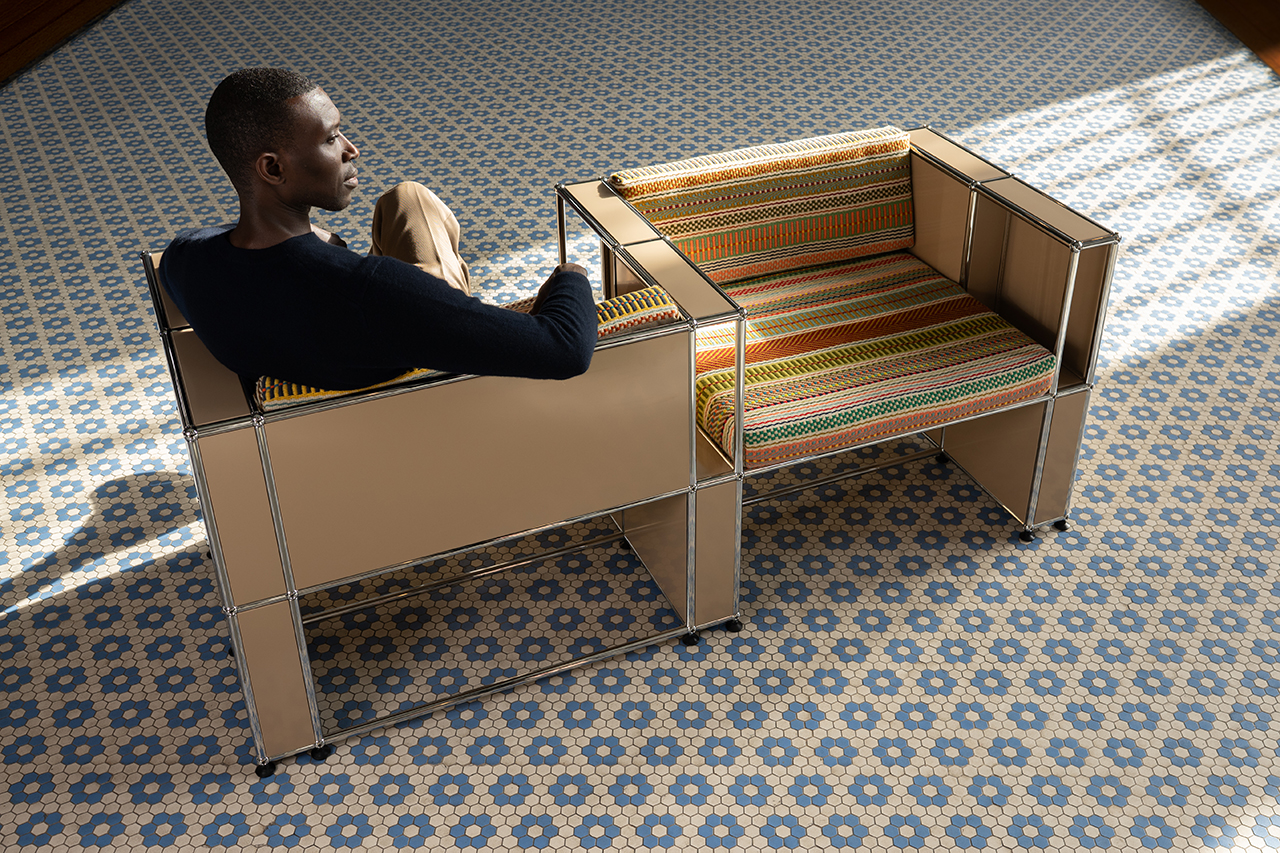
The Architect of the Collection: Armando Cabral’s Multinational Journey
To understand the aesthetic depth of the NKYINKYIM A CASA collection, one must examine the trajectory of its creator. Born in Guinea-Bissau, Armando Cabral’s family moved to Portugal during his childhood, a transition that exposed him to the rich textile and craft traditions of the Iberian Peninsula. He later pursued education in London, a global hub for avant-garde fashion and design, before establishing his professional base in New York City.
This peripatetic lifestyle has informed Cabral’s approach to design, which he describes as inherently interconnected. Having launched his eponymous footwear and lifestyle brand in 2009, Cabral has consistently sought to bridge the gap between African heritage and European craftsmanship. The collaboration with USM allows him to scale these concepts into the realm of interior architecture. By utilizing the USM Haller System—a framework defined by its modularity and industrial neutrality—Cabral has found a canvas that can support the weight of diverse cultural symbols without losing its structural integrity.
The Engineering of Elegance: The USM Haller System
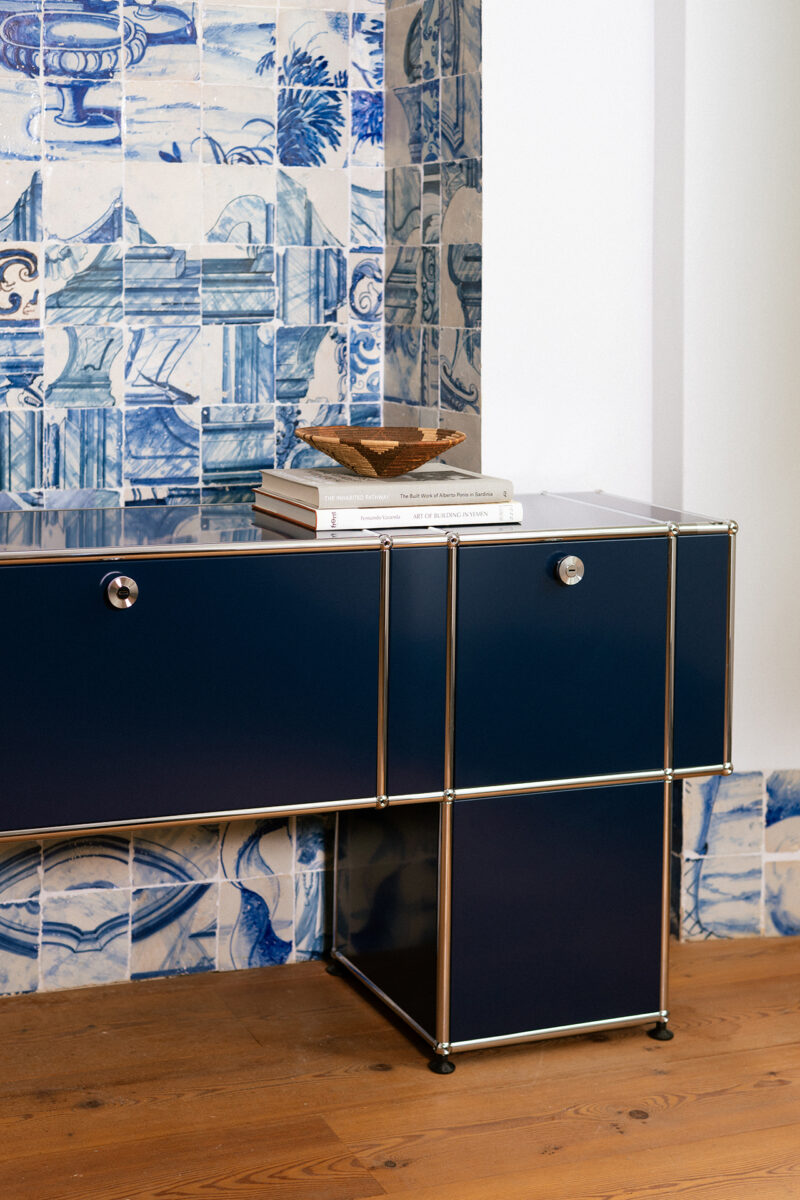
The foundation of the collection is the iconic USM Haller System, a design staple that has remained virtually unchanged since its inception in the early 1960s. Originally designed by architect Fritz Haller and USM’s Paul Schärer in 1963, the system was initially intended for the company’s own office building in Münsingen, Switzerland. It was based on a simple but revolutionary concept: a chrome-plated brass ball-and-tube connector that allows for infinite configurations.
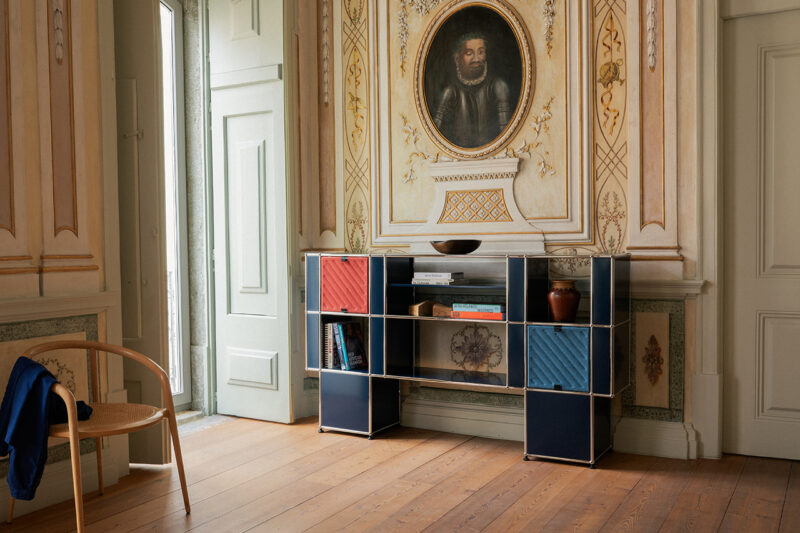
The Haller System is often cited as the pinnacle of Swiss rationalism—a philosophy that prioritizes function, efficiency, and neutrality. In 2001, the system was added to the permanent collection of the Museum of Modern Art (MoMA) in New York, cementing its status as a landmark of 20th-century design. While the system is traditionally associated with sterile, high-efficiency office environments, the NKYINKYIM A CASA collection reimagines it as a warm, expressive medium for the home.
Cabral’s intervention involves the introduction of multi-directional striped fabrics and asymmetrical compositions. By wrapping the modular steel frames in elaborate textiles inspired by the Alentejo region, the coldness of the industrial steel is softened. The modular nature of the design, according to Cabral, symbolizes the way individual components of one’s identity form a cohesive, functional whole.
Cultural Symbiosis: Alentejo Weaving and Adinkra Symbolism
The most striking feature of the collection is the use of textiles that pay homage to the Alentejo region of Portugal. Known for its rolling plains and cork forests, Alentejo has a weaving history that dates back centuries, characterized by heavy wool rugs and intricate geometric patterns. Cabral has reinterpreted these traditions by applying multi-directional stripes to the cushions and upholstery of the USM frames. These fabrics do not merely serve as decoration; they are structural elements that redefine the silhouette of the furniture.
The "Nkyinkyim" symbol provides the philosophical backbone for the collection’s geometry. In Adinkra culture, the twisted, zigzagging shape of the Nkyinkyim represents the proverb, "Life is a twisted journey." This is mirrored in the Uno Bookcase, which departs from the standard rectangular grid of typical USM units. Instead, it utilizes a steel tube-and-connector-ball structure to create an unexpected, geometric form accented by colored insert panels. The result is a piece of furniture that functions as a sculptural representation of life’s non-linear paths.
Product Highlights: The Bassarel Love Chair and Uno Bookcase
The expanded collection features several standout pieces that challenge traditional furniture typologies. The Bassarel Love Chair is perhaps the most provocative. It reprises the "tête-à-tête" or "S-chair" typology, where two seats are joined but face in opposite directions. This historical design was popularized in the 19th century to facilitate intimate conversation while maintaining a degree of social decorum. In Cabral’s hands, the Bassarel Love Chair becomes a modern site for "gossipy exchanges," blending 19th-century social engineering with 21st-century modular aesthetics.
The Uno Bookcase further pushes the boundaries of the Haller System. By experimenting with color palettes and asymmetrical panel placements, Cabral demonstrates that the "form-follows-function" mantra of the original Swiss design does not have to result in uniformity. The bookcase serves as a provocation, urging the viewer to reconsider the potential of modular systems to reflect personal and collective history.
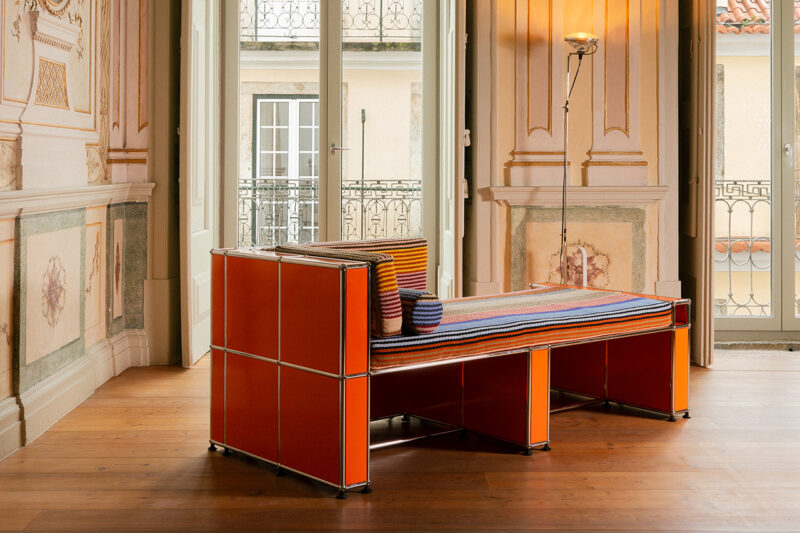
Other pieces, such as the daybed and the valet wardrobe, focus on the concept of "A Casa." These items are designed for the private moments of life—rest, preparation, and reflection. The valet wardrobe, in particular, speaks to Cabral’s background in fashion, offering a structured space for the curation of one’s daily identity.
Technical Analysis and Industry Implications
From a technical standpoint, the NKYINKYIM A CASA collection is a feat of integration. USM’s manufacturing process involves high-precision steel tubing and powder-coated panels, which are typically produced in a range of 14 signature colors. Cabral’s use of custom textiles required a delicate balancing act to ensure that the fabric’s weight and tension did not interfere with the precision-engineered tolerances of the Haller connectors.
The collection arrives at a time when the furniture industry is increasingly moving toward "narrative design." Consumers are no longer satisfied with purely functional objects; there is a growing demand for pieces that tell a story of origin, craftsmanship, and sustainability. By combining the longevity of USM’s steel structures—which are designed to last for generations—with the "slow craft" of Portuguese weaving, Cabral is tapping into a market that values both durability and soul.
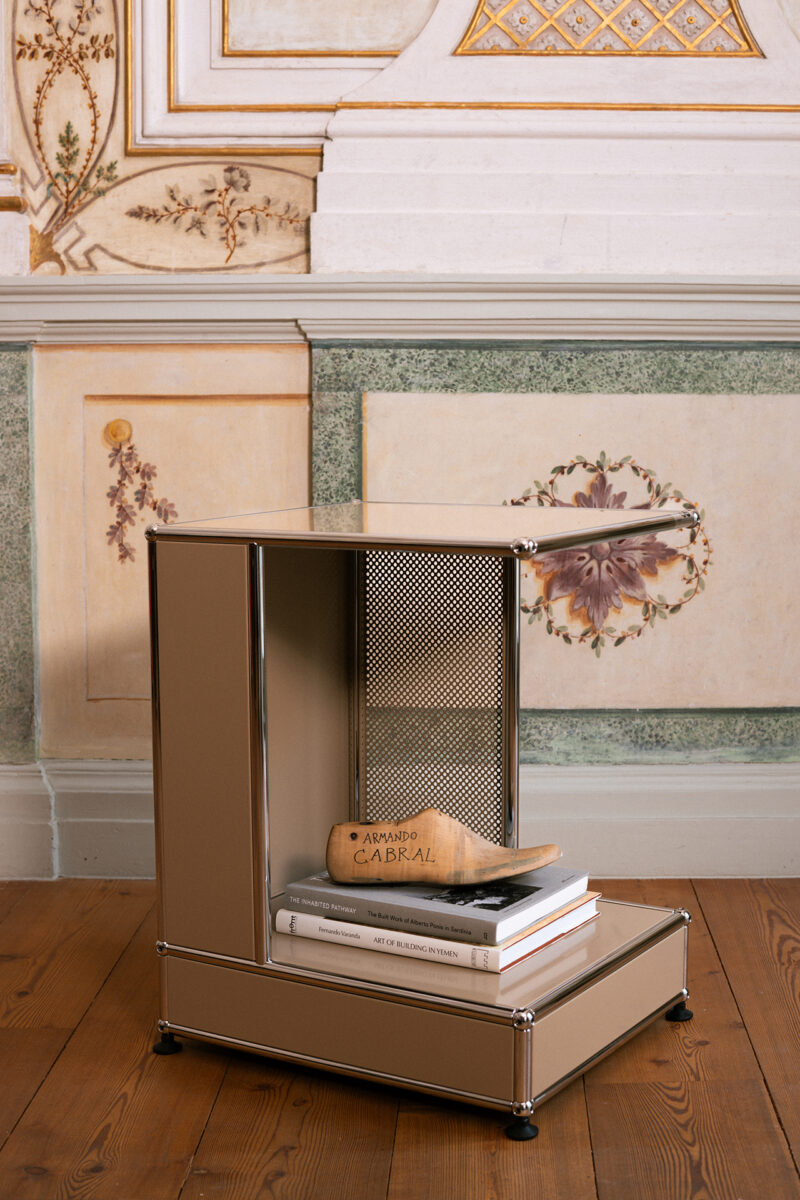
Furthermore, this collaboration signals a shift in how legacy brands like USM approach their heritage. In recent years, USM has engaged in various collaborations to stay relevant in a changing design landscape. However, the partnership with Armando Cabral is unique in its depth of cultural inquiry. It moves beyond a simple color update or a limited-edition finish, instead fundamentally altering the way the Haller System interacts with space and culture.
Official Responses and Market Impact
While official sales figures for the expanded collection are rarely disclosed for such high-end collaborations, design critics have lauded the project for its "sophisticated playfulness." Industry analysts suggest that this move helps USM expand its reach into the residential luxury market, particularly among younger, design-conscious consumers who value the brand’s sustainability credentials but seek a more personalized aesthetic.
Statements from USM representatives emphasize that the modularity of their system is its greatest strength, allowing it to evolve alongside the changing needs and identities of its users. Cabral’s collection is seen as the ultimate proof of this flexibility. By integrating African and European influences, the brand reinforces its image as a global design leader capable of facilitating "cross-cultural exchange."

Conclusion: Furniture as a Cultural Vessel
The NKYINKYIM A CASA collection is a testament to the power of design to serve as a medium for personal and shared cultural expression. Through the lens of Armando Cabral’s multinational upbringing, the rigid, rationalist structures of USM have been transformed into vessels of history and identity.
As the design world continues to grapple with questions of diversity and representation, projects like this offer a roadmap for how global brands can authentically engage with different cultures. By honoring the specificities of Alentejo weaving and Adinkra symbolism within a Swiss framework, Cabral has created a collection that is both universal in its appeal and deeply personal in its execution. The "twisted journey" of the Nkyinkyim has led to a destination that feels, quite literally, like home.