Telepathic Instruments Orchid ORC-1 Review A Deep Dive into Kevin Parkers Chord Generation Hardware and its Utility for Electronic Music Production

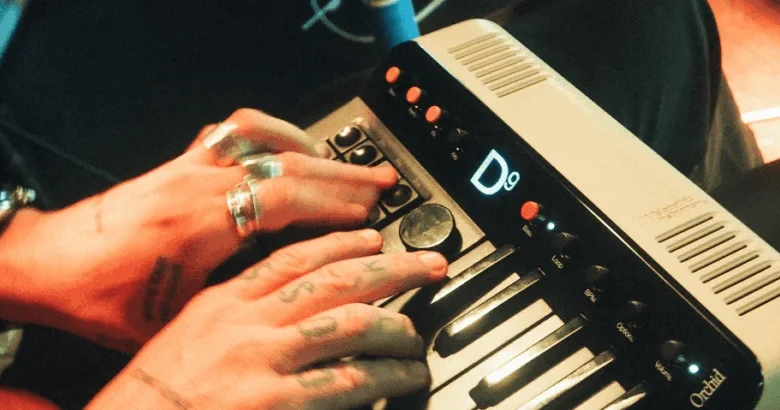
Telepathic Instruments has officially entered the hardware market with the release of the Orchid ORC-1, a specialized chord generator and synthesizer born from the creative requirements of Tame Impala’s Kevin Parker. While initially conceived as a private songwriting tool to assist Parker in navigating complex harmonic arrangements, the device has transitioned into a commercial product aimed at a broader demographic of musicians. The central question surrounding its release is whether a tool designed for an indie-psych polymath can effectively serve the needs of the electronic and dance music production community. By blending a simplified user interface with a sophisticated internal sound engine, Telepathic Instruments seeks to bridge the gap between intuitive musical exploration and professional-grade studio integration.

The Genesis of Telepathic Instruments and the Orchid ORC-1
The development of the Orchid ORC-1 represents a unique collaboration between high-profile artistry and technical engineering. Kevin Parker, widely recognized for his meticulous approach to melody and harmony in the Tame Impala project, sought a hardware solution that could streamline the chord-writing process without the friction often associated with traditional music theory or complex DAW-based MIDI editing. To bring this vision to fruition, Parker collaborated with technical director Tom Cosm, a well-known figure in the electronic music education and Ableton Live community.
The timeline of the Orchid’s development suggests a move away from the "black box" nature of many modern synthesizers toward an "ideas machine" philosophy. According to Telepathic Instruments, the goal was to create a device that feels like an extension of the songwriter’s intent. The transition from a personal prototype to a mass-produced instrument involved refining the user interface to ensure that even those with minimal formal training in music theory could generate harmonically rich progressions. This development path mirrors a growing trend in the music technology industry where established artists collaborate with boutique manufacturers to release "signature" workflow tools rather than just standard synthesizers.

Hardware Design and User Interface
The physical design of the Orchid ORC-1 draws heavy inspiration from 1970s aesthetic sensibilities, featuring a minimalist layout and a distinctive color palette. The interface is divided into two primary sections: a single-octave keyboard of black keys on the right and a dedicated bank of eight chord buttons on the left. This layout is intentionally restrictive, forcing the user to focus on harmonic relationships rather than virtuosic keyboard performance.
The chord buttons provide instant access to various tonalities, including major, minor, suspended, diminished, sixths, minor sevenths, major sevenths, and ninths. By holding a chord button and pressing a key on the keyboard, the Orchid generates a full chord based on that root note. A central "Voicing" dial allows users to cycle through different inversions and note distributions, providing a tactile way to experiment with how a chord sits in a mix.

To further assist the creative process, the Orchid includes an OLED display that provides visual feedback on the current chord name and active parameters. The inclusion of a built-in eight-hour battery and high-quality onboard speakers emphasizes its role as a portable "sketchpad," allowing producers to work away from the studio environment—a feature increasingly requested by modern creators who suffer from "screen fatigue."
Internal Synthesis and Sound Architecture
While the Orchid is marketed heavily on its chord-generation capabilities, its internal sound engine is a significant component of its value proposition. The device utilizes two identical digital engines—one for the main chord section and one for the dedicated bass engine. These engines offer three distinct synthesis types:

- Virtual Analog: Designed to provide the warmth and harmonic saturation associated with classic hardware synths.
- Physically Modeled Electric Piano: Optimized for the "indie" and "psych-rock" tones frequently found in Parker’s work.
- Frequency Modulation (FM): Capable of producing the sharp, crystalline textures required for modern electronic music.
The presets were curated and programmed by Kevin Parker himself, ensuring that the out-of-the-box sounds possess a professional, "record-ready" quality. However, the hardware offers limited on-unit editing, primarily restricted to filter adjustments and basic effects. This "curated" approach ensures that the user spends more time writing and less time sound-designing, though it may frustrate those who prefer deep synthesis control.
Software Integration: The Pistil Ecosystem
To complement the hardware, Telepathic Instruments released Pistil, a standalone application and plugin that serves as a bridge between the Orchid and a Digital Audio Workstation (DAW). Pistil serves several critical functions: it acts as a patch librarian, allowing users to save and organize their sounds, and it provides a full interface for deep-editing the synthesis parameters that are inaccessible on the hardware itself.

One point of contention within the production community is the pricing structure of this ecosystem. Despite the Orchid being a premium-priced hardware unit, the Pistil software is sold separately for £99. This decision has drawn mixed reactions from potential buyers who expect integrated software to be included with hardware purchases. Nevertheless, for professional producers, the ability to use the Orchid’s internal sounds as a plugin within a DAW like Ableton Live or Logic Pro is a significant workflow advantage.
Application in Dance and Electronic Music Production
The utility of the Orchid ORC-1 in dance music depends largely on the sub-genre in question. For producers working in melodic house, UK Garage (UKG), or synth-pop, the device is a powerful asset. Its ability to quickly cycle through sophisticated seventh and ninth chords—staples of soulful house and garage—allows for a faster creative flow than clicking notes into a MIDI roll.

The inclusion of "Perform" modes—such as synchronized arpeggios and strums—adds a rhythmic element that aligns well with electronic production. These patterns can be tempo-synced to an external clock, ensuring they sit perfectly within a project’s grid. Furthermore, the device includes a selection of pre-programmed beats ranging from techno to trap, serving as a metronome or a rhythmic foundation for initial ideas.
However, for genres that rely less on harmonic complexity and more on textural evolution, such as industrial techno or experimental ambient, the Orchid may feel overly "musical." As Tom Cosm noted in recent discussions, the device excels in genres that are "melodic in nature." It provides a structured environment that prevents "wrong" notes through its scale-locking features, which is invaluable for producers who may lack formal keyboard skills but want to move beyond simple triads.

Connectivity and Professional Workflow
In a studio environment, the Orchid functions as a sophisticated MIDI controller. It is capable of outputting MIDI over three separate channels:
- Channel 1: Performance data (arpeggios and strums).
- Channel 2: Dedicated bass notes.
- Channel 3: Raw chord data.
This multi-channel output allows a producer to control three different software instruments simultaneously from a single performance on the Orchid. By arming three tracks in a DAW, a user can capture a complete arrangement—bass, chords, and a lead/arpeggio—in a single pass.

Despite these strengths, the hardware has some technical limitations. Current firmware does not allow for simultaneous charging and MIDI-over-USB-C, meaning users must choose between powering the unit and using it as a modern controller, or rely on the traditional five-pin MIDI port for connectivity. Telepathic Instruments has indicated that firmware updates are a priority, with the community requesting features such as MIDI loop capture (to complement the existing audio looper) and a wider variety of musical scales.
Market Positioning and Comparative Analysis
The Orchid enters a market increasingly populated by "smart" music tools. It competes indirectly with software solutions like Captain Chords or Scaler 2, and directly with hardware like AlphaTheta’s Chordcat. Where the Orchid differentiates itself is in its "boutique" appeal and the specific artistic DNA of Kevin Parker. Unlike the Chordcat, which offers more "hand-holding" features like the Chord Cruiser mode (which suggests subsequent chords in a progression), the Orchid remains a more manual, discovery-based tool. It does not tell the user which chord to play next; rather, it makes every chord they choose sound professional.

This distinction is important. The Orchid is not a music theory tutor; it is a creative facilitator. The inclusion of a physical notebook in the box is a testament to this philosophy—it encourages the user to engage with the music, write down their discoveries, and develop a personal relationship with the harmonies they create.
Broader Impact on Music Production
The release of the Orchid ORC-1 highlights a broader shift in the music industry toward the democratization of music theory through technology. By lowering the barrier to entry for complex harmony, Telepathic Instruments is enabling a new generation of producers to explore musical territories that were previously the domain of trained pianists.

From a journalistic perspective, the Orchid represents the successful "productization" of a specific artist’s workflow. It proves that there is a significant market for hardware that prioritizes "vibe" and "inspiration" over raw technical specifications. While the price point and the separate cost of the Pistil software may be prohibitive for some, the Orchid’s build quality, internal sound engine, and intuitive interface position it as a serious tool for the modern songwriter.
In conclusion, the Orchid ORC-1 is more than a celebrity-endorsed gadget; it is a well-engineered instrument that addresses a specific pain point in the creative process. For the electronic music producer, it offers a tactile, fun, and highly musical way to break out of creative ruts and inject a higher level of harmonic sophistication into their tracks. As Telepathic Instruments continues to refine the platform through firmware updates, the Orchid is likely to become a staple in the studios of melodic-focused producers worldwide.
Related posts: