Andy Burnham Becomes Prime Minister as UK Music Industry Sets Out Five Key Tests for New Administration

The political landscape of the United Kingdom has undergone a seismic shift today as Andy Burnham officially assumes the office of Prime Minister, succeeding Keir Starmer in a transition that has captured the attention of both Westminster and the nation’s cultural sectors. Burnham, the former Mayor of Greater Manchester and a veteran of the Cabinet, arrives at 10 Downing Street with a reputation deeply intertwined with the UK’s creative identity. Known as an ardent enthusiast of the "Madchester" scene and a vocal supporter of guitar music—with well-documented affinities for The Smiths, Radiohead, and The Strokes—the new Prime Minister faces immediate pressure to translate his personal passion for the arts into robust, protective legislation. As he takes the reins of government, the music industry, led by the trade body UK Music, has wasted no time in presenting a definitive roadmap for the new administration, outlining five critical "tests" that will determine whether this premiership marks a turning point for the UK’s £6.7 billion music economy.
The appointment of Burnham comes at a precarious moment for the British music scene. While the industry remains a global powerhouse, it is currently grappling with the dual threats of unregulated generative artificial intelligence and the lingering logistical hurdles of post-Brexit international touring. Tom Kiehl, the Chief Executive of UK Music, issued a comprehensive statement welcoming the new Prime Minister while simultaneously demanding immediate action on long-standing grievances. Kiehl’s "five tests" serve as a challenge to Burnham to prove that his administration will be more than just "music-friendly" in sentiment, but also "music-first" in policy.
The Five Strategic Tests for the Burnham Ministry
The first of the tests presented to the new Prime Minister involves a direct confrontation with the secondary ticketing market. UK Music is calling on the government to deliver on previous manifesto pledges to "root out ticket touts." For years, fans and artists alike have complained about the industrial-scale harvesting of tickets by resellers using automated "bots," which then list seats on secondary platforms at vastly inflated prices. This practice not only prices out genuine fans but also diverts revenue away from the artists, promoters, and venues that take the financial risks associated with live performance. The industry is looking for a Prime Minister who will finally implement strict price caps on resales and increase transparency in the primary and secondary markets.
The second test addresses the existential threat posed by Artificial Intelligence. The industry is demanding that the government rule out any new copyright exceptions in relation to AI. Currently, there is significant concern among creators that AI developers are using copyrighted music to "train" their models without permission, credit, or compensation. By insisting on a "human-first" approach to copyright, the music sector hopes Burnham will protect the intellectual property rights that underpin the entire creative economy.
The third and fourth tests focus on the institutional and regional foundations of British music. Kiehl has called for a "strong and well-funded BBC" to continue its role as a vital incubator for new talent. Through platforms like BBC Introducing and 6 Music, the public broadcaster remains a cornerstone of the UK’s cultural soft power. Simultaneously, the industry is pushing for the devolution of power to grow music in towns and cities across the UK. This is an area where Burnham has significant credibility; during his tenure as Mayor of Greater Manchester, he frequently argued that political and economic power must be dispersed from London to the regions. The industry now expects him to apply this "Northern Powerhouse" logic to cultural funding, ensuring that grassroots venues in the North, the Midlands, Scotland, and Wales receive the same level of investment as those in the capital.
The final, and perhaps most diplomatically challenging test, involves the removal of "costly and prohibitive barriers" to touring the European Union. Since the UK’s exit from the EU, musicians have been plagued by expensive visas, complex "carnets" for equipment, and restrictive "cabotage" rules for touring vehicles. For emerging artists, the cost of a European tour has become prohibitive, threatening the "pipeline" of talent that eventually reaches headline status. Resolving this issue will require Burnham to engage in delicate negotiations with European partners, a move that would signal a shift toward a more collaborative relationship with the EU.
A Career Defined by Culture and the North
To understand the industry’s high expectations, one must look at Andy Burnham’s political trajectory. Before his high-profile stint as the Mayor of Greater Manchester, Burnham served as the Secretary of State for Culture, Media, and Sport from 2008 to 2009. During that period, he was credited with a deep understanding of the "creative industries" as a primary engine of UK economic growth. His return to Westminster as Prime Minister is seen by many as a homecoming for a politician who has always placed culture at the center of his "place-based" politics.
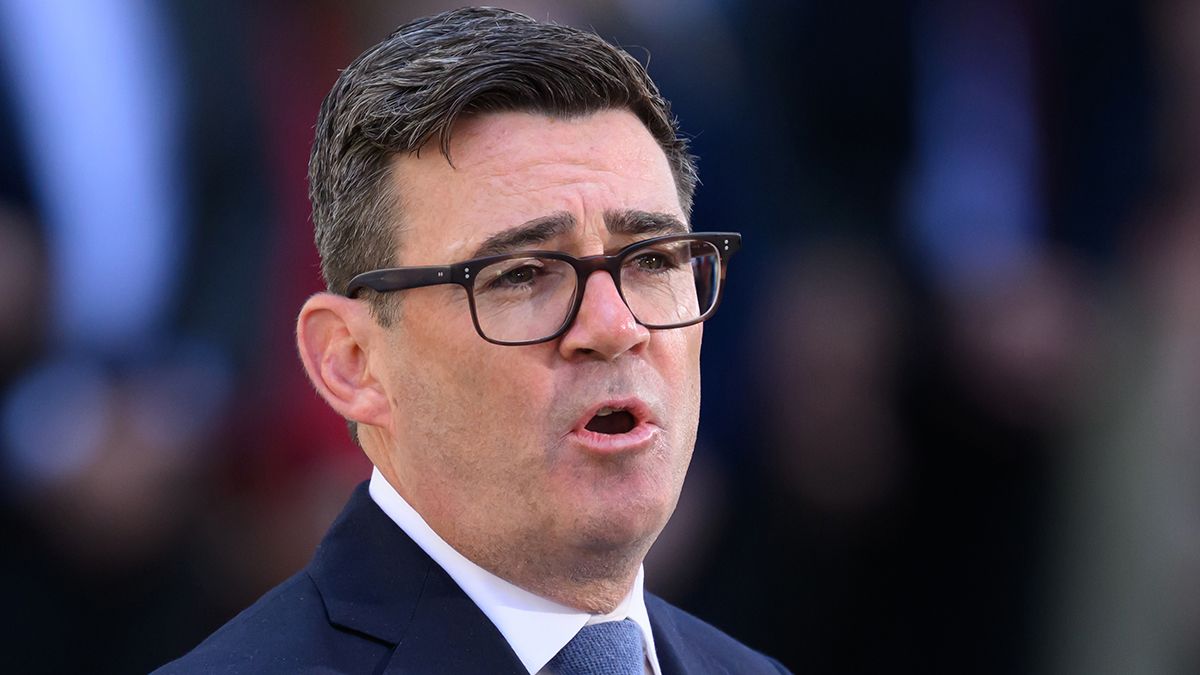
His personal brand is uniquely tied to the musical heritage of the North West. Burnham’s public image has often featured him at festivals like Glastonbury or local Manchester venues, discussing his "Baker’s Dozen" of favorite records. In interviews, he has frequently cited The Smiths’ "The Queen Is Dead" and Radiohead’s "The Bends" as formative influences. This "genuine" enthusiasm, as described by industry insiders, provides him with a level of cultural capital rarely seen in the upper echelons of British politics. However, as UK Music’s Tom Kiehl noted, the challenge now is to turn that cultural capital into economic stability. "As a former Culture Secretary and big music fan, he has a deep understanding of what makes the music industry tick," Kiehl remarked. "He also knows the challenges facing a sector which is one of the Government’s best international calling cards."
The Economic Context: A £4.8 Billion Export Powerhouse
The urgency of the industry’s demands is backed by significant economic data. According to the most recent industry reports, the UK music sector generates approximately £4.8 billion in annual exports. This figure represents not just record sales and streaming royalties, but also international touring revenue and publishing rights. The music industry is one of the few sectors where the UK maintains a consistent trade surplus, acting as a vital contributor to the national GDP.
However, the "grassroots" of this economy are under threat. Data from the Music Venue Trust suggests that small, independent venues are closing at an alarming rate due to rising energy costs, business rates, and changing consumer habits. The industry argues that if the "bottom of the pyramid" collapses, the multi-billion-pound export market at the top will eventually wither. Burnham’s administration will be expected to address these structural weaknesses, possibly through business rate relief or a "grassroots levy" on stadium-level ticket sales—a proposal that has gained traction in recent months.
Recent Policy Foundations and the Path Forward
The transition to Burnham’s leadership follows a series of recent government initiatives aimed at stabilizing the sector. Only last week, the Department for Culture, Media, and Sport outlined a "National Strategy for Music," which included a £15 million cash injection for new music projects. Additionally, an extra £10 million was earmarked for a mentoring scheme designed to provide children from lower-income backgrounds with access to creative education.
Furthermore, the government recently moved to reform the licensing system for live events, increasing the number of "Temporary Event Notices" (TENs) available to venues. These reforms were designed to reduce the bureaucratic burden on small business owners looking to host live performances. Political analysts suggest that Burnham is unlikely to "row back" on these measures. Instead, given his history of interventionist policy, there is an expectation that he may expand these programs, potentially introducing more aggressive subsidies for the arts as part of a broader "levelling up" agenda.
Analysis of Broader Implications
The Burnham premiership represents a potential shift toward "cultural regionalism." By championing the devolution of music funding, the new Prime Minister could oversee a decentralization of the British music industry. For decades, the industry has been heavily concentrated in London, from major label headquarters to the most influential media outlets. If Burnham succeeds in empowering regional hubs, it could lead to a more diverse and resilient cultural landscape.
However, the geopolitical hurdles remain significant. The "test" regarding EU touring is particularly fraught with difficulty. Any move to ease movement for musicians would likely require reciprocal arrangements for EU artists entering the UK, a prospect that touches on the sensitive issue of border control. Burnham’s ability to navigate these waters will be the ultimate trial of his diplomatic skill.
As the new Prime Minister settles into Downing Street, the music industry remains cautiously optimistic. The combination of a leader who understands the sector’s intrinsic value and a trade body that is unafraid to set rigorous benchmarks creates a unique dynamic. The coming months will reveal whether Burnham’s "love of the music" translates into a golden era for British creativity or if, amidst the turbulence of modern UK politics, the industry’s hopes will once again be deferred. For now, the "five tests" remain on the Prime Minister’s desk, a silent reminder that in the world of policy, as in music, performance is everything.
Related posts: