Mastering the Digital Culinary Arts The Rise of Patrick Foley and the Evolution of Hyper Realistic 3D Food Visualization

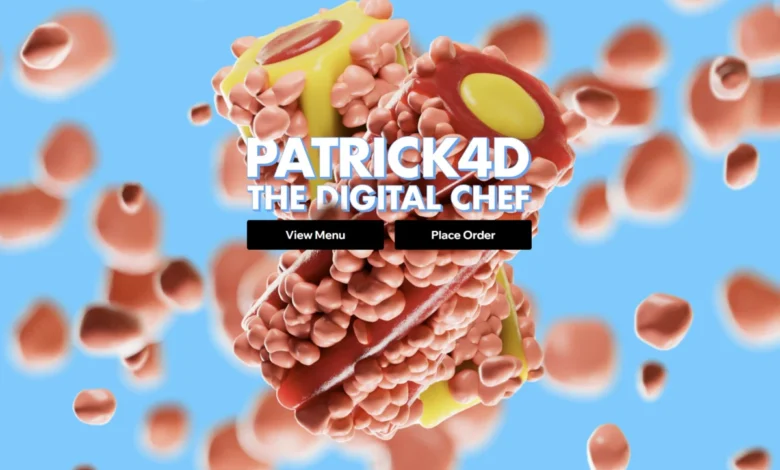
The landscape of digital art and motion graphics has undergone a seismic shift over the last decade, transitioning from abstract geometric experiments to a level of photorealism that challenges the human eye’s ability to distinguish between the virtual and the physical. At the forefront of this evolution is Patrick Foley, a digital artist better known by his professional moniker "Patrick 4D." Foley has carved out a unique and highly specialized niche within the 3D community, focusing on the hyper-realistic rendering of food—a subject matter traditionally reserved for high-end food photography and practical styling. Through a combination of cinematic training, advanced rendering technology, and a relentless commitment to "daily" artistic output, Foley has transformed the way brands and audiences perceive digital culinary assets. His work, which ranges from the glistening glaze of a donut to the intricate textures of commercial packaging for global brands like Starbucks and Pop-Tarts, represents a broader trend in the advertising industry: the migration from physical product photography to fully realized computer-generated imagery (CGI).

The Cinematic Foundations of a 3D Pioneer
Patrick Foley’s journey into the world of three-dimensional art did not begin with software manuals or coding, but rather with a camera lens and a director’s chair. He attended the Savannah College of Art and Design (SCAD) in Atlanta, an institution renowned for its rigorous programs in film and television. This educational background proved foundational to his eventual success in the 3D space. While many digital artists approach the medium from a technical or mathematical perspective, Foley’s work is deeply rooted in the principles of traditional cinematography. At SCAD, he mastered the nuances of three-point lighting, the emotional impact of camera angles, and the physics of light behavior in real-world environments.
This cinematic pedigree is evident in the "Patrick 4D" portfolio. Every render is treated as a film set, where the placement of an area light or the selection of a focal length is as critical as the digital geometry of the object itself. Foley has frequently credited his film background as the "secret sauce" that allows his renders to bypass the "uncanny valley"—the point at which a digital recreation looks almost real but feels unsettlingly artificial. By applying real-world camera logic to the virtual space of Cinema 4D, Foley achieved a level of grounded realism that immediately caught the attention of both the artistic community and commercial clients.

The Technological Catalyst Octane Render and the GPU Revolution
The transition from film to 3D was catalyzed by Foley’s discovery of Cinema 4D, a standard software in the motion graphics industry. However, the true turning point in his career came with the adoption of Octane Render, a GPU-based rendering engine developed by OTOY. Before the widespread adoption of GPU (Graphics Processing Unit) rendering, artists were largely dependent on CPU-based engines, which often required hours, if not days, to produce a single high-quality frame. This "waiting period" created a barrier to experimentation; an artist could not see the final result of a lighting change until the render was complete.
Octane Render changed this paradigm by providing a real-time "Live Viewer." This allowed Foley to see an interactive, near-final version of his work as he moved lights, adjusted textures, and changed camera settings. Foley has cited the influence of Mike Winkelmann, the artist known as Beeple, whose "Everydays" project demonstrated the speed and versatility of the Octane engine. Inspired by this workflow, Foley moved away from slow, traditional pipelines and embraced a high-velocity creative process. The speed of Octane allowed him to commit to "dailies"—creating and publishing a new piece of art every single day—which rapidly accelerated his skill acquisition and built his massive following on social media platforms like Instagram and Discord.

The Physics of Appetite Subsurface Scattering and Texture Mastery
Foley’s specialization in food is not merely an aesthetic choice but a technical challenge. Food is notoriously difficult to render because of its organic complexity. Unlike a hard-surface object like a car or a smartphone, food is often translucent, porous, and irregular. To achieve the "delicious" look that has become his trademark, Foley utilizes a sophisticated rendering technique known as Subsurface Scattering (SSS).
In the physical world, light does not just bounce off the surface of objects like chocolate, gummy bears, or bread; it penetrates the surface, bounces around inside the material, and exits at a different point. This is what gives organic materials their "glow" and soft appearance. In the Octane node-based system, Foley meticulously crafts materials that mimic these properties. By adjusting the "scatter" and "absorption" coefficients within the software, he can recreate the exact density of caramel or the slight translucency of a fruit slice. This attention to microscopic detail is what makes his digital food appear more appetizing than its real-world counterparts, which often require chemical sprays and artificial dyes to look good under hot studio lights.

From Stylized Characters to Global Commercial Success
While Foley is now synonymous with digital food, his early 3D explorations were more experimental. He initially gained traction for creating "warped" and stylized versions of popular culture characters. These early works allowed him to experiment with anatomy, cloth simulation, and surrealism. However, a pivot occurred when he began applying his high-end texturing skills to food items. He quickly realized that the market for realistic digital food was underserved. "I realized pretty fast that they were actually looking delicious and somewhat commercial already," Foley noted in a recent spotlight.
This realization led to a significant shift in his professional trajectory. Major corporations began to see the value in his work. Traditional food photography is expensive, time-consuming, and limited by the laws of physics. A real ice cream cone will melt under studio lights, and a real splash of milk is difficult to capture with perfect symmetry. In the digital realm of Patrick 4D, the ice cream never melts, and the milk splash can be sculpted frame-by-frame to achieve the perfect composition.

His recent collaborations with brands like Starbucks and Pop-Tarts represent a milestone for the 3D community. Seeing digital renders placed "front and center" on physical packaging in grocery stores across the country validates the maturity of the technology. For Foley, the transition from a digital screen to a physical product on a shelf serves as the ultimate proof of concept for his workflow.
The Culture of the "Daily" and Community Engagement
A defining characteristic of Foley’s career is his transparency and commitment to the 3D community. Through daily live streams on Discord, he demystifies the process of high-end rendering. He often completes a professional-grade render within one to two hours, proving that quality does not always require an excessive time investment if the artist has mastered their tools.

These live sessions serve as both a tutorial for aspiring artists and a feedback loop for Foley. The community can watch him sculpt textures and adjust lighting in real-time, often providing suggestions that find their way into the final piece. This "open-source" approach to creativity has fostered a loyal following and helped establish a standard for the next generation of motion designers. By sharing his custom HDRI (High Dynamic Range Imaging) setups and lighting rigs, Foley has influenced the aesthetic of countless other artists in the Octane ecosystem.
Implications for the Future of Digital Advertising
The success of artists like Patrick Foley signals a broader shift in the $600 billion global advertising industry. As rendering engines become faster and more accessible, the reliance on practical sets is diminishing. There are several key implications for this shift:

- Sustainability: Digital food renders eliminate the massive food waste often associated with commercial shoots, where hundreds of pounds of product are often discarded.
- Versatility: Once a digital model of a product is created, it can be repurposed for print, social media, and television commercials with minimal additional cost.
- Hyper-Realism as a New Standard: The ability to "perfect" the appearance of a product beyond what is possible in reality is becoming the new baseline for consumer expectations.
Patrick Foley’s evolution from a film student at SCAD to a premier 3D artist for global brands is a microcosm of the digital revolution in visual arts. By combining the soul of cinematography with the speed of modern GPU rendering, he has created a new visual language for the culinary world. As he continues to push the boundaries of what is possible within Cinema 4D and Octane, the line between the kitchen and the computer will only continue to blur, proving that in the modern age, digital food can be every bit as enticing—and perhaps even more perfect—than the real thing.