Simon Rich joins the award-winning short film Houston We Have a Crush as executive producer

The landscape of modern digital storytelling has undergone a profound shift, with prestigious publications increasingly acting as curators and distributors for high-concept independent cinema. This trend continues with the announcement that acclaimed writer and producer Simon Rich has joined the sci-fi short film Houston, We Have a Crush as an executive producer. The project, directed by Omer Ben-Shachar and co-written by New Yorker humorist Jennifer Kim, has been acquired by The New Yorker for an upcoming premiere across its digital platforms, including its high-traffic YouTube channel.
The acquisition underscores the magazine’s ongoing commitment to showcasing narrative-driven, unconventional shorts that align with its literary sensibilities. For Rich, a frequent contributor to The New Yorker and a veteran of the comedy landscape—with credits ranging from Saturday Night Live and Man Seeking Woman to Pixar’s Inside Out and the TBS series Miracle Workers—the partnership represents a strategic alignment with rising directorial talent.
A Narrative of Digital Isolation
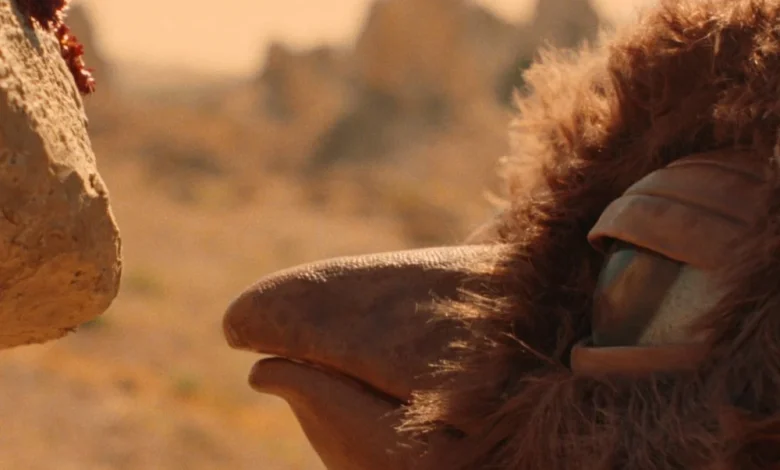
Houston, We Have a Crush serves as a metaphorical exploration of contemporary loneliness. The film centers on Ditto, an isolated alien who discovers a smartphone left behind by an astronaut during a mission. As Ditto navigates the device’s gallery, messages, and applications, he develops an all-consuming, idealized crush on the astronaut who owns the device.
The premise is designed to mirror the "digital echo chamber" effect often experienced in human relationships. According to director Omer Ben-Shachar, the story is rooted in the very human tendency to project fantasies onto digital personas—individuals we may know only through the curated lens of their online presence. "Jen and I thought it would be funny if an astronaut accidentally left his phone in space, and an alien found it and fell in love with him based on what was inside," Ben-Shachar explained. "But the idea came from something very personal. We’ve both experienced that feeling of projecting our fantasies onto someone we barely know, only to discover that the person we’ve imagined doesn’t quite exist."
By positioning an alien as the protagonist, the filmmakers provide an externalized perspective on the alienation that often accompanies modern digital interaction. The film stars Sam Humphrey as the titular alien, Ditto, and Ben Rigby as the elusive astronaut.
The Path to Recognition: A Festival Chronology
Before its transition to the digital stage of The New Yorker, Houston, We Have a Crush established a robust presence on the international film festival circuit. Over the past two years, the film has been an official selection at more than 40 prestigious festivals, marking it as a significant work in the short-form genre.
The film’s festival run began with critical acclaim, eventually securing nominations and awards that highlight its technical and narrative merits. Key milestones in the film’s distribution timeline include:
- SXSW Sydney: The film earned a nomination for Best Narrative Short, signaling its appeal to both domestic and international audiences.
- Guadalajara Film Festival: The production received the Art Directors Guild (ADG) Production Design Award, recognizing the intricate world-building required to bring Ditto’s environment to life.
- Leeds International Film Festival: The film was honored with the Jury Award for Best Fanomenon Short, highlighting its unique genre-bending appeal.
- Sulmona Film Festival: The project took home the award for Best International Short Film at the 43rd edition of the event.
Other notable stops included the Palm Springs International ShortFest, NewFest, Austin Film Festival, Urbanworld, and the Indy Shorts International Film Festival. This extensive circuit success served as the primary catalyst for the current acquisition, providing the film with the necessary credentials to reach a broader, more mainstream audience via The New Yorker’s platform.
Industry Perspectives and Creative Backing
The involvement of Simon Rich brings significant weight to the project. Rich, known for his ability to blend existential dread with sharp, observational humor, has publicly praised the film’s unique tone. In a formal statement released on Friday, Rich remarked, "I’m thrilled to present this hilarious and heartbreaking short directed by the brilliant Omer Ben-Shachar. Co-written by Ben-Shachar and Jen Kim, Houston, We Have a Crush is a brutally relatable story of loneliness and unrequited love that speaks to the freakish alien bird in all of us."
Rich’s endorsement acts as a bridge between the niche world of independent shorts and the broader cultural consciousness. His production team, which includes Hollywood Ventures Group, Claudio Olachea, and Jennifer Kim, has managed to shepherd the film from a festival darling to a platform-ready digital asset.

Director Omer Ben-Shachar has a proven track record of critical success. His previous short, Tree #3, was a recipient of a Student Academy Award and a Student Emmy nomination. Additionally, his work on Single Residence Occupancy—which secured the Atlanta Film Festival’s Jury Award for Best Narrative Short and Imagine Entertainment’s "From Minutes to Movies" competition—has solidified his reputation as a filmmaker capable of balancing emotional depth with high-concept humor. With over 100 festival screenings across his filmography, Ben-Shachar is increasingly viewed as a director to watch in the development of long-form narrative content.
Implications for Short-Form Distribution
The acquisition of Houston, We Have a Crush by The New Yorker is emblematic of a broader shift in how high-quality short films reach audiences. As streaming services and digital publications seek to differentiate their offerings, the "curated short" has become a valuable commodity.
By acquiring films that have already proven their merit on the festival circuit, platforms like The New Yorker reduce the risk associated with unproven intellectual property while simultaneously gaining access to an audience already primed by critical buzz. This model provides filmmakers with a clear pathway to visibility that does not rely solely on the traditional, and increasingly crowded, feature-film theatrical market.
Furthermore, the decision to develop Houston, We Have a Crush into a feature-length project suggests that the short-film format is being treated as a "proof of concept" or a pilot for more expansive stories. By utilizing the short film to test the resonance of the central conceit—the disconnect between digital perception and reality—the creators have established a foundation upon which a full-length feature can be built.
The Evolution of the "Alien" Metaphor
The science-fiction genre has long utilized the "outsider" archetype to critique contemporary societal norms. In the case of Houston, We Have a Crush, the alien is not merely a trope for space travel, but a vehicle to explore the specific anxieties of the 21st century.
The film’s core conflict—the struggle to reconcile a digital identity with a physical reality—is particularly relevant in an era defined by social media, remote communication, and the increasing abstraction of human connection. The "crush" experienced by Ditto is a manifestation of the "parasocial relationship," a psychological phenomenon wherein individuals develop one-sided emotional bonds with media figures or online personalities.
By framing this within a sci-fi narrative, the creators avoid the didacticism of a traditional drama. The visual language of the film, supported by the ADG-recognized production design, allows for a heightened, slightly surreal aesthetic that mirrors the distortion inherent in digital obsession.
Future Prospects and Creative Direction
With the digital release imminent, the production team is already looking toward the next phase of the project: the feature film adaptation. The transition from short to feature is a significant undertaking, requiring the expansion of the world beyond the initial premise. However, given the success of the short’s festival run and the collaborative support of figures like Simon Rich, the project appears well-positioned for this expansion.
The partnership between The New Yorker, the production team, and the creators serves as a testament to the resilience of original, high-concept storytelling. As the film prepares for its digital debut, it stands as a case study in how independent filmmakers can leverage festival accolades and strategic executive partnerships to navigate a complex, fragmented media landscape.
Whether the feature-length iteration will maintain the poignant, comedic brevity of the original short remains to be seen. However, if the current reception is any indication, the story of Ditto and his digital infatuation is one that resonates deeply with an audience increasingly familiar with the blurred lines between the virtual and the real. As the industry continues to evolve, the success of such projects highlights a growing appetite for stories that, while set in the stars, remain firmly grounded in the complexities of the human condition.