Decoding The End of Oak Street: A Comprehensive Breakdown of David Robert Mitchell’s Sci-Fi Thriller Ending

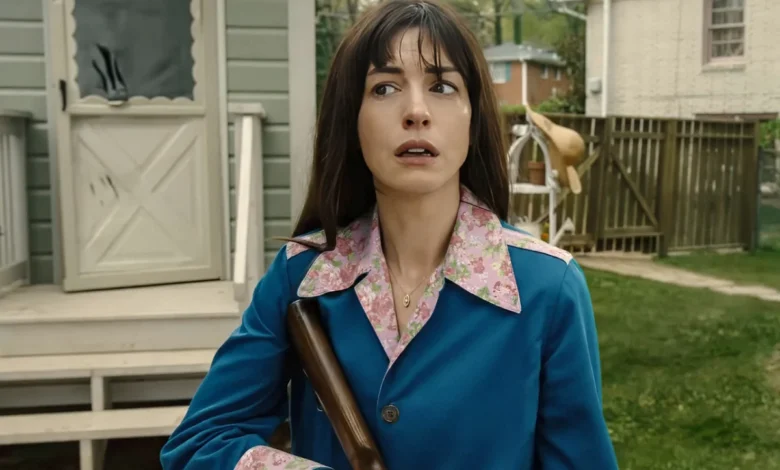
The cinematic landscape of 2026 received a jolt of unexpected high-concept spectacle with the theatrical release and subsequent streaming debut on HBO Max of The End of Oak Street. Written and directed by David Robert Mitchell—best known for his acclaimed 2014 horror benchmark It Follows—the film has generated substantial commercial success and critical discourse. Grossing $122 million worldwide against its production budget and securing an 86 percent approval rating on Rotten Tomatoes, the feature merges suburban domestic drama with prehistoric chaos. Anchored by performances from Academy Award winner Anne Hathaway and Ewan McGregor, the film presents an affluent Detroit cul-de-sac disrupted by anomalies in the space-time continuum, resulting in an invasion of prehistoric fauna. As the narrative culminates in a complex sequence of temporal displacement and domestic resolution, audiences have been left parsing the structural mechanics of its final acts.
Main Facts and Narrative Premise
The narrative of The End of Oak Street unfolds within an idyllic, affluent suburban Detroit cul-de-sac during the autumn of 1982. The Platt family serves as the central focal point: Greg Platt, portrayed by Ewan McGregor, conceals his recent job termination from his wife by secretly taking on pizza delivery shifts. Simultaneously, Denise Platt, played by Anne Hathaway, harbors her own internal isolation, spending her days in the basement typing an autobiographical manuscript about a stifled suburban mother. Their children, astronomy-focused high schooler Audrey (Maisy Stella) and troublemaking younger brother Brian (Christian Convery), navigate typical adolescent pressures alongside the family dog, Starbuck.
While local news broadcasts hint at atmospheric disturbances and electromagnetic anomalies, the residents of the neighborhood remain preoccupied with domestic routines, block parties, and neighborhood disputes. This normalcy shatters when a series of localized environmental disruptions occurs—ranging from blinding light phenomena to the appearance of prehistoric flora. The situation escalates when the neighborhood is physically excised from its geographical coordinates and transposed directly into a Cretaceous-era jungle environment. The ensuing survival narrative forces the characters to confront both predatory fauna and latent familial fractures.
Chronology of Events
The escalation within The End of Oak Street follows a distinct timeline moving from domestic tension to existential survival:
- Antecedent Phase: The Platt family experiences standard suburban alienation. Greg delivers pizzas covertly; Denise writes in secret; Brian antagonizes neighbors; Audrey plans for Cornell. Electromagnetic anomalies begin registering on regional news broadcasts.
- The Displacement: During a localized storm, the cul-de-sac is severed from contemporary Michigan and integrated into a prehistoric ecosystem. Initial encounters with displaced megafauna, including feathered theropods and large herbivores, confirm the spatial anomaly.
- Escalation and Loss: Attempts to flee the neighborhood fail as roads terminate abruptly at the edge of the ancient jungle. Family members become separated during nocturnal excursions. The narrative pivots significantly when an Allosaurus kills Greg Platt, eliminating a primary protagonist midway through the runtime.
- The Convergence: Surviving family members—Denise, Audrey, and Brian—along with newly orphaned neighbor Jeannette, navigate escalating hazards, including large reptiles and environmental fires, while seeking spatial anomalies capable of reversing the displacement.
- Temporal Return and Postscript: The survivors utilize a spatial portal, falling into a residential swimming pool shortly before the initial displacement event. Denise utilizes localized telecommunications to warn select neighbors, altering the historical timeline. A two-year postscript depicts the aftermath, including Denise’s literary success and the complex social integration of alternate-timeline duplicates.
Supporting Data and Box Office Performance
The commercial trajectory of The End of Oak Street reflects a growing audience appetite for original, mid-budget genre cinema that blends practical aesthetic choices with high-concept sci-fi premises. Distributed by Warner Bros., the film secured a robust $122 million global box office haul following its theatrical rollout. Industry analysts note that such figures represent a strong return on investment for an original intellectual property in an era heavily dominated by franchise sequels and established comic book adaptations.
Critical reception has largely aligned with commercial metrics. Review aggregators position the film at 86 percent "Fresh," with critics singling out David Robert Mitchell’s precise framing, tension pacing, and tonal balancing act. By treating the premise—suburban families versus Cretaceous predators—with narrative sincerity rather than overt camp, the production maintains stakes that elevate the project above traditional creature-feature tropes.
Official Responses and Creative Intent
Director David Robert Mitchell has noted in press collateral that the conceptual genesis of the film draws from speculative fiction traditions, suburban satire, and childhood imaginative play. The juxtaposition of 1980s Americana with prehistoric paleontology serves as a visual metaphor for the disruption of domestic stability.
Cast members have similarly emphasized the human element underpinning the digital and practical effects work. Anne Hathaway’s portrayal of Denise relies on physical pragmatism—underscored by visual hints of her character’s marksmanship background—to ground the surreal escalation of the plot. Ewan McGregor’s mid-film exit, an unconventional storytelling choice for a production featuring high-profile leads, was designed to upend viewer expectations regarding narrative armor and audience surrogacy.
Broader Impact and Implications
The thematic resonance of The End of Oak Street extends beyond its creature-feature mechanics, offering commentary on generational trauma, suburban conformity, and the fragility of modern infrastructure. The inclusion of temporal mechanics and parallel universe duplicates in the final act invites prolonged academic and fan-based discourse regarding the internal logic of Mitchell’s cinematic universe.
By addressing the consequences of temporal displacement—specifically illustrated by the survival of neighbors warned by Denise and the logistical complications of duplicate individuals residing in the same timeline—the film concludes on a note of ambiguous resolution. Rather than providing a neat, clinically closed narrative loop, the production embraces the strange implications of its premise, leaving viewers to reconcile the domestic tranquility of the final sequence with the cosmic chaos that preceded it. As the title continues to draw viewership on HBO Max following its theatrical run, its standing as a defining entry in 2026 speculative cinema appears secure.