YouTube Has Quietly Changed How It Counts Video Views and It Is Reshaping Creator Analytics

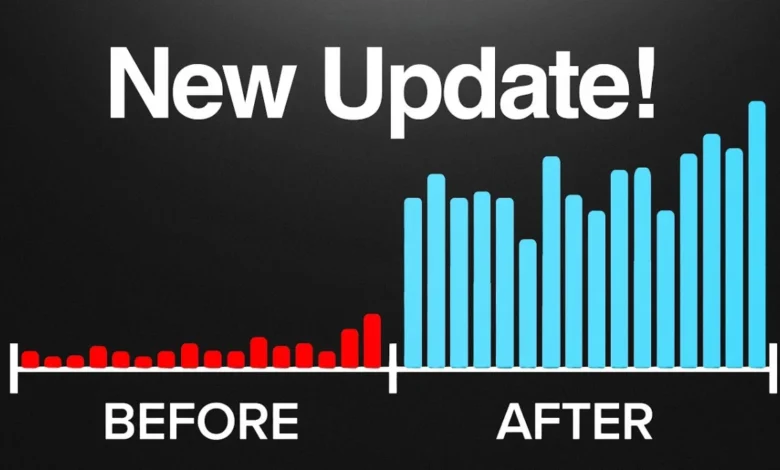
The landscape of digital content creation underwent a significant, albeit subtle, transformation on August 24, 2026, when YouTube implemented a major update to its view-counting algorithm. This change, which brought the platform’s long-form content metrics in line with the standards previously established for YouTube Shorts, has effectively redefined the baseline of what constitutes a "view." Under the new criteria, a view is registered from the very first frame of playback, regardless of duration. While this shift aligns YouTube with the metrics used by competitors such as TikTok and Instagram Reels, it has introduced a new layer of complexity for creators, advertisers, and data analysts attempting to interpret channel performance.
A Chronology of the Metric Shift
For years, the industry operated under the assumption that a view required a specific threshold of engagement. While YouTube never officially disclosed the exact second-count required to trigger a recorded view, anecdotal evidence and informal testing by the creator community suggested a threshold—often estimated at around 10 seconds—that ensured a viewer had at least begun to engage with the content.
The move toward "first-frame" counting was not entirely unprecedented. In 2025, YouTube transitioned Shorts to this immediate-count model to better reflect the rapid-fire nature of vertical, short-form consumption. By expanding this policy to long-form, non-Shorts content in late August 2026, the platform unified its data reporting. This standardization serves a strategic purpose: it simplifies the narrative for brand partners and agencies who often evaluate performance across multiple social media platforms. However, for the individual creator, the immediate result has been a sudden, noticeable spike in public-facing view counts that does not necessarily correlate with an increase in audience retention or long-term growth.

The Anatomy of the New View Count
The discrepancy between the old and new metrics is most visible when analyzing audience retention graphs. Historically, most videos exhibit a sharp decline in viewership within the first few seconds of playback as users filter through content. Under the previous system, those who clicked away after two or three seconds were not counted as a "view." Under the current system, every one of those early departures is now captured as a metric.
Data synthesized from over 75,000 videos by the research firm Agentio provides a stark look at the reality of this change. The study revealed that only approximately six out of every ten public-facing views now qualify as "engaged views"—a separate metric that continues to track the more substantial viewing habits that defined the platform’s legacy. For smaller channels, particularly those with fewer than 50,000 subscribers, the inflation is even more pronounced; public view counts have, in some instances, nearly doubled, effectively decoupling the public-facing number from the actual depth of viewer interest.
The Role of Engaged Views in Financial Stability
Despite the inflation of the public metric, the financial infrastructure of the YouTube Partner Program (YPP) remains largely untouched by this change. Ad revenue, which is primarily driven by the duration of time a viewer remains on a video, continues to rely on legacy standards of engagement. YouTube has maintained the "engaged view" metric as a specific, filterable data point within YouTube Studio Analytics.
For creators, the pedagogical challenge lies in distinguishing between the "vanity" metric of the public view count and the "utility" metric of the engaged view. While the former may be useful for high-level marketing or increasing the perceived popularity of a video, the latter remains the primary indicator of content quality and audience loyalty. Creators who fail to pivot their analytical focus toward engaged views and average view duration (AVD) risk misinterpreting their own performance, potentially leading to flawed content strategies.

Implications for Brand Deals and Agency Relations
The most significant professional impact of this update concerns the creator economy’s brand deal ecosystem. Historically, creators have used view counts as a primary KPI when negotiating sponsorships. With the public count now including thousands of "non-engaged" viewers, the potential for misaligned expectations between creators and brands has increased.
Industry experts warn that agencies and brands are increasingly sophisticated and capable of accessing the same granular analytics that creators see. Pitching a brand deal based solely on a total view count that has been inflated by the new, lower threshold could lead to skepticism from advertisers. Consequently, there is a growing consensus that creators should prioritize "engaged views" and "total watch time" when entering sponsorship negotiations. These metrics offer a more accurate representation of content efficacy, protecting the creator’s reputation and ensuring that pricing remains commensurate with genuine audience attention.
Analyzing the Impact on Historical Comparisons
A critical hurdle for creators is the lack of retroactivity in this update. Because the change was not applied to videos uploaded prior to August 24, 2026, historical comparisons have become inherently unreliable. A video uploaded in July 2026 and a video uploaded in September 2026 are no longer measured on the same scale, even if they occupy the same niche or target the same audience.
This "step-change" in data forces creators to exercise caution when conducting channel audits. Longitudinal analysis—the process of tracking a channel’s growth over several years—now requires an adjustment period to account for the discontinuity in the data set. Creators are advised to compare post-August performance only against other post-August content to maintain a standard baseline, while treating legacy data as a separate, distinct category.

Broader Platform Trends and Future Outlook
The decision to adopt a first-frame counting model is reflective of a broader shift in the digital media landscape, where attention is increasingly fragmented. By prioritizing immediate counts, YouTube is essentially signaling that the "start" of a video is a valuable moment in itself, regardless of whether the viewer stays for the duration. This shift mirrors the platform’s ongoing efforts to compete with the rapid consumption cycles of TikTok.
However, this does not mean the platform has abandoned the importance of deep engagement. By keeping "engaged views" as a prominent, accessible metric, YouTube is essentially offering two tiers of data: one for the public-facing market and one for the internal, high-value analysis required to maintain a sustainable channel.
For the modern content creator, the takeaway is clear: do not mistake the public number for the health of the channel. A high public view count can indicate successful click-through rates and an effective thumbnail, but it does not account for the quality of the content itself. To maintain an edge in an increasingly competitive market, creators must look past the surface-level metrics. By utilizing the advanced reporting features in YouTube Studio—specifically focusing on the retention graph, engaged views, and watch time—creators can continue to identify what truly resonates with their audience.
In the final analysis, while the "public view" has been redefined to be more inclusive of short-term interest, the fundamental requirement for success on YouTube remains unchanged. Long-term growth is still predicated on content that captures and sustains attention. The update should be viewed not as a change to the core value of the platform, but as a change to the reporting mechanism. Creators who adapt their metrics, adjust their expectations for brand deal pricing, and continue to prioritize the "engaged view" will remain at the forefront of the creator economy. As the platform continues to evolve, the ability to discern between superficial growth and genuine engagement will continue to be the most critical skill for any successful digital creator.