The Comprehensive Guide to Naming UI Components and Design Systems in Modern Product Development

Naming is one of the most persistent challenges in software engineering and interface design. The linguistic frameworks established during the early stages of a product’s lifecycle dictate not only the technical architecture of the code but also the cognitive models of the teams building it and the users interacting with it. When nomenclature is inconsistent or ambiguous, it creates "dialect gaps" between designers, developers, and product managers, leading to friction in development velocity and confusion in the final user experience.

The core of the issue lies in the tension between specificity and abstraction. A name that is too generic, such as "Container" or "Box," provides little context for the component’s purpose, leading to misuse in the codebase. Conversely, a name that is too specific—for instance, "LoginButtonBlue"—prevents the component from being reused in other contexts, such as a "SubmitButton" or a "CancelButton," thereby inflating the design system with redundant assets. Establishing a robust, scalable taxonomy is not merely a stylistic preference; it is a fundamental requirement for maintaining large-scale, multi-brand digital ecosystems.
The Evolution of Naming Conventions
Historically, the industry relied on ad-hoc naming patterns, which often broke down as projects scaled from simple websites to enterprise-grade applications. The emergence of design systems in the mid-2010s marked a shift toward systematic naming. In a 2022 survey of design system practitioners, 74% of respondents cited "inconsistent naming" as the primary barrier to the successful adoption of shared design libraries.

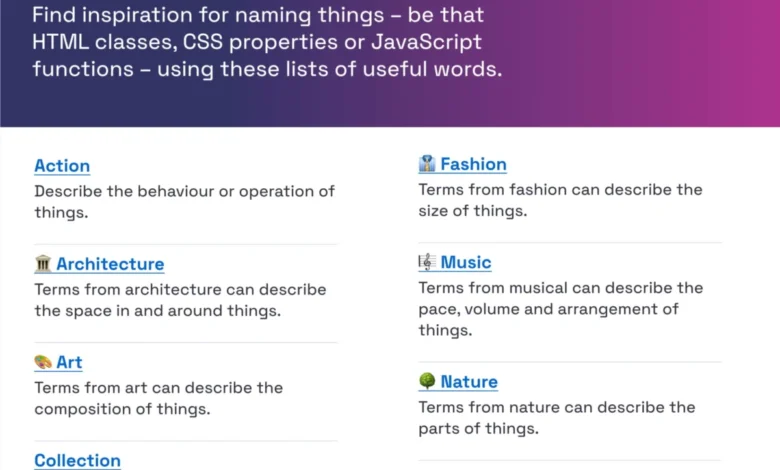
To address this, several key resources have emerged to standardize the vocabulary used in digital product creation. Platforms like Classnames provide thematic libraries that encourage developers to move beyond functional descriptions and toward conceptual metaphors. By grouping terms by behavior, association, or visual characteristics—drawing from domains as diverse as architecture, music, and biology—teams can create a more predictable and intuitive class-naming structure that remains resilient to change.
The Role of Color Taxonomies
Color naming represents a distinct subset of this challenge. Traditionally, developers relied on hex codes or generic descriptions like "blue-500." However, as products expanded into dark mode and multi-theme environments, these names became functionally inaccurate. The rise of repositories like the Color Parrot project, which maintains a database of over 30,000 unique color names, highlights the industry’s attempt to reconcile human-readable names with machine-readable data.

By abstracting color values through a token-based system, organizations can decouple the "what" (the color value) from the "why" (the intent). For example, replacing a literal color name with a semantic token like "action-primary-background" allows a theme to change dynamically without requiring updates to every instance of the color in the codebase.
Best Practices for Layers, Groups, and Tokens
The structural integrity of a design file is just as important as the code itself. Industry experts, including those from organizations like Intuit, have pioneered the development of flexible design token taxonomies. Intuit’s approach to their multi-product ecosystem—which supports brands as diverse as Mailchimp and QuickBooks—demonstrates the necessity of a tiered structure. Their taxonomy maps tokens from primitive values (base colors, spacing) to semantic roles (text-color-error, border-radius-interactive) and finally to component-specific variables.

This tiered architecture, often documented in a "Variables Taxonomy Map," ensures that developers can trace a token’s lineage. When a change is required at the brand level, the downstream impact is predictable and automated. This methodology is supported by tools like the Design Token Naming Guide, which helps teams build a structural hierarchy involving components, states (hover, disabled, focused), and roles.
Understanding User-Centric Feature Naming
While internal naming focuses on efficiency, the naming of user-facing features requires a different set of priorities. Research indicates that low feature adoption is frequently tied to "discoverability friction," where users struggle to find or understand a feature because the terminology does not align with their mental model of the product.

Successful feature naming is driven by the "job-to-be-done" framework. Rather than naming a feature after its technical function, developers and product teams are increasingly adopting the user’s own language. By conducting user interviews and mapping the terminology used by customers to describe their own tasks, companies can ensure that the interface feels intuitive. If a user describes an action as "sorting my receipts," a feature named "Data Aggregation Module" is likely to fail, whereas "Receipt Organizer" bridges the gap between the user’s problem and the technical solution.
Data-Driven Insights and Industry Resources
The current landscape of naming resources is robust, offering tools that cater to both technical and strategic requirements:
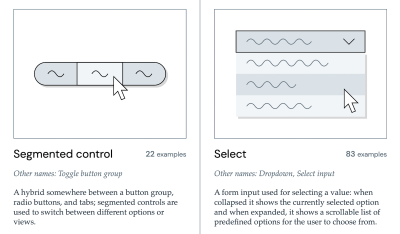
- Component Gallery: An exhaustive database of UI components from industry-leading design systems. It serves as a benchmarking tool for teams looking to standardize their component names against established industry norms.
- Onym: An open-source repository that provides methodologies for naming products and services, including vetting processes and linguistic etymologies.
- Vodafone UK Variables Taxonomy: A prime example of how enterprise organizations document the relationship between brand-level primitives and component-specific tokens.
Implications for Future Development
The long-term implication of these naming strategies is a decrease in "technical debt" and an increase in cross-departmental collaboration. When a developer, a designer, and a project manager all refer to a specific component by the same name, the communication overhead is significantly reduced. This alignment allows for faster prototyping, easier maintenance, and a more cohesive brand experience.
Furthermore, as AI-assisted coding and automated design generation tools become more prevalent, the importance of clear, semantic naming will only grow. Large Language Models (LLMs) rely on consistent patterns to generate accurate code or design specifications. A system with a messy, non-standardized taxonomy will inevitably produce less reliable results when integrated with automated workflows.

Conclusion and Strategic Outlook
Effective naming is a discipline that requires ongoing attention and governance. Organizations should treat their naming systems as living documentation, regularly auditing for inconsistencies and pruning redundant labels. Whether through the implementation of a strict token hierarchy or the adoption of user-centric labels for new features, the goal remains the same: to remove ambiguity from the development process.
Teams struggling with adoption or consistency should prioritize the creation of a "Source of Truth"—a centralized, accessible guide that defines the vocabulary of the product. By investing in the language used to build digital interfaces, companies can foster a more collaborative environment and deliver products that are easier for both internal teams to build and end-users to navigate. As the digital landscape continues to evolve, the ability to communicate intent clearly through naming will remain a hallmark of high-performing engineering and design organizations.