How to select and acquire the best DVD and Blu-ray discs for framerate purists who own a multiregion player and a multirate display device


For the dedicated cinephile and framerate purist, the pursuit of visual fidelity extends far beyond the resolution of the screen. While modern streaming platforms have largely standardized output, the physical media market remains a complex landscape of regional standards, frame rate conversions, and historical production constraints. Achieving the "original intent" of a director—viewing content at the precise cadence at which it was filmed—requires a meticulous understanding of how international media has been mastered and distributed over the last four decades.
The Evolution of Broadcast Standards and Physical Media
The divide between NTSC (National Television System Committee) and PAL (Phase Alternating Line) has historically dictated the consumption of media. NTSC, common in the Americas and parts of Asia, operates at approximately 29.97 or 59.94 frames per second (fps), while PAL, standard in Europe and much of the world, operates at 50 fps.
When theatrical films, typically shot at 24 fps, were transferred to DVD for the European market during the late 1990s and early 2000s, technical limitations forced a process known as "PAL speedup." To match the 50 Hz refresh rate of CRT television sets, the footage was accelerated by approximately 4.166%. This resulted in a slight increase in the audio pitch and a condensed runtime. For the modern viewer equipped with a multiregion player and a multirate display, these legacy compromises are no longer necessary, yet they remain embedded in millions of legacy discs currently circulating in the secondary market.
Case Studies in Media Acquisition
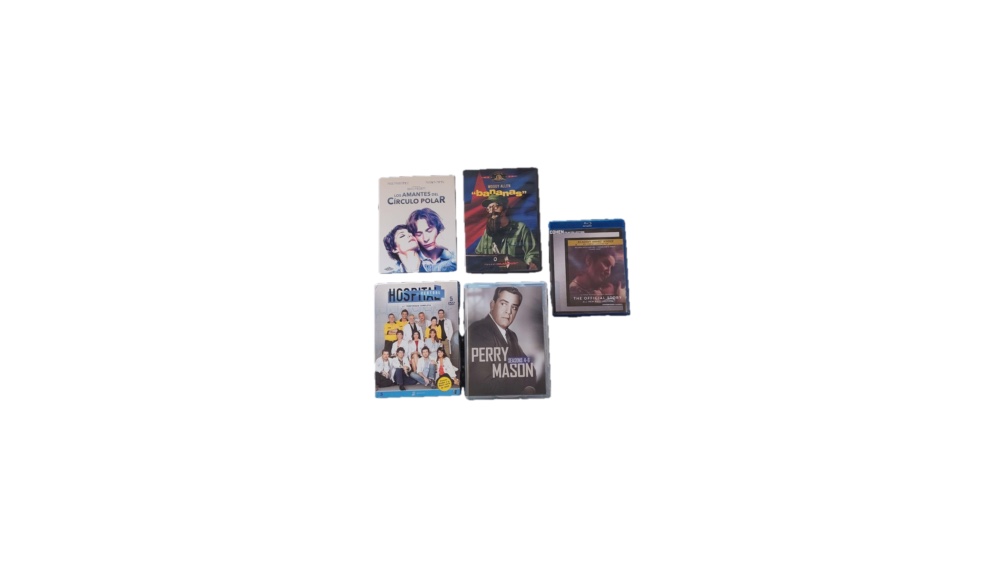
The selection of the "best" version of a film or television series requires an audit of its provenance. A review of five specific titles illustrates the necessity of distinguishing between native frame rates and converted masters.
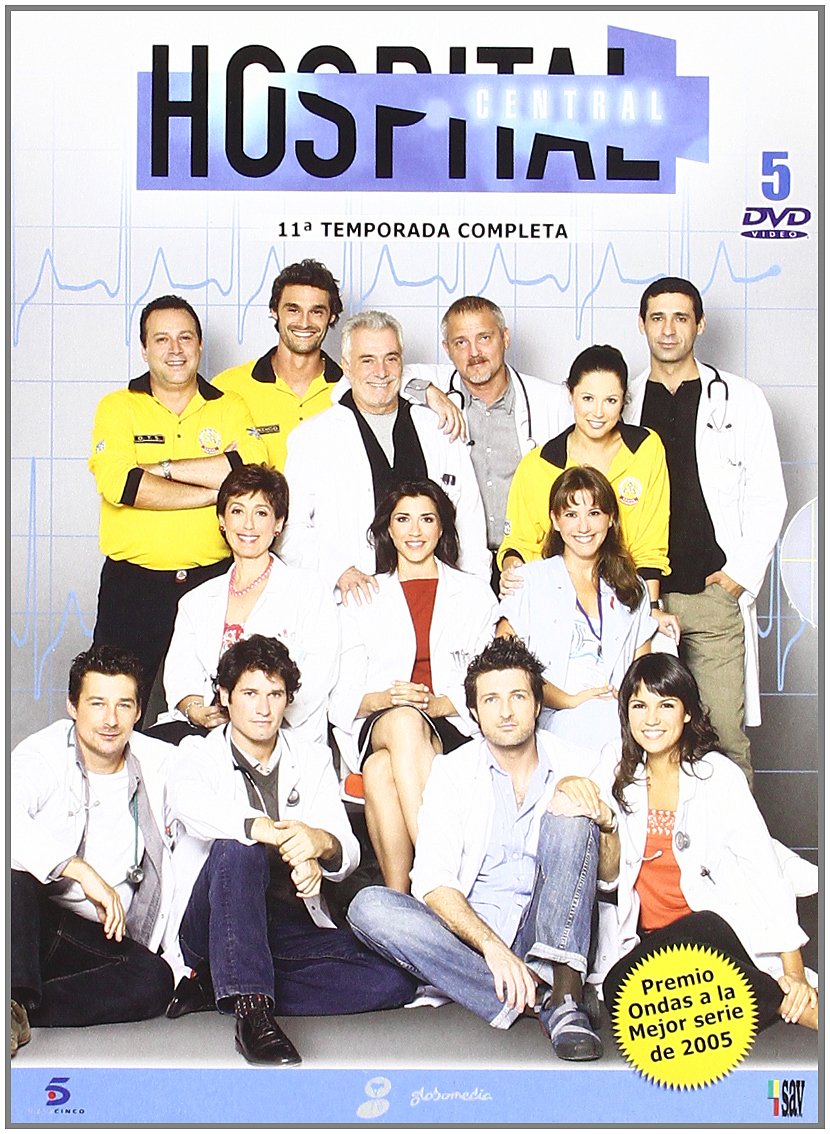
Hospital Central: A Case for Native PAL Production
The Spanish medical drama Hospital Central (2000–2012) offers a distinct example of content produced specifically for the PAL standard. Unlike feature films shot on 35mm celluloid at 24 fps, this series was produced in 50i (interlaced) format. For the viewer seeking the intended visual experience, the PAL-derived DVD is the superior choice. When processed through a multirate display capable of handling 50 Hz or 100 Hz, the motion fluidity matches the original production intent, avoiding the judder associated with forcing 50i content into an NTSC playback environment.
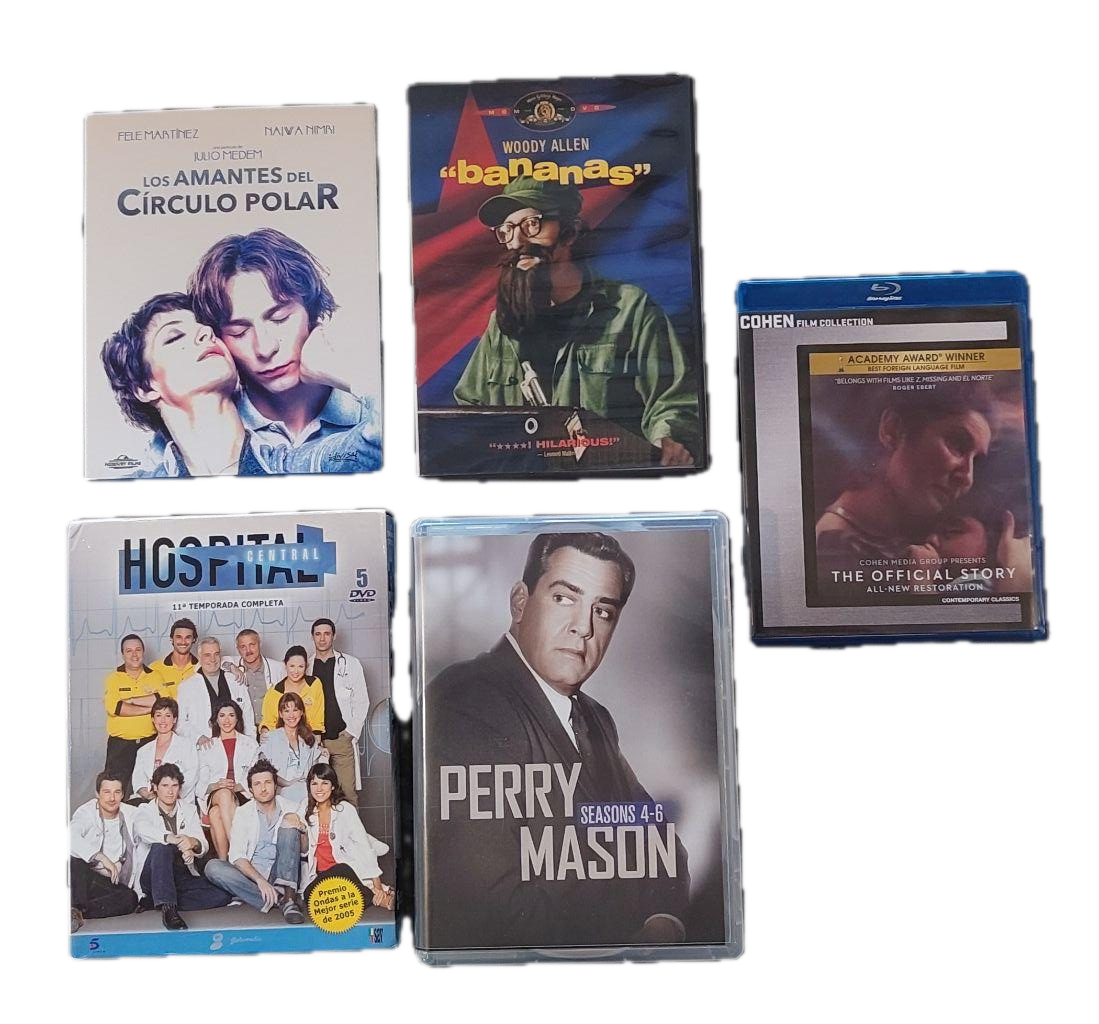
Los Amantes del Círculo Polar and The Official Story: The 24 fps Standard
In contrast to television productions, feature films such as the 1998 Spanish drama Los Amantes del Círculo Polar and the 1985 Argentine classic La historia oficial were captured on 35mm film. When these films were originally released on European DVD, they were subject to the aforementioned PAL speedup. For a purist, these early DVD releases are suboptimal. The transition to the Blu-ray format, which supports 23.976 fps, restored these films to their original cadence. Acquiring the Blu-ray version allows modern multirate hardware to display the film at 47.952 Hz or 119.88 Hz, effectively eliminating the pitch shift and runtime compression introduced by early-2000s mastering techniques.
Technical Testing: Bananas and Perry Mason
The 1971 Woody Allen film Bananas serves as a critical test case for EIA-608 line 21 Closed Captions. By utilizing a 23.976 fps 16:9 progressive DVD, users can verify whether their hardware correctly interprets closed captioning data, which was historically tied to the NTSC standard. Conversely, the original Perry Mason series (Seasons 3-6) provides a necessary benchmark for interlaced DVD performance. As these seasons remain primarily available on DVD rather than Blu-ray, they represent the baseline for testing how modern scalers handle legacy 59.94i interlaced content.
The Technological Transition: From CRT to Multirate Displays
The shift from CRT (cathode ray tube) monitors to modern LCD, OLED, and projection technologies has fundamentally changed the requirements for home cinema. In 2003, the dominance of 50 Hz CRT sets in Europe necessitated the conversion of film-based content to PAL. By 2006, the mass-market introduction of LCD flat panels began to decouple the hardware from the rigid 50 Hz or 60 Hz limitations of the tube era.
Modern display devices are now overwhelmingly "multirate," meaning they can adjust their refresh rate to match the frame rate of the source material. This capability is the final link in the chain for the purist. A multiregion player capable of outputting a signal at the source’s original frame rate—combined with a display that can refresh at a multiple of that rate—ensures that the viewer sees the film exactly as the director intended, free from the artifacts of frame-rate conversion.
Implications for Media Archivists and Collectors
The implications for collectors are twofold. First, the "best" version of a title is no longer necessarily the most recent release; it is the one that adheres most closely to the original frame rate. Second, the technical metadata of a release—often ignored by the average consumer—is the most vital piece of information for the enthusiast.
The industry has seen a stabilization in recent years, with most Blu-ray and 4K UHD releases adhering to the 23.976 fps or 24 fps standard, regardless of the region of origin. However, the vast library of legacy content remains trapped on discs that were optimized for the display limitations of twenty years ago.

Strategic Criteria for Disc Selection
For those seeking to build a collection that satisfies the requirements of a multiregion, multirate setup, the following criteria should be applied:
- Verify the Source: Determine whether the content was originally shot on film (24 fps) or video (50i/59.94i).
- Prioritize Native Cadence: For film-based content, always favor Blu-ray releases over DVD, as the former avoids the PAL speedup common in European DVD production.
- Check for Region Encoding: Ensure the disc region matches the capabilities of the player. While multiregion players are common, regional locks on specific discs can still impede playback.
- Evaluate Captioning Requirements: If Closed Captions (EIA-608) are a necessity, test the specific player’s ability to decode these from the disc’s specific format (progressive vs. interlaced).
- Analyze the Master: Be aware that some international releases may use older, lower-quality masters compared to domestic releases. In some cases, a compromise between resolution and frame rate may be necessary.
Conclusion
The quest for the original intended framerate is an exercise in technical preservation. By understanding the historical context of broadcast standards and the mechanical evolution of television sets, collectors can bypass the distortions that once defined home cinema. As physical media continues to serve as the highest-fidelity option for home viewing, the ability to discern between a high-quality transfer and a legacy-limited master remains the defining skill of the modern framerate purist.
For the average viewer, these nuances may be imperceptible, but for those committed to the integrity of the motion picture experience, the hardware and software configuration described represents the gold standard of contemporary home cinema. As digital distribution continues to dominate the market, the importance of maintaining and properly playing physical media becomes even more critical to the preservation of artistic intent.