The relationship between vehicle owners and automotive service professionals has long been characterized by a distinct psychological divide. While routine auto maintenance such as oil changes, fluid flushes, and tire rotations are clearly outlined in vehicle owner manuals, the interpersonal dynamics of bringing a car into a shop remain a frequent source of friction. Industry insiders note that for many consumers, dropping off an automobile feels akin to approaching a black hole, where financial resources seem to vanish past the event horizon, and updates regarding the vehicle’s operational status are difficult to obtain.

This information asymmetry often fosters anxiety on the part of the consumer and unnecessary frustration for the technician. Automotive professionals, for the most part, are dedicated and conscientious tradespeople attempting to perform a mentally and physically demanding job efficiently within an industry where labor time directly dictates compensation. Drawing from decades of collective experience spanning technician bays to general management roles across the automotive service sector, industry veterans emphasize that cultivating specific customer habits can drastically alter the service dynamic. By adhering to core principles of courtesy, clear communication, and operational preparation, vehicle owners can facilitate smoother repairs, prevent costly delays, and ultimately secure superior customer service.
The Impact of Vehicle Cleanliness on Service Efficiency
One of the most immediate, albeit frequently overlooked, factors influencing how a vehicle is handled in a repair facility is its physical cleanliness. While no formal shop policy dictates that a dirty car should receive inferior treatment, human nature invariably plays a role in professional environments. Technicians are far more likely to approach a meticulously maintained vehicle with an elevated sense of care compared to one delivered in a state of severe neglect.

A common misconception among motorists is that automotive technicians view basic detailing as an ancillary part of their job or will simply clean up a messy interior to proceed with repairs. In reality, asking a skilled diagnostic technician to navigate a filthy cabin or engine bay is inefficient and professionally disrespectful. Mud, dirt, and foreign debris impede mechanical progress by obscuring vital components and introducing abrasive grit into sensitive electronic or mechanical systems. Furthermore, diagnosing suspension noises or chassis rattles becomes nearly impossible when the interior is cluttered with loose objects that shift during test drives, masking authentic mechanical anomalies. Presenting a clean vehicle not only demonstrates basic consideration for the technician’s workspace but also prevents accidental damage and unnecessary labor charges.
Avoiding the Pitfalls of Internet-Sourced Diagnostics
The proliferation of online search engines and artificial intelligence chatbots has empowered consumers to research automotive symptoms extensively before visiting a repair facility. While foundational knowledge helps facilitate a constructive dialogue with service advisors, relying too heavily on unverified online diagnoses frequently leads to miscommunication and incorrect repair requests.

Insisting on a specific repair based on a cursory internet search can create adversarial friction in the work bay. For instance, demanding the replacement of fuel injectors because an online forum suggested it will yield precisely what was requested, even if the actual root cause of a slow start is a failing fuel pressure regulator. This phenomenon often leads to a dynamic of malicious compliance, where a frustrated mechanic executes the customer’s exact orders despite knowing it will not resolve the underlying issue. Automotive diagnostics require specialized diagnostic tools, wiring schematics, and years of experiential expertise. Industry professionals advise focusing descriptions strictly on observed symptoms rather than prescribing definitive solutions, allowing certified technicians to perform their duties accurately.
The Complications of Supplying Outside Parts
The modern digital marketplace offers consumers unprecedented access to discounted aftermarket and salvage automotive components through platforms like Amazon, eBay, and Facebook Marketplace. Consequently, many vehicle owners attempt to minimize repair expenses by purchasing their own parts and bringing them to the service facility for installation. However, this practice introduces significant operational and financial liabilities.

When a customer supplies external parts, repair shops typically void any labor warranties they would otherwise extend on the repair. Moreover, online purchases frequently arrive as incorrect applications, incomplete assemblies, or defective units. Discovering a missing component midway through a complex disassembly causes expensive work stoppages that disrupt shop schedules and often result in diagnostic delay fees. Established repair facilities usually receive wholesale pricing from local distributors, allowing them to retail parts at competitive rates while assuming full accountability for the hardware. If a shop-supplied part fails prematurely, the facility covers the replacement labor, shielding the consumer from absorbing the cost twice.
Managing Expectations and Minimizing Workflow Interruptions
Effective communication remains the cornerstone of any successful automotive repair transaction, yet the frequency and method of communication heavily dictate workflow efficiency. While customers naturally desire regular updates regarding their vehicles, repeatedly contacting the shop to speak directly with the technician can severely impede progress.

In flat-rate labor environments, a technician’s income is directly tied to uninterrupted wrenching time. Every telephone call answered requires the mechanic to halt physical labor, clean up, and transition mental focus, bringing the repair process to a temporary standstill. This operational bottleneck is precisely why professional service departments employ dedicated service advisors to interface with customers and insulate technicians from time-consuming interruptions. Establishing clear timelines, preferred communication channels, and diagnostic expectations during the initial drop-off phase eliminates the anxiety that typically prompts excessive check-in calls.
The Economics of Professional Diagnostics
Automotive troubleshooting is a specialized discipline that requires continuous education, expensive diagnostic software, and sophisticated hardware. A prevalent pitfall involves motorists attempting to bypass standard intake procedures by requesting quick, informal assessments in the parking lot for minor vehicular issues.

Asking a mechanic to "just take a quick look" devalues years of acquired technical expertise. Skilled technicians are naturally disinclined to provide uncompensated diagnostic labor, and impromptu parking lot evaluations frequently put professionals in an awkward position. Establishing a formal appointment and agreeing to standard diagnostic fees ensures that the vehicle receives a methodical evaluation. Many reputable shops apply diagnostic fees directly toward the cost of the authorized repair, aligning professional compensation with thorough, reliable service.
Pre-Service Preparation: Child Safety Seats and Accessories
Certain aspects of vehicle preparation are rarely considered by motorists until they actively impede repair operations. A prominent example is the presence of child safety seats in vehicles requiring mechanical work. Due to strict liability regulations and safety standards, technicians at most professional facilities will not uninstall or reinstall child safety seats.

If a repair requires accessing components beneath the rear seating area—such as a fuel pump assembly or electrical wiring harnesses—a left-behind child safety seat immediately halts progress. Technicians cannot legally or ethically assume the responsibility of reinstalling these safety-critical devices, forcing the shop to contact the owner and wait for them to clear the workspace. Removing child seats, personal electronics, and valuable cargo prior to drop-off prevents unnecessary delays in the service pipeline.
The Pitfalls of Last-Minute Add-On Requests
The logistics of an auto repair facility operate with precise choreography, balancing incoming parts deliveries, technician shift allocations, and hydraulic lift availability. A frequent disruption to this schedule occurs when a customer introduces secondary repair requests—such as a loose trim piece, a rattling glove box, or an unscheduled oil change—at the moment of vehicle pickup.

While addressing minor vehicular grievances is standard practice when properly scheduled, springing additional tasks on service staff at the conclusion of a primary repair forces technicians to backtrack. This last-minute request disrupts scheduled bay rotations for subsequent appointments, creating a ripple effect of delays throughout the shop. To ensure seamless service, vehicle owners should compile a comprehensive list of all desired repairs during the initial intake consultation.
Transparency and the Cost of Vague Descriptions
Cryptic service drop-offs involving vague descriptions such as "makes a funny noise" or "feels weird" place an immediate burden on service staff. Vague symptom reporting extends diagnostic times, as technicians must spend valuable billable hours attempting to replicate elusive conditions.
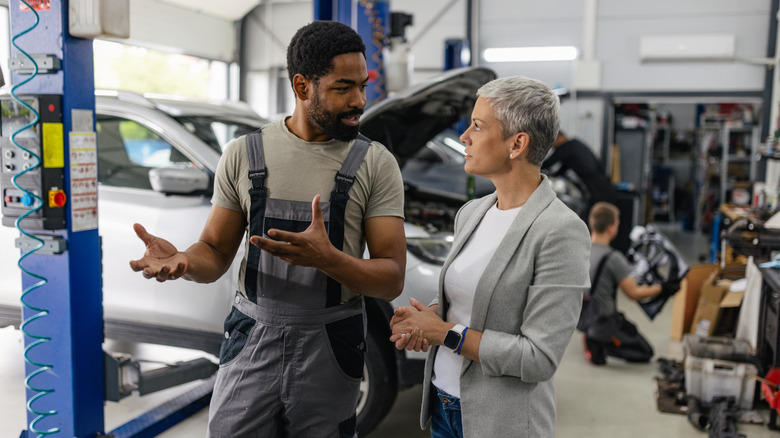
Providing specific parameters—such as the vehicle speed at which a noise occurs, whether the symptom manifests exclusively during engine warm-up, or if it correlates with braking and steering inputs—significantly narrows down potential mechanical failures. Furthermore, attempting to conceal the origin of damage out of misplaced embarrassment counteracts efficient troubleshooting. Technicians operate objectively to resolve mechanical faults rather than judge vehicle history, and complete transparency regarding prior incidents accelerates accurate repair strategies.
Managing Communication Availability During Active Repairs
Once a vehicle is admitted to a service bay and diagnostic evaluations are finalized, timely communication becomes critical for maintaining shop throughput. Service advisors frequently attempt to reach vehicle owners via phone, text, or digital portals to present diagnostic findings, discuss repair authorizations, and outline updated cost estimates.

When vehicle owners become entirely unreachable during this authorization phase, service operations stall. A partially disassembled vehicle left awaiting authorization occupies a valuable hydraulic lift, preventing the shop from servicing other clients. If communication fails completely, facilities are often forced to reassemble the vehicle partially and relocate it to an overflow parking lot until the owner responds, drastically extending the overall turnaround time and complicating future scheduling.
The Importance of Access Keys and Special Hardware
Finally, overlooking specialized vehicle hardware prior to drop-off can instantly immobilize the service process. Modern automobiles frequently utilize unique wheel-lock lug nuts designed to prevent theft, requiring a specific adapter key to remove the wheels.

Discovering that a wheel lock key is missing from the glove box or center console after a vehicle has been positioned on a lift for brake service or tire replacement forces technicians to suspend work immediately. Searching through personal compartments for security keys is time-consuming and risks compromising customer privacy. Similarly, notifying the service team of aftermarket security alarms, remote-start installations, or state-mandated ignition interlock devices prevents unintended system lockouts. By anticipating these operational requirements and preparing the vehicle accordingly, consumers foster a mutually respectful environment that maximizes efficiency, minimizes expenses, and consistently yields superior automotive service.