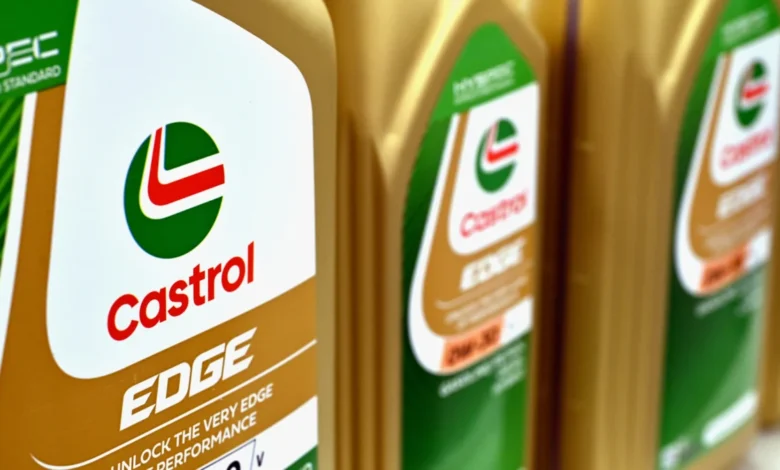
When it comes to automotive maintenance, few components are as vital to the longevity and health of an internal combustion engine as motor oil. Among everyday drivers and high-performance automotive enthusiasts alike, Castrol has long cemented its status as a cornerstone of the industry. Renowned for flagship product lines such as Castrol EDGE, GTX, and GTX Full Synthetic, the brand has built a global reputation on engineering lubricants that satisfy a sweeping array of manufacturer requirements and rigorous industry standards. However, the sheer ubiquity of major household names can often overshadow equally capable, highly specialized alternatives. For motorists seeking lubricants that match or exceed the technical prowess of Castrol, several under-the-radar brands offer advanced formulations, stringent OEM approvals, and robust engineering pedigree that deserve serious consideration.
Understanding the Lubricant Landscape and Industry Benchmarks
To appreciate how lesser-known manufacturers stack up against industry giants, one must first examine what makes a motor oil competitive. Modern engines operate under extreme thermal and mechanical stress. Downsized turbocharged gasoline direct-injection (TGDI) powerplants, in particular, are prone to low-speed pre-ignition (LSPI), an abnormal combustion phenomenon that can catastrophic-failure pistons and connecting rods if lubricants lack the proper chemical defenses. Furthermore, regulatory pressures demanding heightened fuel economy and reduced emissions have forced fluid formulators to adopt advanced base stocks—such as polyalpholefins (PAOs) and Group V esters—alongside sophisticated additive packages.
While Castrol provides broad market coverage, specialty blenders often focus on niche chemical engineering, exceeding baseline specifications to cater to enthusiast applications, extended drain intervals, and demanding track environments. Navigating this landscape requires looking past heavy marketing budgets and examining technical data sheets, American Petroleum Institute (API) licensings, International Lubricant Standardization and Approval Committee (ILSAC) certifications, and original equipment manufacturer (OEM) approvals.
Ravenol: German Precision and Advanced Base Stocks
A prominent contender in the high-grade lubricant sector is Ravenol, a German-owned manufacturer that commands immense respect in European markets while steadily expanding its footprint globally. Although less recognized on American retail shelves compared to domestic giants, Ravenol boasts a comprehensive catalog designed for passenger cars, heavy-duty trucks, motorcycles, and specialized industrial machinery.
A prime example of Ravenol’s technical capability is its DXG SAE 5W-30 full-synthetic motor oil. Engineered specifically for modern gasoline engines—both naturally aspirated and turbocharged—the formula utilizes a sophisticated blend of polyalpholefins (PAO) and Group V base oils. This is further augmented by tri-nuclear molybdenum and specialized organic friction modifiers designed to minimize internal mechanical drag.
From a certification standpoint, Ravenol DXG 5W-30 holds API SQ Resource Conserving and ILSAC GF-7A compliance, alongside an official General Motors dexos1 Gen 3 approval. The manufacturer also lists explicit recommendations for major automotive conglomerates including Chrysler, Fiat, Ford, Honda, Acura, and Opel. Technical parameters underscore the oil’s resilience, boasting a high viscosity index of 163 and a remarkably low pour point of -71 degrees Fahrenheit, ensuring exceptional cold-weather flow. Ravenol’s institutional commitment to quality is reinforced by its IATF 16949 and ISO 9001 certifications, while its in-house testing laboratories operate under ISO/IEC 17025 accreditation, ensuring that its performance claims are backed by rigorous, verifiable data.
Liqui Moly: Targeting Modern Efficiency and LSPI Defense

Another heavyweight originating from Germany is Liqui Moly, a brand heavily favored by European car enthusiasts that has systematically adapted its portfolio to service American and Asian vehicle architectures. The company has aggressively updated its Special Tec AA lineup and Molygen New Generation series to align with the latest API SQ performance benchmarks.
Liqui Moly’s Special Tec AA SAE 0W-20 serves as a case study in modern lubricant formulation. Tailored for fuel-efficient gasoline engines equipped with direct injection and turbochargers, the fluid targets critical performance metrics dictated by the API SQ standard, including heightened oxidative stability, enhanced engine cleanliness, and optimized control over sulfate ash deposits. Crucially, Liqui Moly’s updated formulations have successfully passed the newly established LSPI Aged Oil test. This protocol evaluates a lubricant’s capacity to suppress destructive pre-ignition events even after the oil has experienced significant thermal degradation over extended operational hours.
Holding ILSAC GF-7A approval and GM dexos1 Gen 3 certification, Special Tec AA 0W-20 is officially recommended for a vast array of Asian and domestic nameplates, including Chrysler, Ford, Honda, Kia, Nissan, and Toyota. By matching the rigorous specifications of mainstream alternatives while offering specialized chemical packages, Liqui Moly provides a robust alternative for vehicle owners prioritizing long-term mechanical preservation.
Amsoil: Synthetic Pioneering and Independent Testing Validation
For motorists seeking uncompromising synthetic performance, Amsoil stands out as a pioneering force, having introduced the world’s first API-qualified synthetic motor oil in 1972. The company’s flagship Signature Series represents a 100% synthetic formulation available across eight distinct viscosity grades, ranging from ultra-low 0W-16 to traditional 5W-30.
Amsoil engineers its Signature Series to combat severe engine stressors, including high-temperature deposits, sludge formation, turbocharger coking, and horsepower degradation. The formulations undergo rigorous evaluation against ASTM standards such as D6891, D5293, D8111, and D6593. Notably, in ASTM D5293 cold-cranking viscosity evaluations, Amsoil Signature Series 5W-30 demonstrated superior flow characteristics compared to competing products from brands like Driven, Lucas, Red Line, and Royal Purple.
Furthermore, Amsoil frequently subjects its lubricants to grueling real-world and extended-drain testing. Independent 100,000-mile evaluations conducted on Ford F-150 trucks equipped with 3.5-liter twin-turbocharged engines revealed that the Signature Series maintained exceptional wear protection, leaving engine bearings in pristine condition post-test. Recent iterations of the formula show a 12.5% improvement in cold-cranking performance and superior performance in Thermo-Oxidation Engine Oil Simulation Test (TEOST) benchmarks, reaffirming its competitive standing against established market leaders.
Motul: Motorsport Heritage Translated to the Street
With roots deeply embedded in international motorsport, French lubricant manufacturer Motul bridges the gap between competitive racing technology and everyday street reliability. The company’s extensive 8100 line features full-synthetic options tailored to diverse engineering requirements.
Motul’s 8100 ECO-LITE 5W-30 is engineered for modern gasoline powerplants, accommodating both indirect and direct-injection architectures, whether naturally aspirated or forced-induction. In addition to meeting API SQ-RC and ILSAC GF-7A specifications and holding GM dexos1 Gen 3 approval, the fluid satisfies stringent OEM performance mandates established by Ford and Volkswagen.

The broader 8100 portfolio is meticulously segmented to address specific motoring priorities. The ECO-nergy series focuses on maximizing fuel economy across 0W-30 and 5W-30 viscosities, while the ECO-clean and ECO-clean+ lines utilize low-SAPS (Sulfated Ash, Phosphorus, and Sulfur) formulations designed to safeguard sensitive catalytic converters and diesel particulate filters. Conversely, Motul’s X-cess line utilizes high High-Temperature High-Shear (HTHS) viscosity formulas to protect engines operating under sustained high thermal loads, whereas the X-power 10W-60 caters exclusively to high-output performance engines.
Red Line: Ester-Based Formulations for Extreme Environments
Rounding out the list of formidable alternatives is Red Line Synthetic Oil, a brand synonymous with extreme motorsport applications and specialized high-performance engineering. Red Line’s Professional-Series 5W-30 utilizes advanced Group III and Group IV PAO base stocks, carrying API SP and ILSAC GF-6 certifications alongside GM dexos1 Gen 2 and Gen 3 approvals.
What distinguishes Red Line from traditional retail brands is its heavy reliance on polyol ester base stocks. Esters possess natural polarity, allowing oil molecules to chemically cling to metal surfaces, thereby providing continuous boundary lubrication even after an engine has been turned off. This metallurgical affinity is paired with robust additive packages containing elevated levels of zinc dialkyldithiophosphate (ZDDP) for superior anti-wear protection in flat-tappet and high-lift cam configurations.
Red Line’s street and racing lineups span viscosities from 0W-20 to 20W-50, alongside specialized 15W-40 heavy-duty diesel and 10W-60 motorcycle oils. By maintaining distinct product tiers—including dedicated break-in oils and European-series formulations—Red Line caters to enthusiasts who demand specialized metallurgical protection well beyond standard factory maintenance intervals.
Broader Industry Implications and Selection Methodology
Choosing the correct motor oil requires looking past brand familiarity and evaluating verifiable technical credentials. The selection of Ravenol, Liqui Moly, Amsoil, Motul, and Red Line was derived from a comprehensive audit of manufacturer technical catalogs, official OEM approvals, and documented laboratory testing rather than subjective consumer sentiment or viral social media commentary.
As automotive engineering trends toward smaller displacement, turbocharged engines operating at higher power densities, the demand for high-grade synthetic lubricants will only intensify. While Castrol remains a reliable industry standard, these underrated brands demonstrate that advanced chemical formulation, stringent independent testing, and specialized engineering offer consumers powerful alternatives capable of safeguarding modern engines against premature wear, thermal breakdown, and destructive pre-ignition events.