S.W.A.T. Exiles Brings Shemar Moore Back to the Screen in Starz Sequel Series

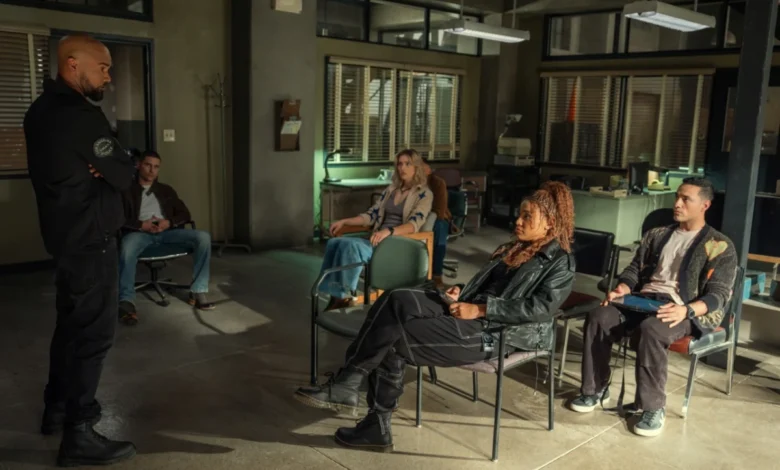
The television landscape is welcoming back a familiar tactical unit, albeit with a new network home and a restructured roster. Following an eight-season run on CBS that concluded in 2025, the procedural franchise is expanding with a sequel series titled S.W.A.T. Exiles, which officially premieres on Starz. While the platform has shifted from traditional broadcast television to premium cable and streaming, the core anchor of the franchise remains firmly in place. Shemar Moore reprises his defining role as Daniel "Hondo" Harrelson, stepping once again into a command position to lead a radically different generation of law enforcement officers.
Background and Plot Premise
The narrative picks up two years after the conclusion of the flagship series. Hondo has been carrying the professional and personal fallout of a botched tactical raid that resulted in the tragic death of a young S.W.A.T. officer. Having taken the blame for the operation, he spent the intervening years operating in the private sector, providing security services for technology executives in the Los Angeles area.
However, his hiatus from public service comes to an end when his former superior, Commander Robert Hicks (played by Patrick St. Esprit), approaches him with a mandate from the Los Angeles Police Department (LAPD). The department wants Hondo to return to active duty and rebuild a brand-new S.W.A.T. team from the ground up.
The assignment, however, comes with hidden complexities. Upon assembling his new squad, Hondo quickly realizes that the unit lacks the cohesion, experience, and operational seasoning of his previous teams. Furthermore, underlying departmental politics reveal a more cynical objective: the LAPD leadership has allegedly set Hondo and his inexperienced team up to fail, utilizing the experiment as a pretext to dismantle the S.W.A.T. division permanently.
A New Generation of Recruits
The newly formed tactical unit features a diverse array of specialized personnel, reflecting contemporary technological and social dynamics within modern law enforcement dramas:
- Sammy Bishop (Lucy Barrett): A terminally online Gen-Z officer whose constant documentation of her environment introduces modern digital habits into tactical scenarios.
- Ethan Cole (Freddy Miyares): A socially awkward drone specialist whose technical capabilities push the traditional boundaries of tactical investigation.
- Cassidy Han (Zyra Gorecki): An agile operator with a physical disability—having one leg—who consistently outperforms able-bodied colleagues in tactical maneuvering.
- Jude Reddick (Ronen Rubinstein): An operative carrying a complicated past that influences his approach to fieldwork.
- Adain Bradley (Adain Bradley): An ambitious officer who openly challenges Hondo’s leadership philosophy after an initial training exercise results in operational failure.
Despite the internal friction and lack of synchronization, the unit is immediately thrust into high-stakes fieldwork. Their inaugural major case involves a former cartel assassin who emerges from hiding to protect his threatened family, forcing Hondo’s untested squad to navigate live-fire combat scenarios while managing their internal discord and the emerging revelation of an internal mole dedicated to sabotaging Hondo’s command.
Production and Network Transition Context
The transition of the S.W.A.T. intellectual property from CBS to Starz represents a notable shift in programming strategy for a long-running broadcast procedural. Executive produced by Jason Ning, S.W.A.T. Exiles attempts to bridge the gap between network procedural comfort and premium cable expectations.
Despite the migration to Starz—a platform historically known for grittier, more serialized, and boundary-pushing content—early analysis of the series indicates that the structural DNA of the episodes remains closely aligned with its broadcast predecessor. Aside from minor language adjustments, the narrative architecture follows the familiar formula established across eight seasons on CBS: a tactical deployment, a high-intensity confrontation, and a resolution focused on minimizing casualties during volatile engagements. The original series star Jay Harrington also makes a guest appearance as Deacon in the opening episode, maintaining continuity with the broader franchise history.
Critical Reception and Audience Implications
Television critics reviewing the premiere of S.W.A.T. Exiles have pointed out the paradoxical nature of the sequel series. On one hand, Shemar Moore continues to anchor the production with a commanding screen presence that dictates the pacing and emotional weight of nearly every scene he occupies. His character’s tactical philosophy and leadership challenges provide a steady focal point for viewers familiar with the original run.
On the other hand, analysts note that the introduction of younger, less polished characters sometimes strains narrative credibility. Elements such as real-time social media streaming during active tactical operations have drawn scrutiny from reviewers questioning the realistic protocols of specialized law enforcement units. Furthermore, the central conflict—involving institutional sabotage by LAPD leadership—mirrors the bureaucratic antagonist tropes frequently utilized in the later seasons of the original series.
Broader Industry Impact
The launch of S.W.A.T. Exiles highlights a growing trend in modern television economics: extending established broadcast procedurals into streaming and premium cable spin-offs to capture dedicated fan bases while experimenting with altered demographic appeal. By retaining recognizable anchors like Moore while integrating contemporary character archetypes, Sony Pictures Television and Starz are testing whether traditional procedural audiences will follow familiar intellectual property across different viewing ecosystems.
As the season progresses, the narrative trajectory will depend heavily on whether the internal departmental conspiracy regarding the LAPD’s effort to dismantle S.W.A.T. can provide sufficient narrative momentum to differentiate Exiles from its predecessor, or if the series will ultimately settle into the comfortable, repetitive rhythms of standard network television.