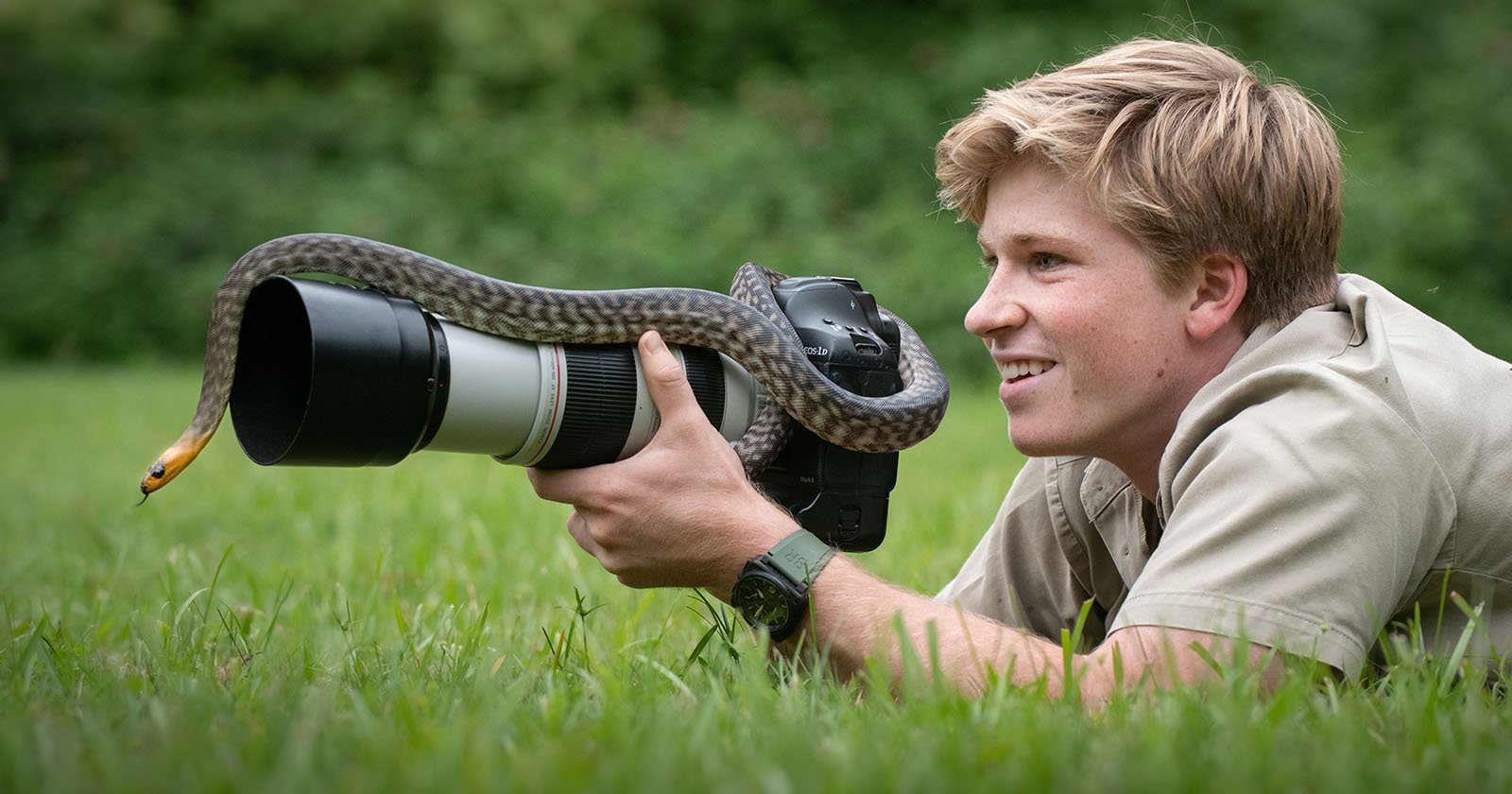
Renowned conservationist, television presenter, and wildlife photographer Robert Irwin has recently shared his insights on the evolving landscape of photography, particularly concerning the burgeoning influence of artificial intelligence (AI). In a candid interview with Parade magazine, Irwin, who has expanded his multifaceted career to include a successful run on Dancing With the Stars, reaffirmed his deep-seated passion for photography, a pursuit he describes as foundational to his identity. This discussion comes as the digital art world grapples with the implications of AI-generated imagery, and Irwin’s perspective offers a valuable viewpoint from an artist dedicated to capturing the raw essence of the natural world.
A Lifelong Passion for the Lens
For Robert Irwin, photography is far more than a hobby; it’s a deeply ingrained passion that has shaped his life from a young age. He explained to Parade, "This has been a passion project of mine and ours for a very long time. A lot of people might not realize this, but there’s this part of my life that’s been really probably the most formative part of my life and really created the person I am today, which is photography." This sentiment underscores the profound connection he feels to the art form, viewing it as an intrinsic element of his personal and professional development.
Irwin’s journey into photography began at approximately ten years old, a period marked by his immersion in the world of wildlife and conservation, a legacy inherited from his late father, Steve Irwin. His early experiences instilled in him a profound appreciation for the natural world and a desire to share its wonders with a wider audience. Photography became his chosen medium, a way to not only document the animals he encountered but also to translate the emotional impact of these encounters into compelling visual narratives. This early dedication has evolved into a sophisticated approach, where he now seeks to inspire the same sense of awe and connection in others that he experiences through his lens.
Concerns Over AI’s Impact on Photography
While Irwin acknowledges the rapid advancements in technology, including AI, he expresses significant reservations about its potential impact on the authenticity and integrity of photography. He articulated his concerns, stating, "As with any advancement in technology, I think we sometimes forget about the environmental destruction that it can cause. I can definitely speak through, pun intended, the lens of photography." This statement hints at a broader awareness of technological footprints, extending beyond the digital realm to encompass the often-overlooked environmental costs associated with the development and deployment of new technologies.
Irwin’s primary critique of AI in photography centers on its perceived ability to diminish the artistry and dilute the impact of genuine photographic achievements. He elaborated, "With AI, I think not only does it take away from the artistry of photography, but it also dilutes what is impressive. Because we’ve seen so many incredible things, we don’t realize that what is real and that’s more amazing because it’s real, you know?" He further illustrated this point with examples of fantastical AI-generated imagery, such as an eagle riding an elephant, which he believes can mislead viewers and detract from the profound beauty of authentic wildlife photography. "When you see the image of the, I don’t know, eagle riding the elephant or whatever ridiculousness it is that people genuinely think is real, when there is the actual real amazing photo, it almost dilutes it because we’ve seen so many incredible things."
This perspective aligns with a growing debate within the photographic community regarding the definition of a photograph and the ethical considerations surrounding AI-generated content. The ease with which AI can create hyper-realistic yet fabricated images raises questions about authorship, originality, and the very essence of capturing a moment in time. Irwin’s concern is that the proliferation of such easily produced, often sensationalized, imagery may lead to a desensitization to the extraordinary feats of nature and the skill required to document them through traditional photography.
The Unseen Wonders: A Photographer’s Wishlist
Despite his extensive experience and prolific output, Robert Irwin maintains a profound sense of wonder and an extensive list of animals he still yearns to photograph in their natural habitats. He revealed to Parade that contrary to popular assumption, he has not encountered every creature imaginable. "Anyone who has a passion for wildlife will tell you they have a list that’s a mile of long of what they want to see next," he remarked.
His personal wishlist highlights a global ambition, with a particular yearning to explore South America, a continent he has yet to visit. Among his top aspirations are:
- Sloths in the wild: Witnessing these famously slow-moving creatures in their natural environment is a long-held desire.
- The Galapagos Islands: This unique archipelago, renowned for its endemic wildlife and pivotal role in evolutionary theory, holds significant appeal.
- Komodo dragons: Having a deep affection for these ancient reptiles, photographing them in their native Indonesian habitat is a paramount goal.
- Snow leopards: Irwin considers capturing the elusive snow leopard in the wild to be "the pinnacle" of wildlife photography, a testament to its rarity and challenging environment.
- Polar bears: The majestic polar bear in its Arctic domain represents another dream encounter, one that he believes would evoke an overwhelming emotional response. "A polar bear in the wild. I think I would just squeal with excitement if I saw one of them," he confessed.
These aspirations underscore Irwin’s enduring curiosity and his commitment to documenting the planet’s diverse biodiversity. Each unphotographed species represents a new story to tell, a new facet of the natural world to bring to light for conservation purposes.
Photography as a Tool for Conservation
Beyond its artistic merit, Robert Irwin firmly believes in the power of photography as an indispensable tool for wildlife conservation. He articulated this conviction, stating, "I’ve spent many, many years of my life capturing nature through photography. And growing up, [it] was my kind of individual way of spreading this conservation message that I’m so passionate about." His early experiences with the camera were instrumental in shaping his ability to communicate the urgency of protecting endangered species and their habitats.
The sentiment of inspiring future generations is also a driving force behind his photographic endeavors. "I know that feeling that it gave me as a kid, and I want to give other kids that feeling," he explained, referring to the sense of wonder and connection that photography can foster. By sharing his own passion and showcasing the beauty of the natural world, Irwin aims to cultivate a similar sense of responsibility and advocacy in young people.
The Crikey! Magazine Photography Competition: A Platform for Authenticity
In alignment with his commitment to promoting genuine wildlife photography, Robert Irwin, in collaboration with Australia Zoo, is spearheading the 10th anniversary edition of the Crikey! Magazine Photography Competition. This global initiative serves as a platform to celebrate and showcase compelling, conservation-focused photography from around the world. The competition is open for entries until August 31, 2026.
Irwin’s vision for the competition is rooted in a demand for authentic storytelling. He emphasized, "I’m looking for storytelling that shows nature as it’s intended. You’re not meddling with anything. You’re letting nature take its course, and you’re photographing it in its true and raw state." He firmly rejects the inclusion of AI-generated images, asserting, "I don’t care how many AI photos you see. When you see a real, true representation of nature, there is a visceral feeling that hits you in the heart; you just can’t deny it. I think storytelling and art has to be authentic, and that is just so important. In wildlife photography, we need a true and authentic representation of nature. In our competition at least, there is no room for AI, that’s for sure. It ain’t happening."
This explicit stance against AI in the competition reflects a broader movement within the photographic industry to uphold ethical standards and preserve the integrity of documentary and wildlife photography. The Crikey! Magazine Photography Competition aims to encourage photographers of all levels, from emerging talents to seasoned professionals, to capture and share the raw beauty and inherent value of the natural world, fostering a deeper appreciation and commitment to conservation. Irwin encourages prospective entrants, "There’s a category for you to tell your story," underscoring the inclusive nature of the competition and its focus on diverse perspectives within wildlife photography.