ProjectSAM and the Evolution of Orchestral Sampling From Symphobia to the Lineage Series and Beyond

The landscape of modern film scoring and digital music production has undergone a seismic shift over the last two decades, moving from the rigid, artificial textures of early synthesizers to the lush, breathing acoustic spaces of contemporary virtual instruments. At the heart of this transformation is ProjectSAM, a developer that has consistently challenged the status quo of orchestral sampling. With the recent expansion of their groundbreaking Lineage Series from percussion into strings and their deep integration with Native Instruments’ NKS (Native Kontrol Standard) framework, the company is once again redefining the workflow of professional composers. This evolution is currently being highlighted during the Native Instruments Big Partner Sale, an event that offers the global production community a window into the sophisticated technology driving today’s cinematic soundscapes.
The Genesis of a Sound Philosophy
The story of ProjectSAM began in 2001, a period when orchestral libraries were largely defined by "dry" recordings. At the time, the industry standard was to record individual instruments in dampened studios with close-range microphones. While this allowed for a high degree of control, it placed the burden of realism on the composer, who had to apply complex artificial reverbs to simulate the sound of a live hall. Vincent Beijer and Maarten Spruijt, the founders of ProjectSAM, recognized a fundamental flaw in this approach: the natural interaction between an instrument and the acoustic space is a critical component of the musical experience.
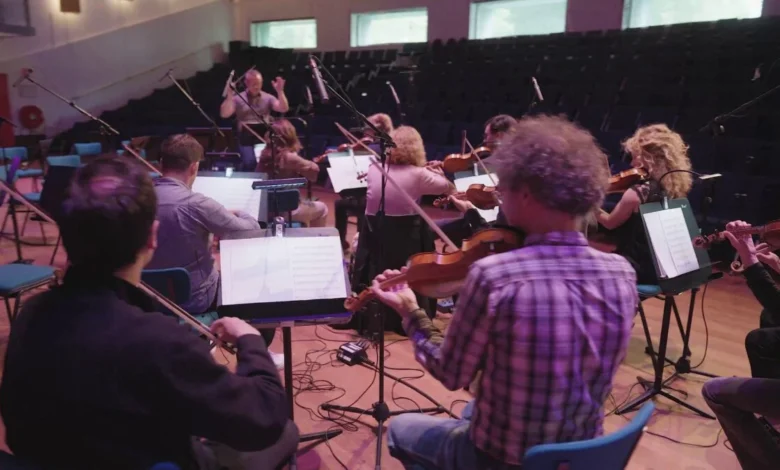
Their initial "proof of concept" involved recording local conservatory players in a concert hall from a distance, capturing the natural bloom and tail of the room. When they released this recording as a free sample set, the demand was so overwhelming that it nearly crashed their school’s servers. This response validated their core philosophy—the "ensemble-recording" approach—which prioritizes the natural, breathing acoustic perspective of a hall over the clinical precision of a dry studio. This philosophy would eventually lead to the release of Symphobia in 2008, a library that revolutionized the industry by offering pre-orchestrated ensembles and cinematic textures that were "ready to use" out of the box.
Chronology of Innovation: From GigaSampler to Kontakt 8
The technical journey of ProjectSAM mirrors the broader history of music technology. In the early 2000s, libraries like SAM Horns were distributed as collections of presets for platforms like GigaSampler. These early iterations were limited by the hardware of the time, often requiring multiple physical DVDs for installation and offering very little in the way of a graphical user interface (GUI). The process was manual, prone to bugs, and restricted by the memory limitations of early 32-bit operating systems.
The turning point came in 2008 when ProjectSAM transitioned to a Kontakt-exclusive development model. By focusing on a single, powerful engine, the team was able to dedicate their resources to advanced scripting and UI design. This shift allowed for the creation of more intuitive instruments that could handle complex tasks—such as legato transitions and round-robin sample cycling—without taxing the user’s creative focus.
The recent launch of Lineage Strings marks another milestone, as it is the first ProjectSAM library developed specifically for Kontakt 8. This version of the software provides the foundation for the most advanced features in the Lineage Series, including enhanced NKS2 integration and sophisticated "lookahead" algorithms that analyze MIDI data in real-time.
The Lineage Series: Bridging Inspiration and Detail
While the Symphobia series focused on "instant inspiration" through large orchestral blocks and cinematic effects, the Lineage Series represents a return to a more traditional orchestral layout, but with modern intelligence. The series began with Lineage Percussion and has now expanded to include a comprehensive string section.

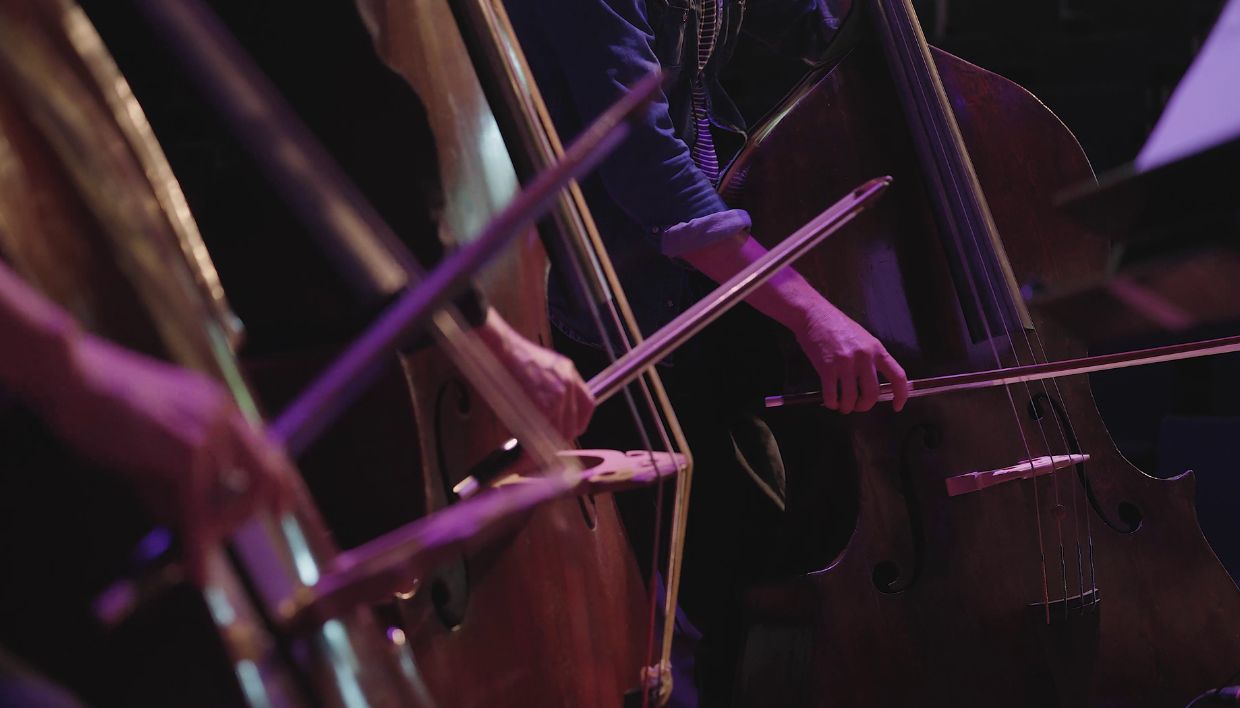
The identity of the Lineage Series is shaped by its recording environment. Unlike many libraries that record sections in isolation, ProjectSAM maintains a cohesive acoustic signature that allows different instruments to sit perfectly in a mix without additional processing. However, the Lineage Series moves beyond the "ensemble only" approach of Symphobia, offering individual sections (First Violins, Second Violins, Violas, Cellos, and Basses) to provide composers with greater flexibility in orchestration.
This dual-line strategy—where Symphobia provides the broad strokes and Lineage provides the fine detail—reflects the modern composer’s need for both speed and precision. In an industry where "turnaround times" for television and film scores are shrinking, the ability to move seamlessly between these two approaches is a significant competitive advantage.
Technological Breakthroughs: Adaptive Phrasing and Smart Lookahead
The most significant advancements in the Lineage Series are found "under the hood." ProjectSAM has introduced a suite of intelligent features designed to reduce the technical friction of virtual orchestration.
-
Adaptive Phrasing and Smart Lookahead: One of the most tedious aspects of using virtual strings is "keyswitching"—manually telling the software whether to play a short note (staccato) or a long note (sustain). The Lineage engine utilizes a "Smart Lookahead" delay. By introducing a negligible delay of a few hundred milliseconds, the engine can analyze the incoming MIDI sequence. It can distinguish between a sustained note, a tenuto, or a quick trill, and automatically switch to the most appropriate recorded articulation. This allows the composer to play the instrument "live" with a level of realism previously only achievable through hours of manual editing.
-
Intelligent Arranging: The Arranger module is designed to solve the problem of chord distribution. In a real orchestra, a five-note chord is distributed across the different string sections based on range and voicing. ProjectSAM’s Arranger module detects the notes of a chord, identifies inversions and root keys, and intelligently assigns those voices to the appropriate sections. This tool allows for the rapid creation of realistic accompaniments, serving as a powerful assistant for both novice and veteran orchestrators.
Accessibility and the NKS Standard
A critical, yet often overlooked, aspect of ProjectSAM’s recent development is their commitment to accessibility. Before the widespread adoption of the Native Kontrol Standard (NKS), virtual instrument interfaces were almost entirely mouse-driven. This created a significant barrier for the blind and visually impaired community, for whom complex GUIs were essentially invisible.
The integration of NKS, and specifically the newer NKS2 framework, has transformed how ProjectSAM designs its instruments. For the Lineage Series, the visual controls on the screen and the physical controls on hardware (such as the Komplete Kontrol keyboards) were designed in tandem. This ensures "full parity," meaning every parameter available to a sighted user is also accessible via hardware encoders and voice-guided feedback.
The "Light Guide"—the LEDs above the keys on NKS keyboards—also plays a functional role. In Lineage Strings, the Light Guide helps users navigate the complex mapping of the keyboard, indicating where different sections or articulations are located. During the development of Lineage Strings, the ProjectSAM team worked closely with a beta testing group of visually impaired composers to ensure that features like the Smart Lookahead delay did not interfere with the tactile feedback of the hardware.

Market Context and the Role of AI
The virtual instrument market is currently valued at hundreds of millions of dollars annually, driven by the explosion of home-based content creation and the high demand for cinematic music in gaming and streaming media. ProjectSAM operates in a highly competitive space alongside other industry giants like Spitfire Audio and Orchestral Tools.
In this context, the conversation around Artificial Intelligence (AI) and Machine Learning (ML) is unavoidable. ProjectSAM’s stance on AI is one of cautious optimism. While they acknowledge the power of ML as a "powerful assistant," they maintain that it cannot replace the nuanced control required for high-level artistry. The primary challenge with AI in music production is latency; a truly intelligent system needs to "know" the future of a musical phrase to make the best decision, which contradicts the need for real-time performance. ProjectSAM’s solution—the use of a small lookahead buffer—is a practical compromise that brings "intelligent" decision-making into the DAW without sacrificing the composer’s direct connection to the instrument.
Broader Impact and Industry Implications
The ongoing Native Instruments Big Partner Sale, which concludes on June 30, serves as a significant event for the industry. It provides a data point on the increasing democratization of high-end production tools. By making libraries like Lineage Strings and the Symphobia series more accessible through significant discounts, the barrier to entry for professional-grade orchestral sound is lowered.
The implications for the future of music are clear: the focus is shifting away from the "technicality" of sampling and toward the "musicality" of the interface. As software becomes smarter, the role of the composer evolves from a programmer of samples to a conductor of digital ensembles. ProjectSAM’s trajectory from 2001 to the present illustrates a relentless pursuit of this goal—ensuring that the technology serves the creative flow, rather than hindering it.

As the industry looks toward the next decade, the innovations found in the Lineage Series—accessibility-first design, intelligent orchestration assistance, and hall-centric recording—will likely become the standard expectations for any professional-grade virtual instrument. ProjectSAM continues to prove that while the tools of the trade may change, the fundamental goal remains the same: to bring the natural, breathing power of the orchestra into the hands of every composer.
Related posts: