Optimizing YouTube Engagement: A Comprehensive Analysis Reveals Best Posting Times for Long-Form Videos and Shorts

Success on YouTube is a multifaceted endeavor, intricately woven from compelling content quality, strategic title crafting, eye-catching thumbnails, and critically, the precise timing of uploads. While the core appeal of a video remains paramount, the platform’s dynamic algorithm and audience consumption patterns dictate that even the finest content benefits from an optimized distribution strategy. Navigating these variables often involves a period of trial and error for individual creators and marketers, yet robust data analysis can illuminate pathways to enhanced visibility and engagement.
A recent extensive study conducted by Buffer, analyzing nearly 2 million YouTube videos, including both traditional long-form content and the increasingly popular YouTube Shorts, has provided significant, concrete guidance on one of these crucial factors: the optimal time to publish. This research underscores that while timing is not a panacea for content success – factors like topic relevance, production value, and audience retention hold immense weight – it undeniably offers a strategic advantage. Publishing content during peak audience activity hours significantly increases the likelihood of garnering early engagement signals, such as clicks, watch time, and likes. These initial metrics are vital cues for YouTube’s algorithm, influencing its decision to recommend a video more widely across the platform. Given the substantial effort invested in content creation, strategically timing an upload represents an accessible and high-impact step to boost a video’s initial traction.
Methodology and Scope of the Analysis
Buffer’s comprehensive study measured the median engagement across 1.8 million videos, meticulously comparing performance across every hour and day of the week. This large-scale data aggregation allowed researchers to identify distinct patterns in posting times that correlated with the highest engagement rates, forming the basis for the recommended best times to post on YouTube. A key revelation from this analysis, marking a significant departure from Buffer’s 2025 findings, is the pronounced divergence in optimal posting times between long-form videos and YouTube Shorts. This distinction is logical when considering the differing distribution mechanisms and typical consumption habits associated with each format. Long-form videos often rely on a strong initial push to enter recommendation queues, whereas Shorts are designed for continuous, often passive, resurfacing by YouTube’s engine over extended periods. Consequently, the study meticulously separated data for each format to provide highly accurate and actionable recommendations.
It is important to note that these findings represent general trends observed across a vast dataset. Individual channels may exhibit unique audience behaviors, necessitating further fine-tuning using YouTube’s native analytics tools. However, these broad recommendations serve as an invaluable starting point for creators, marketers, and full-time YouTubers alike.
Key Findings for Long-Form YouTube Videos
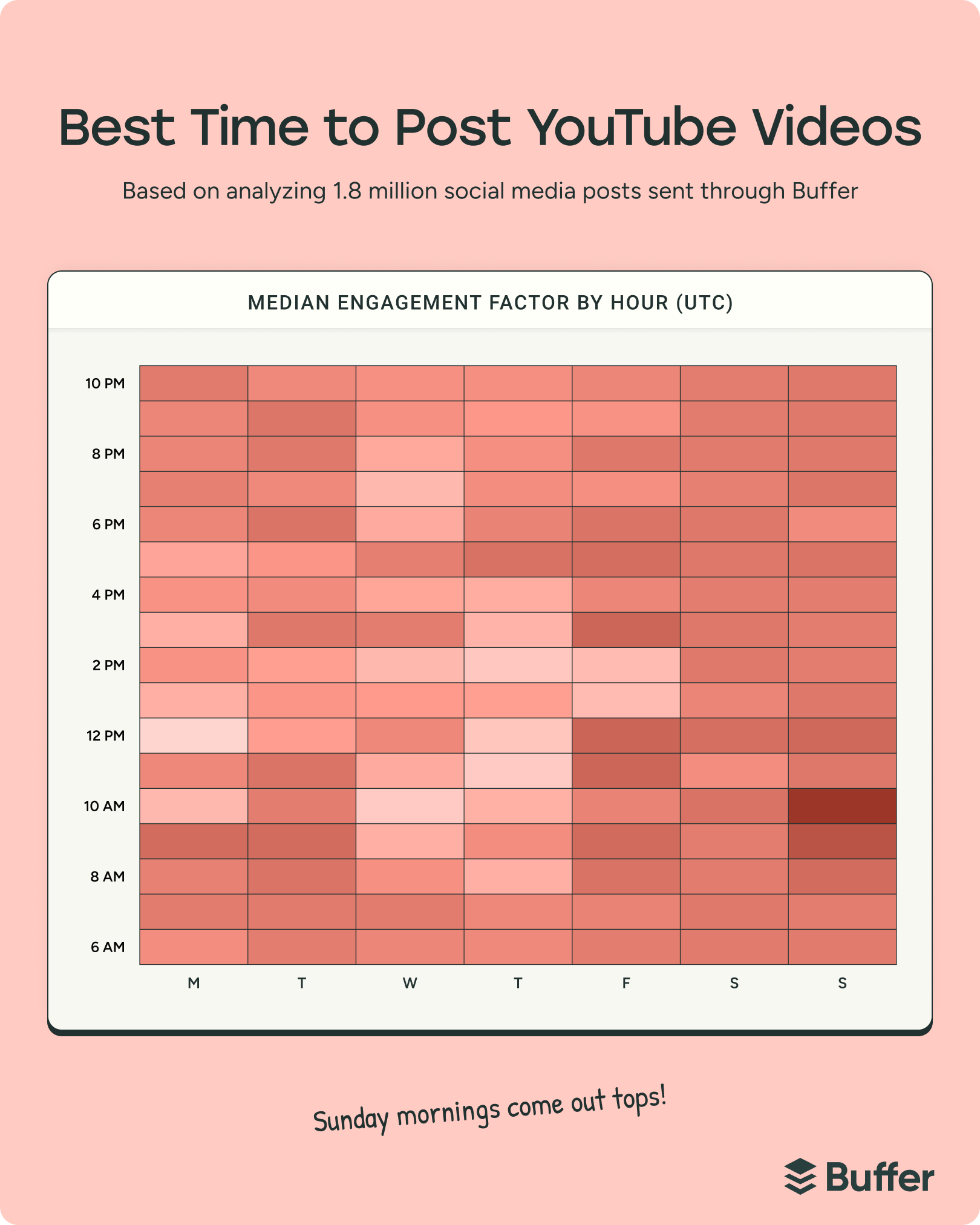
The analysis pinpointed Sunday at 10 a.m. (local time) as the single best time to post long-form videos on YouTube, demonstrating the highest engagement factor across the entire week by a considerable margin. Generally, long-form content shared during the morning hours, specifically between 8 a.m. and 11 a.m., consistently achieved superior engagement levels.
This finding represents a notable shift from previous analyses, including Buffer’s 2025 study, which indicated late afternoon (3–5 p.m.) on weekdays as the prime window. The current data strongly suggests that weekend mornings, particularly Sundays, now significantly outperform midweek days. This shift could be attributed to evolving audience behavior, with viewers potentially having more leisure time on weekend mornings to engage with longer content, or a reduction in competition during these hours.
Conversely, the study identified early to mid-afternoon on weekdays, especially Wednesdays and Thursdays, as the least opportune times for long-form video uploads. For instance, Thursday at 2 p.m. recorded one of the lowest engagement factors (0.11) in the entire dataset, indicating a clear dip in audience activity or availability during these periods. Despite these general trends, even weaker days presented "decent pockets" of engagement.
Daily Breakdown for Long-Form Video Optimisation:
- Monday: The optimal time is 9 a.m., followed by 10 p.m. and 7 a.m. Monday mornings suggest viewers beginning their week with content consumption, while the late-evening slot indicates a secondary window for engagement.
- Tuesday: Publishing at 9 a.m. is best, with 11 a.m. and 8 a.m. also performing strongly. Tuesday stands out as one of the best weekdays overall for long-form content, with its morning window consistently delivering high engagement.
- Wednesday: 7 a.m. is the top slot, followed by 3 p.m. and 5 p.m. Wednesday generally performs weaker than other days, requiring tempered expectations, but these slots still offer reasonable engagement for channels on a consistent posting schedule.
- Thursday: The best time is 5 p.m., with 6 p.m. and 7 a.m. as alternatives. Thursday emerged as the weakest day for long-form engagement, particularly during midday and early afternoon. Evening uploads are recommended if a Thursday post is unavoidable.
- Friday: 12 p.m. leads, with 11 a.m. and 3 p.m. also strong. Interestingly, Friday is the only weekday where midday activity surpasses morning engagement, with Friday at 12 p.m. registering one of the highest engagement factors (0.70) of the week, positioning it as a strong alternative to Sunday.
- Saturday: 12 p.m. is optimal, followed by 10 a.m. and 3 p.m. Saturday’s engagement is moderate and consistent, making it suitable for channels targeting weekend audiences.
- Sunday: The undisputed peak is 10 a.m., achieving a 0.95 engagement factor. 9 a.m. (0.80) and 12 p.m. (0.67) also perform significantly above average. Sunday mornings are unequivocally the prime window for long-form content, making a compelling case for its inclusion in any content calendar.
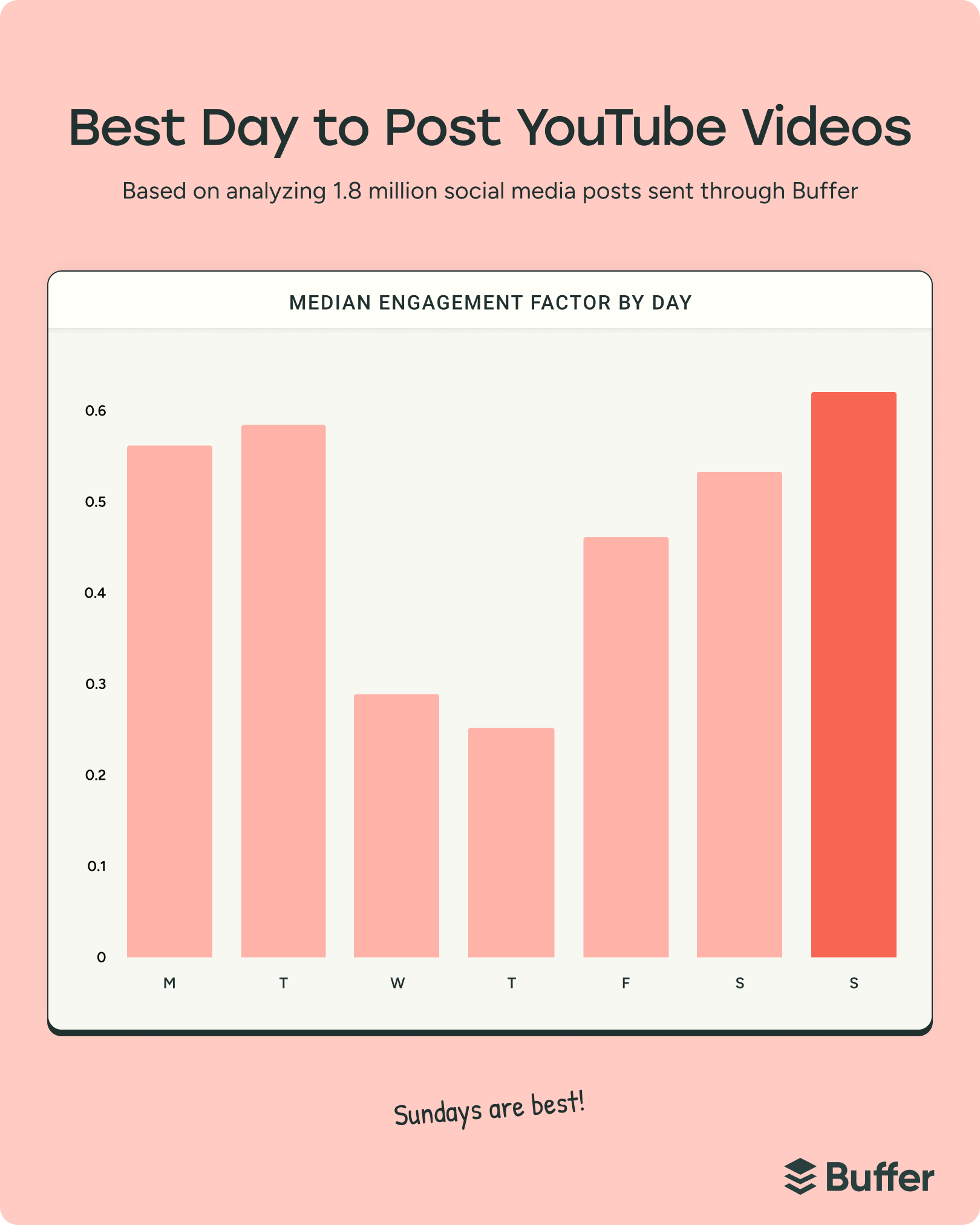
The overarching trend indicates that Sunday is the strongest day for long-form video engagement, followed by Tuesday and Monday, all categorized as "strong." Friday and Saturday fall into the "moderate" range, while Wednesday and Thursday are identified as the weakest days. This reversal from previous data highlights the dynamic nature of audience behavior and algorithm preferences on YouTube. Furthermore, the data suggests that long-form videos are particularly sensitive to timing due to their reliance on early engagement signals. Therefore, publishing an hour or two before the identified peak activity window can allow YouTube sufficient time to process and index the video, ensuring it is ready for immediate visibility when the audience comes online.
Optimizing for YouTube Shorts
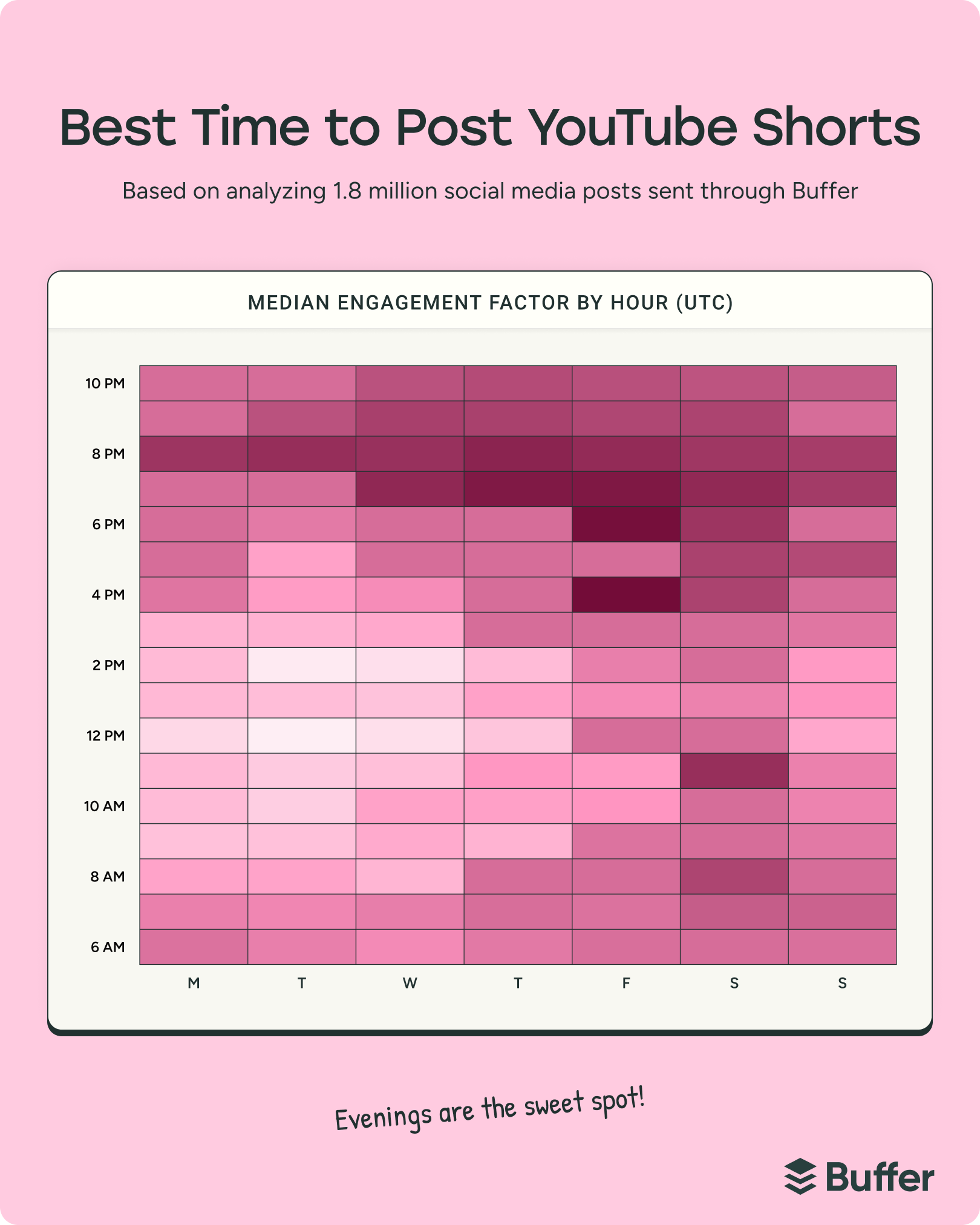
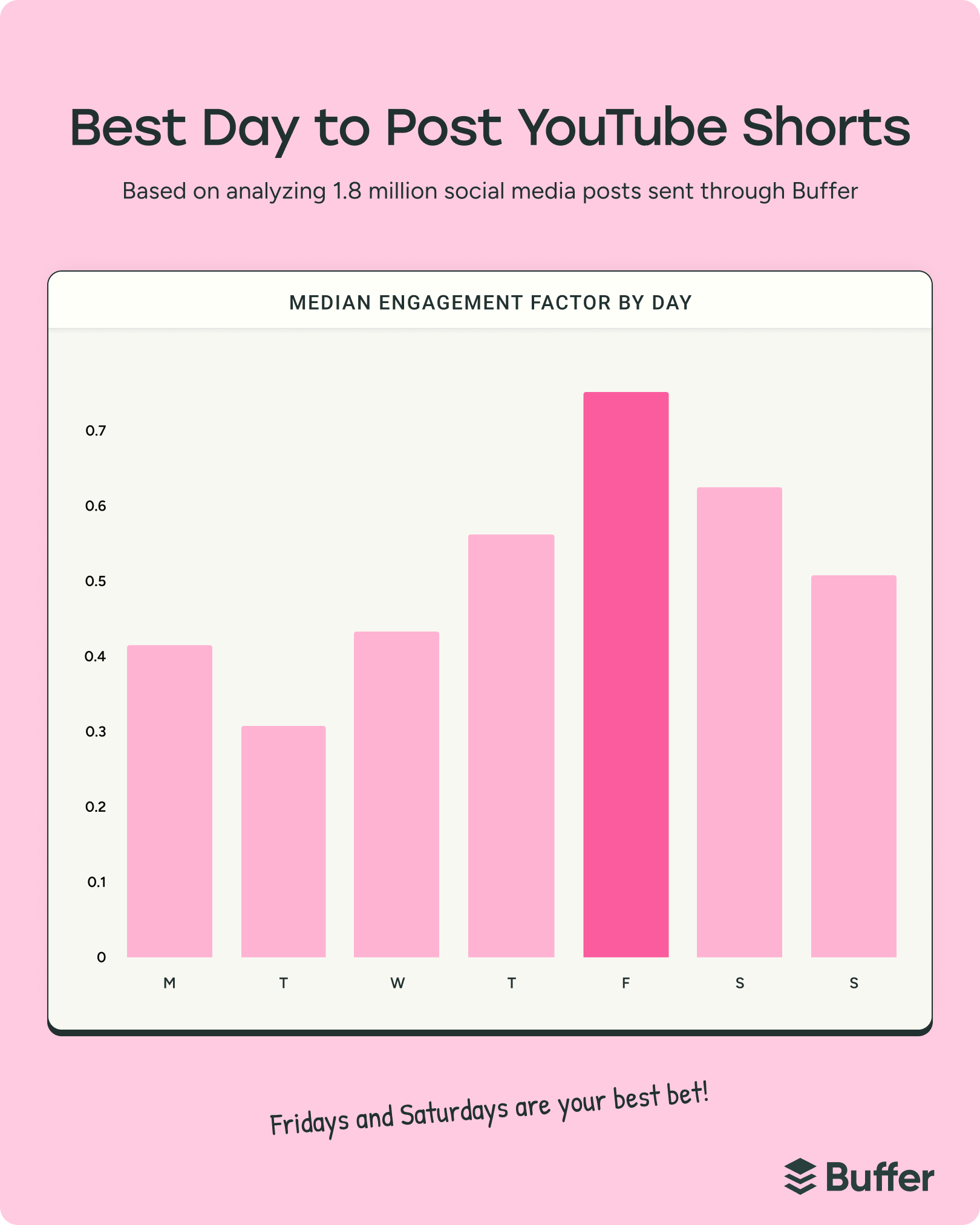
The study revealed a stark contrast in engagement patterns for YouTube Shorts, necessitating a distinct scheduling strategy. The analysis indicates that the best time to post YouTube Shorts is Friday at 4 p.m., followed closely by 6 p.m. and 7 p.m. These three Friday evening slots dominate the top rankings, solidifying Friday as the premier day for Shorts content.
In direct opposition to long-form videos, which thrive in morning hours, YouTube Shorts engagement consistently peaks in the evenings, typically between 6 p.m. and 11 p.m. This pattern aligns with how users consume short-form content – often as a means of unwinding or casual scrolling at the end of the day. The worst times for Shorts uploads generally fall between 12 p.m. and 5 p.m. on most weekdays, with Friday afternoon being a notable exception due to its late-afternoon surge.
Daily Breakdown for YouTube Shorts Optimisation:
- Evenings dominate for Shorts: The general trend suggests prioritizing evening slots for Shorts content across the week.
- Saturday Exception: Saturday is unique in that an 11 a.m. slot breaks into the top three, hinting at a potential morning window for Shorts viewing during the weekend.
- Overall Days: Friday leads as the best day for Shorts, followed by Saturday and Thursday.
- Weakest Days: Tuesday and Monday exhibit the lowest engagement for Shorts. Channels focusing solely on Shorts are advised to concentrate their efforts on the latter half of the week, with Friday as a cornerstone.
This distinct pattern for Shorts further emphasizes that their continuous resurfacing by YouTube’s recommendation engine makes the initial publish time less make-or-break compared to long-form videos. However, optimizing for that initial push still provides a significant advantage in catching early momentum.
Long-Form vs. Shorts: A Strategic Comparison
For creators and marketers leveraging both long-form videos and Shorts, the study’s most critical takeaway is the necessity of employing distinct scheduling strategies for each format. The optimal times for long-form content (Sunday mornings) and Shorts (Friday evenings) show almost no overlap. This divergence presents a strategic opportunity: channels can schedule long-form content for morning uploads and Shorts for evening drops without internal competition for audience attention. This allows for a more diversified and efficient content distribution calendar.
Empowering Creators: Finding Your Best Time with YouTube Analytics
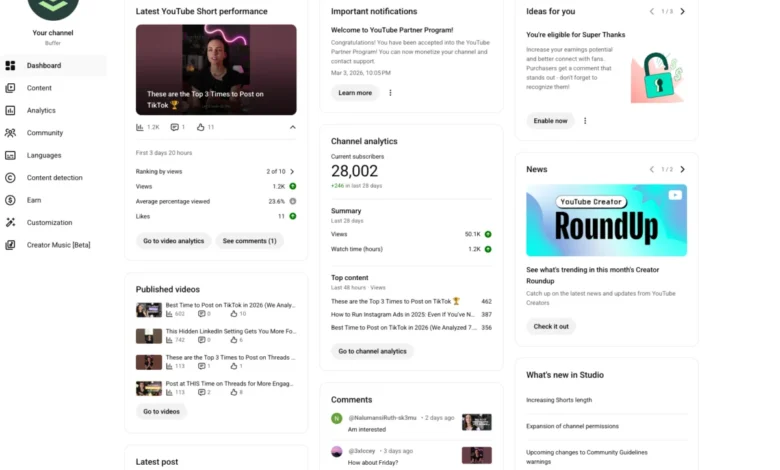
While the broad data provided by Buffer is invaluable, every audience is unique. The general patterns serve as an excellent starting point, but the definitive "best time to post" for a specific channel ultimately lies within its own YouTube Analytics. YouTube Studio offers a robust suite of real-time metrics that empower creators to fine-tune their posting schedules.
Step-by-step guide to leveraging YouTube Analytics:
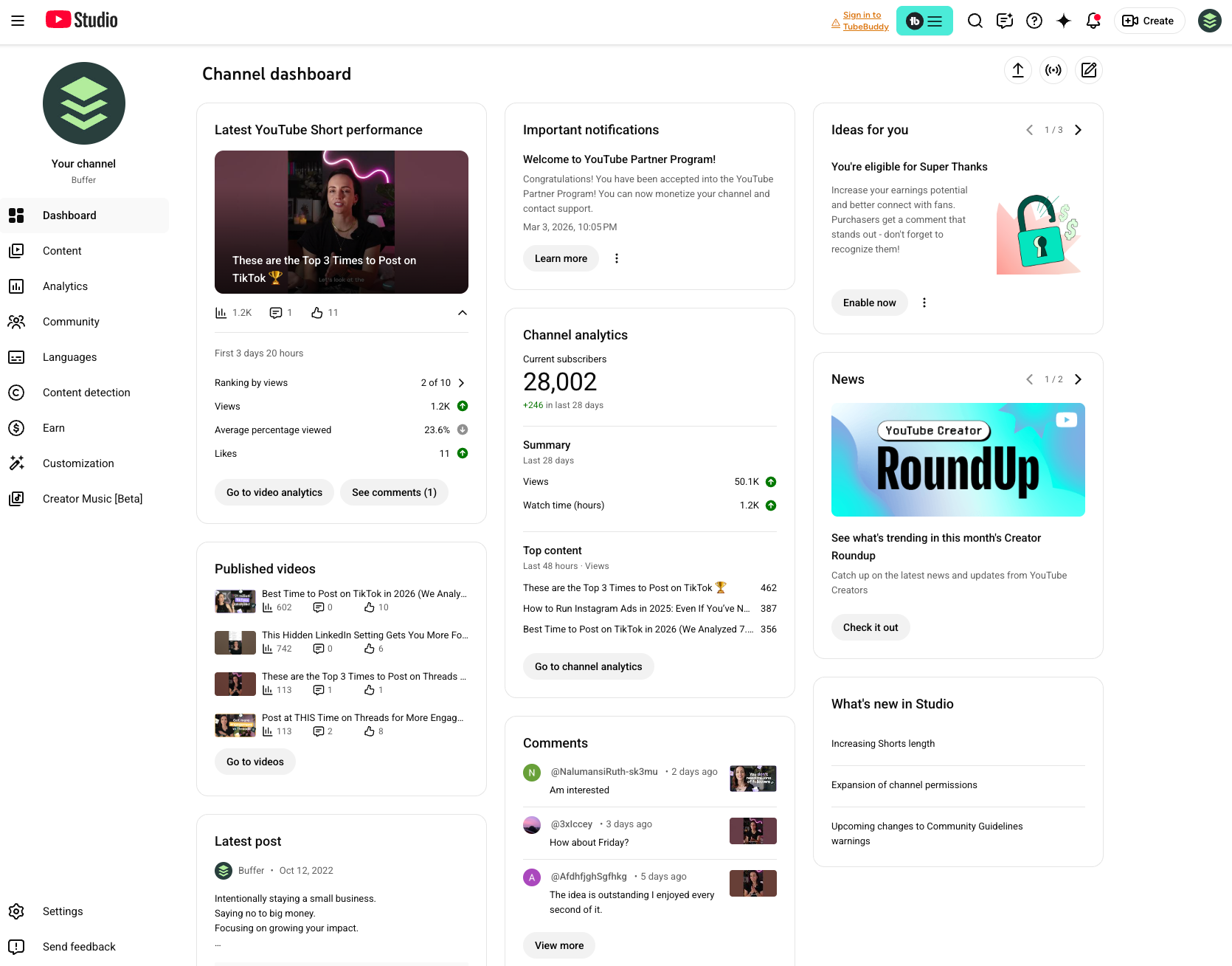
- Access YouTube Studio: Navigate directly to studio.youtube.com. This serves as the channel’s control center for managing uploads, monitoring performance, and interacting with the audience.
- Explore YouTube Analytics: Click on the "Analytics" tab on the left-hand side. This section provides a comprehensive overview of viewership, watch time, subscriber growth, and engagement metrics, crucial for understanding channel performance.
- Navigate to the Audience Tab: Within Analytics, select the "Audience" tab at the top. This section offers deep insights into the channel’s audience demographics (location, age, gender), content preferences, and most importantly, activity patterns.
- Utilize "When your viewers are on YouTube" Report: Scroll down on the Audience tab to locate this critical heatmap. Presented in the channel’s local time zone, this graph visually represents audience activity, with darker purple blocks indicating peak engagement times and lighter blocks showing lower activity. This report, updated every 28 days, is the most accurate indicator of a channel’s specific optimal posting times. Regular monitoring is essential to adapt to any shifts in audience behavior.
Broader Implications and Strategic Recommendations
The findings from Buffer’s analysis hold significant implications for content strategy in the highly competitive YouTube landscape. For individual creators, these insights offer a data-driven approach to scheduling, reducing the guesswork that often plagues content planning. For marketers and businesses, understanding these peak times can optimize campaign effectiveness, ensuring brand messages reach their target audience when they are most receptive.
The emphasis on early engagement signals for long-form videos underscores the importance of a robust launch strategy. Beyond mere timing, this includes compelling titles and thumbnails that encourage initial clicks, and content quality that sustains viewer attention, leading to longer watch times. For Shorts, while the initial publish time is less critical for long-term discovery, optimizing for the evening peaks can still maximize immediate viewership and contribute to quicker algorithmic recognition.
This study reinforces the dynamic relationship between content creators, platform algorithms, and audience behavior. As YouTube continues to evolve, with new features and consumption trends emerging, ongoing data analysis and adaptation will remain paramount. The ability to blend general industry benchmarks with specific channel analytics is the hallmark of a sophisticated and successful YouTube strategy.
Frequently Asked Questions (FAQ) on YouTube Posting Times
What is the best time to post on YouTube?
Based on Buffer’s analysis of 1.8 million videos, the optimal time for long-form YouTube videos is Sunday at 10 a.m. For YouTube Shorts, Friday is the strongest day, with 4 p.m., 6 p.m., and 7 p.m. being the top three time slots.
What is the best time to post YouTube Shorts?
The best time to post YouTube Shorts is Friday at 4 p.m., followed by 6 p.m. and 7 p.m. Generally, Shorts tend to perform best during evening hours, particularly towards the end of the week.
What is the best day to post on YouTube?
Sunday is the most effective day for posting long-form YouTube videos, followed by Tuesday and Monday. For YouTube Shorts, Friday emerges as the strongest day, with Saturday and Thursday also performing well.
Does posting time matter on YouTube?
Yes, posting time can influence video performance, although it is one of several critical factors. Publishing when your audience is highly active can help garner crucial early engagement signals, which YouTube’s algorithm uses for broader recommendations. However, content quality, topic relevance, title, and thumbnail are generally more significant for long-term success.
Should I post on YouTube before my audience is most active?
It can be beneficial to experiment with posting an hour or two before your audience’s peak activity, as this allows YouTube time to process and index the video. However, there isn’t a universal lead time. Channels should consult their YouTube Analytics’ "When your viewers are on YouTube" report and test different timings in conjunction with broader data to find what works best.
How do I find my best time to post on YouTube?
To determine your channel’s specific best time to post, access YouTube Studio, navigate to "Analytics," and then select the "Audience" tab. Within this section, locate the "When your viewers are on YouTube" report, which displays a heatmap of your audience’s activity over the past 28 days. This personalized data, combined with general trends, allows for an informed and refined posting schedule.