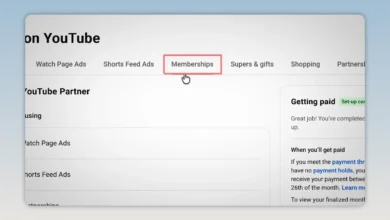
Nearly two decades after its initial inception, the YouTube Partner Program (YPP) is undergoing its most significant structural evolution since 2018. As the undisputed pioneer and leader of the global creator economy, YouTube has announced a sweeping overhaul designed to adapt to shifting consumption habits, reward high-engagement creators more meaningfully, and introduce lucrative alternative revenue streams. With a community now surpassing three million active creators worldwide, the platform is preparing to implement these pivotal updates starting February 1, 2027. Management has projected that aggregate payouts to creators in 2027 will outpace the previous year, underscoring a continued commitment to financial scalability for independent digital entrepreneurs.
The Evolution of the Creator Economy and YPP History
To understand the weight of these 2027 adjustments, one must look back at the trajectory of the YouTube Partner Program. Launched in 2007, YPP radically transformed the internet by allowing everyday video uploaders to monetize their content through advertising revenue sharing. For years, it remained the gold standard of digital monetization, standing virtually alone in its ability to pay content creators consistently, transparently, and at scale.
Over the decades, the platform expanded its monetization parameters beyond traditional ad-sharing on long-form horizontal videos. It integrated Fan Funding tools, channel memberships, live-stream super chats, integrated e-commerce shopping, and eventually, a dedicated revenue-sharing model for vertical short-form content known as YouTube Shorts. However, as consumption patterns dramatically shifted toward living room TVs—where watch times now exceed one billion hours daily—and mobile vertical feeds—generating over 200 billion daily views—the underlying architecture of YPP required a modernization strategy to protect the ecosystem’s long-term viability.

Premium Lite and Expanded Subscription Monetization
A cornerstone of the 2027 updates is the global expansion of "Premium Lite" to all regions where YouTube Premium is officially supported. This subscription tier offers users uninterrupted, offline, and background viewing capabilities for a vast majority of the platform’s content catalog, albeit with a structured framework distinct from standard ad-supported viewing.
Under the updated financial framework, creators generate income from these subscriptions via dedicated revenue pools partitioned by subscription variant. Specifically, YouTube allocates 30% of net subscription revenue for standard Premium and 60% for Premium Lite directly into creator pools. These calculations comprehensively factor in operational costs, promotional expenses, and mandatory licensing payouts designated for music industry partners.
The distribution of these pooled funds is mathematically tied to member watch time and aggregate views. From there, creators receive their standard revenue share split: 55% for long-form video content and 45% for YouTube Shorts. Platform data indicates that when users transition from ad-supported viewing to a paid subscription model, channel partners generally experience a higher average earnings yield per user, offering a predictable and resilient income alternative to standard advertising fluctuations.
Restructuring YouTube Shorts Revenue Sharing
Short-form video has exploded in popularity, but the sheer volume of content necessitates a more targeted approach to financial distribution. Beginning February 1, 2027, YouTube is implementing a performance threshold for Shorts ad and subscription revenue sharing. Creators must accumulate at least 10 million qualified Shorts views over a rolling 90-day window to unlock direct ad and subscription revenue sharing on vertical clips.

Channels falling below this specific threshold will not be expelled from YPP; rather, they will maintain their active membership status and continue uninterrupted monetization on long-form video assets. Once these channels cross the 10-million-view threshold within a 90-day period, Shorts revenue sharing will automatically reactivate.
To offset potential friction for emerging creators, YouTube is deploying new auxiliary incentive programs. Instead of relying strictly on ad revenue splits, these initiatives introduce performance bonuses tied to milestones such as YouTube Shopping integrations, brand deal facilitation incentives, and financial growth boosts awarded to creators who successfully initiate and scale platform-wide trends.
Elevated Entry Thresholds for New YPP Applicants
To protect the integrity and sustainability of the program against rapid platform expansion, YouTube is adjusting the baseline qualification metrics for new applicants seeking entry into YPP for ads and Premium revenue sharing. Crucially, these new thresholds will not impact creators who are already active members of the program prior to the implementation date.
New applicants will now be required to achieve 8,000 qualified watch hours over the preceding 365 days, or alternatively, 20 million qualified Shorts views over the preceding 90 days. Meanwhile, entry barriers for existing Fan Funding and integrated shopping features will remain unaltered.

Industry analysts observe that these elevated entry requirements are designed to filter out low-quality, automated, or unoriginal content mills, ensuring that advertising dollars are concentrated among creators who drive genuine community engagement and watch-time retention. Creators reviewing these parameters can access updated digital agreements directly through the YouTube Studio dashboard ahead of the February 1, 2027 enforcement deadline.
Industry Implications and Strategic Analysis
The phased rollout of these policies highlights a broader maturation phase within the creator economy. For years, platforms competed primarily on sheer user acquisition and low barrier-to-entry monetization. Today, the focus has shifted toward economic sustainability, platform safety, and rewarding genuine community-building efforts.
By tightening ad-revenue thresholds while simultaneously broadening micro-incentive programs for shopping, brand collaborations, and trend-setting, YouTube is engineering a multi-tiered economic model. Creators producing high-retention long-form content or dominant short-form videos stand to benefit significantly from the refined payout structures. Conversely, micro-creators are nudged to diversify their income streams early through direct fan support and commerce rather than relying solely on programmatic ad yields.
As digital media consumption continues its migration toward connected televisions and mobile-first vertical ecosystems, these structural adjustments position YouTube to maintain its competitive moat against rival short-form platforms. By balancing stringent quality gates with expanded high-tier subscription payouts, the platform aims to secure its dominance as the premier destination for professional digital content creation well into the next decade.