Native Instruments and A. G. Cook Launch SuperStarSaw Synthesizer to Redefine the Legacy of Digital Sound Design

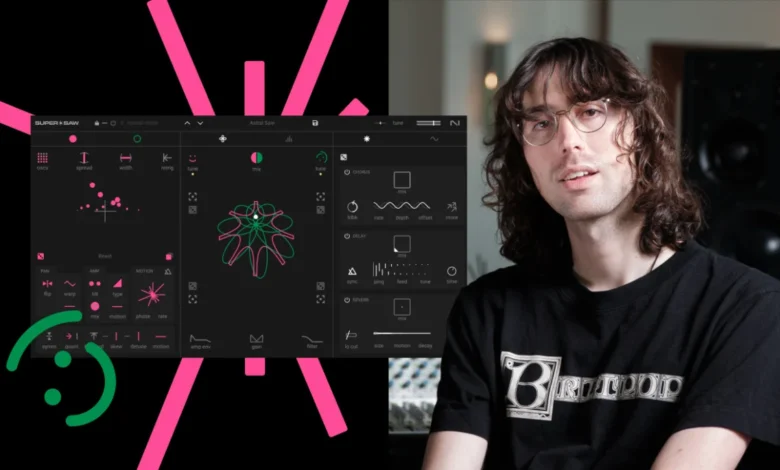
The landscape of electronic music production has been fundamentally altered with the official release of Super*Saw (pronounced SuperStarSaw), a specialized software synthesizer developed through a landmark collaboration between industry leader Native Instruments and the influential producer A. G. Cook. This partnership marks a significant moment in the evolution of digital signal processing (DSP), as it seeks to condense the complex, often labor-intensive workflows of "supersaw" stacking into a streamlined, highly expressive virtual instrument. By revisiting the digital textures that defined the late 1990s and early 2000s, Native Instruments and Cook have delivered a tool that bridges the gap between nostalgic rave aesthetics and the cutting-edge requirements of modern pop and club music.
The Heritage of the Supersaw: From 1996 to the Hyperpop Era
To understand the significance of Super*Saw, one must look back to the mid-1990s, specifically to the release of the Roland JP-8000 in 1996. It was this hardware synthesizer that first introduced the "Supersaw" oscillator, a function that allowed seven sawtooth waves to be played simultaneously and detuned against one another. The resulting sound was thick, harmonically rich, and possessed a "wall-of-sound" quality that became the foundational element of Trance, Hardstyle, and eventually, mainstream Eurodance.
As the music industry transitioned from hardware to software in the early 2000s, the supersaw remained a staple, though it often required significant processing power and complex routing to achieve the necessary "weight." In the 2010s, a new generation of producers, led by A. G. Cook and his PC Music collective, began to subvert these sounds. They pushed the digital artifacts and hyper-processed textures of the 90s to their logical extremes, creating a genre eventually labeled "Hyperpop." Cook’s work with artists such as Charli XCX, Caroline Polachek, and Oklou has frequently utilized these massive, detuned saw-wave stacks to create a sense of "digital euphoria" or "controlled chaos."
The release of Super*Saw represents the culmination of this sonic trajectory. It is not merely a recreation of a 1996 oscillator; it is a modern interpretation designed by one of the primary architects of the current pop landscape.
A. G. Cook’s Visionary Production Philosophy
A. G. Cook has spent over a decade challenging the boundaries of what constitutes "good" or "natural" sound in music. His discography, which includes the sprawling 49-track album 7G, the more focused Apple, and his most recent 2024 triple-album Britpop, serves as a testament to his fascination with digital limits. For Cook, the creation of a dedicated synthesizer was a long-term career objective.
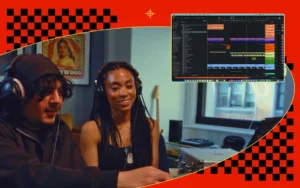
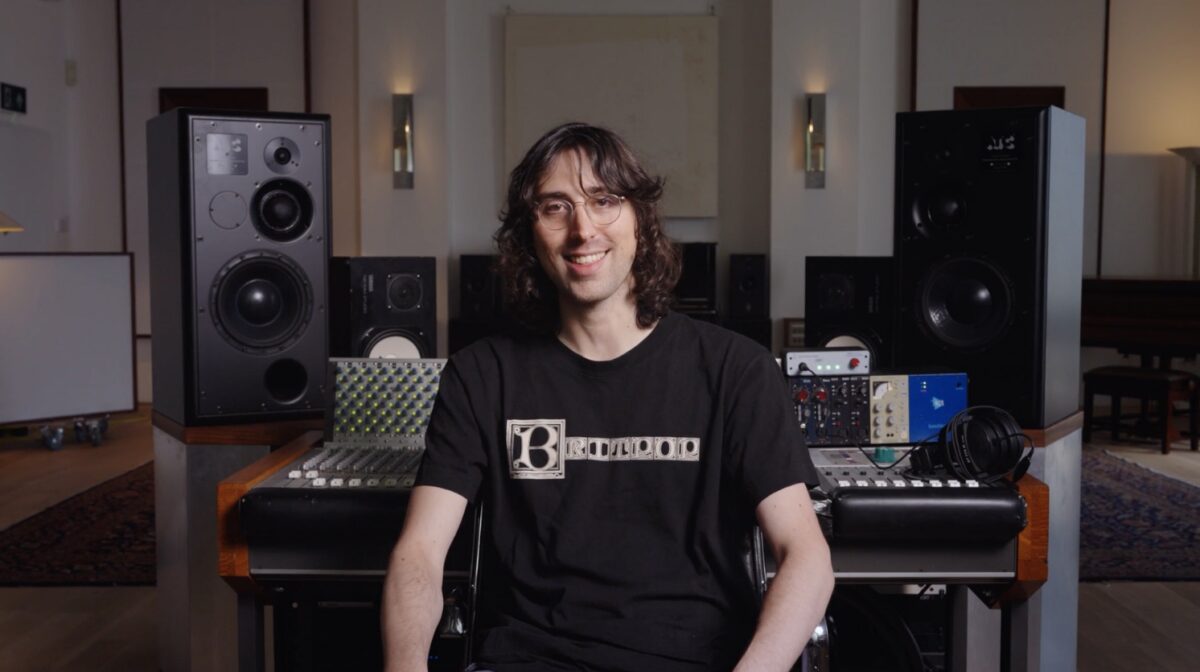
"It’s funny having my own synth plugin," Cook remarked during a launch event at Baltic Studios in London. "It’s something that’s always been a bit of a goal of mine and kind of on the back burner. I’m always excited when I see artists make their own tools around a specific ideology they have."
Cook’s ideology is rooted in the concept of "extension." He views instrument design as a way of taking existing musical ideas—the "family tree" of a sound—and pushing the edges until they break or transform into something new. In his own productions, Cook often uses supersaws that are so densely layered they lose their melodic identity and function as percussive "blocks of sound." This transition from harmony to texture is a central theme in Super*Saw’s design, allowing users to move from delicate, shimmering chords to aggressive, industrial-grade noise.
Technical Architecture: The Pink and Green Dual-Layer System
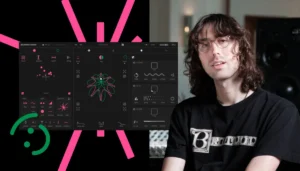
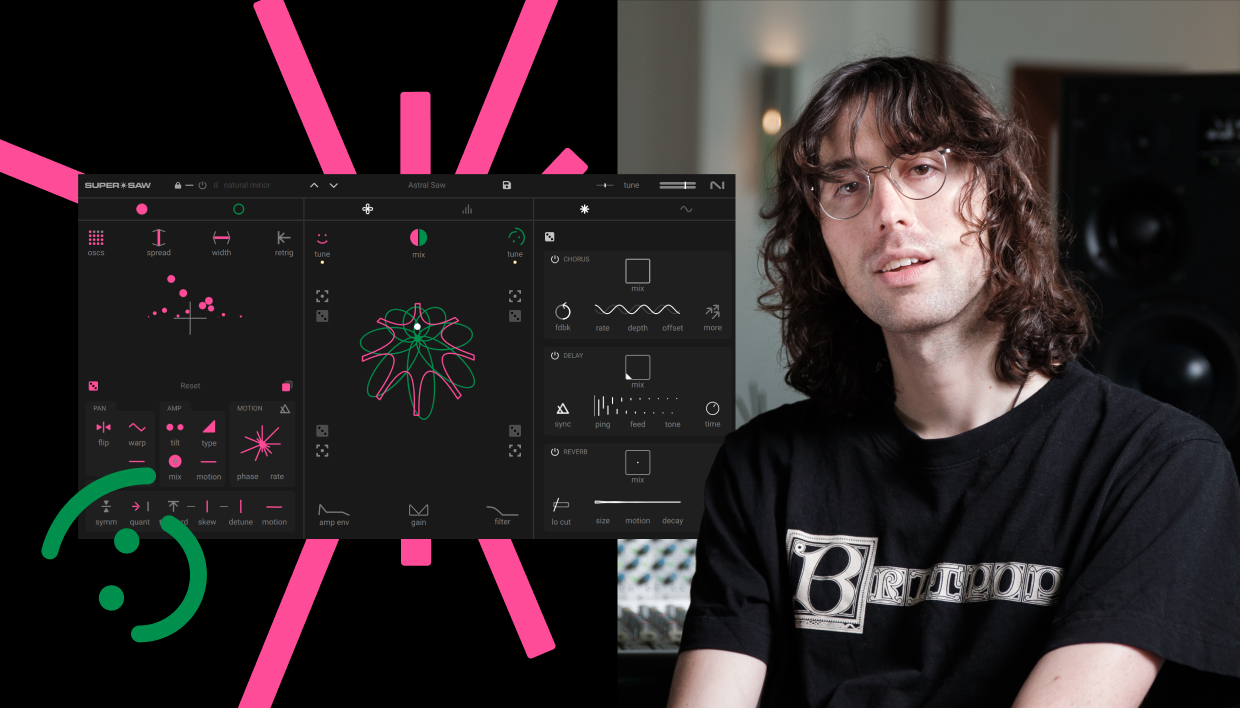
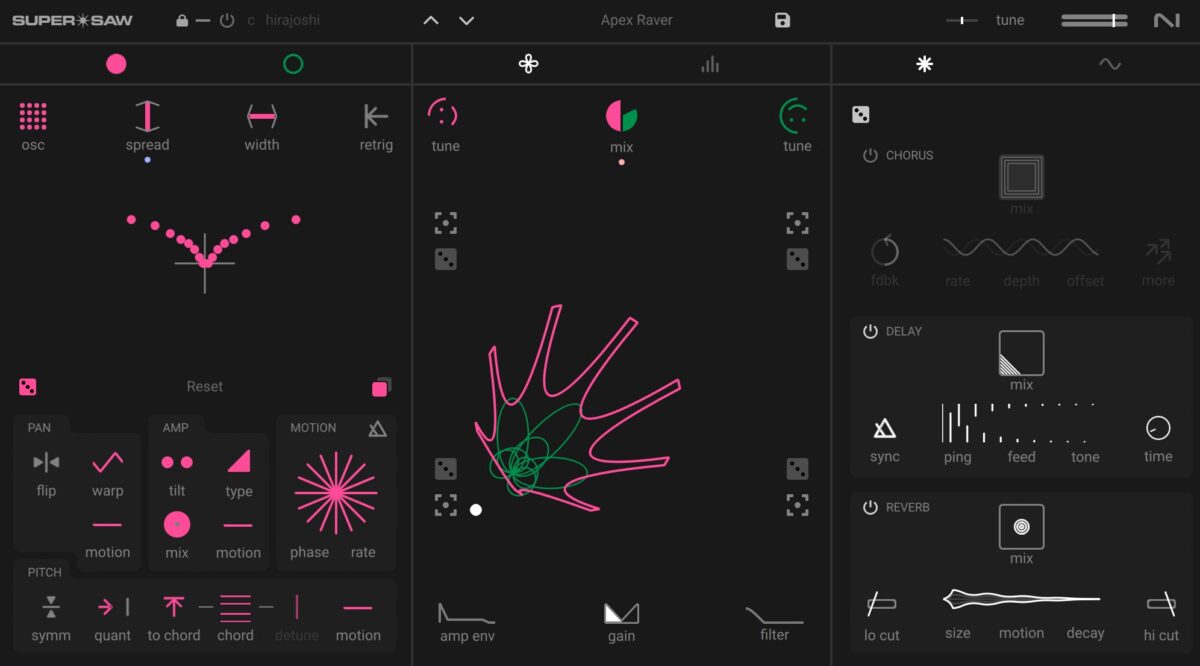
SuperSaw is built upon a dual 8-voice sawtooth oscillator system, providing a total of 16 sawtooth waves that can be manipulated in real-time. The interface is intentionally minimalist, utilizing a color-coded system that mirrors the visual identity of Cook’s Britpop* album: vivid pink and neon green.
The Dual-Layer Logic
Cook describes the two layers as a "comedic duo." This architecture allows for a sophisticated division of labor within a single patch. For example, the "Green" layer can be used to provide a stable, fundamental root note or a clean bass foundation, while the "Pink" layer is set to "go crazy"—utilizing extreme detuning, rapid modulation, and wide stereo spreading. By separating these functions, the plugin ensures that even the most chaotic sounds retain a sense of musicality and "weight" in a mix.
The 4-Corner Morpher and Star Modulator
One of the most innovative features of the instrument is the 4-corner Morpher. This allows producers to set four distinct states for a sound—varying in pitch, detune, or filter settings—and smoothly transition between them using a single control. This removes the need for complex, multi-track automation within a Digital Audio Workstation (DAW).
Additionally, the "Star Modulator" serves as a unique modulation source. Shaped like a star, this LFO-style modulator can be mapped to various parameters including panning, amplitude, and pitch. This feature is particularly useful for creating the "shimmer" or "wobble" often heard in Cook’s more experimental tracks, such as "Stargon" or "Mad Max."
Solving the "Workflow Bottleneck"
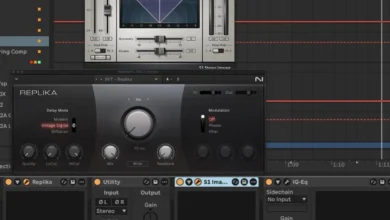
Prior to the development of Super*Saw, achieving the specific "A. G. Cook sound" was a tedious process for producers. Standard techniques involved duplicating a MIDI track multiple times, loading a different instance of a synth on each track, and manually adjusting the fine-tuning of each oscillator to create a dense stack.
"Doing some of those more classic A. G. Cook-style supersaw sounds can sometimes be the slowest part of my process," Cook explained. He cited his track "Stargon" as a primary example of where the workflow felt unmusical. "It was a real pain to get all the automation right and meticulously line everything up. It never felt like I was playing the synths or interacting with them in a musical way."
By consolidating these functions into a single interface with randomization features (the "dice" button), Super*Saw transforms a technical chore into a creative exploration. It allows for immediate results, enabling producers to stay in a "flow state" rather than getting bogged down in the minutiae of track management.
Industry Implications and Market Context
Native Instruments’ decision to collaborate with A. G. Cook signals a broader trend in the music technology industry: the shift toward artist-curated, "ideological" software. While "workhorse" synthesizers like Native Instruments’ own Massive X or Xfer Records’ Serum offer infinite possibilities, there is a growing demand for instruments that provide a specific "curated" sound and a simplified path to professional results.
SuperSaw enters a market where the boundaries between "underground" and "mainstream" have blurred. The "supersaw" sound, once relegated to niche trance circles, is now a dominant force in global pop, largely due to the influence of the PC Music aesthetic on artists like Charli XCX, whose recent album Brat has become a cultural phenomenon. As producers worldwide seek to emulate these textures, SuperSaw provides the official, "authorized" tool for doing so.
Furthermore, the plugin serves as a "coda" or "epilogue" to Cook’s recent creative output. By boiling down his decade of sound design into a playable instrument, he has essentially democratized his signature sound, moving it from a private production secret to a public creative resource.
Chronology of Development
The development of Super*Saw followed a multi-year timeline:
- 2020-2021: A. G. Cook releases 7G and Apple, solidifying the "maximalist digital" sound of his solo career. Discussions with Native Instruments begin regarding a potential collaboration.
- 2022-2023: The technical architecture of the plugin is finalized. Cook and the Native Instruments engineering team work to refine the dual-layer system and the Morpher logic.
- Early 2024: Cook releases Britpop, establishing the pink-and-green visual aesthetic that would ultimately define the plugin’s user interface.
- July 2024: Official launch of Super*Saw, accompanied by a video walk-through at Baltic Studios and a series of preset packs curated by Cook and his collaborators.
Conclusion: The Future of the Digital Stack
Super*Saw is more than a nostalgic tribute to the 90s; it is a forward-looking instrument that embraces the "honestly digital" nature of modern music. By focusing exclusively on the sawtooth wave, it forces producers to explore the creative potential of a single, fundamental building block.
The collaboration between Native Instruments and A. G. Cook highlights the importance of artist-led innovation in the tech sector. As digital instruments continue to evolve, the focus is shifting away from mere emulation of the past and toward the creation of new workflows that reflect how music is actually made in the 21st century. Whether used for shimmering pop melodies, earth-shaking basslines, or experimental walls of sound, Super*Saw provides a powerful new toolkit for the next generation of electronic musicians.
For the global community of producers, the release offers a rare opportunity to access the specific sonic DNA of one of the era’s most influential creators. As Cook concludes, the goal was to "boil that stuff down into an instrument that can be used by other people in completely different ways." With the launch of Super*Saw, that goal has been realized, marking a new chapter in the ongoing history of digital synthesis.
Related posts: