Google Ads Launches Invalid Traffic Overview Card to Enhance Transparency in Advertising Spend

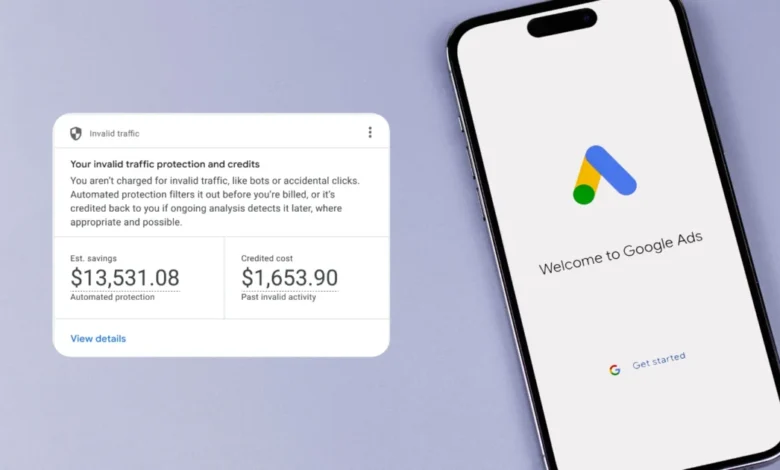
Google has officially launched a new Invalid Traffic Overview Card within the Google Ads platform, a strategic move designed to provide advertisers with unprecedented visibility into the volume and financial impact of filtered invalid traffic. The feature, which began a global rollout this week, centralizes data that was previously fragmented across various campaign reports and monthly billing statements. By offering a unified view of both pre-billing filtered activity and post-billing credits, the tech giant aims to address long-standing concerns from marketers regarding ad spend efficiency and the transparency of automated traffic filtering.
The deployment of this feature is available immediately to all Google Ads users and is also integrated into Search Ads 360, ensuring that large-scale enterprise accounts managing complex, multi-channel campaigns can leverage the same diagnostic tools. According to Ginny Marvin, the Google Ads Liaison, this initiative is part of a broader effort to demystify the "black box" of automated ad quality controls and provide advertisers with the concrete data required to audit their own traffic quality more effectively.
The Mechanism of Invalid Traffic Filtering
For over a decade, Google has utilized a combination of sophisticated automated systems and rigorous manual reviews to identify and filter invalid interactions. This category of traffic is broad, encompassing malicious bot activity, accidental double-clicks, intentional click fraud aimed at inflating costs for competitors, and server-side scraping scripts.
Historically, Google’s primary defense mechanism has been to preemptively filter this traffic before it ever registers on an advertiser’s invoice. While this practice is designed to protect the advertiser’s budget, it has often resulted in a lack of transparency. Advertisers could observe that their traffic was filtered, but they were rarely privy to the exact volume or the specific dollar value of the "saved" budget. The new Invalid Traffic Overview Card changes this by explicitly surfacing estimated savings, allowing marketers to quantify exactly how much of their budget was shielded from fraudulent or accidental interactions.
Navigating the New Reporting Interface
Advertisers can access the new functionality via the Google Ads Overview page by navigating to the "Campaigns" tab. The interface is designed for both high-level monitoring and granular analysis. By clicking "View details," users are presented with a dynamic daily trend chart that visualizes fluctuations in invalid activity over time, alongside a campaign-level table that breaks down performance across the account’s portfolio.
The card specifically highlights three key metrics:
- Filtered Interactions: The total count of clicks or impressions identified by Google’s algorithms as invalid prior to billing.
- Estimated Savings: A crucial addition that translates the volume of filtered traffic into a monetary value, providing a clear picture of how much budget was preserved.
- Post-Billing Credits: An accounting of instances where invalid traffic was identified after an invoice had been issued, triggering a credit back to the account.
This reporting structure is a significant departure from previous iterations of the platform, where post-billing credits often felt like "hidden" adjustments that appeared on statements without clear attribution to specific campaigns or timeframes.
Addressing the Disconnect Between Billing and Performance
A persistent pain point for digital marketers has been the divergence between accounting records and performance dashboards. Google Ads typically locks campaign metrics at the end of each month to ensure consistency with financial records. Consequently, when the company identifies invalid traffic retroactively and issues a credit, that credit does not automatically adjust the historical Cost or Cost-Per-Acquisition (CPA) figures in the main campaign tables.
To bridge this gap, Google has introduced the "Invalid Activity Credit: Search & PMax" report within the Report Editor. This specialized report allows advertisers to reconcile their actual spending with the performance metrics they use for optimization. It includes ten detailed columns, such as "Adjusted Cost" and "Adjusted Cost/Conv," which retroactively attribute credits to the specific dates when the ads originally ran. This ensures that performance analysts can conduct post-mortem assessments of their campaign efficiency without the noise of fraudulent traffic or the confusion caused by delayed billing adjustments.
Strategic Implications for Lead Generation
While the new card provides significant clarity, experts note that it does not serve as a panacea for all traffic quality concerns—particularly for those in the lead generation sector. A common misconception among advertisers is that "invalid traffic" covers all forms of low-quality leads. However, as Ginny Marvin clarified in the latest Ads Decoded newsletter, there is a fundamental distinction between an "invalid interaction" and a "low-quality lead."
Invalid traffic, as defined by Google, relates to technical fraud—bots, automated scripts, and non-human behavior. Conversely, a "bad lead" often originates from a legitimate human user who clicks an ad, visits a landing page, and completes a form with false or low-intent information. Because these interactions are technically "valid" from a traffic perspective—they involve a real device, a real IP address, and a human user—Google’s automated filters do not catch them.
For businesses relying on lead generation, this means that the new dashboard will be an essential tool for verifying technical traffic health, but it will not replace the need for robust CRM integration. Advertisers are encouraged to compare their Google Ads traffic data against internal CRM conversion quality metrics to identify gaps that automated filters cannot bridge.
The Broader Context of Digital Ad Fraud
The release of this tool comes at a time when the digital advertising industry is under increasing pressure to address the escalating costs of ad fraud. Recent industry reports have estimated that global ad fraud costs advertisers billions of dollars annually, with bot-driven traffic continuing to evolve to bypass traditional detection methods.
By providing this level of granular reporting, Google is likely attempting to bolster advertiser confidence in the platform’s security measures. By showing exactly what is being filtered, the company is moving toward a model of "radical transparency." This shift is consistent with the broader industry trend of empowering marketers with data-driven insights to manage their own risk, rather than simply asking them to trust the platform’s internal black-box systems.
Analyzing the Data: What Advertisers Should Look For
For those using the new card, context is paramount. A high volume of filtered traffic in a large-scale brand awareness campaign is not necessarily a sign of a compromised account; rather, it is often a natural byproduct of high-volume bidding. Advertisers should focus on the ratio of filtered traffic to total traffic and monitor for anomalies. If a specific campaign shows a sudden, unexplained spike in filtered traffic, it may indicate a targeted attack or a shift in the quality of the placement source, prompting a need for manual exclusion lists or adjustments to targeting settings.
Furthermore, the "Estimated Savings" figure should be viewed as a signal of the efficacy of Google’s protection systems. If the savings figure remains consistent over time, it suggests that the protection layers are functioning as expected. If the figure drops, it may either suggest an improvement in overall traffic quality or, conversely, a potential weakness in detection that warrants a deeper investigation into the account’s traffic sources.
Future Outlook and Industry Response
As the rollout continues, the industry will be watching to see how advertisers integrate this data into their monthly review cadences. The move is generally viewed as a positive development, representing a shift toward a more collaborative relationship between the platform and the advertiser. By placing the tools for investigation directly into the hands of the user, Google is effectively reducing the friction associated with dispute resolutions and billing inquiries.
However, the burden of proof regarding lead quality remains firmly with the advertiser. As digital landscapes become more complex with the integration of AI-driven bidding and automated creative, the distinction between "bot traffic" and "low-quality human traffic" will continue to be a primary area of concern for marketers. For now, the Invalid Traffic Overview Card stands as a significant milestone in providing the visibility necessary to make informed, data-backed decisions in an increasingly automated advertising ecosystem. As campaigns continue to scale, the ability to discern between effective investment and wasted spend will remain the hallmark of a high-performing digital marketing strategy.