From Beirut to Hollywood: How Animator Alissar Kobeissi Is Bridging Cultures and Redefining 3D Character Performance

The global animation landscape is undergoing a structural renaissance, characterized by the blurring lines between two-dimensional aesthetics and three-dimensional depth, as well as a democratization of storytelling that welcomes perspectives from previously underrepresented regions. At the forefront of this evolution is Palestinian-Lebanese senior animator Alissar Kobeissi. Operating within the upper echelons of major Hollywood studios—including Sony Pictures Imageworks, Illumination, Skydance Animation, and Walt Disney Animation Studios—Kobeissi represents a new wave of international talent actively reshaping the technical and narrative boundaries of contemporary computer graphics.
Her journey from watching dubbed Pan-Arab television broadcasts in the Middle East to supervising complex digital performances for global blockbusters offers a lens through which to examine the broader industrial shifts toward hybrid artistic styles, cross-cultural storytelling, and evolving studio pipelines.
Formative Years and the International Pipeline
Growing up in the United Arab Emirates, Kobeissi’s initial exposure to animation came via localized television broadcasts. Shows such as Pokémon, Nobody’s Boy: Remi, and Romeo’s Blue Skies—dubbed into Arabic and aired on the Pan-Arab channel Spacetoon—alongside imported Disney and Pixar features viewed on VHS, established an early foundation in visual narrative. A pivotal moment arrived with a birthday screening of Disney’s Mulan, a film that synthesized cultural specificity, systemic social commentary, humor, and high-level cinematic composition.

This early fascination directed her academic pursuits toward the Académie Libanaise des Beaux-Arts (ALBA) in Beirut. There, she earned a Bachelor’s degree in Computer Graphics and Interactive Media, a curriculum that spanned traditional disciplines such as gouache painting, art history, and typography alongside technical subjects like JavaScript. Her transition from 2D and foundational arts into the three-dimensional space was catalyzed by an encounter with basic digital rotation tools in LightWave 3D, prompting her to enroll in online character animation courses provided by AnimSchool.
This educational background paved the way for an international career that began in earnest following a viral animation test. The piece caught the attention of industry veterans including Kevin Webb, then head animator at Sony Pictures Imageworks, and Patrick Delage at Illumination. Kobeissi secured her breakthrough studio role in 2018 at Sony Pictures Imageworks on Smallfoot, followed by a tenure at Illumination working on Sing 2. Her portfolio subsequently expanded to encompass major titles across competing studio ecosystems, exposing her to the universal structural similarities of high-budget production pipelines as well as their distinct proprietary methodologies.
Technological Evolution: Bridging 2D Aesthetics with 3D Rigs
The technical methodology of modern feature animation relies heavily on the integration of reference footage and inter-departmental collaboration. According to Kobeissi, artists rarely generate organic human or creature nuances entirely from scratch; instead, live-action reference material serves as a foundational baseline. Animators study real-world physical dynamics and apply artistic stylization to select which behavioral beats to amplify for narrative clarity.
This process increasingly involves blending traditional draftsman techniques with digital tools. Utilizing hardware such as Wacom tablets, animators frequently sketch digital thumbnails and draw directly over 3D animation poses and reference footage. This workflow allows artists to push lines of action, silhouette readability, and stylization onto three-dimensional rigs. While 3D software ensures consistency of character proportions across an entire feature film, the deliberate manipulation of those digital constraints is what grants characters unique personality and entertainment value.

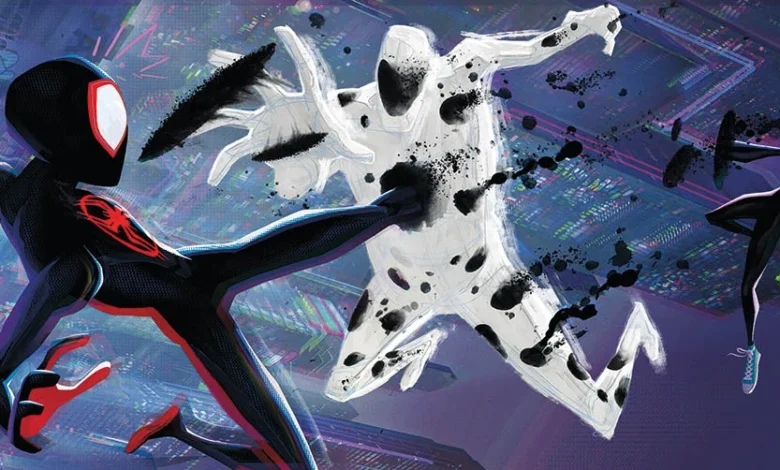
Studio pipelines have had to adapt to these hybrid visual targets. During the production of Sony Pictures Imageworks’ Spider-Man: Across the Spider-Verse, for instance, the sheer volume of stylized layout work performed organically by animators necessitated structural changes. To alleviate production bottlenecks, the studio established an entirely new department specifically designed to bridge the gap between layout and formal animation phases without imposing layout duties directly onto animators during production.
Managing effects-driven characters introduces further technical hurdles. While working on the VR short film Reimagined Volume III: Young Thang, Kobeissi animated a protagonist constructed entirely out of water. Every acting choice required a corresponding physical simulation of fluid dynamics that had to concurrently mirror the emotional and energetic state of the character. Achieving this necessitated close coordination between the animation and effects departments, ensuring that silhouette choices and dynamic indicators—such as wind-blown hair signaling emotional intensity—were explicitly mapped out during the initial animation pass before handing off the shots for heavy simulation.
The Democratization of Animation and Regional Renaissance
Beyond technical workflows, the commercial and critical landscape of animation is shifting. The medium is increasingly recognized by older demographics not as a genre restricted to children, but as a flexible medium capable of mature, complex storytelling. Landmark projects such as the Spider-Verse franchise, Arcane, Flee, and The Breadwinner demonstrate that audiences are responding favorably to distinct, risk-taking visual styles tailored specifically to serve demanding narrative themes.
This decentralization of production has coincided with a geopolitical shift in where animation is created. Historically, limited local infrastructure forced animators from the Middle East to emigrate to Western studios. However, the proliferation of accessible software, specialized training programs, and streaming investment has catalyzed a renaissance in regional markets.

Platforms such as Netflix have invested heavily in geographically diverse talent pools and distinct artistic styles. This trend is mirrored in the rise of independent productions and regional showcases, such as Beirut Animation Nights, a festival co-hosted by Kobeissi to spotlight works by Lebanese artists. By combining traditional cultural identities with modern technical proficiency, a new generation of artists in the Middle East and beyond is contributing to an increasingly globalized animation economy.
Industry Challenges and Future Outlook
Despite technological advancements and widening audience demographics, industry veterans continue to evaluate systemic inefficiencies within major studio structures. A primary concern voiced by senior artists is the institutional distance between the technical workforce and high-level narrative decision-making. As pipelines become increasingly specialized, individual animators can occasionally become insulated from broader creative discussions regarding character arcs and overall story direction.
While major studios historically utilized internal short-film incubator programs to foster cross-departmental creativity and leadership development, budgetary contractions in recent years have scaled back many of these initiatives. Navigating the barrier between execution-level animation and creative authorship remains an ongoing challenge for studios seeking to maximize the artistic potential of their personnel.
As the industry looks forward, Kobeissi remains optimistic about the trajectory of the medium. The ongoing convergence of hand-drawn sensibilities with advanced 3D rendering engines, coupled with a willingness to address complex socioeconomic and psychological themes through accessible visual metaphors, suggests that the boundaries of animated storytelling will continue to expand. For artists operating at the intersection of international cultural identity and Hollywood studio pipelines, the primary frontier lies in sustaining this creative momentum while continuing to dismantle the structural walls that have historically confined animation to narrow commercial definitions.
Related posts: