The Evolution of In-Store Retail Media: How Brands Are Transforming Physical Grocery Aisles Into High-Performance Digital Channels

For over a decade, modern advertising has been dominated by a digital gold rush. Brands funnelled billions of dollars into e-commerce ecosystems, social media feeds, and connected television (CTV) inventories, driven by the allure of precise targeting, real-time optimization, and streamlined attribution models. Yet, even as digital ad expenditures climbed to historic heights, a foundational truth of consumer behavior remained largely unchanged: the physical retail store continues to be one of the most influential touchpoints along the path to purchase.
Despite this enduring reality, marketers have historically treated brick-and-mortar locations merely as passive physical backdrops rather than active, programmable media channels. Traditional media buyers accustomed to the unified inventories and closed-loop metrics of digital platforms often viewed physical retail as an operational labyrinth. Executing campaigns inside brick-and-mortar stores required fragmented, retailer-by-retailer negotiations with little to no standardization in performance measurement.
That paradigm is currently undergoing a radical transformation. Driven by technological advancements and shifting consumer habits, in-store retail media has evolved into a sophisticated, programmatic channel. Advertisers can now purchase physical screen inventory through centralized platforms, apply precise digital-grade audience targeting, and measure campaign effectiveness across the entire marketing funnel. As infrastructure matures and standardized metrics take root, capital investment is following suit. According to projections from eMarketer, U.S. in-store retail media spending is poised to cross the billion-dollar threshold, reaching an estimated $1.15 billion by 2029.
The Chronology of Retail Media: From Passive Signage to Programmatic Networks
To understand the current momentum of in-store retail media, it is helpful to examine its evolutionary trajectory over the past decade.
In the early 2010s, physical retail advertising was largely characterized by static print signage, cardboard end-caps, and rudimentary loop-based video displays controlled independently by individual supermarket managers or local franchise owners. These placements offered zero audience data, no programmatic buying capabilities, and virtually no attribution beyond localized sales spikes that were difficult to isolate from other variables.
By the mid-2010s, early digital out-of-home (DOOH) networks began introducing digital screens into retail environments. However, these networks operated in silos. They functioned more like traditional billboards transplanted indoors than integrated components of a broader omnichannel strategy. Media buyers treated them as niche additions to out-of-home budgets rather than core components of shopper marketing or performance media.
The turning point arrived toward the end of the decade and accelerated through the early 2020s, catalyzed by the explosive growth of broader retail media networks (RMNs) online. As major grocery chains developed robust first-party customer data platforms—bolstered by loyalty programs, mobile shopping applications, and digital couponing—they recognized an opportunity to monetize their physical square footage in the same manner they monetized their e-commerce websites.
By the mid-2020s, technology providers and specialized networks began bridging the operational gap. Platforms emerged that allowed programmatic buying, dynamic creative optimization, and sophisticated audience segmentation within physical stores. Today, in-store retail media stands at the intersection of DOOH, video storytelling, and retail data science, marking a mature phase where physical storefronts operate with the technological sophistication of digital ad exchanges.
The Data-Driven Case for the Physical Store
The resurgence of the physical grocery store as a premier media channel is rooted in hard data regarding consumer habits. According to Grocery TV’s 2026 In-Store Shopper Perception Report, an overwhelming 95% of grocery shoppers make at least half of their purchase decisions while physically inside the store.
Crucially, this trend is not limited to older demographics. Younger, highly sought-after consumer cohorts continue to frequent physical locations at high frequencies. Data shows that 55% of Gen Z consumers shop in physical retail grocery environments at least once a week, dismantling the assumption that younger generations exclusively engage with brands through digital-only channels.
Furthermore, consumer receptivity toward in-store advertising has risen significantly. Grocery TV’s comparative data indicates that shopper receptivity increased across every major store zone over recent years. Digital display formats saw an average 10-percentage-point increase in positive customer experience ratings, climbing from 41% to 51%.
"We’re seeing advertisers lean in, testing and learning what works now that the infrastructure and measurement capabilities are in place," said Marlow Nickell, co-founder and CEO of Grocery TV. "There’s a lot of opportunity ahead as more retailers launch their in-store networks."
Mapping the Modern In-Store Ecosystem
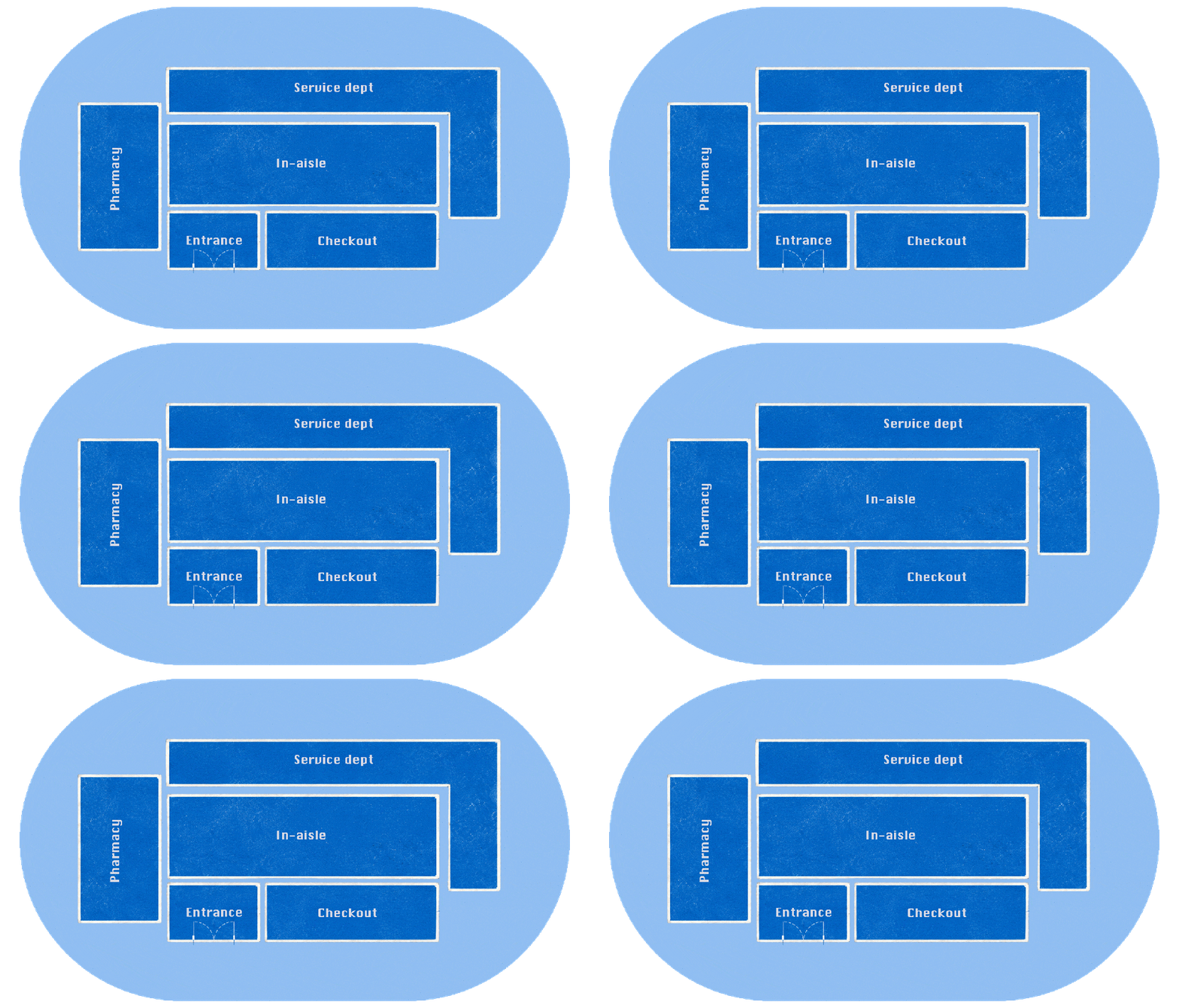
Navigating the physical grocery store as a media channel requires an understanding of how different zones within a retail footprint function. Unlike billboards encountered while driving—which represent transient, on-the-go media—grocery stores represent high-dwell environments where consumers spend extended periods browsing, evaluating, and making purchasing decisions.
Strategic screen placement is critical to campaign success. High-traffic and high-dwell areas, such as store entrances, checkout lanes, pharmacies, and deli counters, yield the highest levels of consumer engagement and favorability. According to Grocery TV research, shoppers rate screens in high-dwell areas such as pharmacy and checkout zones with an 84% favorability rating. Conversely, intrusive placements that disrupt the core shopping experience, such as screens embedded directly inside refrigerator coolers, tend to generate lower consumer acceptance.
Chelsea Monaco, senior vice president of commerce media at Digitas North America, emphasizes that the hybrid nature of the channel requires nuanced organizational alignment. "In-store retail media today can be categorized multiple ways, and it varies by the organization," Monaco noted. "The intersection of digital and in-store blurs in the retail media space, and the investment sources are so unique. I’ve typically seen it most categorized as shopper marketing, but investment source and where it sits in the organization depict the true categorization."
Audience Targeting and Contextual Relevance
Modern in-store media networks leverage a sophisticated blend of geographic, demographic, and behavioral data to achieve precision targeting that mirrors digital channels.
Geographic parameters allow brands to target stores down to specific states, designated market areas (DMAs), ZIP codes, or proximity to points of interest—such as positioning campaigns in grocery stores adjacent to university campuses to capture student populations. Behavioral signals, including past purchase patterns and responsiveness to promotions, combined with demographic metrics like age, household income, and family composition, enable brands to tailor campaigns to specific consumer segments.
Contextual relevance plays a profound role in driving consumer action. Research indicates that shoppers are 2.5 times more likely to consider a brand when an advertisement is contextually relevant to its immediate physical environment. For example, financial service providers and telecom brands have successfully utilized checkout screens—moments when consumers physically handle their wallets—to drive brand consideration, leveraging the psychological alignment of personal finance being top-of-mind.
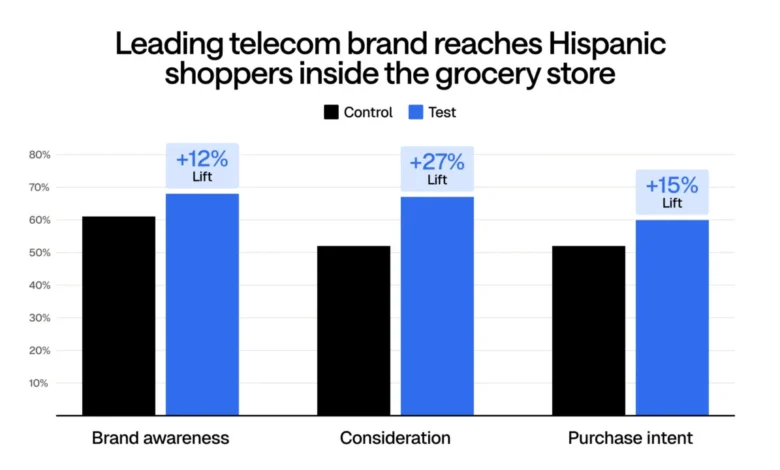
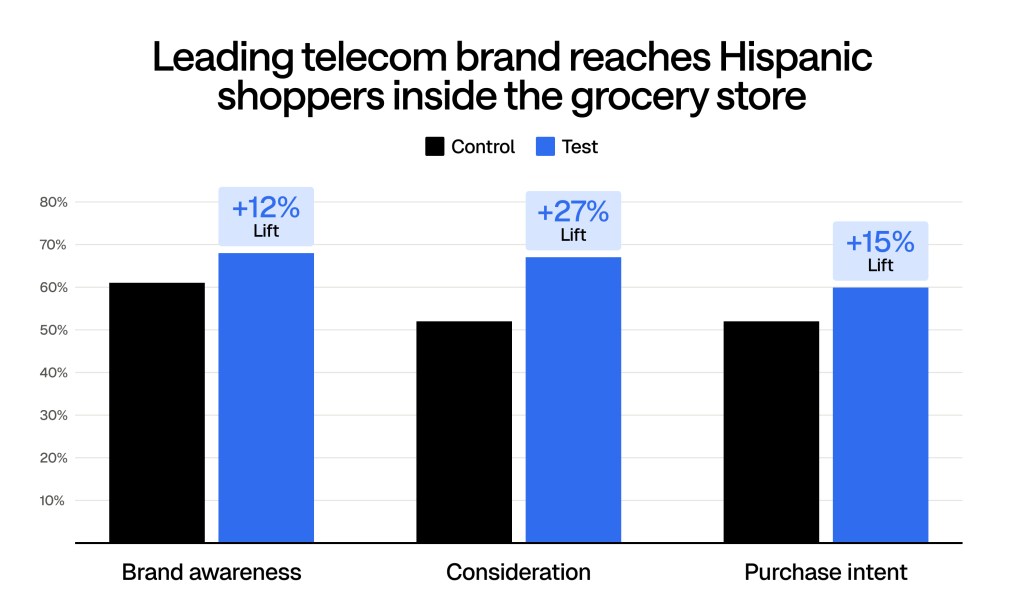
In one notable campaign, a telecom brand promoted an international access plan across retailer-owned networks in stores that over-indexed for Hispanic shoppers. The campaign delivered a 27% lift in brand consideration for wireless plans, a 15% lift in purchase intent, and a 12% lift in unaided brand awareness.
Overcoming Measurement Challenges in Physical Retail
Historically, one of the primary deterrents for digital media buyers entering the physical retail space was the perceived lack of standardized, closed-loop attribution. However, recent methodologies have closed this gap, allowing marketers to evaluate campaign performance across multiple tiers of the marketing funnel.
A joint study conducted by Grocery TV and the Interactive Advertising Bureau (IAB) revealed a notable operational gap: across four out of five key outcomes, more marketers believe in-store media can drive specific results than feel confident in their current ability to measure those outcomes. Bridging this gap requires aligning internal key performance indicators (KPIs) and moving beyond immediate point-of-sale metrics to evaluate broader brand health and customer retention.
Advanced measurement frameworks now utilize several distinct methodologies:
- Matched-Store Studies: Comparing sales lifts between test stores running campaigns and control stores over defined periods. For a Frito-Lay campaign executed via Hy-Vee’s RedMedia and Grocery TV across 103 stores over a month, matched-store analysis demonstrated a 15% sales lift and a $7.94 return on ad spend (ROAS).
- Brand Lift Studies: Utilizing control groups to evaluate changes in brand awareness, consideration, and favorability. A campaign for a financial health app measured against control groups found an 82% lift in brand rating, a 72% lift in recommendation, and a 34% lift in brand awareness.
- Transaction-Based Basket Analysis: Evaluating the halo effects of campaigns beyond the single advertised SKU. A national personal care brand partnering with Grocery TV observed not only a 15% sales lift for the advertised product but also a 12% lift across complementary products and an 8% lift across its broader brand portfolio.
- Post-Purchase Tracking: Measuring loyalty, repeat purchase behavior, and customer retention. The IAB study noted that 75% of marketers who fully leverage in-store media track post-purchase outcomes, compared to only 42% of underutilizing marketers.
Strategic Implications and the Road Ahead
As in-store retail media establishes itself as a core pillar of omnichannel marketing, early adopters are securing a distinct competitive advantage. Research from Grocery TV and MFuture indicates that integrating in-store media delivers an average of 49% incremental reach beyond existing media plans, allowing brands to minimize overexposure, plug gaps left by traditional digital display or online video, and maximize overall media efficiency.
For marketing leaders and brand strategists, the imperative moving forward is clear. Integrating physical retail into broader media mixes does not require a complete restructuring of organizational budgets. Instead, brands can begin by defining clear business objectives, testing in-store placements alongside established digital and television channels, and rigorously evaluating incremental contributions to sales and brand equity.
As Marlow Nickell advises, building institutional knowledge around creative best practices, targeting capabilities, and measurement frameworks takes time. Brands that initiate pilot programs and lean into testing now will be best positioned to capitalize on the multi-billion-dollar in-store media landscape as it scales toward the end of the decade.