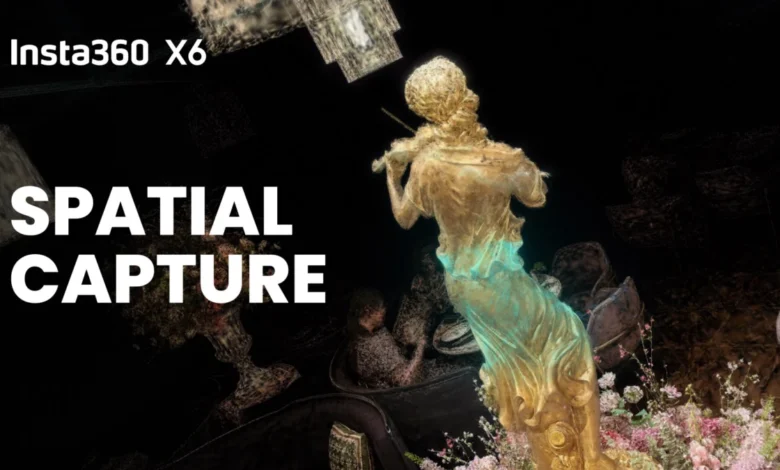
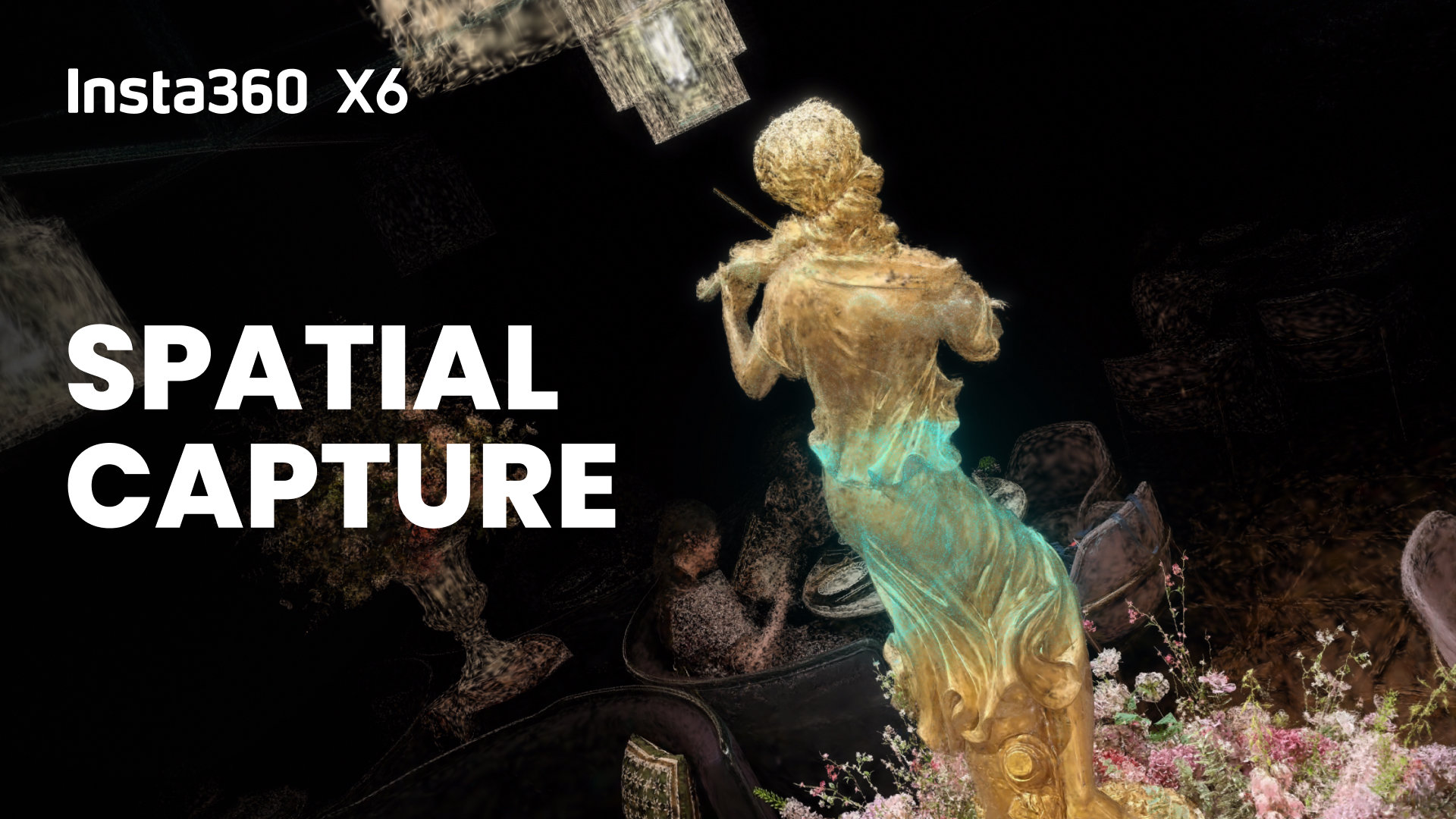
The landscape of consumer-grade spatial computing shifted significantly this past weekend as Insta360, the global leader in 360-degree camera technology, unveiled its groundbreaking "Spatial Capture" feature. Announced during the grand opening of the company’s first North American flagship store in the heart of New York City’s Times Square, this new software capability promises to democratize the creation of immersive 3D environments. By leveraging 3D Gaussian Splatting (3DGS), Insta360 is effectively bridging the gap between flat 360-degree video and fully explorable, photorealistic digital twin environments.
The Technological Leap: From 360 Video to 3DGS
Historically, the creation of high-fidelity 3D scenes—often referred to as digital twins or spatial environments—has been the exclusive domain of professionals equipped with LiDAR scanners, high-end DSLR arrays, and intensive photogrammetry software. The process typically required meticulous, multi-angle photography followed by hours, or even days, of offline rendering on workstation-grade hardware.
3D Gaussian Splatting (3DGS) has emerged as a disruptive alternative to traditional photogrammetry. Instead of building complex geometric meshes, 3DGS represents a scene as a collection of thousands of "Gaussian" particles that contain information about position, orientation, color, and transparency. When combined with the comprehensive coverage of a 360-degree camera, this technique allows for a fluid, volumetric representation of space that can be navigated from multiple vantage points, providing a sense of depth and immersion that static panoramic photos cannot achieve.
Deployment and Chronology of the Rollout
The integration of Spatial Capture is scheduled to commence on September 28, 2026, within the United States. While the feature is being marketed primarily alongside the new Insta360 X6, the company has confirmed that the capability will be backward compatible with existing hardware, specifically the Insta360 X5 and the X4 Air.
The launch sequence is designed to prioritize accessibility:
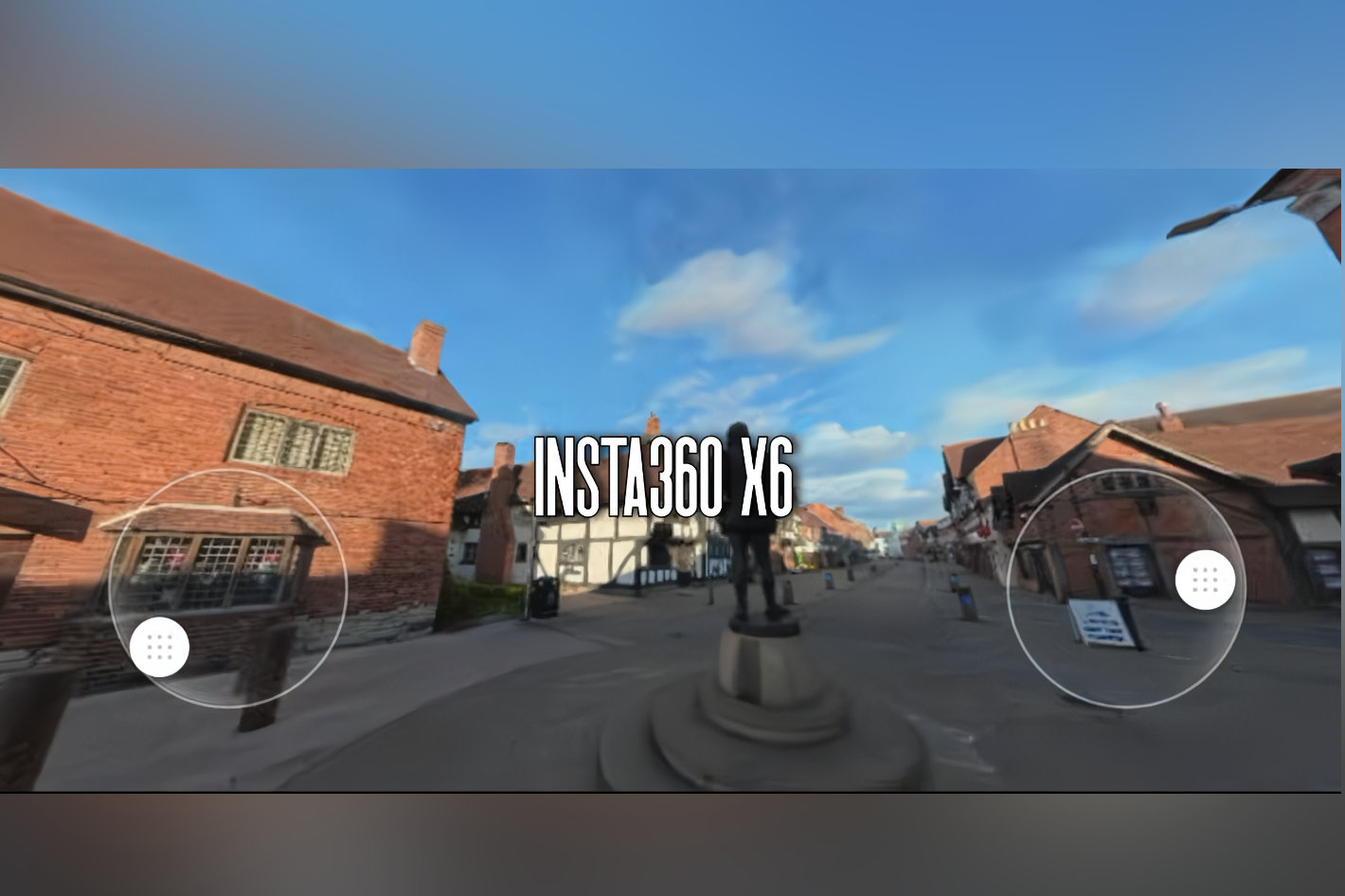
- Initial Beta Testing: Early demonstrations have been conducted by select content creators, most notably award-winning filmmaker Hugh Hou, who has showcased the capability of the X6 to generate complex, navigable scenes from simple, handheld 360-degree walks.
- Flagship Debut: The feature was demonstrated live during the September weekend opening of the Times Square store, allowing the public to interact with the 3DGS scenes in real-time.
- Phased Global Expansion: While the September 28 rollout is restricted to the U.S. market, industry analysts expect a global rollout to follow shortly, pending server-side infrastructure scaling to handle the computational load of cloud-based processing.
- The Freemium Model: To manage cloud processing costs, Insta360 has implemented a tiered model, offering users the ability to generate up to four 3DGS scenes per month at no additional cost, with potential subscription or pay-per-scene models likely for high-volume users in the future.
Streamlining the Workflow: How It Works
The primary friction point in spatial content creation has always been the complexity of the workflow. Insta360 has designed a "point-and-shoot" approach to solve this. The process is remarkably straightforward:
- Capture: Users record a 360-degree video of their environment using the X6. The camera captures every angle simultaneously, eliminating the need for the user to manually frame specific objects.
- Trimming: Users can record up to two minutes of footage. Any segments containing unnecessary movement or camera shake can be trimmed within the mobile application.
- Cloud Processing: The raw footage is uploaded to Insta360’s servers, where the 3DGS algorithm performs the heavy lifting. The conversion process generally requires one to two hours.
- Interaction: Once processed, the user receives a notification. The resulting scene can be explored via touch, virtual joysticks, or the device’s internal gyroscope, allowing for a "fly-through" experience of the captured space.
Strategic Implications for Consumers and Businesses
The release of Spatial Capture signals a shift in how personal memories are preserved. Rather than a flat video that forces the viewer to watch through a single, static lens, the 3DGS output allows for the preservation of an entire environment. This has profound implications for several sectors:
Personal Archiving: Individuals can now "freeze" a point in time within their childhood home, a wedding venue, or a travel destination, allowing future generations to virtually walk through those spaces.
Real Estate and Hospitality: For small business owners and real estate agents, the barrier to creating professional-grade 3D tours has been significantly lowered. Without the need for expensive hardware or specialized training, businesses can capture their brick-and-mortar locations and share them via a simple web link, allowing potential customers to explore the space remotely.
Content Creation: Digital storytellers can now incorporate "explorable" scenes into their narratives. By creating custom camera paths within the 3D environment, creators can produce cinematic sequences that feel as though they were filmed with professional tracking equipment, despite having been captured with a handheld consumer camera.
Official Statements and Industry Context
Max Richter, Co-Founder and VP of Marketing at Insta360, emphasized the company’s vision for the future of spatial media during the product announcement. "Spatial creation should not be limited to people with specialized equipment or expertise," Richter stated. "By combining the ability of a 360 camera to capture everything around it with a simpler 3DGS workflow, X6 makes it easier for anyone to capture not just a moment, but an entire place they can explore again."
This strategy aligns with the broader industry trend of "spatializing" the internet. As hardware like the Apple Vision Pro and various Meta Quest iterations bring VR/AR headsets into the mainstream, the demand for user-generated spatial content is growing. Insta360 is positioning itself as the primary content provider for these devices, essentially serving as the "camera of record" for the spatial web.
Technical Challenges and Future Outlook
While the promise of 3DGS is immense, challenges remain. Cloud-based processing requires significant data bandwidth and server uptime, and the accuracy of the 3D reconstruction is still heavily dependent on lighting conditions and the quality of the source video. Users operating in low-light environments or those moving the camera too quickly may experience "artifacting" or "floaters"—common issues in Gaussian Splatting where the model struggles to interpret visual data accurately.
Furthermore, the transition from 360 video to 3DGS is not yet perfect. The "looping" of textures and the handling of reflective surfaces remain difficult for current algorithms. However, the trajectory is clear: as processing power increases and machine learning models become more refined, the fidelity of these scenes will only improve.
The decision by Insta360 to include the X5 and X4 Air in this rollout suggests that the company is committed to building a long-term ecosystem rather than forcing hardware obsolescence. By retrofitting existing devices with this software, Insta360 is fostering a large user base ready to engage with the technology immediately upon the September 28 launch.
As the industry moves toward 2027, the success of the Spatial Capture initiative will likely be measured by the adoption rate among casual users. If the workflow remains as seamless as promised, the X6 could define the standard for personal spatial capture, transforming the way the world records its history, its businesses, and its experiences. For now, the integration of 3DGS into a consumer product represents one of the most significant advancements in creative technology in recent years, turning the once-niche field of spatial computing into a daily reality for the average person.