Erika Kirk issues scathing rebuke after Dave Chappelle jokes about the assassination of Charlie Kirk

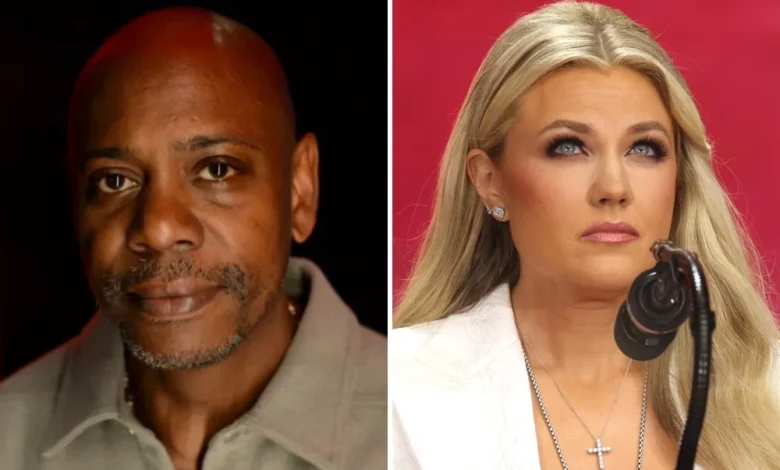
The recent remarks made by comedian Dave Chappelle during a performance at Madison Square Garden have ignited a firestorm of national discourse regarding the boundaries of political satire and the normalization of violence in public life. The controversy centers on comments Chappelle made concerning the late conservative activist and Turning Point USA co-founder, Charlie Kirk, who was assassinated in a high-profile shooting in Utah in September 2025. The incident has drawn sharp condemnation from Kirk’s widow, Erika Kirk, who argues that such rhetoric contributes to a culture of moral degradation.
The Chronology of the Incident and Subsequent Fallout
Charlie Kirk, a prominent figure in American conservative politics, was 31 years old when he was fatally shot on September 10, 2025, while speaking at a university event in Utah. The assassination sent shockwaves through the American political landscape, marking a rare and violent end for a public speaker known for his polarizing influence on college campuses.
The most recent escalation in the discourse surrounding his death occurred this past Friday at Madison Square Garden. Despite the venue’s strict "phone-free" policy—which requires attendees to secure their mobile devices in Yondr pouches—audio footage of the set leaked to the public. During the performance, Chappelle addressed the audience, stating, "I feel f***ed up saying this. It’s scary being a public speaker. Ever since that guy Charlie Kirk got murdered, and I shouldn’t say this publicly, but I feel better." Chappelle continued to elaborate on the sentiment, suggesting that he found himself in an inexplicably "good mood" following the news of the tragedy.
The reaction to Chappelle’s comments was swift. Within 48 hours, the clip had circulated across various social media platforms, leading to a barrage of criticism from political commentators, free speech advocates, and members of the public who viewed the joke as an endorsement of political violence.
Official Response from the Kirk Family
Erika Kirk, the widow of the late activist, took to X (formerly Twitter) on Sunday to issue a formal response. Her statement serves as a somber reflection on the impact that such public "punchlines" have on grieving families.
"To see leftist podcasters, comedians, and commentators laugh about political assassination as though it’s entertainment and the destruction of a human life is a punchline, is beyond disgusting," she wrote. She emphasized the human cost of the event, noting that the act of violence continues to dictate the daily lives of her and their two children.
Beyond the personal grief, Mrs. Kirk addressed the broader societal implications of the discourse. "A culture that laughs at assassination is one of profound moral decay. It threatens the very foundation of our country and the principles that hold our democracy together. You do not have to agree with someone’s politics to recognize the value of their life. This should not be so hard. Political violence must never be something this country tolerates, excuses, or celebrates."
A Pattern of Controversy: The "I’ve Had It" Podcast
The controversy surrounding Chappelle is not an isolated incident. Just days prior to his performance, the hosts of the popular podcast "I’ve Had It," Jennifer Welch and Angie Sullivan, faced significant backlash for a similar attempt at humor regarding the late activist. During a Thursday episode of their program, the hosts joked about the circumstances of Kirk’s death, prompting a swift negative reaction from their listener base and the broader public.
Recognizing the intensity of the backlash, Welch and Sullivan issued a joint statement on Saturday, expressing regret. "We apologize for our comments regarding the late Charlie Kirk," the statement read. "We realize that our attempt at humor crossed a line and we regret it." This quick retraction highlights the current sensitivity within the media landscape regarding the boundaries of acceptable speech concerning political fatalities.
The Data and Context of Political Violence in the U.S.
The assassination of Charlie Kirk in 2025 represents a critical juncture in the recent history of American political discourse. According to data provided by non-partisan watchdog groups tracking civil unrest, threats against public figures, including academics, politicians, and media personalities, have increased by nearly 40% since 2022.
The environment in which these figures operate has become increasingly volatile. Forensic analysis of public discourse suggests that the dehumanization of political opponents—often facilitated by the rapid, unfiltered nature of social media—has lowered the barrier to entry for actual physical violence. Experts in political sociology argue that when figures of influence, such as comedians or influencers, frame the murder of an ideological opponent as a source of relief or joy, it validates the underlying impulse that led to the assassination in the first place.
Analysis of Implications for Public Speech
The intersection of comedy and political violence has long been a subject of ethical debate, but the current climate has raised the stakes. There is a fundamental tension between the tradition of "punching up" in comedy—which historically targets power structures—and the act of celebrating the removal of a human life, regardless of their political affiliation.
- The Normalization of Violence: When public figures normalize the death of an opponent, it risks eroding the democratic norm of peaceful conflict resolution. Even if the remarks are presented as "jokes," the reception by the public can often strip away the ironic framing, leaving only the endorsement of violence.
- The "Safe Harbor" of Comedy: Comedians often rely on the defense that their stage is a sanctuary for taboo thoughts. However, in an era of mass communication, the "sanctuary" of a stage like Madison Square Garden is effectively a public square. The argument that comedy exists in a vacuum is becoming increasingly difficult to sustain in a digital age.
- Institutional Responsibility: Platforms, venues, and media outlets are now facing increased pressure to regulate the content of their performers. While this raises concerns about censorship, it also reflects a growing societal demand for a baseline of decency in the public discourse.
Ethical Standards and Future Outlook
The incident involving Dave Chappelle and the subsequent responses from the Kirk family and other media personalities serve as a litmus test for the current state of American civility. The moral weight of an assassination cannot be mitigated by the professional standing of the person making the joke.
As the nation grapples with this event, the conversation is likely to shift toward the responsibilities of cultural influencers. When the line between political disagreement and the celebration of death is blurred, the structural integrity of democratic debate is compromised.
For the family of Charlie Kirk, the discourse serves as a painful reminder that the tragedy of September 10, 2025, remains a live issue. As Mrs. Kirk stated, the challenge of the current era is not merely about political alignment, but about the fundamental recognition of human value. Whether the entertainment industry will adjust its approach to political tragedy remains to be seen, but the intensity of the current backlash suggests that the public is increasingly unwilling to tolerate the trivialization of political violence.
The coming weeks will likely see further scrutiny of how major media platforms handle content that touches upon the deaths of political figures. With social media providing a constant feedback loop, the pressure on comedians and podcasters to maintain a level of ethical rigor is at an all-time high. The legacy of Charlie Kirk, in the eyes of his family, is one that deserves to be discussed with gravity rather than used as a tool for cheap provocation. As this story continues to develop, it will remain a focal point for debates regarding the intersection of free speech, moral responsibility, and the health of the American political system.