Deconstructing Hollywood Mythmaking: The Origins, Evolution, and Cultural Persistence of the Infamous Richard Gere Gerbil Urban Legend

Hollywood has long functioned as a global incubator for celebrity gossip, mythological exaggeration, and sensationalized urban legends. From the fabricated studio-era scandals of the Golden Age to the rapid-fire viral misinformation campaigns of the modern digital era, the machinery of fame has consistently generated unverified and often salacious tales about its biggest stars. Yet, among the vast catalog of Hollywood folklore, no rumor has proven more remarkably tenacious or culturally pervasive than the early-1980s urban legend linking actor Richard Gere to an alleged medical emergency involving a small rodent.
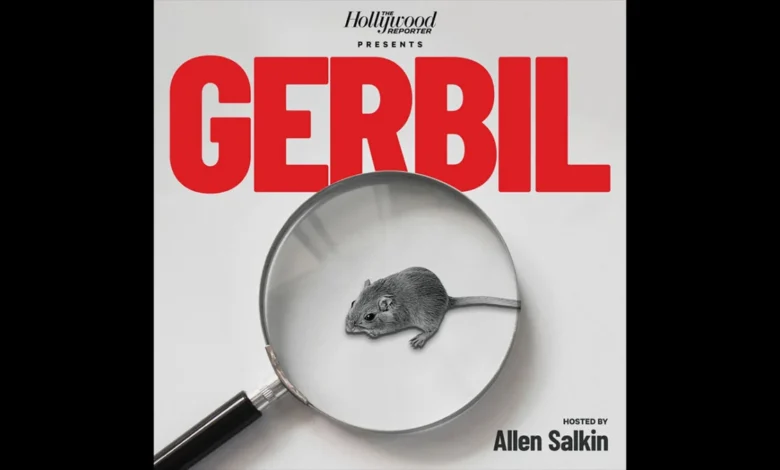
More than four decades after the rumor first materialized in the whispered corridors of the entertainment industry, veteran journalist Allen Salkin and The Hollywood Reporter are revisiting the myth in a comprehensive 12-episode podcast series titled Gerbil. The production seeks to do far more than merely rehash an old piece of Hollywood gossip; it attempts to dissect how misinformation functioned before the advent of the internet, analyzing the psychological, cultural, and industrial mechanisms that allowed a baseless anecdote to permanently attach itself to the public persona of an American film icon.
The Anatomy of a Hollywood Urban Legend
The core of the rumor, which began circulating in the entertainment community during the early years of the decade, claimed that Richard Gere required emergency medical intervention at a Los Angeles hospital after inserting a gerbil into his rectum. Despite a complete absence of medical records, eyewitness accounts, police reports, or credible journalism to support the claim, the story took on a monstrous life of its own. It spread by word of mouth, crossed geographic boundaries, and eventually permeated mainstream comedy routines, late-night television monologues, and everyday popular culture.
In his extensive reporting for the podcast, Salkin argues that the legend’s incredible staying power stems from its status as one of the earliest precursors to the modern internet meme. Long before social media algorithms accelerated the spread of digital falsehoods, the gerbil rumor demonstrated how easily human anxieties could be weaponized and distributed.
Writing in a recent column for The Hollywood Reporter, Salkin observed that the myth serves as a vital artifact of cultural history. “The gerbil legend may be the most essential rumor in Hollywood history because it perfectly reveals how the products of the entertainment industry, deliberately and, more importantly, accidentally, express fears, yearnings, nightmares and dreams that worm themselves eternally into our brains,” he noted.
This perspective is expanded upon in the podcast by Stanford University communications professor Fred Turner, who offers a stark cultural analysis of why the story resonated so deeply with the public consciousness. Turner frames the rumor not merely as an embarrassing personal attack on an actor, but as a symbolic projection of collective American anxieties. As Turner bluntly summarizes in the audio series, “This is Richard Gere, an American icon. And so in some sense, the gerbil is not just up Richard Gere’s ass, it’s up America’s ass.”
Investigating the Myth: Behind the Scenes of the Podcast
To construct a rigorous narrative surrounding the genesis and spread of the rumor, Salkin leveraged his extensive background as an investigative journalist and regular contributor to major cultural publications. Eschewing simple sensationalism, the production adopts an analytical approach, examining the social ecology of 1980s Hollywood, the economics of public relations, and the psychological appeal of taboo-breaking gossip.
The 12-episode series features a diverse lineup of cultural critics, historians, media theorists, and industry insiders who help contextualize the phenomenon. Among those interviewed by Salkin are prominent sex columnist Dan Savage, acclaimed film director Mike Figgis, political and social commentator Andrew Sullivan, and respected podcasters Karina Longworth and Connor Ratliff. The investigative framework is further bolstered by insights from journalists Mark Rozzo and Michael Gross, alongside several confidential surprise guests who shed light on how studio publicists and talent agents managed crises in an era before digital damage control.
The project is co-executive produced by Aliza Rosen, the president and founder of AYR Media. Rosen brings a wealth of true crime and investigative podcasting experience to the venture, having previously produced acclaimed audio series such as Audible’s Bitter Blood, Funny My Way, and Queen of the Con. Her extensive television and film credits—including CBS’s The Case of JonBenet Ramsey, Amazon Prime’s Spy High, and the critically lauded feature film Latter Day Jew—ensure that the audio documentary maintains a high standard of narrative pacing and investigative rigor.
Chronology of Misinformation: From Industry Whispers to Global Folklore
The trajectory of the Richard Gere rumor provides a fascinating case study in the lifecycle of pre-digital misinformation. While it is impossible to pinpoint the exact moment the story was first uttered, media historians generally trace its emergence to the period immediately following Gere’s meteoric rise to international stardom in films like American Gigolo (1980) and An Officer and a Gentleman (1982).
During the 1980s and 1990s, rumors of this scale traveled through closed communication channels: industry party circuits, agency mailrooms, call sheets, and eventually shock-jock radio broadcasts. Unlike modern viral falsehoods that can be easily fact-checked or debunked via a quick search engine query, pre-internet rumors relied on the friction of communication. The lack of verifiable proof was frequently reinterpreted by cynical consumers as evidence of a powerful Hollywood cover-up, demonstrating how institutional distrust fuels conspiratorial thinking.
By the turn of the millennium, the rumor had transitioned from a localized industry whisper to a widespread piece of pop-culture folklore, frequently referenced in television comedies such as Sex and the City and South Park. The longevity of the myth illustrates how cultural artifacts can outlive the specific social contexts that produced them, hardening into urban legends that are accepted as background fact by generations too young to remember the peak of Gere’s initial box-office dominance.
Broader Implications and Societal Impact
The release of Gerbil arrives at a time of heightened global anxiety regarding the spread of misinformation, deepfakes, and synthetic media. Yet, by looking backward rather than forward, the podcast offers a sobering reminder that human vulnerability to false narratives is not a byproduct of social media technology, but a fundamental aspect of human psychology.
Sociologists and media scholars note that urban legends about celebrities often serve as a social safety valve. Famous actors, musicians, and public figures occupy a liminal space in modern society, embodying both unattainable perfection and deep-seated cultural insecurities. When a star achieves massive commercial success—particularly one who projects an aura of polished masculinity and moral seriousness, as Gere frequently did in his humanitarian and cinematic work—audiences often feel a subconscious urge to cut them down to size. The persistence of the gerbil myth reflects a collective desire to humanize, humiliate, or destabilize an untouchable cultural icon.
Furthermore, the podcast highlights the historical failure of traditional entertainment journalism to adequately police or contextualize celebrity rumor-mongering. In decades past, mainstream entertainment outlets often ignored salacious rumors to maintain access to studio executives and major stars, inadvertently leaving a vacuum that allowed unverified underground stories to flourish unchecked.
Release Details and Accessibility
Gerbil officially premieres its inaugural two episodes on September 17, with subsequent episodes rolling out weekly on Thursdays. The 12-part investigative series is accessible across all major digital audio distribution platforms, including Apple Podcasts, Spotify, Amazon Music, and iHeartRadio.
As listeners tune in to trace the bizarre history of Hollywood’s most resilient urban legend, the series promises to deliver a compelling intersection of cultural history, media criticism, and investigative journalism. By examining how a harmless rodent became inextricably linked to the legacy of a major motion picture star, Gerbil ultimately holds up a mirror to a society that has always preferred a juicy fiction over a mundane truth.