Caracal Sighting in Kuno National Park Fuels Hope and Caution Amidst Cheetah Reintroduction Efforts

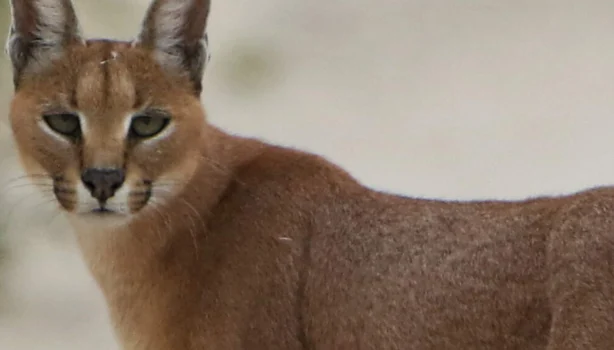
The recent confirmation of a caracal’s presence in Madhya Pradesh’s Kuno National Park, captured by camera traps, has ignited both excitement and a measured scientific response. The elusive, long-legged wildcat, distinguished by its distinctive black-tufted ears, was recorded moving under the cloak of night within the same landscape currently hosting India’s ambitious cheetah reintroduction project. This sighting, while significant, underscores the delicate nature of wildlife monitoring and the complexities of confirming resident populations of rare and shy species.
A Rare Glimpse of a Scarce Predator
The discovery, first reported by Mongabay India, marks a notable event for Kuno National Park, a region increasingly under the global spotlight due to the return of cheetahs after decades of absence. For the park’s field director, Uttam Kumar Sharma, who has been stationed at Kuno for the past four years, this caracal sighting represents the first documented instance of the species within the park’s boundaries during his tenure. The forest department is now diligently reviewing older records and surveillance data to ascertain if caracals have been previously observed in Kuno or its surrounding areas, a process that could potentially extend the known historical presence of the species in the region.
The caracal (Caracal caracal) is one of India’s least frequently encountered wild cats. Its nocturnal habits and inherently shy disposition make direct observation exceedingly difficult, even for seasoned wildlife biologists. This reliance on technology, such as motion-triggered camera traps, becomes paramount in documenting the presence of such species without causing disturbance. These devices act as silent sentinels, capturing fleeting moments of wildlife activity that might otherwise go unnoticed for years, or even indefinitely.
Scientific Scrutiny: Presence Versus Population
While the camera trap footage unequivocally confirms the presence of a caracal in Kuno, experts are exercising caution in interpreting its significance. Shekhar Kolipaka, a senior landscape developer at the Commonland Foundation with extensive research experience on caracal distribution in India, articulated this scientific prudence. "A single camera-trap photograph confirms the presence of a caracal, but does not indicate the existence of a resident population," Kolipaka stated. His explanation highlights a crucial ecological principle: the natural dispersal patterns of young adult carnivores.
Kolipaka elaborated on the migratory behaviors of these animals, particularly males, which are known to traverse vast distances in search of suitable territories. These journeys can involve navigating diverse and often challenging landscapes, including rivers, agricultural fields, human settlements, roads, and railway lines. Therefore, a solitary sighting, even in a protected area, could represent a transient individual passing through rather than an established breeding resident. The true confirmation of a resident population, Kolipaka emphasized, will only emerge through sustained and continued monitoring efforts.
The Crucial Role of Camera Traps in Wildlife Surveys
The caracal sighting serves as a potent illustration of the indispensable role camera traps play in modern wildlife research, especially for elusive species. These automated devices have revolutionized the way scientists gather data on animals that are active at night, are wary of human presence, or inhabit dense and inaccessible terrain. Unlike traditional methods of direct observation, which can be intrusive and often yield limited results for such species, camera traps offer a non-invasive means of documenting biodiversity. They operate continuously, day and night, capturing invaluable photographic and video evidence of species that might otherwise remain invisible.
In cases like the Kuno caracal, where evidence is scarce, camera traps are often the sole source of proof for a species’ presence. The technology allows for the collection of crucial data points on species distribution, activity patterns, and potentially, population dynamics, all without stressing the animals or altering their natural behaviors. This reliance on technological solutions is becoming increasingly vital as conservation efforts face the challenge of monitoring populations across vast and complex landscapes.
A Protected Species Facing an Uncertain Future
The heightened attention surrounding the caracal’s appearance in Kuno is intrinsically linked to its conservation status in India. The caracal is afforded the highest level of protection under Schedule I of India’s Wildlife (Protection) Act, 1972. This legislative designation underscores its vulnerability and the imperative for stringent conservation measures. While the International Union for Conservation of Nature (IUCN) classifies the caracal globally as a species of "least concern," its status within India paints a more precarious picture. Here, it is considered "near threatened," reflecting a significant decline in its population and range over the past century.
Compounding this concern is the lack of a reliable official population estimate for caracals in India. Widely circulated figures suggesting around 50 individuals are considered unverified by many researchers. A comprehensive study conducted in 2020 revealed a dramatic contraction of the caracal’s historical range in India, with an estimated shrinkage of approximately 96 percent compared to pre-1947 levels. Today, the species is largely concentrated in specific pockets of Rajasthan, Gujarat, and Madhya Pradesh.
Recent confirmed sightings of caracals outside of these core areas have been infrequent and often serendipitous. These have included accidental captures on camera traps deployed for tiger monitoring in Rajasthan’s Mukundra Hills, and evidence gathered through radio-collaring and camera surveillance near the India-Pakistan border in Jaisalmer. These sporadic occurrences highlight the fragmented nature of the caracal’s remaining habitat and the challenges in tracking its movements.
Habitat Recovery and the Cheetah Project: A Symbiotic Hope?
Uttam Kumar Sharma, Kuno’s field director, has suggested a potential correlation between the caracal’s appearance and the habitat improvement initiatives undertaken as part of the cheetah reintroduction program. He noted an increase in water availability and enhancements in grassland quality within Kuno since the commencement of the cheetah project. This observation aligns with the broader objective of the cheetah reintroduction, which, as Madhya Pradesh Chief Minister Mohan Yadav articulated on social media, is designed to benefit not just cheetahs but also the entire ecosystem and its inhabitants.
The argument posits that by restoring and improving habitats for the reintroduced cheetahs, the project inadvertently benefits other native wildlife, including elusive predators like the caracal. The enhanced grasslands can support a greater abundance of prey species, which in turn can sustain larger carnivores. Increased water sources can also attract and support a wider array of wildlife. This "umbrella species" approach to conservation, where protecting the habitat of a flagship species leads to the protection of many others, is a well-established conservation strategy.
However, researchers most intimately involved with caracal conservation maintain a cautious optimism. They emphasize the need for further fieldwork and data collection to substantiate this hypothesis. The immediate next steps for the forest department are crucial: meticulously examining historical records and intensifying monitoring efforts around the specific location where the camera traps captured the caracal. This will be instrumental in determining whether the sighting represents a lone, transient individual or an indication of a more established presence, potentially a breeding pair or a small, nascent population within Kuno.
Broader Implications for Conservation in India
The caracal sighting in Kuno National Park, situated within the larger context of the cheetah reintroduction, carries significant implications for conservation strategies in India. It underscores the interconnectedness of ecosystems and the potential for well-planned conservation initiatives to yield positive outcomes for a variety of species. The improvement of habitat conditions, driven by the needs of the cheetahs, could indeed provide a much-needed boost to the populations of other threatened carnivores.
This event also highlights the ongoing need for robust, long-term monitoring programs. The caracal’s precarious status in India demands continuous vigilance and research to understand its distribution, population trends, and the threats it faces. The success of the cheetah project, while celebrated, should not overshadow the conservation needs of other equally vulnerable species that share these landscapes.
The careful, data-driven approach advocated by experts like Shekhar Kolipaka is essential. While the caracal’s reappearance in Kuno offers a beacon of hope, it is the sustained commitment to scientific research, habitat management, and diligent monitoring that will ultimately determine the long-term survival of this magnificent wild cat and the health of the Indian wilderness. The story of the Kuno caracal is a reminder that conservation is a marathon, not a sprint, and that every sighting, however small, contributes a vital piece to the larger ecological puzzle.