Blender 5.2 LTS Unleashes Advanced Features, Elevating Open-Source 3D Capabilities for Global Artists


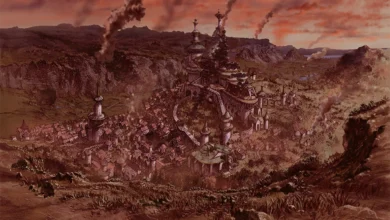
The Blender Foundation has officially released Blender 5.2 LTS, the latest long-term support version of its acclaimed open-source 3D creation suite, introducing a suite of powerful new features and critical performance enhancements designed to empower artists, animators, and developers across various industries. This release marks a significant stride in Blender’s ongoing evolution, reinforcing its position as a robust and increasingly indispensable tool in the professional 3D pipeline. Key additions include advanced node-based physics simulations powered by Geometry Nodes, a specialized Thin Wall mode in Principled BSDF for enhanced photorealism of thin meshes, a dedicated Bevel node, a Sample Sound node for audio-reactive animations, and a Cycles texture cache that promises substantial memory and startup time reductions for complex scenes. Users can explore the new capabilities through an official overview video and download the latest version from Blender.org. The featured image for this release is credited to Joanna Kobierska.
The Significance of an LTS Release
The "LTS" designation, standing for Long Term Support, is a crucial aspect of Blender’s release strategy, particularly for professional environments. Unlike standard releases that introduce frequent, sometimes experimental, changes, LTS versions are designed for maximum stability and reliability over an extended period. Blender LTS releases typically receive critical bug fixes and stability updates for two years, providing a dependable foundation for studios and individual artists engaged in long-term projects, production pipelines, or educational institutions that require a consistent software environment. This commitment to stability reduces the risk of workflow disruptions, ensures backward compatibility for ongoing projects, and allows developers and artists to invest confidently in a particular version without concerns about rapid, breaking changes. Blender’s LTS cycle, which typically sees a new LTS version every two years (with the previous being 3.6 LTS), demonstrates a mature approach to software development, balancing rapid innovation with the practical needs of its professional user base. This strategic approach has been instrumental in Blender’s increasing adoption in film, animation, game development, and architectural visualization sectors, where stability and predictability are paramount.
Deep Dive into Key Features and Their Implications
The 5.2 LTS release introduces several features that address long-standing user requests and open new creative avenues, impacting various stages of the 3D production workflow.
Node-Based Physics Simulations with Geometry Nodes
Perhaps the most transformative feature in Blender 5.2 LTS is the integration of node-based physics simulations directly into Geometry Nodes. Geometry Nodes, first introduced in Blender 2.92, revolutionized procedural modeling and scattering by allowing users to manipulate geometry through a powerful node-based interface. Initially focused on static procedural generation, this update expands its capabilities dramatically by enabling dynamic simulations. Artists can now construct complex physics interactions – such as cloth, soft bodies, rigid bodies, and even fluid-like effects – entirely within the Geometry Nodes environment.
This paradigm shift offers unparalleled flexibility and control. Traditional physics simulations often involve baking processes and rigid parameters, making iterative design cumbersome. With node-based physics, artists gain real-time feedback and the ability to dynamically adjust simulation parameters, influence forces, and define object behaviors using a visual, interconnected network of nodes. For instance, a designer could procedurally generate a pile of falling objects, simulate fabric draping over complex forms, or create intricate destruction sequences, all while maintaining a non-destructive workflow. This not only streamlines production but also encourages experimentation and rapid prototyping, making advanced simulations more accessible and integrated into procedural workflows. The implications for motion graphics, visual effects, and game asset creation are profound, offering a powerful alternative to traditional simulation tools and further solidifying Geometry Nodes as a core procedural toolkit within Blender.
Thin Wall Mode in Principled BSDF
Rendering meshes with minimal thicknesses, such as leaves, paper, fabric, or delicate glass structures, has historically posed challenges for realistic lighting and shading. The Principled BSDF (Bidirectional Scattering Distribution Function) shader, Blender’s physically based rendering (PBR) shader, is designed to emulate how light interacts with real-world materials. However, accurately representing extremely thin surfaces, where light scattering and absorption occur over a negligible distance, often required complex workarounds or resulted in unnatural visual artifacts.
The new Thin Wall mode directly addresses this issue. By optimizing how light interacts with surfaces identified as "thin walls," the renderer can more accurately simulate phenomena like subsurface scattering, translucency, and light transmission through these delicate geometries. This leads to significantly more photorealistic results without requiring artists to thicken geometry or employ elaborate shader networks. For architectural visualization, product design, and character artists working on clothing or foliage, this feature dramatically improves the realism and efficiency of rendering, allowing for more convincing and visually appealing presentations of intricate details.
Bevel Node
The addition of a dedicated Bevel node is a seemingly small but highly impactful quality-of-life improvement for modelers. Beveling, the process of rounding off sharp edges, is fundamental in 3D modeling to prevent unnatural sharp reflections and to add realism to objects. Previously, artists would typically apply bevel modifiers, perform manual beveling operations, or use complex node setups to achieve this procedurally.
The Bevel node streamlines this process within a node-based workflow. It allows artists to apply bevels parametrically and non-destructively, meaning the original mesh data remains untouched, and bevel parameters can be adjusted at any time. This is particularly valuable in hard-surface modeling, product design, and architectural visualization, where precise edge control is critical. Integrating it as a node also opens possibilities for conditional beveling based on other procedural parameters, enhancing flexibility and making intricate detailing more manageable and consistent across complex models.
Sample Sound Node
The Sample Sound node introduces a new dimension to animation and motion graphics within Blender by enabling direct integration of audio data into node networks. This node can extract frequency data (e.g., amplitude, specific frequency bands) from an audio source, making it accessible for driving animations, modifiers, or material properties.
The creative applications are extensive. Artists can now easily create audio-reactive animations where objects pulsate, deform, or change color in response to music beats or spoken words. This is invaluable for music videos, interactive installations, abstract animations, and dynamic data visualization. The node simplifies what previously required external tools or complex scripting, democratizing the creation of sophisticated audio-driven visual effects and expanding Blender’s utility for motion graphics designers and VJs (video jockeys).
Cycles Texture Cache
Performance optimization is a continuous endeavor for any 3D software, especially concerning rendering complex scenes. Cycles, Blender’s physically based production renderer, is known for its high-quality output but can be demanding on system resources, particularly memory, when dealing with scenes rich in high-resolution textures.
The introduction of a Cycles texture cache directly addresses this challenge. By intelligently caching frequently used texture data, the renderer can significantly reduce memory consumption and cut down on startup times for texture-heavy scenes. Instead of reloading or re-processing textures every time, the cached data allows for quicker access and more efficient memory management. This translates into faster rendering iterations, smoother viewport performance, and an overall more responsive user experience, especially for artists working on large-scale environments, detailed characters, or complex product renders that rely heavily on intricate texture maps. This enhancement is crucial for pushing Blender’s capabilities further into professional production pipelines where efficiency and speed are paramount.
Blender’s Ascendancy: A Chronology of Open-Source Innovation
Blender’s journey from a proprietary in-house tool to a global open-source powerhouse is a testament to community collaboration and persistent innovation. Originally developed by Ton Roosendaal for NeoGeo in 1994, it was released to the public as shareware in 1998. However, NeoGeo’s bankruptcy in 2002 led to a pivotal moment: the Blender Foundation was established, and a public crowdfunding campaign successfully raised €100,000 to buy the rights to Blender and release it as open-source software under the GNU General Public License (GPL).
This act of liberation marked the beginning of Blender’s exponential growth. Key milestones in its development include:
- 2006: The release of "Elephants Dream," the world’s first open movie, demonstrating Blender’s capabilities in professional animation.
- 2008: "Big Buck Bunny," another open movie, further showcased Blender’s animation and rendering prowess.
- 2011: The introduction of Cycles, a new physically-based production renderer, significantly elevating Blender’s rendering quality to industry standards.
- 2014: Blender 2.7x series solidified its feature set, gaining traction among independent artists and small studios.
- 2019: Blender 2.80 brought a monumental overhaul of the user interface (UI) and user experience (UX), making the software far more accessible and intuitive for new users, alongside the introduction of Eevee, a real-time render engine. This release is often cited as a turning point in Blender’s mainstream adoption.
- 2020: Blender 2.9x continued to refine the UI and introduce initial versions of Geometry Nodes, laying the groundwork for the procedural workflows now advanced in 5.2 LTS.
- 2021: Blender 3.0 marked a significant version jump, focusing on performance, further Geometry Nodes development, and an improved asset browser.
- 2022: Blender 3.3 LTS became the first long-term support version of the 3.x series, offering stability for large projects.
- 2023: Blender 3.6 LTS continued this trend, offering further refinements and stability.
- 2024: The release of Blender 5.2 LTS, following the established cadence, builds upon this foundation with sophisticated new features, particularly expanding the procedural capabilities of Geometry Nodes and enhancing rendering realism and performance.
The open-source model has allowed Blender to foster a vibrant global community of developers and artists who contribute to its code, documentation, and educational resources. This collaborative ecosystem is a significant competitive advantage, enabling rapid iteration and the integration of diverse perspectives into the software’s development.
Blender’s Growing Ecosystem and Industry Impact
Blender’s impact on the 3D graphics industry has been steadily growing, challenging the dominance of proprietary software solutions. Its free and open-source nature has democratized access to high-end 3D creation tools, enabling hobbyists, students, and professionals in developing nations to participate in the digital arts without prohibitive licensing costs.
- User Base: Blender boasts a massive and diverse user base, estimated to be in the millions, growing consistently year over year. The Blender Development Fund, supported by individuals and major companies like Epic Games, NVIDIA, Unity, Adobe, and AMD, underscores its widespread industry recognition and importance.
- Animation and VFX: While still catching up to industry giants like Autodesk Maya for large-scale studio pipelines, Blender is increasingly used for feature film production (e.g., "Next Gen," "The Missing Link" for some previs work), animated shorts, and independent films. Its robust animation tools, coupled with Cycles and Eevee, make it a powerful choice for character animation, motion graphics, and visual effects. The new Geometry Nodes physics simulations will further enhance its capabilities in complex VFX shots.
- Game Development: Blender is a staple in indie game development pipelines for modeling, texturing, rigging, and animation. Its integration with game engines like Unity and Unreal Engine is seamless, and its comprehensive toolset makes it ideal for rapid prototyping and asset creation. The procedural tools in 5.2 LTS can significantly accelerate environment generation and dynamic asset creation for games.
- Architectural Visualization (ArchViz) and Product Design: For architects and product designers, Blender offers powerful modeling, rendering, and presentation capabilities. The Thin Wall mode and improved Cycles performance in 5.2 LTS are particularly beneficial for rendering intricate architectural details, realistic materials, and precise product models with greater fidelity.
- Education: Its accessibility makes Blender an unparalleled tool for education, enabling institutions worldwide to teach 3D graphics without the burden of expensive software licenses, fostering the next generation of digital artists.
Blender’s continuous improvement, fueled by community contributions and strategic funding, has positioned it as a serious contender against commercial alternatives. Its unique combination of powerful features, open-source flexibility, and zero cost makes it a compelling choice for an ever-growing segment of the 3D industry.
Statements and Community Reception
While specific official statements regarding Blender 5.2 LTS are typically presented through release notes and developer blogs on Blender.org, the overarching message from the Blender Foundation consistently emphasizes a commitment to stability, performance, and empowering artists through innovative, open-source tools. The focus on an LTS release underscores the Foundation’s dedication to providing a reliable platform for production work, listening to community feedback regarding stability needs, and ensuring that new features are robust enough for professional application.
The community’s reception to new Blender releases, especially LTS versions, is generally enthusiastic. Artists eagerly anticipate performance improvements and workflow enhancements. The integration of physics into Geometry Nodes is expected to be particularly well-received, as it represents a significant step towards a fully procedural and dynamic workflow within Blender, a direction that many advanced users have been advocating for. The performance gains from the Cycles texture cache will also be welcomed by anyone dealing with large-scale projects, directly addressing common bottlenecks. The release video and detailed documentation provide transparent insights into the development process, fostering trust and engagement within the user base.
Broader Implications for 3D Graphics
The release of Blender 5.2 LTS carries significant implications for the broader 3D graphics landscape. It continues to solidify Blender’s role in the democratization of high-end 3D content creation, making sophisticated tools accessible to a wider audience globally.
- Acceleration of Procedural Workflows: The expansion of Geometry Nodes with physics simulation capabilities is a major step towards making fully procedural, non-destructive workflows more powerful and versatile. This trend is central to modern 3D production, offering unprecedented flexibility, scalability, and efficiency in creating complex assets and environments. Blender is at the forefront of this evolution in the open-source space.
- Enhanced Realism and Efficiency: Improvements like the Thin Wall mode and the Cycles texture cache directly contribute to achieving higher levels of photorealism with greater efficiency. As demand for realistic digital content grows across industries from marketing to virtual production, these enhancements allow artists to meet those demands more effectively within an open-source framework.
- Competitive Landscape: Blender’s continuous advancement puts pressure on proprietary software developers to innovate and justify their licensing models. The availability of a free, feature-rich, and stable alternative encourages competition, which ultimately benefits all users through better software and more innovative features across the board.
- Future of Open Source: Blender’s success story serves as a powerful model for open-source software development in specialized, high-demand fields. Its ability to attract significant corporate sponsorship and a vast volunteer developer community demonstrates the viability and strength of collaborative development, even for highly complex applications.
In conclusion, Blender 5.2 LTS is more than just a software update; it is a reaffirmation of the Blender Foundation’s commitment to continuous innovation and the empowerment of the global 3D community. By delivering advanced features that enhance procedural workflows, elevate rendering realism, and boost performance within a stable, long-term support framework, Blender continues to carve out an increasingly prominent and indispensable role in the future of digital content creation. The latest release invites artists and studios to explore new creative horizons, reinforcing Blender’s position as a serious and ever-evolving platform for professionals worldwide.