Autodesk Releases Maya 2027.2 Featuring Custom AI Training for MotionMaker and Significant Performance Optimizations for Smart Bevel Modeling

Autodesk has officially announced the release of Maya 2027.2, the latest iteration of its industry-standard 3D modeling, animation, and rendering suite. This update marks a significant milestone in the integration of artificial intelligence within the visual effects (VFX) and game development pipeline, specifically through the expansion of MotionMaker, the software’s generative animation system. By introducing the ability for users to train custom AI models using their own proprietary motion-capture or keyframe data, Autodesk is addressing the growing demand for personalized, style-consistent animation in high-end production environments. Alongside these AI advancements, the update delivers substantial performance gains for the Smart Bevel system and critical improvements to Universal Scene Description (USD) workflows.
The Evolution of Generative Animation: Training Custom AI Models
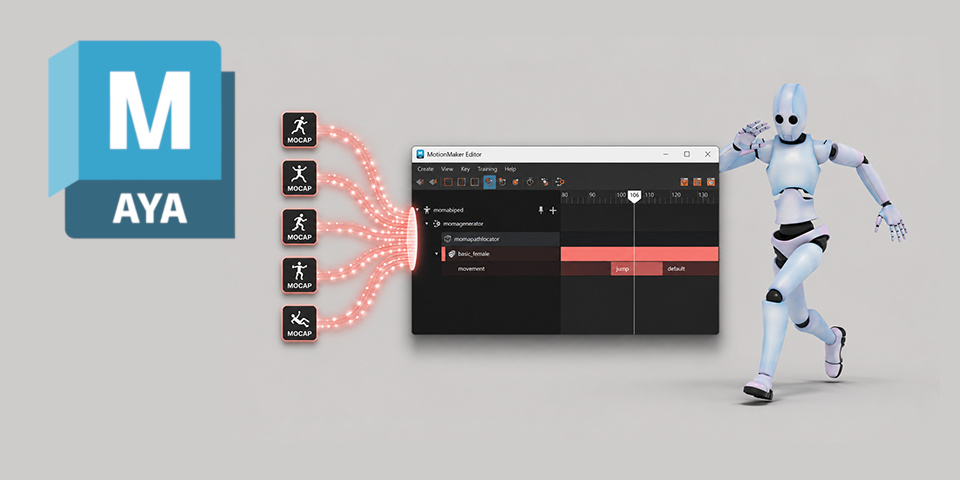
The centerpiece of the Maya 2027.2 update is the transformation of MotionMaker. Originally introduced in Maya 2026.1, MotionMaker was designed to streamline the creation of motion cycles for common character types, such as humans, canines, and horses. Until now, users were limited to the pre-trained models provided by Autodesk, which, while effective for layout and previsualization, often lacked the specific stylistic nuances required for final-quality hero or crowd animation.
With the 2027.2 update, Autodesk introduces "Bring Your Own Data" (BYOD) capabilities. This feature allows studios to leverage their existing libraries of high-quality motion-capture (mocap) data or hand-keyed animations to train bespoke AI models. This process occurs locally on the user’s hardware, ensuring that sensitive intellectual property remains within the studio’s secure infrastructure—a critical consideration for major film and game productions.
The technical workflow for custom model training involves several distinct steps. First, the character must be configured according to Autodesk’s new standard character definition. This standardization ensures that source animations can be accurately retargeted across different rigs. Once the data is ingested, users must tag specific frame ranges to identify different "styles" or actions, such as a "stealthy walk," a "wounded limp," or a "heroic jump." Once the training is complete, the resulting model can generate infinite variations of these motions within the MotionMaker interface.
Industry analysts suggest that this move toward localized, user-driven AI training is a strategic response to the broader industry trend of "style preservation." By training on a studio’s unique animation data, the AI can replicate the specific "acting" choices of a studio’s animation team, allowing for more consistent character personalities across massive crowds or background characters. Early testing conducted by the Screen Industries Research and Training (SIRT) Center at Sheridan College indicates that while the system is currently best suited for secondary or crowd characters, it offers a cost-effective alternative for smaller studios that cannot afford frequent, large-scale mocap sessions.
Modeling Performance: The Smart Bevel Optimization
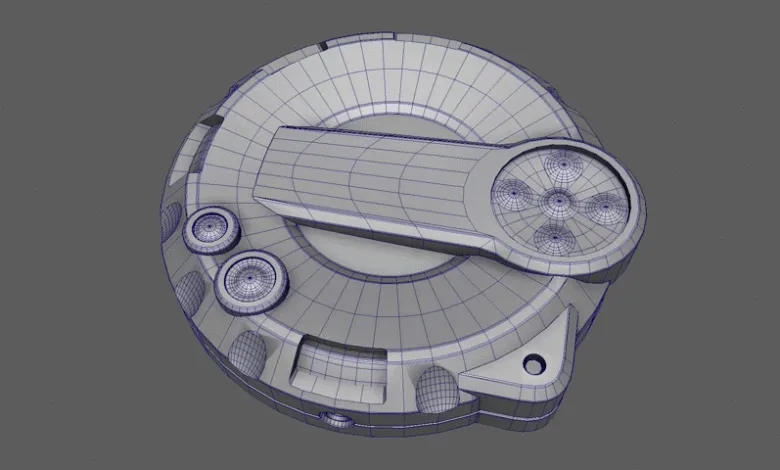
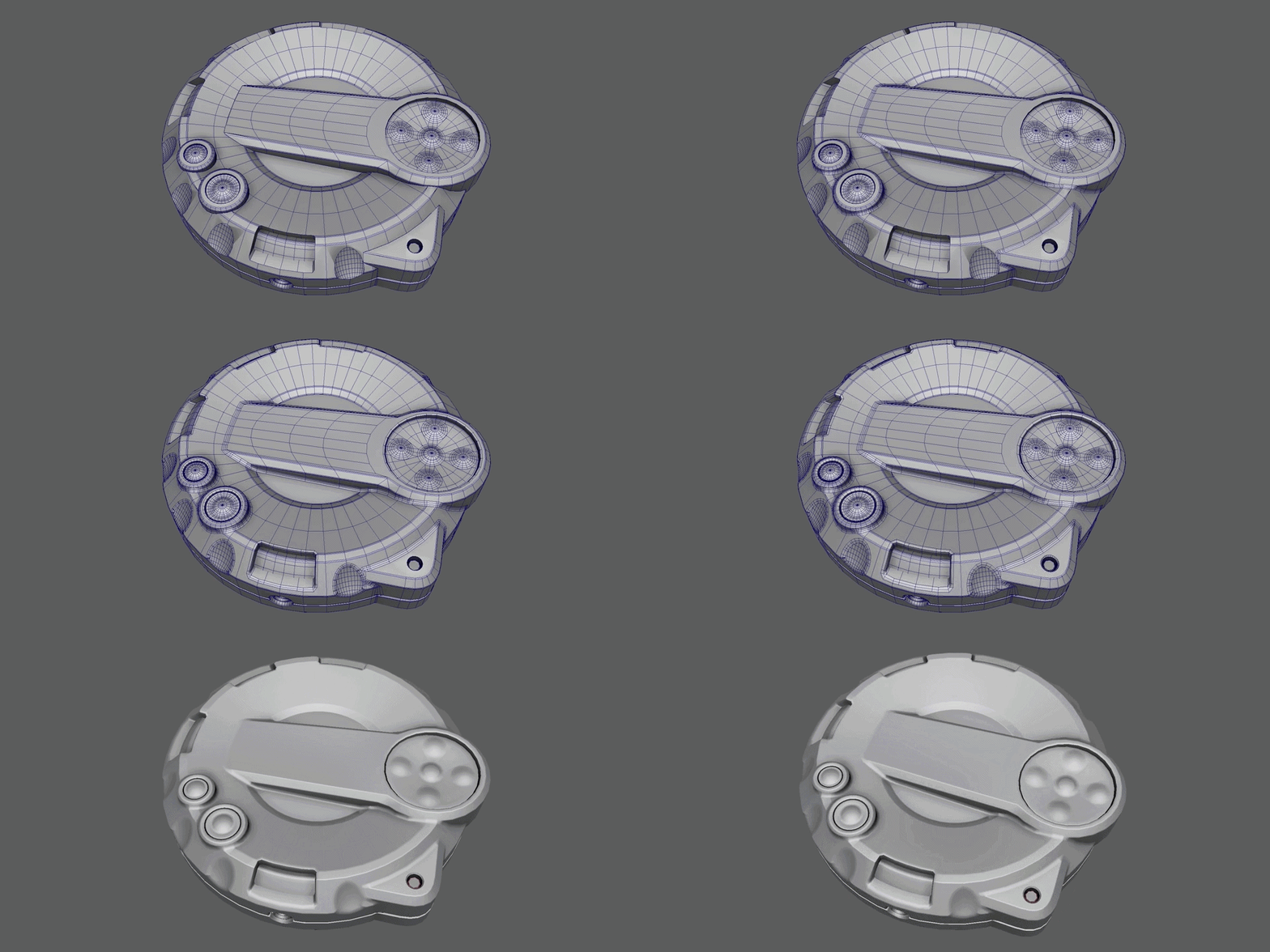
Beyond the animation advancements, Maya 2027.2 introduces a massive overhaul of the Smart Bevel system. First debuted in the initial Maya 2027 release, Smart Bevel was designed to automate the complex task of creating clean, topologically sound bevels on intricate geometry. However, high-density meshes often resulted in significant processing delays and high memory overhead.
The 2027.2 update addresses these bottlenecks with an efficiency increase that Autodesk characterizes as "up to 20x faster." Furthermore, memory consumption during the beveling process has been reduced by a factor of 22. For artists working on complex hard-surface models—such as vehicles, machinery, or architectural environments—this optimization translates to near-instantaneous feedback during the iterative design process. This level of performance is essential for modern "kitbashing" workflows, where artists combine hundreds of high-resolution parts to create complex assets.
Enhanced USD Integration and Asset Management
As the industry continues its transition toward Universal Scene Description (USD) as the primary format for scene interchange, Autodesk has updated the USD for Maya plugin to version 0.37. This version focuses heavily on diagnostic tools and pipeline stability.
One of the primary challenges in large-scale USD pipelines is the management of asset paths, especially when scenes are shared across multiple departments or global studios. The new diagnostic features in USD for Maya 0.37 allow technical directors to troubleshoot and resolve broken asset paths more efficiently. Additionally, the update improves layer management and introduces the ability to build components directly from USD prims selected in the Outliner. This tighter integration allows artists to manipulate USD data with the same ease as native Maya geometry, further blurring the line between the two formats.
Rendering Breakthroughs: Arnold and 3D Gaussian Splatting
The release of Maya 2027.2 coincides with the update of the Arnold for Maya (MtoA) plugin to version 5.6.2, which integrates the latest Arnold 7.5.2 core. This update brings support for 3D Gaussian Splatting, a revolutionary technique for representing 3D scenes using volumetric radiance fields rather than traditional polygonal meshes.
Gaussian Splatting has gained rapid traction in the industry for its ability to create photorealistic digital twins of real-world environments from simple video or photographic input. With the new Arnold update, Maya users can import these splats, relight them within a 3D scene, and render them alongside traditional CG assets. This is a significant leap forward for virtual production and VFX, as it allows for the seamless blending of captured real-world data with synthetic elements.
While the parallel release of 3ds Max 2027.2 included native tools for manipulating Gaussian Splats, Maya’s implementation is currently focused on the rendering side via Arnold. This suggests a phased rollout of the technology, with more robust native manipulation tools likely planned for future Maya iterations.
Maya Creative: Expanding Accessibility
In tandem with the main release, Autodesk has launched Maya Creative 2027.2. Aimed at smaller studios and independent contractors, Maya Creative is a "lite" version of the software that excludes some of the more advanced features—such as the Bifrost visual programming environment—but retains the core modeling, animation, and rendering toolsets.
Crucially, Maya Creative 2027.2 includes the new MotionMaker AI training capabilities and the Smart Bevel optimizations. By offering this version on a pay-as-you-go basis, Autodesk is lowering the barrier to entry for high-end animation tools. The minimum spend for Maya Creative has been significantly reduced, now starting at approximately $99 per year (down from $300), making it a viable option for boutique studios and freelance artists working on tight budgets.
Chronology and Development Timeline
The release of Maya 2027.2 follows a rapid development cycle that began with the launch of the 2026 version series.
- May 2025 (Maya 2026.1): Introduction of MotionMaker with basic human and canine models.
- March 2026 (Maya 2027.0): Introduction of the Smart Bevel system and horse models for MotionMaker.
- May 2026 (Maya 2027.1): Initial USD workflow improvements and Arnold 7.5.1 integration.
- July 2026 (Maya 2027.2): The current release, adding custom AI training and the 20x performance boost for Smart Bevel.
This timeline reflects Autodesk’s shift toward a more agile release schedule, providing incremental updates with substantial feature additions rather than waiting for a single annual "mega-release."
Industry Implications and Competitive Analysis
The introduction of custom AI training in Maya 2027.2 places Autodesk at the forefront of the generative AI conversation in the professional CG space. While other platforms, such as Blender and SideFX Houdini, have explored AI-assisted workflows, Autodesk’s focus on a "production-ready" local training system addresses the specific legal and creative needs of the VFX industry.
By enabling studios to train models on their own data, Autodesk is mitigating concerns regarding copyright and data scraping that have plagued the broader generative AI field. This "closed-loop" AI ecosystem is likely to become the standard for professional media and entertainment software. Furthermore, the massive performance improvements in Smart Bevel suggest that Autodesk is prioritizing the "feel" of the software, ensuring that as scenes become more complex, the tools remain responsive.
System Requirements and Pricing
Maya 2027.2 is available for Windows 11, RHEL and Rocky Linux (8.10/9.7), and macOS 14.0 or higher. The software remains available through a subscription-only model, priced at approximately $255 per month or $2,010 per year.
For eligible individual artists and small businesses, the Maya Indie program remains available. To qualify, users must earn less than $100,000 annually from their creative work and work on projects with a total value of less than $100,000. Maya Indie is currently priced at $330 per year, offering the full feature set of the standard version at a fraction of the cost. Maya Creative continues to operate on a flexible "Flex" token system, starting at roughly $3 per day of use.
Summary of Impact
Maya 2027.2 represents a dual-track strategy by Autodesk: the pursuit of cutting-edge AI innovation alongside the fundamental optimization of core modeling tools. By empowering artists to train their own AI and providing the performance headroom to work with increasingly dense geometry, Autodesk is reinforcing Maya’s position as the foundational tool for modern digital content creation. As the industry moves toward more automated and data-driven pipelines, the features introduced in this update will likely serve as the blueprint for the next generation of 3D animation workflows.