Americans Ditch Traditional News for Online Opinion Leaders and Comedians, Particularly on the Right

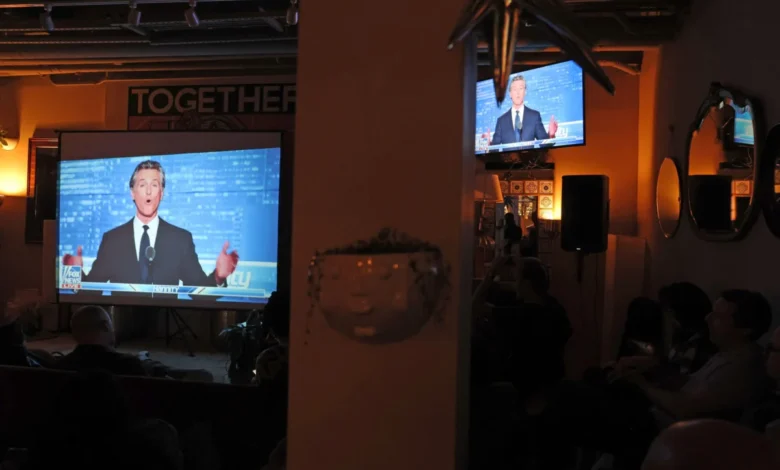
A significant shift in how Americans consume news is underway, with traditional bastions of information like television and newspapers being supplanted by online opinion personalities and comedians, a trend particularly pronounced among those who voted in the last presidential election. This evolving media landscape, revealed by a recent poll, suggests a growing distrust in institutional news sources and a preference for commentators who align with pre-existing viewpoints, often delivered with entertainment value.
The findings emerge from a comprehensive poll conducted in March by Ipsos for the Jordan Center for Journalism Innovation and Advocacy at the University of Mississippi. The research underscores a fundamental alteration in the news consumption habits of the American public, moving away from curated journalistic content towards more personalized and often ideologically driven online voices.
Key Findings: The Rise of the Online Influencer
The poll identified a hierarchy of news influencers, with conservative politicians and cabinet members, including then-President Trump, topping the list. When these political figures were excluded from the analysis, the landscape shifted to online personalities. Joe Rogan, the podcast host, emerged as a leading non-political influencer. He was followed closely by prominent conservative television hosts Greg Gutfeld and Sean Hannity of Fox News, and then by commentators Tucker Carlson and Ben Shapiro. Notably, only three individuals – Trump, Rogan, and JD Vance – managed to capture the attention of over 10 percent of respondents as primary news influencers.
This data points to a significant appetite for news and commentary delivered through channels that prioritize personality and opinion. The success of figures like Rogan, Gutfeld, and Carlson suggests that entertainment value and a direct, often unvarnished, delivery style are increasingly valued by news consumers. The dominance of right-leaning figures in this category, particularly among those who voted in the last presidential election, indicates a potential amplification of partisan viewpoints within this segment of the electorate.
A Divergent Path for Different Electorates
The poll also highlighted a distinct difference in news consumption patterns based on political affiliation. For individuals who voted for Kamala Harris, the preferred news influencers were predominantly late-night television hosts. Jimmy Kimmel of ABC’s "Jimmy Kimmel Live!" led this group, followed by Stephen Colbert of CBS’s "The Late Show" and Jon Stewart, formerly of "The Daily Show." This suggests that for this demographic, news and political commentary are often integrated with humor and satire from established television personalities, albeit from a different ideological spectrum than the online right-leaning influencers.
This dichotomy underscores the increasing polarization not only in political discourse but also in the very channels through which citizens access information. The study implies that individuals are actively seeking out sources that reinforce their existing beliefs and perspectives, creating what some experts describe as an "echo chamber" effect.
The Shifting Tides of Information Access
Beyond specific influencers, the poll provided stark statistics on the declining reliance on traditional media. Just under 70 percent of respondents reported obtaining their news online in a given week. This stands in contrast to 55 percent who cited television as their primary source and a mere 25 percent who still turn to newspapers. This data clearly illustrates the ongoing migration of news consumption to digital platforms.
Professor Andrea Hickerson, dean of the School of Journalism and New Media at the University of Mississippi, commented on these findings, stating, "The poll highlights the growing role of online influencers in the news environment. Many respondents report following politicians, commentators and creators directly for news and commentary, which points to a visible shift away from institution-centered news consumption." Her observation points to a fundamental change in the power dynamics of information dissemination, with individuals now bypassing traditional media gatekeepers.
Steven L. Herman, assistant professor of practice and executive director of the Jordan Center, further elaborated on this phenomenon. "On these platforms, opinionated personalities and comedians appear to drown out anyone who would fit in the traditional journalist category," Herman said. He drew a historical parallel, noting, "Even in the late 19th century and early 20th centuries, sensationalist and polarizing voices in print and later on air were among the most influential in the political landscape – such as political satirist Mark Twain and populist Father Charles Coughlin." This historical context suggests that the current trend, while amplified by digital technology, is not entirely unprecedented in its reliance on charismatic, opinionated figures to shape public discourse.
Traditional Media’s Shifting Role
While declining in primacy, traditional media outlets still hold sway for a significant portion of the population. Among these, television emerged as the dominant force, with Fox News, the broadcast networks (ABC, CBS, NBC), and CNN being the most frequently cited sources. This indicates that while the way people consume news is changing, the visual medium of television remains a powerful platform for information delivery.
On the digital front, social media platforms and video-sharing sites have become critical conduits for news. Facebook, YouTube, and Instagram were identified as the most popular online sources for news. This highlights the ubiquitous nature of these platforms and their integration into the daily lives of millions, making them de facto news aggregators, even if not always intentionally curated for journalistic accuracy.
Broader Implications: A Fractured Media Ecosystem
The findings of the Ipsos poll carry significant implications for the health of public discourse and the future of journalism. The study underscores the increasingly fractured nature of the media environment, where consumers can curate their news consumption to align with their existing beliefs. This ability to "pick and choose" sources can lead to an entrenchment of partisan viewpoints and a diminished capacity for constructive dialogue across ideological divides.
Furthermore, the shift away from traditional news sources can be interpreted as a symptom of declining trust in established media institutions. This distrust, fueled by a variety of factors including accusations of bias, partisan reporting, and a perceived disconnect from everyday Americans, has pushed many to seek alternative avenues for information. The rise of online influencers, who often present themselves as more authentic or relatable than traditional journalists, directly capitalizes on this erosion of faith.
Historical Context: The Enduring Appeal of the Opinionated Voice
The trend of individuals gravitating towards opinionated personalities for news is not entirely new. As Steven L. Herman noted, historical figures like Mark Twain, through his satirical commentary, and Father Charles Coughlin, a radio priest who wielded significant populist influence in the early 20th century, demonstrate a long-standing public fascination with charismatic voices that offer strong opinions. However, the current digital age has democratized and amplified this phenomenon to an unprecedented degree. Social media platforms allow for the rapid dissemination of content and direct interaction between influencers and their audiences, creating a feedback loop that can solidify both the influencer’s reach and the audience’s allegiance.
The accessibility of platforms like YouTube and podcasts means that individuals do not need the backing of a major media corporation to build a substantial following. This has led to a proliferation of independent commentators, many of whom prioritize entertainment and ideological alignment over journalistic rigor. The Ipsos poll’s findings suggest that for a growing segment of the population, this model of news consumption is not only acceptable but preferred.
The Challenge for Journalism and Democracy
The findings pose a significant challenge for traditional journalism and, by extension, for a well-informed citizenry. If a substantial portion of the public is relying on entertainers and ideologically driven commentators for their news, the shared understanding of facts and events necessary for a functioning democracy may be increasingly difficult to achieve. The potential for misinformation and disinformation to spread unchecked within these online echo chambers is a serious concern.
The ability of individuals to select news sources that confirm their biases can lead to a less informed and more polarized electorate, making compromise and consensus-building more challenging. The responsibility now falls on both media creators and consumers to navigate this complex landscape. For journalists, it means adapting to new platforms and finding ways to re-establish trust and relevance. For consumers, it requires a greater degree of media literacy and a conscious effort to seek out diverse perspectives, even when they are not immediately appealing.
The Ipsos poll serves as a crucial wake-up call, highlighting a profound transformation in how Americans engage with information. The enduring appeal of traditional media is waning, replaced by a more personalized, opinion-driven, and often entertaining approach to news consumption. Understanding this shift is paramount for anyone seeking to comprehend the contemporary American media landscape and its impact on political and social discourse. The future of news, it appears, is increasingly shaped not by seasoned reporters in newsrooms, but by personalities on screens and speakers, reflecting and reinforcing the diverse, and often divided, views of the nation.