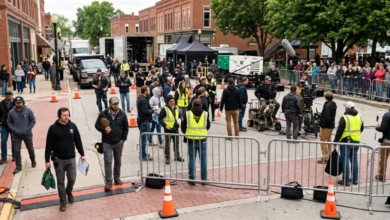
Desert Palms: Redefining Immersive Cinema through the Mundane and the Technical

The Venice International Film Festival’s Biennale College-Cinema Immersive program has long served as a prestigious incubator for experimental storytelling, but the 2026 selection of Desert Palms represents a significant shift in how creators approach virtual reality. Directed by Tristan Seniuk, the short film eschews the traditional high-fantasy spectacle common in immersive media in favor of a hyper-realistic, claustrophobic exploration of a Desert Palms Emergency Care waiting room. Produced with a 75,000-euro grant from the Biennale, the project serves as both a narrative experiment and a technical case study for the capabilities of Blackmagic Design’s URSA Cine Immersive camera system.
A Departure from Spectacle
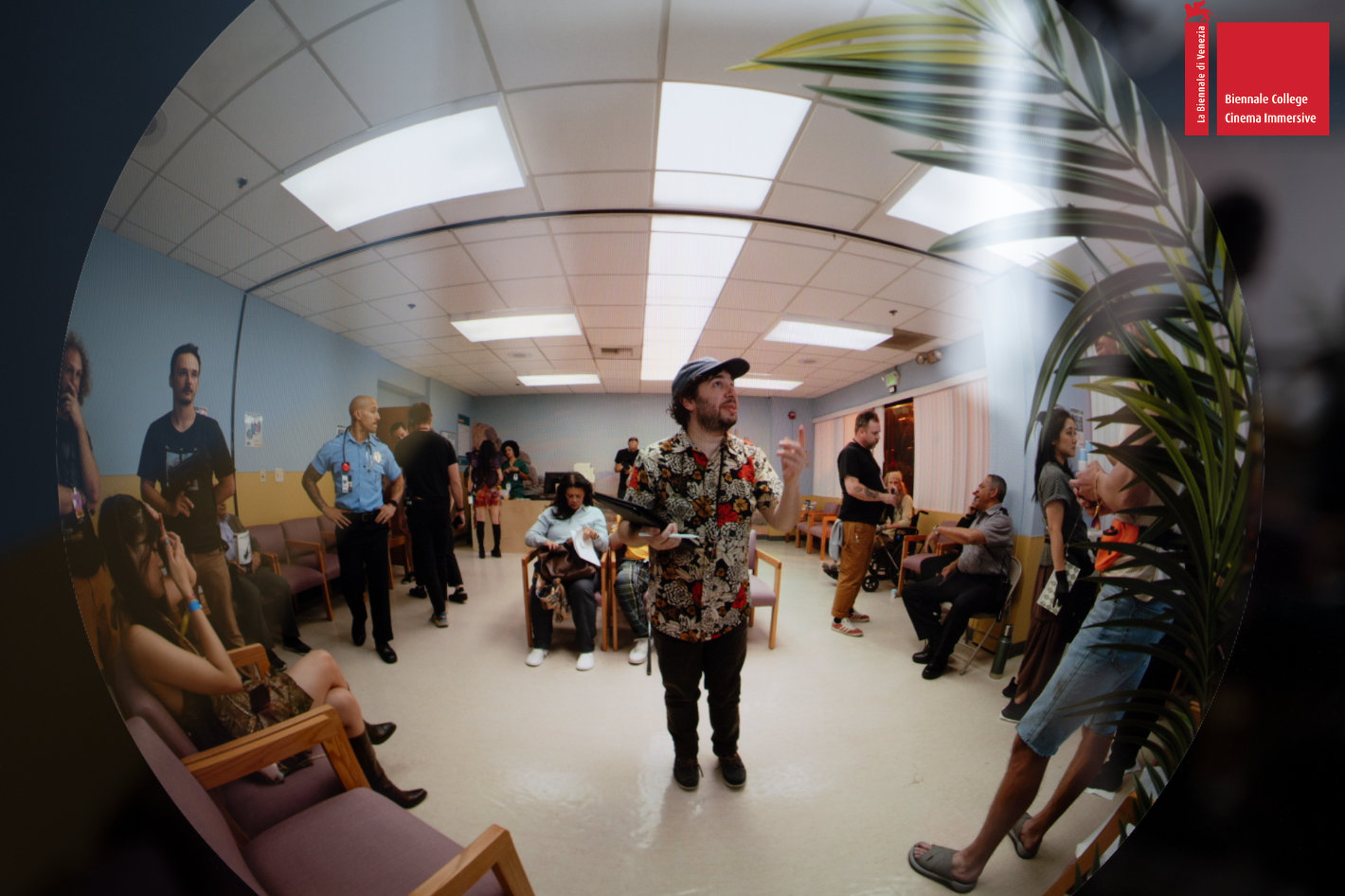
In an era where most immersive content—often categorized under Apple Immersive Video—focuses on transporting users to mountain peaks, deep-sea trenches, or front-row seats at concerts, Seniuk’s project adopts a radical counter-approach. The narrative premise is rooted in the "universal mundane." Inspired by a casual weekend filmmaking retreat, Seniuk and his collaborators sought to replicate the specific, shared anxiety of waiting for medical attention.
The story takes place in an overcrowded emergency room located adjacent to a bustling music festival. This proximity provides a natural conflict: a stream of colorful, often intoxicated or injured festival-goers forced into the sterile, slow-moving environment of an overwhelmed medical facility. By anchoring the viewer in a location that is intentionally devoid of "wonder," the director forces the audience to engage with the subtle human dynamics of patience, frustration, and the shared, begrudging experience of communal waiting.
The Seven-Month Production Timeline
The development of Desert Palms followed a rigorous schedule mandated by the Biennale College-Cinema Immersive criteria. The production can be categorized into four distinct phases:
- Conceptualization (Months 1–2): Developing the script was an unprecedented hurdle. Unlike traditional cinema, where the camera dictates the viewer’s focus, this immersive project required a script that balanced 24 concurrent storylines. Writers had to account for the spatial reality of the room, ensuring that every corner of the 360-degree environment held narrative weight.
- Pre-Production and Technical Testing (Months 3–4): The team faced the challenge of lighting a space that was essentially "all-seeing." Because there were no off-camera zones to hide rigs or lighting equipment, the production design had to integrate all lighting fixtures into the architectural design of the set.
- Principal Photography (Month 5): The shoot was designed as a long, single-take sequence. This choice was deliberate, intended to prevent the "omniscient" influence of traditional editing, thereby allowing the viewer to act as a witness rather than a passive audience member.
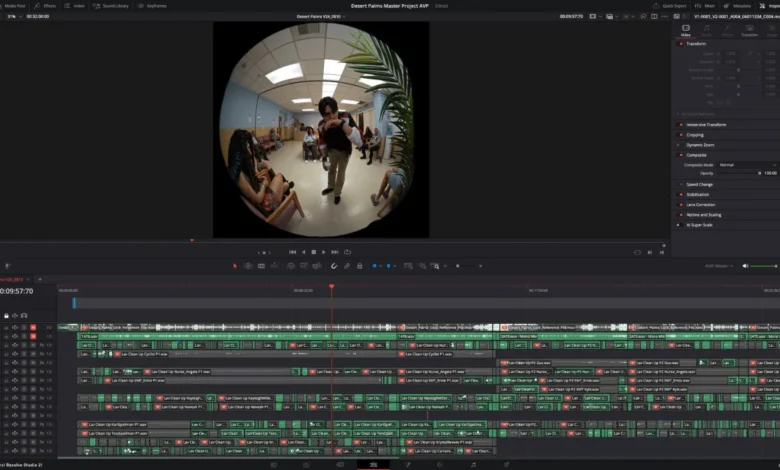
- Post-Production (Months 6–7): The final phase utilized DaVinci Resolve Studio for editing, color grading, and spatial audio integration, culminating in the final delivery for the 2026 Venice Film Festival.
Technical Infrastructure and the URSA Cine Immersive
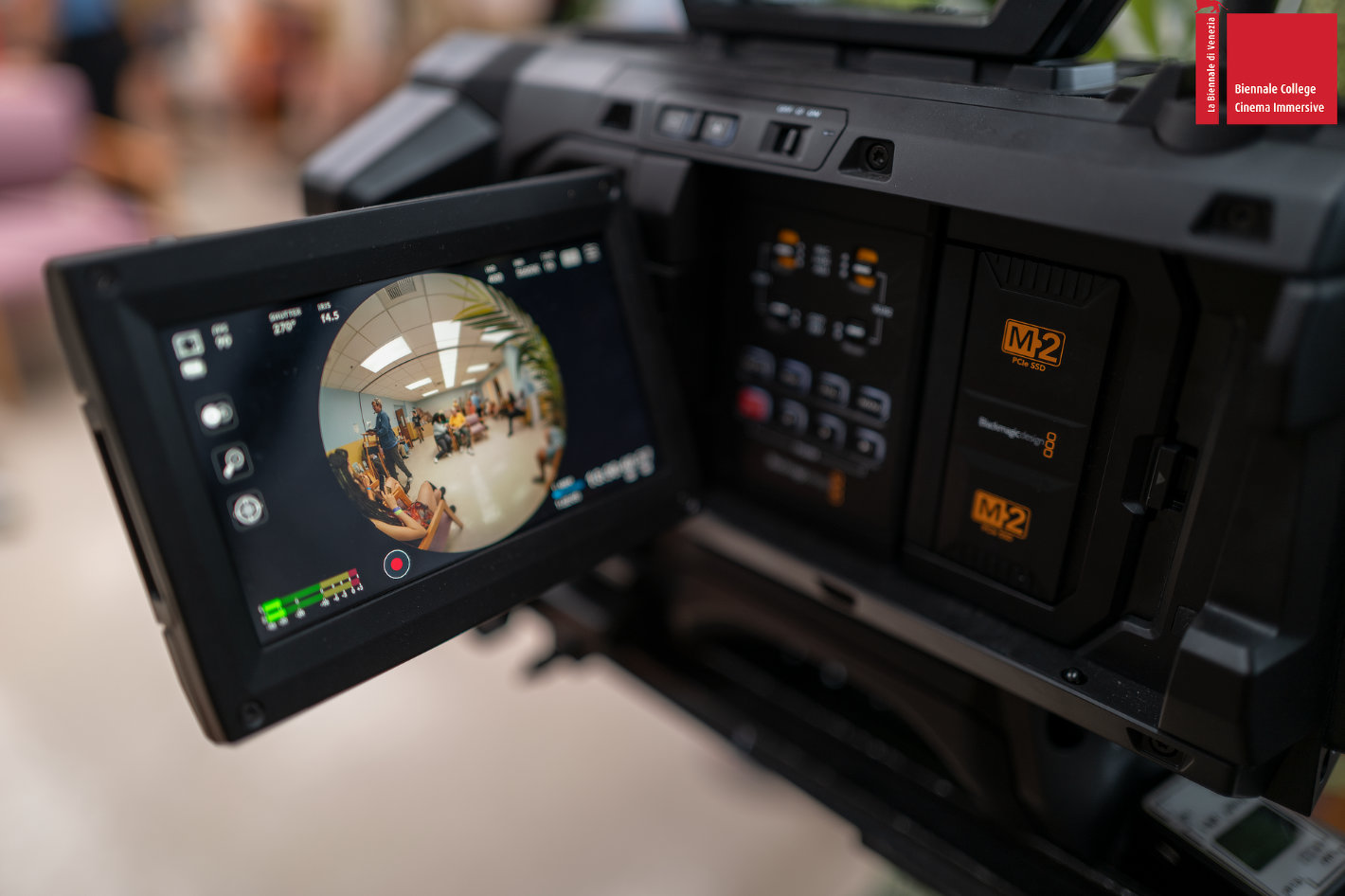
The feasibility of Desert Palms rested heavily on the hardware provided by Blackmagic Design. Seniuk noted that the URSA Cine Immersive was a critical component of the workflow, particularly regarding the handling of metadata and the elimination of complex stitching processes.
In traditional immersive filmmaking, the "stitching" of multiple camera angles is often the most labor-intensive part of post-production. The URSA Cine Immersive system, however, streamlines this by providing a unified file format. The ability of Blackmagic RAW files to maintain consistent metadata allowed the post-production team to maintain high fidelity throughout the color-grading process.
Perhaps the most rigorous test of the hardware occurred during the film’s mid-point "blackout" sequence. To achieve a shift in narrative tone, the production staged a power outage. Filming at 90 frames per second at 400 ISO, the team relied on a single red emergency light to illuminate the scene. The low-light performance of the sensor allowed the team to capture this high-contrast moment without the introduction of digital noise, a feat that would have been significantly more difficult with previous generations of immersive capture technology.
Spatial Audio and the Fairlight Integration
While the visual component was handled by the camera system, the auditory experience was managed through Fairlight, the audio post-production environment within DaVinci Resolve. Sound Designer Jon Hansen was tasked with managing over 100 individual audio tracks, all of which required precise spatialization to match the dimensions of the waiting room.
The transition to Fairlight was a significant pivot for the team. By leveraging the software’s support for Apple Spatial Audio, the team was able to move away from the traditional, cumbersome process of bouncing audio files between different software environments. The use of .DRT files (DaVinci Resolve Timeline files) allowed Seniuk and Hansen to collaborate in real-time, sending updates back and forth without the risk of broken links or lost data. This "single-hood" workflow—where editing, color, and audio exist in one application—proved essential for meeting the strict deadlines of the Biennale grant.
The Sociology of the Waiting Room
The narrative of Desert Palms is built on the interaction between a diverse cast of characters. By bringing together locals and festival-goers in a confined space, the film highlights the loss of individual autonomy that often occurs in medical settings.
The choice to film in a single, uninterrupted take is more than a stylistic preference; it is a narrative tool. In a traditional film, a director uses close-ups to tell the audience who to look at. In Desert Palms, the audience is free to scan the room. If a viewer chooses to watch a person checking their phone in the corner, they may miss a conversation happening by the reception desk. This mimics the reality of the human experience, where our attention is constantly divided. The film forces the viewer to become an active participant in the scene, selecting their own "mini-narratives" within the larger whole.
Industry Implications and Future Prospects
The success of Desert Palms raises questions about the future of immersive storytelling. For years, the medium was criticized for being too reliant on the "wow factor" of VR technology. This project proves that the medium is maturing. By focusing on mundane, human-centric stories, creators are finding ways to use VR to build empathy and deep observation rather than mere amusement.
From an industry perspective, the integration of professional, high-end cinema tools like the Blackmagic URSA Cine Immersive into the immersive pipeline lowers the barrier to entry for independent filmmakers. The ability to shoot, edit, and mix in a unified software ecosystem—without needing a massive team of technical specialists for stitching and file management—could lead to an explosion of high-quality, independent immersive content.
Furthermore, the Biennale College-Cinema Immersive program’s investment of 75,000 euros highlights the growing institutional support for this art form. As festivals continue to carve out space for VR and AR, projects like Desert Palms establish a new benchmark: that immersive film is not just about the technology, but about how that technology can be used to capture the quiet, uncomfortable, and deeply human moments that define our daily lives.
As the film prepares for its premiere, the focus remains on its role as a bridge between traditional narrative cinema and the emerging world of spatial media. By stripping away the bells and whistles of high-budget digital effects and focusing on the tension of a waiting room, Tristan Seniuk has created a piece of work that is as much a technical achievement as it is a social commentary on the patience required in modern life. The industry will undoubtedly watch the reception of Desert Palms closely, as it represents a shift toward a more mature, contemplative, and technically sophisticated future for immersive cinema.