Meta Gives Muse AI Agents Speaking Capabilities and Expressive Avatars in Latest Push for Conversational AI

Meta Platforms has announced a significant expansion for its Muse artificial intelligence ecosystem, equipping its personal AI agents with advanced speaking capabilities and expressive avatars. The update, unveiled by the technology giant, is designed to make AI interaction more intuitive, engaging, and fluid by shifting the primary interface from text prompts to natural voice conversation.
Under the new system, users can select specific voices for their personal AI agents, enabling verbal queries and real-time audio responses. According to Meta, the integration of speech is intended to alleviate the friction of rigid text prompting, allowing users to brainstorm, plan projects, and prepare for complex professional engagements by simply talking things through.
Bridging the Gap Between Thought and Execution
The core philosophy behind the voice update is the natural human tendency to process ideas verbally. Meta’s product literature highlights that thinking out loud often helps individuals structure chaotic thoughts into coherent strategies.
"Sometimes it’s easier to think out loud," Meta explained in its release. "With voice, you can talk through an idea with your Muse and let it take shape without worrying about the exact prompt."
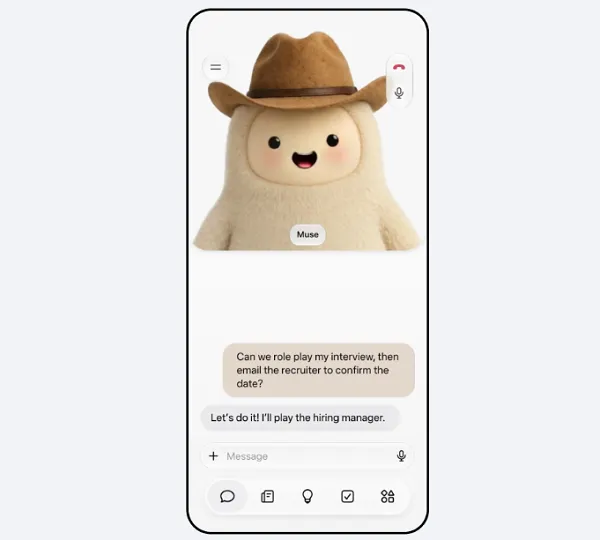
Beyond casual brainstorming, Meta is positioning the feature as a practical tool for professional preparation. The company suggests that users can leverage the voice-enabled Muse agents to rehearse for high-stakes scenarios, such as upcoming job interviews, corporate presentations, or sales pitches. By hearing a synthesized response and answering in real-time, users can simulate the dynamic cadence of a human conversation, which the company hopes will bridge the gap between virtual assistance and realistic interpersonal preparation.
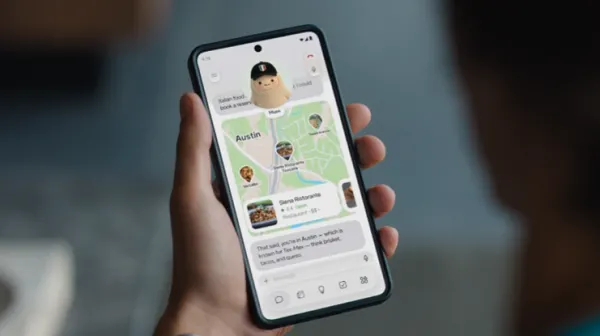
The update does not rely on static audio playback. Meta has engineered the Muse avatars to display subtle facial expressions and hand gestures that dynamically match the emotional tone and context of the conversation. These visual cues are designed to provide feedback to the user, signaling that the AI is actively listening and processing information. Furthermore, Meta is offering users granular control over their interface experience, allowing them to choose whether they want voice-only interaction, an accompanying avatar on the screen, or a full-screen, face-to-face simulation.
A History of Novelty Voice and Persona Experiments
While the technology underpinning Muse’s new speaking capabilities represents a sophisticated leap in multimodal AI integration, Meta’s broader push into persona-driven and stylized AI interactions comes with a complex historical backdrop. The tech giant has spent several years attempting to inject personality, celebrity influence, and distinct vocal identities into its conversational agents, often meeting with mixed consumer reception and regulatory hurdles.
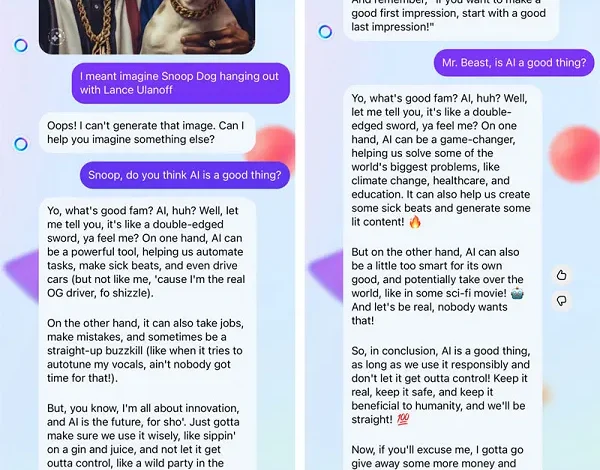
The journey began in earnest in September 2023, when Meta introduced a suite of celebrity-styled AI chatbots across its messaging platforms, including Messenger and Instagram. These bots were designed to reply in text form while adopting the personas of well-known cultural figures, athletes, and entertainers, such as Snoop Dogg, Tom Brady, and Kendall Jenner. The initiative was seen as an aggressive attempt to capture younger demographics by blending social media culture with generative AI.
However, the feature failed to resonate with the broader user base. Consumers found the novelty wore off quickly, questioning the utility of chatting with a text-based AI impersonating a celebrity when they could interact with real humans or more utilitarian productivity assistants. Less than a year after launch, facing stagnant engagement metrics and a lack of sustained consumer interest, Meta quietly retired the celebrity-styled text chatbots.
Undeterred by the initial setback, Meta pivoted toward audio integration. In August 2024, the company rolled out a limited audio version of its celebrity-aligned AI initiative. This iteration involved multi-million-dollar licensing agreements with prominent actors and public figures—including Judi Dench, Keegan-Michael Key, and Awkwafina—to record their actual voices for AI chatbot interactions.
This audio-focused phase also encountered friction. In April 2025, reports surfaced highlighting unintended use cases of the celebrity-voiced bots. Investigative coverage by publications like The Wall Street Journal revealed that some users had managed to circumvent safety guardrails to generate explicit or unintended content voiced by these famous actors. The resulting controversy and potential reputational risks led Meta to curtail the rollout before it could reach a wider audience, ultimately shelving the celebrity voice project entirely.
Custom Voices and the Persistent Pursuit of Whimsy
Despite the cautionary tales of its past celebrity audio projects, Meta is pressing forward with personalized vocal options in Muse. The new update allows users to assign custom voices to their AI characters, ranging from regional dialects—such as a New York accent—to stylized personas like a pirate.
This inclusion highlights a recurring philosophical divide within Meta’s product development teams. While enterprise and productivity-focused AI developers prioritize strict accuracy, zero-latency processing, and corporate utility, consumer-facing divisions at Meta continue to invest heavily in playful, expressive, and anthropomorphic features. Industry analysts note that while these whimsical options are designed to foster emotional attachment and viral sharing, consumers have historically treated such features as fleeting novelties rather than essential daily tools.
Critics question whether users genuinely desire AI characters that speak in pirate vernacular or localized accents, particularly given the underwhelming reception of similar entertainment-first AI deployments. Nevertheless, Meta’s leadership remains convinced that emotional resonance and customization are key to differentiating its AI ecosystem from competitors like OpenAI, Google, and Microsoft.
Societal and Practical Implications
The introduction of expressive, voice-enabled AI avatars on mobile devices also raises broader questions regarding public behavior and social norms. As voice interfaces become more conversational and realistic, users increasingly conduct verbal interactions with their smartphones in public spaces.
While voice-to-text messaging and digital assistant queries via Siri or Google Assistant have long been commonplace, full-duplex conversational AI—where the computer responds with emotional nuance, subtle gestures, and continuous dialogue—shifts the nature of the interaction. Users of the new Muse update will soon be visible in public environments, walking down streets or sitting in cafes, engaging in deep, expressive back-and-forth conversations with an AI character displayed full-screen or via an avatar on their phone.
From an industry perspective, Meta’s latest release underscores the intense race toward multimodal AI. As text-based chat interfaces become commoditized, major technology companies are racing to build platforms that mimic human communication more closely through sight, sound, and emotional simulation. Whether consumers will embrace Muse’s speaking capabilities for practical work preparation or simply test the custom voice filters as a passing novelty remains to be seen as the feature rolls out to the broader user base.