AI Agents Are Learning to Self-Improve Their Own Runtime Environments Through Advanced Harness Frameworks.

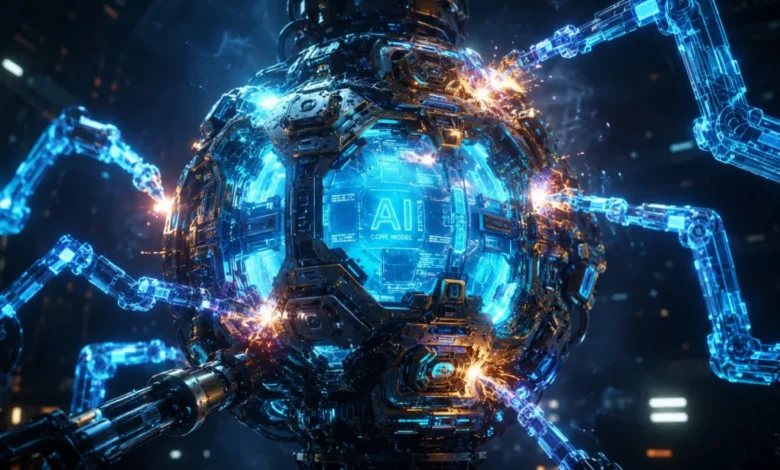
While much focus goes to advances in large language models (LLMs) themselves, the true performance and adaptability of a modern AI application are increasingly dictated by its runtime harness – the intricate execution logic, meticulously crafted system prompts, sophisticated memory management, and dynamic tool configurations that seamlessly connect a foundational model to the complexities of the real world. This underlying infrastructure, often overlooked in public discourse, is undergoing a revolutionary transformation, moving from manual, labor-intensive optimization to autonomous, self-improving systems.
The rapid proliferation of increasingly powerful large language models has presented developers with a significant challenge. While the allure of custom application behavior is strong, the traditional methods of achieving it—training a model from scratch or fine-tuning open-weight LLMs—remain prohibitively expensive, computationally intensive, and fraught with intricate complexities. For the vast majority of engineers and development teams, the most accessible and practical lever for controlling and customizing AI application behavior lies not in modifying the core model weights, but in meticulously optimizing its surrounding harness. This distinction highlights a crucial pivot in AI development: the harness is the operational backbone, providing the essential structure and guidance that enables a raw reasoning engine to perform as a functional, intelligent agent.
However, the sheer pace at which new, more capable models are released has exposed a critical scalability issue. Manually updating, refining, and crafting these harnesses for each new model, or even for specific application nuances, has become an unsustainable, time-consuming chore. This manual bottleneck not only slows down deployment cycles but also introduces human error, leading to inconsistent performance and frustrating debugging processes. The traditional approach to harness optimization, heavily reliant on expert intuition and iterative trial-and-error, is proving inadequate for the dynamic demands of modern AI.
In response to this growing constraint, recent innovations in AI frameworks are fundamentally reframing the paradigm. Instead of continuous reliance on manual labor and human oversight for every adjustment, these cutting-edge frameworks are designed to structure the harness in such a way that AI agents themselves can iteratively analyze their own performance, rigorously test modifications, and autonomously optimize their runtime environments. This shift heralds a new era of meta-AI, where intelligence is applied not just to solve problems, but to improve the very systems that govern problem-solving.
The Overlooked Engine: Understanding the AI Harness
To fully appreciate the significance of self-improving harnesses, it is essential to understand their anatomy. Fundamentally, an AI harness serves as the operating system for a large language model. While the model itself provides the raw cognitive ability – the reasoning, comprehension, and generation capabilities – the harness furnishes the essential system structure, context, and operational scaffolding. Without a well-designed harness, even the most advanced LLM would struggle to translate its latent intelligence into practical, real-world actions.
Familiar examples of sophisticated agent harnesses in production today include tools like Cursor, Aider, Cline, and Anthropic’s Claude Code. These applications demonstrate how a model’s core capabilities are extended through carefully orchestrated components that manage interactions, provide context, and integrate external tools. The harness facilitates crucial functions such as parsing user inputs, breaking down complex tasks into manageable sub-goals, retrieving relevant information from various sources, executing external commands, and formatting outputs in a user-friendly manner.
The intricate complexity and sophisticated engineering behind a modern harness were brought into sharp focus in March 2026, when the source code for Claude Code was inadvertently leaked. This event, a significant moment in the ongoing evolution of AI transparency and understanding, offered security researchers and developers an unprecedented look under the hood of a leading AI agent. Their subsequent analysis revealed that Claude Code was far from a simple chat wrapper; it was, in fact, a highly sophisticated multi-agent orchestrated system. This revelation underscored the industry’s increasing reliance on complex architectural designs to achieve robust, real-world AI performance.
Instead of relying on a single, monolithic agent to simultaneously handle understanding, planning, and coding within one overloaded context window, Claude Code’s architecture demonstrated a clear separation of concerns. A lead agent, often referred to as a "planner," would analyze the initial request, interpret user intent, and decompose the task into a series of smaller, more manageable sub-tasks. These sub-tasks were then delegated to specialized sub-agents, each equipped to handle specific functions such as testing, documentation generation, or debugging, often operating in parallel. This distributed intelligence approach allows for greater efficiency, robustness, and the ability to manage larger, more complex projects.
Central to this orchestration is an "agentic loop," a continuous execution process that defines how the system interacts with its environment. Within this loop, the model systematically gathers context, takes a specific tool-based action (e.g., running a code interpreter, querying a database, writing to a file), observes the result of that action, and then critically adjusts its approach based on the feedback received, before repeating the cycle. To effectively manage this intricate interplay of planning, execution, and adaptation without losing sight of the user’s overarching intent, the harness employs a highly structured memory and control system, acting as the conductor for this complex AI orchestra.
While such general-purpose harnesses excel at delivering strong performance out-of-the-box, developers often seek to optimize an agent for highly specific applications or niche domains. This requires fine-tuning the harness at various levels, from adjusting system prompts to reconfiguring tool access or modifying control flow. However, because modern harnesses are deeply entangled systems, where different components are highly interdependent, this manual optimization process is notoriously fraught with peril. A developer might tweak a prompt to address a specific edge case, only to inadvertently introduce a silent bug that disrupts the agent’s critical tool-calling loop in a seemingly unrelated task. This delicate balance of improvement and potential regression has historically been a major hurdle in deploying robust AI agents.
Pioneering Solutions: The Self-Harness Framework
Addressing the limitations of manual optimization, the "Self-Harness" framework, detailed in an arXiv paper published in June 2026, introduces an innovative iterative and autonomous loop that empowers AI agents to improve their own scaffolding. This framework achieves self-correction by systematically mining execution traces, transforming debugging from a human-centric task into an AI-driven one. The Self-Harness framework operates in three distinct, yet interconnected, stages:
-
Weakness Mining: The process begins with the agent executing a series of tasks against a carefully curated evaluation dataset. During these runs, the system produces detailed execution traces, logging every significant event, including tool calls, error messages, and responses. Crucially, an analytical component of the agent then examines these logs not just for general software bugs, but specifically to identify model-specific failure patterns. This deep analysis allows the system to pinpoint precisely where the underlying LLM, in conjunction with its current harness configuration, deviates from desired behavior. This goes beyond simple error detection, aiming to understand the reasoning failures or misinterpretations that lead to incorrect outcomes.

-
Harness Proposal: Once weaknesses are identified, the agent transitions into a "proposer" role. Leveraging its understanding of the failure patterns, it autonomously generates minimal, targeted code or prompt modifications designed to directly address and fix the identified shortcomings in the harness. These proposals are not arbitrary; they are specific, surgical interventions aimed at improving the agent’s performance in the exact contexts where it previously failed. This might involve refining a system prompt to provide clearer instructions, adding a new rule to the execution logic, or adjusting a tool configuration to prevent misuse.
-
Proposal Validation: The proposed updates to the harness are not immediately adopted. Instead, they undergo a rigorous regression testing phase. This critical stage ensures that any new edit, while potentially fixing a target edge case, does not inadvertently introduce new failures or regress performance on previously passing tasks. If a proposed modification improves one aspect but breaks another, it is rejected. This deterministic validation gate is paramount for maintaining system stability and preventing cascading failures across the complex agent system. It acts as a safeguard, ensuring that the self-improvement process is genuinely beneficial and not merely chasing superficial gains.
The effectiveness of the Self-Harness framework was rigorously tested on Terminal-Bench-2.0, a challenging benchmark for agents interacting with terminal environments. The results were compelling. The base model, without the Self-Harness optimization, frequently encountered failures due to ambiguous file errors and inconsistent command execution. Instead of a human developer laboriously writing patches, the Self-Harness loop autonomously analyzed these failure traces and generated new, executable rules for the harness. For instance, it introduced a strict command-retry discipline to prevent duplicate sequential commands, created a mechanism to force the agent to recreate missing artifacts upon encountering file errors, and added explicit instructions to persist environment variables across shell sessions. These tailored improvements, generated by the AI itself, significantly enhanced the agent’s robustness and reliability.
The framework yielded substantial gains on standard benchmarks without requiring any modifications to the model’s foundational weights. For example, the MiniMax M2.5 model, when integrated with a self-improving harness, saw its pass rate jump from 40.5% to an impressive 61.9%. These improvements were entirely attributable to solutions tailored specifically to the unique performance profile and common failure modes of that particular model, demonstrating the power of personalized harness optimization. This approach democratizes high performance, allowing even smaller, open-weight models to achieve sophisticated capabilities that previously required extensive manual engineering or larger, more expensive proprietary models. Developers can begin to apply the principles of Self-Harness today by instrumenting application trace logs, curating validation datasets, and using external LLMs to analyze logs and automate evaluation.
Modular Innovation: HarnessX and Composable Optimization
A separate yet complementary framework, HarnessX, developed by researchers at Xiaomi and also detailed in an arXiv paper from June 2026, approaches the problem of self-improving harnesses from a different architectural angle. HarnessX treats the harness not just as a collection of scripts, but as a formal software artifact, designed for modularity and extensibility. This framework meticulously breaks down agent behavior into distinct, manageable components: context assembly, memory management, tool ecosystems, and control flow.
Within HarnessX, every specific behavior or function is implemented as an independent processor. These processors are designed like Lego blocks, plugging into precise lifecycle hooks within the agent’s execution pipeline. This modular design offers unparalleled flexibility, allowing the system to swap, add, or remove components dynamically without disrupting the surrounding pipeline or introducing unforeseen side effects. This composability is a critical advantage, enabling fine-grained control and targeted optimization.
HarnessX dynamically adapts these modular blocks using a sophisticated trace-driven evolution engine known as AEGIS (Autonomous Evolution and Guidance for Intelligent Systems). AEGIS operates as a four-stage multi-agent pipeline, orchestrating the continuous improvement of the harness:
-
Digester: This initial agent meticulously analyzes execution traces, much like Self-Harness, but with an added focus on isolating the exact architectural gap or structural weakness where the current harness failed. It aims to understand why a particular component configuration led to a suboptimal outcome.
-
Planner: Based on the Digester’s analysis, the Planner agent devises a high-level strategy to fix the identified architectural gap. This involves determining which modular processor needs modification, or if a new processor needs to be introduced, and outlining the desired behavior change.
-
Evolver: The Evolver agent then translates the Planner’s strategy into concrete action. It generates actual code-level edits to the specific harness processor identified for improvement. Importantly, these edits are subjected to isolated tests within the modular environment, ensuring their correctness and preventing immediate regressions.
-
Critic: The final stage involves the Critic agent, which assesses the proposed edits. Its role is crucial in detecting "reward hacking"—situations where an edit might appear to improve performance on a narrow metric but actually degrades overall system robustness or leads to undesirable emergent behaviors. The Critic employs a deterministic gate to reject updates that regress past performance, similar to Self-Harness, ensuring that only genuinely beneficial changes are integrated.
The standout feature of HarnessX, setting it apart, is its concept of harness-model co-evolution. This addresses a fundamental limitation in AI optimization: optimizing only the harness eventually hits a "scaffolding ceiling" if the underlying model lacks the intrinsic reasoning capacity to effectively utilize the new tools or improved guidance. Conversely, training only the model can hit a "training-signal ceiling" if the harness never prompts it to leverage its advanced capabilities or provides the necessary context.
HarnessX ingeniously tackles this by interleaving harness evolution with model training through a shared replay buffer, utilizing a novel approach called cross-harness Group Relative Policy Optimization (GRPO). GRPO is a reinforcement learning algorithm that refines an AI’s output by generating multiple potential answers and evaluating their quality relative to the group’s average. This sophisticated feedback mechanism allows the model to learn not just from its own successes and failures, but also from the structural improvements of the harness. Every time the harness refines its structural strategy or introduces a new capability, the underlying model simultaneously learns to exploit that new configuration, creating a virtuous cycle of improvement.
In experimental settings, this co-evolutionary approach proved remarkably effective. While harness evolution alone provided a significant 14.5% average performance gain across complex benchmarks like ALFWorld (an embodied AI environment), GAIA (a general AI agent benchmark), and SWE-bench Verified (a software engineering benchmark), the addition of model co-evolution yielded an impressive additional 4.7% performance boost. This demonstrates that co-evolution can break the individual capability ceilings of traditional agent deployment, unlocking synergistic improvements that neither component could achieve in isolation.

The researchers behind HarnessX have embraced open science by open-sourcing their codebase on GitHub. This allows developers worldwide to clone the repository, run the installation script, and define their agent’s scaffolding via intuitive YAML configurations. The repository includes built-in integrations for third-party modules, such as MemPalace for advanced long-term memory management, and connects with distributed training frameworks like VERL. This accessibility empowers engineering teams to implement sophisticated harness-model co-evolution on their own local infrastructure, democratizing access to cutting-edge AI optimization techniques.
Intertwined Progress: Loop Engineering and Continual Learning
The emergence of frameworks like Self-Harness and HarnessX represents a profound convergence with two major movements currently shaping the landscape of production AI: loop engineering and continual learning.
Loop engineering is the systematic design of AI agent systems around robust, multi-step feedback loops, moving beyond simplistic, single-shot prompt-response structures. However, in practice, this has often devolved into "loopmaxxing"—a tendency to force agents to iterate endlessly within an application session without clear, quantifiable optimization signals. This often leads to wasted computational resources and token consumption, with diminishing returns. Self-Harness and HarnessX offer a crucial corrective to this trend by shifting the optimization loop from the application runtime (the user session) to the meta-runtime (the developer’s deployment environment). Here, the system optimizes its own underlying code based on clear, verifiable signals of performance improvement, ensuring that iterations are purposeful and efficient.
This paradigm shift directly enables more effective continual learning, the practice of allowing AI systems to adapt to new data and changing environments over time without suffering from catastrophic forgetting. Catastrophic forgetting is a common challenge in AI, where a model, upon learning a new task, inadvertently wipes out its past capabilities. By allowing agents to ingest real-world environment execution traces and safely rewrite their scaffolding—without altering the foundational base-model weights—the application can organically improve its behavior as it gathers more real-world information. The sophisticated evaluation architecture inherent in these frameworks acts as a seesaw, carefully balancing the need for new feature adaptation and responsiveness to changing environments against strict regression testing to safeguard production stability. This ensures that improvement is incremental, stable, and truly cumulative.
Reshaping the Landscape: Implications for AI Development and Engineers
The advent of self-improving harnesses signals a clear and fundamental shift in how AI applications will be built, maintained, and evolved. This technological leap promises to redefine roles, democratize access to high-performance AI, and introduce new economic efficiencies.
From Prompt Tweakers to Feedback Architects: The era of artisanal, manual prompt engineering, where developers painstakingly craft and iterate on individual prompts, might be approaching its twilight. While prompt design will always remain important for initial system configuration, the focus will increasingly shift. Developers will spend less time patching individual tool calls or tweaking system messages and more time designing the meta-infrastructure: building robust trace logging mechanisms, curating comprehensive and diverse evaluation datasets, and establishing the validation gates that make autonomous agent self-improvement possible. The role of an AI engineer is evolving from a direct coder to an architect of learning systems, designing the environments and feedback loops that govern how an agent learns and adapts.
An Alternative to Pure Scaling: The success of frameworks like Self-Harness and HarnessX provides compelling evidence that continually scaling massive foundation models is not the only path to achieving better performance and more sophisticated AI behavior. The ability to dynamically evolve the runtime interface demonstrates that significant performance gains can be unlocked by optimizing the surrounding operational framework. Notably, HarnessX testing showed that smaller, open-weight models, such as Qwen 9B, gained the most from dynamic scaffolding improvements. This dynamic is crucial for democratizing agent capabilities, proving that highly sophisticated and effective AI behavior does not strictly require access to the largest, most computationally intensive, or proprietary models. This opens doors for smaller organizations and researchers with limited resources to develop powerful AI applications.
Collaboration Over Replacement: As foundation models continue to grow in capability and absorb more base functionalities, the harness does not become obsolete. Instead, its scope expands. The harness will evolve to connect these increasingly capable models to richer, more complex, and highly specific enterprise environments, integrating them with legacy systems, proprietary databases, and specialized workflows. The relationship will be symbiotic: powerful models provide raw intelligence, and sophisticated harnesses provide the contextual understanding, control, and integration necessary for practical deployment.
However, a pragmatic caveat accompanies these advancements. Automating the harness optimization process requires significant computational overhead during the improvement phase. This is largely because the "meta-agent"—the AI responsible for analyzing traces and rewriting code—often relies on frontier models, which are themselves expensive to run. For engineering teams, the challenge is therefore shifting from the manual labor of writing execution logic to the more complex task of managing the multi-tier execution costs and robust validation gates inherent in these self-correcting systems. This requires careful resource allocation and a deep understanding of the economic trade-offs between human intervention and automated optimization.
The Road Ahead
The emergence of self-improving harness frameworks marks a pivotal moment in AI development, signaling a maturation of the field from foundational model creation to robust, adaptable, and autonomous deployment. These systems promise to accelerate the development cycle, enhance the reliability of AI applications, and free developers to focus on higher-level architectural challenges rather than repetitive manual optimization. As these technologies become more integrated into standard AI development pipelines, we can anticipate a future where AI agents are not merely intelligent, but continually self-optimizing, adapting to new challenges with an unprecedented degree of autonomy and efficiency, pushing the boundaries of what intelligent systems can achieve in the real world.
Related posts: