Unlocking C-Suite Buy-In: How Employee Advocacy Statistics Drive Corporate Growth and ROI in 2026

Securing executive-level investment for marketing and communications initiatives has historically required a delicate balance of visionary storytelling and empirical justification. In the current corporate climate, however, passion alone rarely moves the needle for decision-makers managing tightening budgets and congested digital ecosystems. When presenting a proposition to the C-suite, executives do not simply want to understand the theoretical value of a program; they demand concrete proof, verifiable metrics, and a direct line of sight to return on investment (ROI).
For leaders championing internal communication, talent acquisition, and brand marketing initiatives, employee advocacy has emerged as a critical focal point. Yet, elevating an informal employee advocacy initiative into a fully resourced, enterprise-wide strategy requires a compelling business case backed by hard data. As organizations look toward modern marketing frameworks, employee advocacy statistics have become the foundational backbone of executive pitches, reframing social sharing from a peripheral nice-to-have into an indispensable core growth strategy.

The Evolution of Employee Advocacy in the Modern Enterprise
To understand why employee advocacy commands the attention of modern executives, one must examine the shifting dynamics of digital trust and audience consumption. Historically, corporate social media strategies relied heavily on paid amplification and polished messaging emanating from centralized brand accounts. Over time, however, diminishing organic reach on traditional social feeds, rising customer acquisition costs, and widespread consumer skepticism toward corporate advertising have eroded the effectiveness of top-down brand messaging.
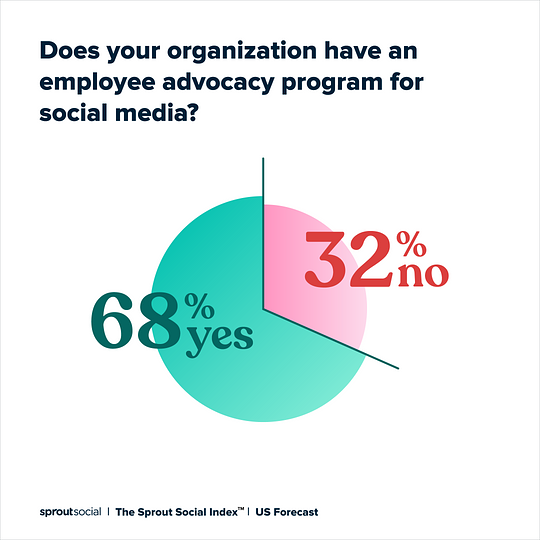
In response, forward-thinking organizations have turned their gaze inward, recognizing that their most powerful, credible, and underutilized marketing asset is their own workforce. Employee advocacy involves empowering staff members to share and promote organizational content, culture, and values on their personal social media profiles. What often begins as informal side projects among enthusiastic team members has matured into a sophisticated corporate standard. Recent industry data indicates that 68% of marketing organizations already operate a formalized employee advocacy program, cementing its status as an established operational standard rather than an experimental tactic.
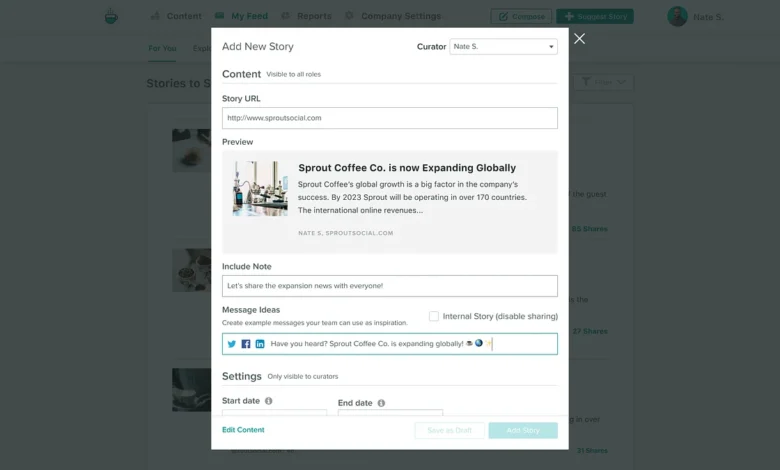
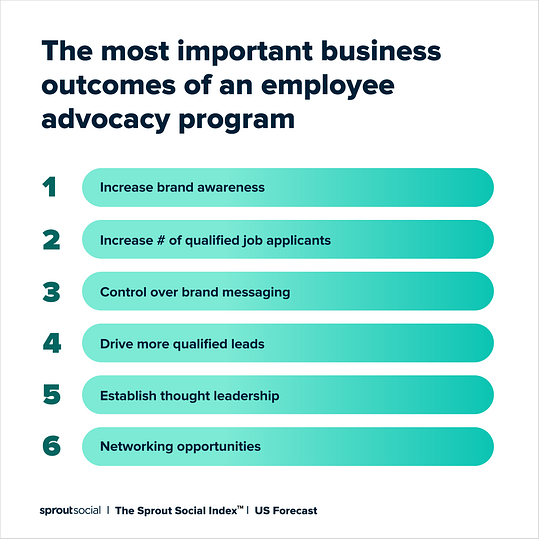
Sophisticated brands now formalize these initiatives through dedicated personnel, specialized curation tools, streamlined workflows, and comprehensive employee training. Among organizations utilizing these frameworks, the primary strategic objectives consistently include increasing brand awareness, attracting qualified job applicants, and exercising tighter control over brand messaging. Secondary benefits frequently cited by corporate leaders encompass the generation of high-quality leads, the establishment of executive and employee thought leadership, and the expansion of professional networking opportunities.
The Power of the Human Voice: Trust and Authenticity
The primary driver behind the success of employee advocacy is the inherent credibility of the human voice. Modern audiences routinely place significantly more trust in peer recommendations and individual perspectives than in corporate advertising. According to industry data, 40% of consumers discover new products and services through employee-generated content on a monthly basis. Furthermore, audience preference heavily favors frontline personnel over executive leadership when it comes to brand communications; approximately 46% of consumers express a desire to hear directly from frontline staff, compared to a mere 10% who prefer content originating from C-suite executives.
This stark disparity highlights a fundamental truth for corporate communicators: authenticity cannot be mass-produced by a marketing department. Paid reach is increasingly expensive and frequently ignored by sophisticated consumers, whereas activating employees scales the one asset audiences continue to reward—genuine, human credibility—at virtually no added media cost.
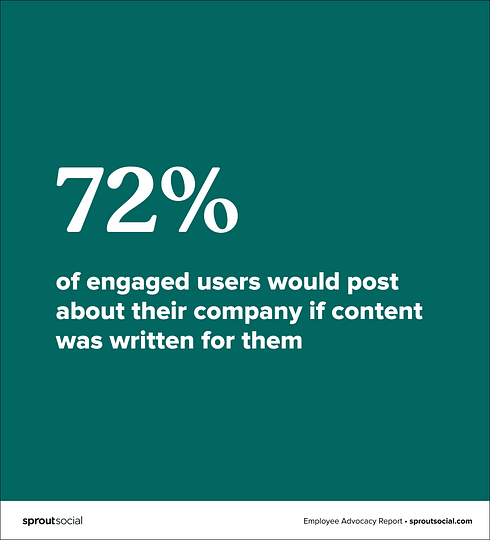
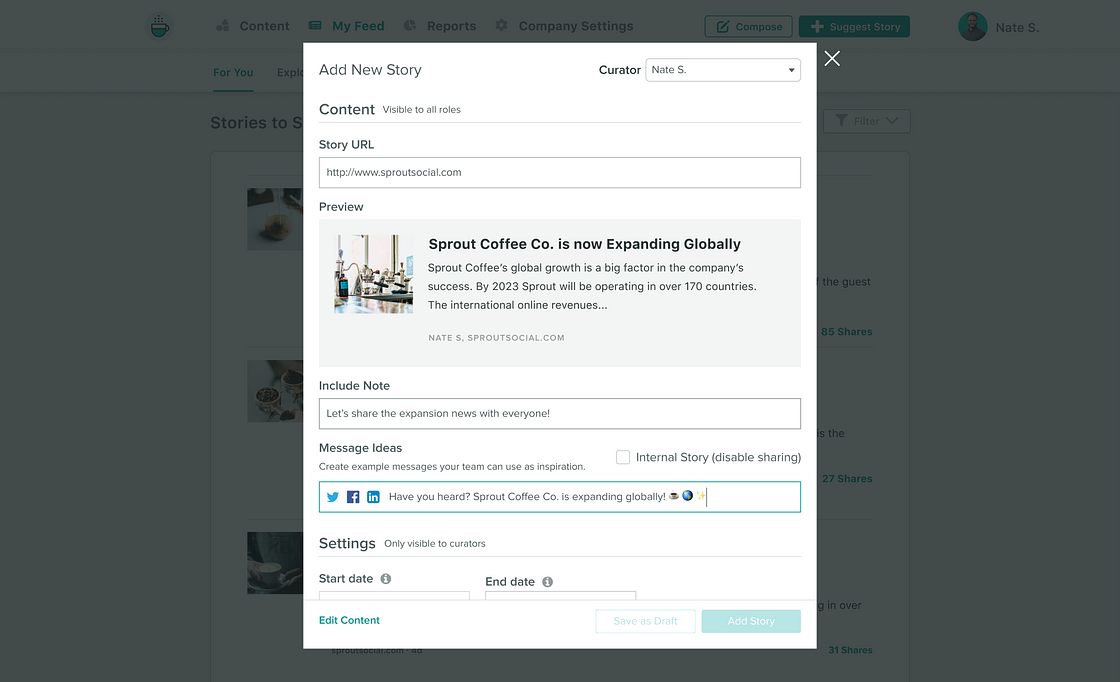
When employees are provided with curated, pre-approved content through a centralized tool, participation rates soar. Research indicates that 85% of onboarded employees actively share company content on their personal channels when equipped with a structured, frictionless system. Crucially, employees are fundamentally willing to act as brand stewards; studies show that 72% of engaged users are prepared to post about their company on social media if the content is written or curated for them, addressing what is fundamentally a content-supply challenge rather than a lack of employee willingness.
Amplifying Reach and Maximizing Impression Metrics
Beyond trust and authenticity, employee advocacy delivers unparalleled amplification capabilities that far outstrip the organic reach of corporate channels alone. When multiplied across hundreds or thousands of employee networks, the cumulative digital footprint of an enterprise expands exponentially.
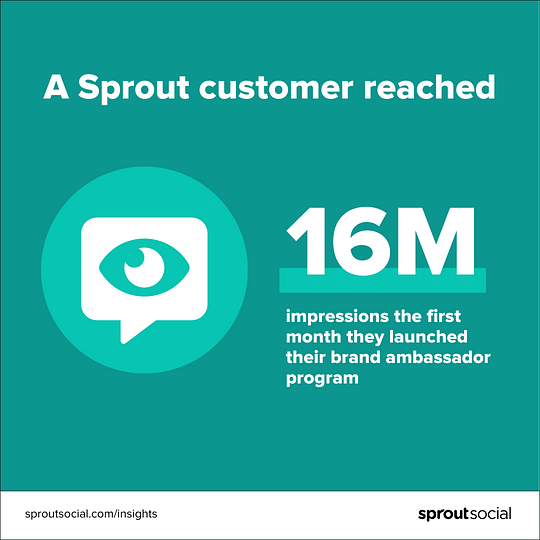
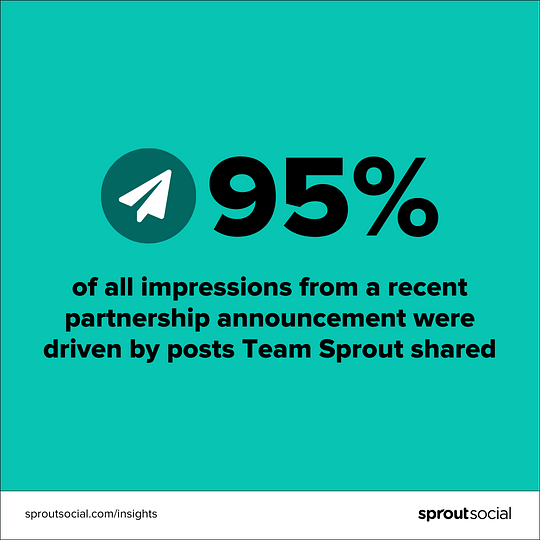
Case studies across various industries illustrate the staggering scale of this amplification. For instance, enterprise software provider Ivanti established a comprehensive brand ambassador program utilizing a dedicated advocacy platform, resulting in a reach expansion of 16 million impressions within the very first month of deployment. Similarly, organizational benchmarks at major technology firms reveal that content distributed through employee networks routinely earns tens of millions of impressions annually. In high-profile corporate announcements—such as major global partnerships—up to 95% of total impressions have been driven entirely by organic posts shared by internal teams.
For C-suite executives evaluating channel efficiency, employee advocacy offers a powerful antidote to declining organic social performance. By tapping into existing employee networks, brands can spike their impressions and amplify their best-performing content without stretching internal creative bandwidth or inflating paid advertising budgets.
Accelerating Revenue and Bottom-Line Impact
While brand awareness and impression volume remain vital metrics, executive buy-in ultimately hinges on revenue generation and tangible business outcomes. Enlisting employees as brand advocates is not merely an exercise in visibility; it directly accelerates sales pipelines and bottom-line targets.
Advocacy scales top-performing marketing assets, generating qualified leads efficiently. Corporate deployments have demonstrated immediate financial returns, with organizations generating significant earned media value within single-month windows. Furthermore, employee advocacy directly supports day-to-day sales functions, including social selling. Among engaged users, 72% report that sharing company content actively aids their sales efforts, a sentiment echoed by 62% of casual users who leverage these tools.
Sales professionals who actively share company insights and industry thought leadership are statistically proven to outperform their peers; according to data from professional networking platforms, sales representatives who engage in social selling are 51% more likely to reach their sales quotas. By positioning employees as industry thought leaders, organizations open doors to new business opportunities that traditional outbound sales strategies might never penetrate. Consequently, modern revenue teams are increasingly advised to treat employee networks as a core demand-generation channel, integrating advocacy metrics directly into customer relationship management (CRM) systems to track pipeline attribution accurately.
Transforming Recruitment, Retention, and Employer Branding
In addition to driving marketing and sales objectives, employee advocacy plays a pivotal role in human resources strategy, specifically in attracting and retaining top-tier talent. Today’s job seekers rarely rely solely on corporate recruitment pages; instead, potential candidates conduct extensive independent research on social media, observing how current employees discuss their workplace culture, challenges, and triumphs.
When employees publicly celebrate their company culture and achievements, they significantly strengthen the organization’s employer brand. Employee-generated recruitment posts reach candidate pools that polished corporate accounts often fail to engage, offering an unvarnished, authentic window into the daily reality of the company.
Internally, advocacy invites employees to become active stewards of the corporate mission, fostering a deep sense of ownership, loyalty, and belonging. When staff members feel invested in the public narrative of their organization, long-term morale, engagement, and employee retention improve noticeably. Organizations that integrate recruitment messaging into their advocacy programs—such as through targeted internal newsletters that allow employees to share open roles with a single click—routinely experience higher application volumes and more culturally aligned candidate pipelines.
Strategic Implications and Executive Action
The empirical evidence supporting employee advocacy presents a clear mandate for corporate leadership. Traditional social media strategies are encountering diminishing returns, and organizations can no longer rely exclusively on paid media to maintain competitive visibility. Employee advocacy transforms a workforce into a measurable engine of reach, revenue, and recruitment power that traditional paid channels simply cannot replicate.
Case studies in sectors ranging from healthcare to enterprise technology demonstrate that formalizing advocacy programs yields transformative results. Organizations implementing structured platforms frequently report engagement increases of up to 200% within six months, accompanied by near-universal platform satisfaction ratings among employees.
As corporate leaders look ahead, the decision facing the C-suite is no longer whether employee advocacy is a viable strategy, but rather how rapidly and strategically the organization can formalize its implementation. By treating employee networks as a primary business channel, equipping teams with centralized curation tools, and aligning advocacy metrics with financial and operational goals, enterprises can unlock unprecedented value from their most authentic and powerful asset: their people.
Related posts: