Native Instruments and A.G. Cook Launch Super*Saw, a Synthesizer Redefining the 1990s Supersaw Waveform for Modern Electronic Production

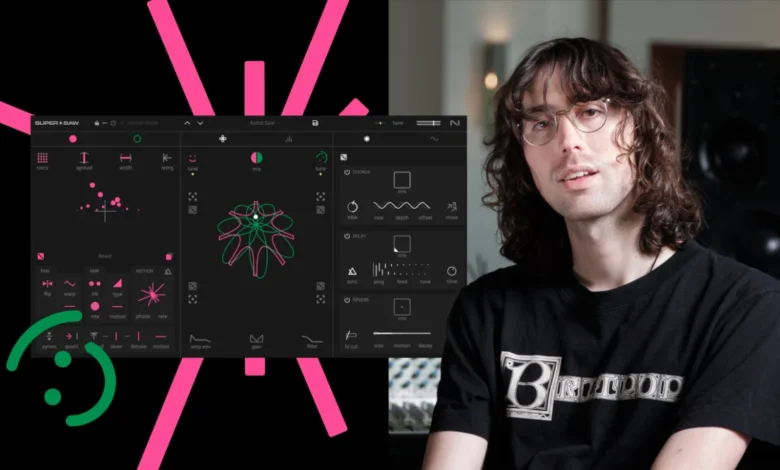
Berlin and London — The landscape of electronic music production and sound design has long been defined by a specific, unmistakable sonic signature: the stacked sawtooth wave. Originating during the digital and virtual analog revolution of the mid-to-late 1990s, the "supersaw" quickly became the bedrock of European rave anthems, euphoric pop music, and expansive club arrangements. Expanding on this rich lineage, Native Instruments has officially announced the release of Super*Saw, stylized and pronounced as SuperStarSaw. Developed in direct collaboration with visionary record producer, artist, and PC Music founder A.G. Cook, the new software instrument aims to condense labor-intensive, multi-layered workflows into a single, highly expressive, and real-time playable synth plugin.
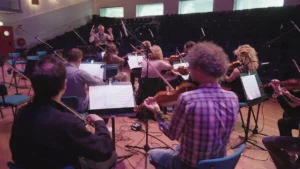
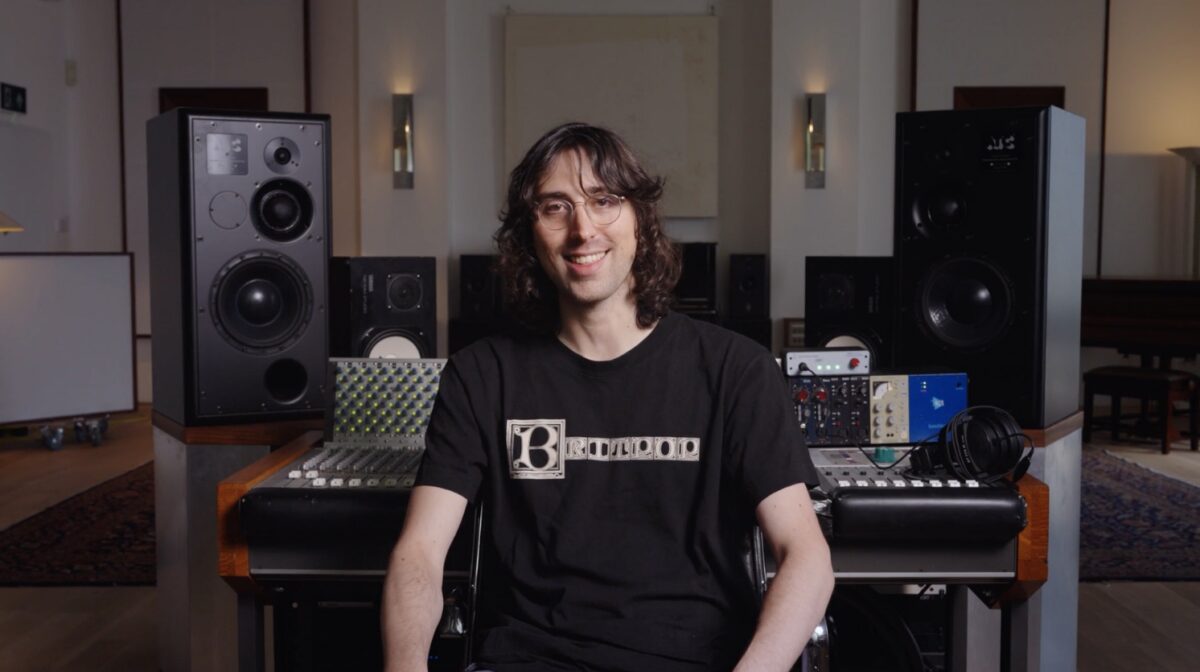
To mark the global product launch, Native Instruments sat down with Cook at the historic Baltic Studios in London to discuss his overarching production philosophy, the technical hurdles of pushing digital instruments past their intended limits, and how Super*Saw bridges the gap between the hyper-digital soundscapes of his past discography and the future of electronic music composition.
Main Facts and Architectural Breakdown of Super*Saw
At its technical core, Super*Saw is built around a singular premise: celebrating the sonic power of the sawtooth wave while completely eliminating the tedious technical workarounds historically required to achieve massive, harmonically dense stacks. The instrument features a dual 8-voice sawtooth oscillator system. This architecture is partitioned into two distinct, color-coded visual and sonic layers: pink and green.
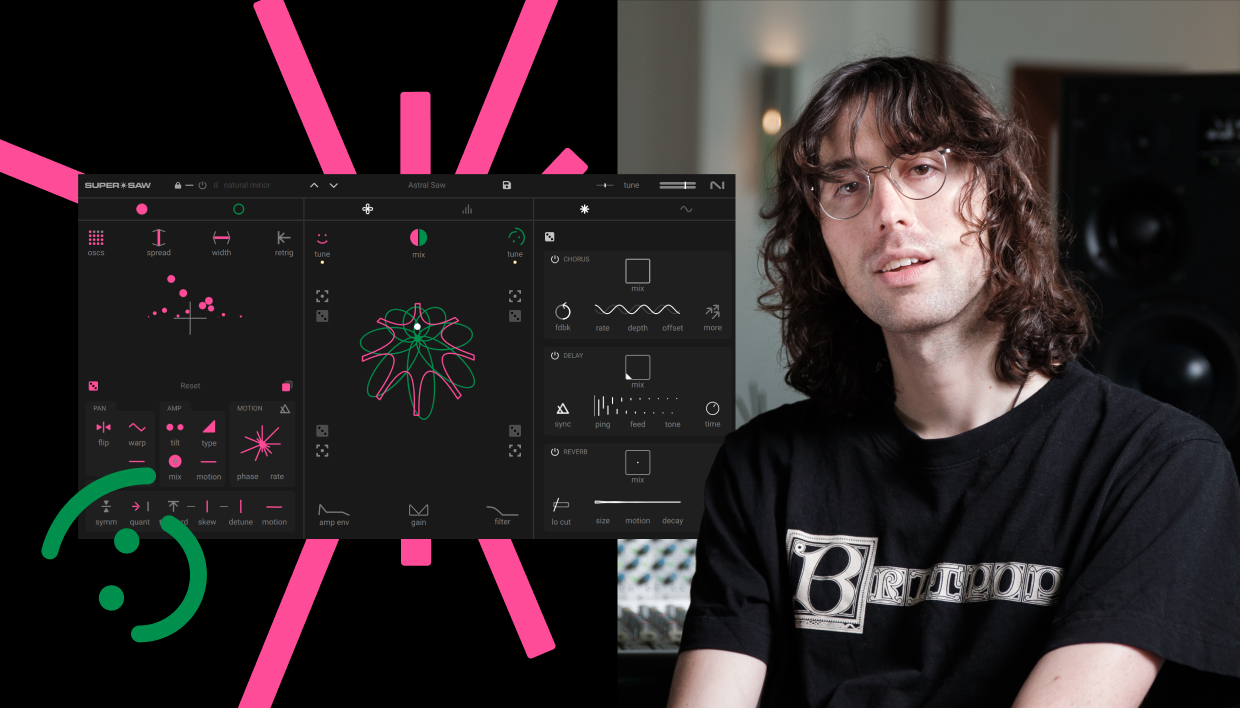
Rather than relying on static automation curves or painstakingly routing multiple third-party plugins within a Digital Audio Workstation (DAW), users can leverage the plugin’s built-in 4-corner Morpher. This interface enables real-time transitions between different chord shapes, detuning rates, and modulation states on the fly. Furthermore, the instrument includes a star-shaped modulation control that can be freely mapped across panning, amplitude, and pitch parameters. By restricting the synthesis engine exclusively to sawtooth waveforms, the instrument forces producers to focus heavily on the creative potential of voice stacking, stereo width, and dynamic movement.
Chronology and Development History
The genesis of SuperSaw stretches back across A.G. Cook’s decade-long career of boundary-pushing production. Rising to prominence as the founder of the influential PC Music label, Cook helped shape the sound of modern hyperpop and electronic avant-garde music through extensive collaborations with major artists such as Charli XCX, Caroline Polachek, and Oklou, alongside ambitious solo projects like his massive 2020 release 7G, his sophomore album Apple, and his recent record Britpop*.
For Cook, designing a signature software instrument was a long-term career ambition that frequently took a back seat to his rigorous studio and touring schedule. The collaboration with Native Instruments materialized as a natural extension of his production methods. Over the years, Cook frequently utilized complex, manual workarounds to achieve his signature supersaw textures—notably on tracks like "Stargon" from 7G, where he stacked multiple distinct synth plugins and manually automated their respective detune functions to create shifting chord progressions.
Recognizing that these painstaking routing sessions often hindered the creative flow of actual musical performance, Cook approached Native Instruments with a clear objective: to design a streamlined hardware-style software instrument that captures the chaotic, wall-of-sound energy of stacked oscillators without the administrative burden of traditional DAW session management.
Supporting Data and Industry Context
The release of Super*Saw arrives at a pivotal moment in music technology, where software developers are increasingly shifting away from sprawling, do-it-all ROMplers in favor of hyper-focused, ideology-driven virtual instruments. The 1990s supersaw—famously popularized by synth engines like the Roland JP-8000—was originally born out of a generational leap in DSP processing power, allowing hardware units to load significantly more oscillators than their analog predecessors.
As digital processing capabilities expanded over the subsequent decades, producers began pushing these boundaries into extreme territory. In Cook’s catalog, tracks such as "Superstar" demonstrate the dramatic dynamic shift possible when transitioning from a delicate, isolated piano arrangement into towering, heavily detuned supersaw layers. On more aggressive compositions, these layered waveforms are driven to such dense extremes that individual chord structures dissolve entirely, functioning instead as rhythmic, heavily texturized blocks of noise akin to percussion. Super*Saw translates these complex production techniques into a streamlined interface, democratizing a workflow that previously required advanced audio routing knowledge.
Official Statements and Artist Reflections
Reflecting on the realization of his own plugin, Cook emphasized that the instrument serves as a conceptual capstone to a specific era of his creative output.
"It’s funny having my own synth plugin," Cook remarked during his interview at Baltic Studios. "It’s something that’s always been a bit of a goal of mine and kind of on the back burner. I’m always excited when I see artists make their own tools around a specific ideology they have."
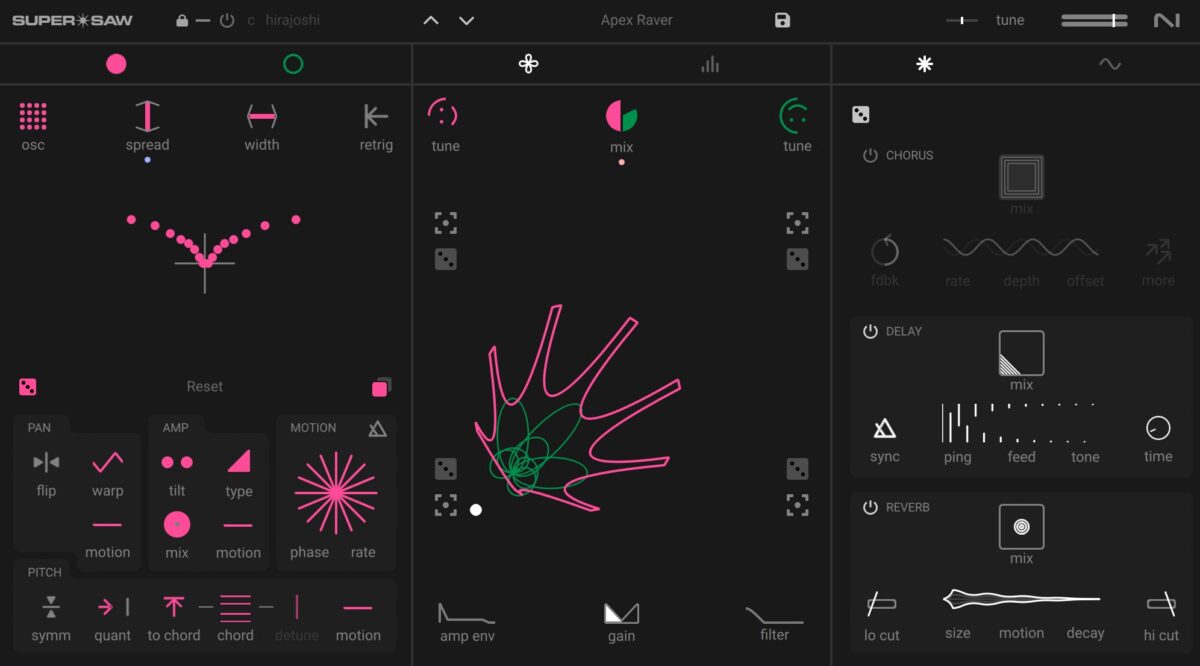
Elaborating on the conceptual design behind the dual-layer architecture, Cook noted the intentionality of the visual and sonic separation between the pink and green modules. "I had a strong sense that it would be two layers, these two groups, because that’s often how I think about building sounds. It’s almost like having a comedic duo. One half could be going crazy and the other half could be anchoring it with a fundamental note. It then became obvious that pink and green would stack really well while feeling distinct, so you have these two vivid, contrasting colour worlds."
Cook views the plugin not merely as a commercial tool, but as a deliberate archival statement. "This plugin is a sort of coda, epilogue, or final chapter to the albums that I’ve already released as A.G. Cook," he concluded. "Not just the Britpop pink-and-green color scheme, but also the echoes of 7G and Apple’s sonic world. It feels more exciting than just making a big sample pack of all those sounds, to think about boiling that stuff down into an instrument that can be used by other people in completely different ways."
Broader Impact and Market Implications
Industry analysts note that the introduction of Super*Saw highlights a growing market demand for artist-driven software ecosystems. By collaborating directly with genre-defining producers, major software developers like Native Instruments can bridge the gap between abstract sound design theory and practical, high-efficiency studio tools.
For electronic music producers, pop composers, and sound designers, SuperSaw eliminates the steep learning curve and time-consuming routing processes traditionally associated with maximalist production styles. By encapsulating decades of rave history and hyper-modern sound design into an intuitive, real-time playable interface, the instrument is expected to significantly influence the production of upcoming electronic and pop releases, empowering creators to explore the outer limits of harmonic density without technical friction. SuperSaw is available now through the official Native Instruments product ecosystem.