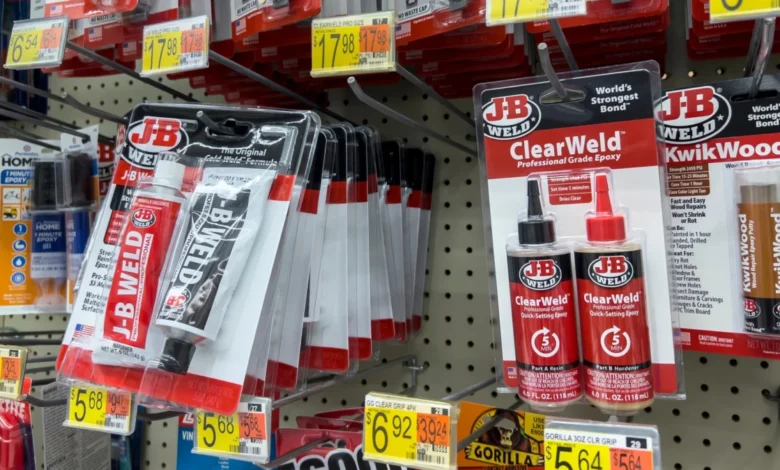
Every DIY enthusiast, mechanic, and homeowner eventually encounters a moment of frustration: a slip of a hammer cracks a boat hull, a lawnmower deck springs a leak, or a treasured hand tool snaps right at the grip. In these high-stress situations, reaching for a reliable adhesive is standard practice, and for decades, the default choice in many workshops has been J-B Weld. Known colloquially as the original "cold weld," this two-part epoxy system has built a reputation for fixing everything from engine blocks to household appliances. However, a frequent point of confusion among users revolves around the exact curing timeline. While applying the adhesive takes only moments, understanding the chemistry behind how long J-B Weld actually takes to dry, set, and fully cure is essential for ensuring structural integrity and avoiding catastrophic project failures.
Understanding the Chemistry: Setting Versus Curing
To properly utilize J-B Weld and its family of products, users must first understand the fundamental difference between setting and curing. These two terms are often used interchangeably in casual conversation, but in the realm of adhesives and chemistry, they represent entirely distinct phases of the bonding process.
Setting refers to the initial stage where the epoxy transitions from a liquid or viscous paste into a solid state. During this window, the material loses its mobility, meaning the parts being joined will no longer slide out of alignment under their own weight. However, reaching the set stage does not mean the joint is ready to bear a load. The epoxy is still relatively fragile and vulnerable to stress.
Curing, on the other hand, is the comprehensive chemical reaction that takes place between the two components of the epoxy: the resin and the hardener. When mixed in the precise manufacturer-recommended ratio, typically a one-to-one proportion by volume for the original formula, the molecules cross-link in an exothermic reaction. This chemical transformation is what grants the epoxy its legendary tensile strength, chemical resistance, and rigidity. Only after the full cure cycle is complete can the repaired item be subjected to heavy loads, high pressures, or rigorous operational conditions.
Product-Specific Timelines Across the J-B Weld Lineup
The J-B Weld brand has expanded significantly since its inception, evolving from a single flagship steel-reinforced formula into a diverse portfolio of specialized adhesives. Because each formulation is engineered for specific materials and application speeds, cure times vary dramatically across the product line.
Flagship Original J-B Weld Epoxy Twin Tube
The product that put the brand on the map is the original steel-reinforced twin-tube epoxy, proudly manufactured in the United States. For this heavy-duty adhesive, the manufacturer specifies a set time of four to six hours under standard room-temperature conditions (approximately 70 degrees Fahrenheit). During this window, the material hardens sufficiently to be handled or lightly shaped. However, achieving its maximum rated tensile strength requires a full cure time of 15 to 24 hours. Rushing this process by applying stress before the 24-hour mark can compromise the molecular bond, leading to joint failure.
J-B Weld KwikWeld
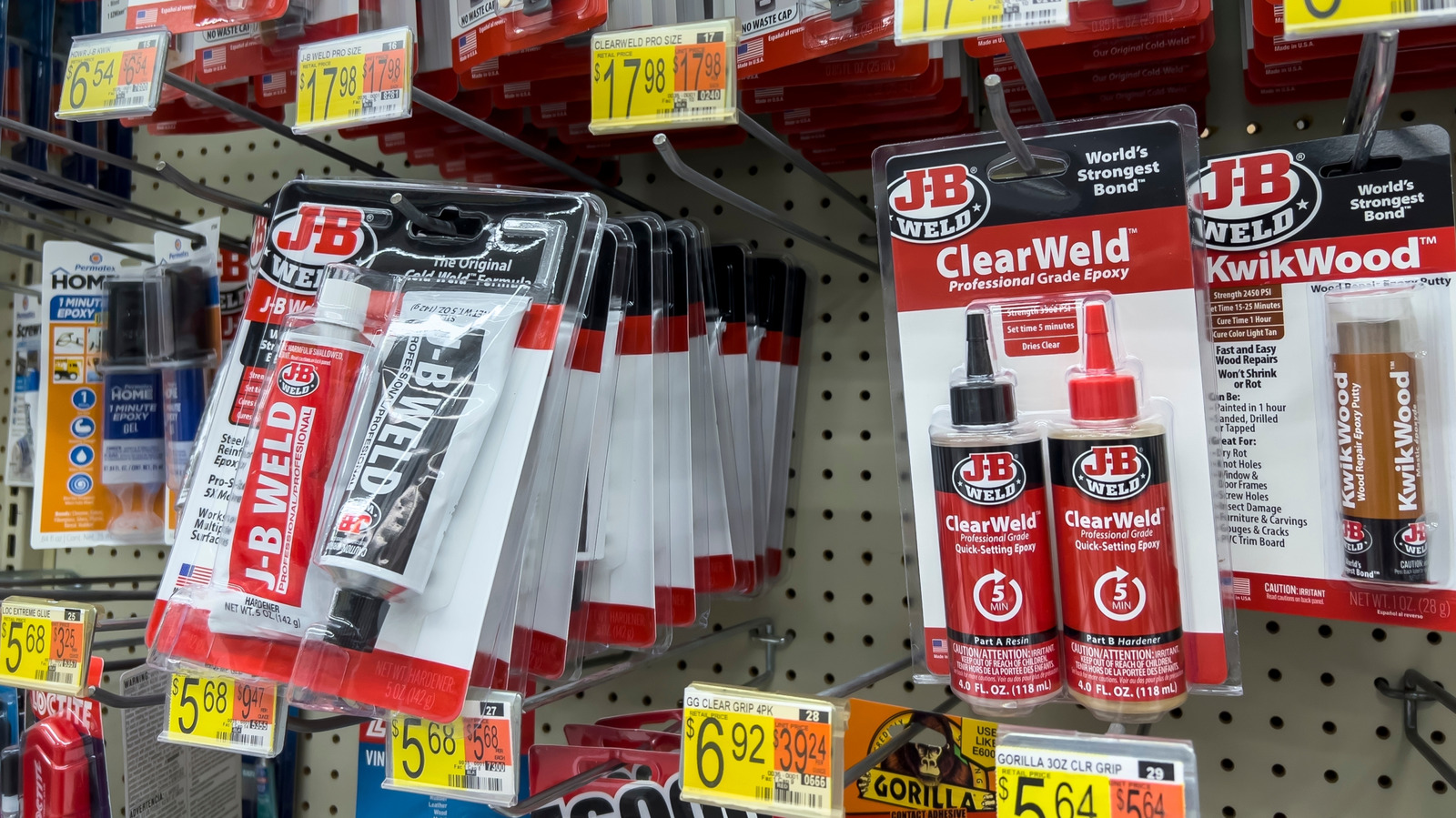
Designed for situations where time is of the essence, KwikWeld is a fast-setting, steel-reinforced epoxy variant. It is engineered to set in roughly four to six minutes, making it ideal for holding components in place quickly without extensive clamping. Despite its rapid initial setup, KwikWeld still requires a proper curing period to develop structural strength, typically taking between four and six hours to fully cure. While highly convenient for emergency roadside repairs or quick household fixes, KwikWeld is generally intended for lower-stress applications compared to the original slow-curing formula.
PlasticWeld and Specialty Epoxies
Addressing the prevalence of plastics in modern manufacturing and household goods, J-B Weld developed targeted solutions such as PlasticWeld. These formulations are tailored to bond specific substrates like ABS, PVC, fiberglass, and various hard plastics. PlasticWeld typically achieves an initial set within 20 to 30 minutes and reaches a full cure in approximately one hour.
J-B Weld ExtremeHeat
For high-temperature environments—such as exhaust manifolds, wood stoves, or engine components—the brand offers ExtremeHeat, a non-rusting paste capable of withstanding temperatures up to 1,000 degrees Fahrenheit. Because of its unique heat-resistant properties and chemical composition, ExtremeHeat requires a more intensive curing cycle. Many applications necessitate heat-curing methods, such as running an engine at idle or applying an external heat source, with full cure cycles extending up to 24 hours to ensure the bond can withstand extreme thermal expansion and contraction.
Troubleshooting the Tacky Bond: Why Isn’t It Drying?
One of the most common complaints among DIYers is encountering an epoxy joint that remains tacky, gummy, or soft long after the stated 24-hour cure window has passed. When an adhesive fails to harden properly, it rarely indicates a defect in the product itself; instead, it almost always points to an environmental factor, improper proportioning, or inadequate preparation.
The timelines provided by manufacturers are calculated under strict laboratory conditions: a clean, dry surface, a stable ambient temperature of approximately 70 degrees Fahrenheit, and an exact one-to-one mixture of resin and hardener. Deviating from these baselines can disrupt the chemical cross-linking process entirely.
1. Incorrect Mixing Ratios
Epoxy relies on a precise stoichiometric balance between the resin and the hardener. If a user squeezes out unequal amounts—either through visual estimation or malfunctioning tubes—the excess of one component will remain unreacted. This residual material cannot polymerize, leaving the mixture permanently soft, sticky, or weak.
2. Inadequate Mixing Quality
Even if the correct proportions are dispensed onto the mixing surface, failing to blend them thoroughly will result in localized failure. If the resin and hardener are not swirled and folded together until uniform in color and consistency, microscopic pockets of unmixed resin will persist. These pockets will never cure, creating structural weak points within the bond line.
3. Ambient Temperature and Humidity
Temperature plays a vital role in the chemical kinetics of epoxies. In cold environments—such as an unheated garage during winter or an outdoor workspace below 50 degrees Fahrenheit—the chemical reaction slows down dramatically or may halt altogether. Conversely, excessive humidity can introduce moisture into the mixture, clouding the adhesive and weakening the final matrix. Users working in cold conditions must artificially warm the workspace or use heating lamps to facilitate a complete cure.
Remediation Steps for Failed Applications
When an epoxy repair fails to cure and remains tacky after 24 hours, hoping it will eventually harden is futile. The chemical reaction has stalled or been corrupted, and the compromised material must be addressed systematically.
First, the uncured or tacky epoxy must be completely removed from the substrate. This can be accomplished using mechanical scraping, wire brushing, or chemical solvents such as acetone or denatured alcohol, depending on the material of the repaired object. Once the surface is stripped of the faulty adhesive, it must be thoroughly cleaned and dried.
To ensure a successful reapplication, the mating surfaces should be mechanically roughened using coarse sandpaper or a file. Epoxies rely heavily on surface texture to create a mechanical lock, and smooth surfaces provide insufficient anchorage. When mixing the fresh batch of J-B Weld, technicians should use a dedicated mixing tray and a flat-edged stick, folding the resin and hardener meticulously for a full minute to guarantee homogeneity. Ensuring an equal one-to-one ratio and maintaining a room-temperature environment will prevent a recurrence of the issue.
Furthermore, proper storage of opened J-B Weld products is critical to their longevity. Caps should be tightly secured immediately after use, preventing ambient moisture from contaminating the tubes and extending the shelf life of the remaining product for future repairs.
Broader Implications and Best Practices for Structural Repairs
The widespread reliance on cold-weld epoxies underscores a broader shift in modern maintenance culture. Rather than immediately replacing broken, fractured, or worn-out components—a practice that contributes to the global accumulation of electronic and mechanical waste—consumers and industrial technicians increasingly rely on high-strength polymer composites to extend the lifecycle of durable goods.
From automotive restoration and marine maintenance to plumbing and artistic fabrication, the ability to permanently fuse metals, plastics, and ceramics without specialized welding equipment has democratized heavy repair work. However, the success of these interventions hinges entirely on adherence to technical specifications. Ignoring cure times, skipping surface preparation, or eyeballing mixing ratios transforms a potential structural repair into a temporary, unreliable fix.
Ultimately, while J-B Weld offers an exceptionally robust solution for bridging broken materials, it demands respect for its chemical nature. By accounting for environmental variables, respecting the 15-to-24-hour cure window for maximum tensile strength, and ensuring meticulous preparation, users can transform a makeshift patch into a permanent, load-bearing restoration.