DJI Osmo 360 II Redefines the Panoramic Camera Landscape with Advanced Sensor Technology and AI-Driven Production Capabilities

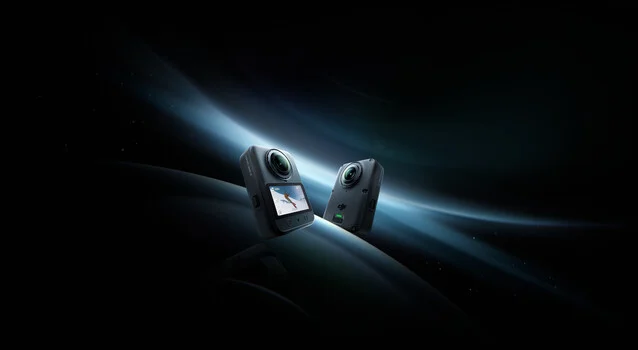
The launch of the DJI Osmo 360 II marks a significant inflection point in the consumer and professional imaging market, effectively establishing a new benchmark for what creators can expect from panoramic hardware. By integrating sophisticated, purpose-built sensor technology with AI-enhanced post-processing, DJI has transitioned the 360-degree camera from a novelty device into a robust, high-fidelity production tool. This release builds upon over 12 years of DJI’s imaging research and development, drawing a direct technical lineage from the original Osmo 360 and the high-performance Avata 360 series.
A Chronology of Innovation: From Concept to Industry Standard
The narrative of the Osmo 360 II begins with the original Osmo 360, a device that disrupted the market by introducing a square CMOS sensor. In conventional 360-degree camera design, engineers typically utilize a circular image field on a rectangular sensor, which leads to a substantial loss of active surface area—often exceeding 25% of the sensor’s potential. By adopting a dual-sensor square architecture, the original Osmo 360 effectively reclaimed this wasted real estate.
The subsequent introduction of the Avata 360 served as a critical stress test for this sensor technology. Designed for high-speed flight and navigation through restricted, complex environments, the Avata 360 required the sensor to maintain image integrity under extreme vibrations, rapid light-level fluctuations, and high-velocity motion. The lessons learned from these operational extremes provided the engineering foundation for the Osmo 360 II, which refines these earlier successes into a consumer-accessible form factor.
The product reached global prominence following its official debut at IFA 2026. The reception was immediate and substantial, resulting in 17 distinct "Best of IFA" accolades from major industry observers, including CNN Underscored, Tom’s Guide, Mashable, Gizmodo, Digital Trends, and Apple Insider. Following its initial retail launch, the device has experienced rapid adoption, signaling a strong market appetite for high-resolution, professional-grade panoramic tools that simplify complex workflows.
Technical Architecture: The Power of 8K and Advanced Optics
At the heart of the Osmo 360 II is a pair of 1/1.1-inch square CMOS sensors. This configuration is not merely a marketing metric but a deliberate design choice that facilitates native 8K resolution. Each pixel measures a generous 2.4μm, which is essential for capturing high-fidelity data even in challenging lighting conditions. The large pixel size allows for superior photon collection, which translates to a high signal-to-noise ratio—a critical factor when cropping into 360-degree footage.
The imaging pipeline has been further enhanced with the introduction of SuperNight 2.0. This proprietary noise-reduction algorithm, combined with the physical capabilities of the 2.4μm pixels, allows for clean, sharp output in low-light environments where traditional 360 cameras typically struggle with grainy, unusable footage. Furthermore, the system boasts a dynamic range of 14.5 stops, a significant advancement that ensures detail is preserved in both the brightest highlights and the deepest shadows. This enables creators to generate HDR 360-degree imagery with accurate color reproduction and high contrast, providing a foundation for professional color grading.
For time-based capture, the Osmo 360 II supports 360-degree timelapse recording at resolutions up to 16K, allowing for the condensation of expansive landscapes into fluid, high-clarity sequences. The inclusion of 10-bit color depth across all recording modes ensures that the system can capture over a billion colors, providing the tonal range required for professional color-managed workflows.
Addressing the Solo Creator’s Workflow
A recurring challenge for modern creators is the "crew-less" production environment. Solo content creators—whether producing travel vlogs, brand campaigns, or live event coverage—often find themselves sacrificing quality for convenience because they lack the manpower to frame shots, manage focus, and operate multiple cameras simultaneously.
DJI has addressed these pain points through the implementation of AI-driven features. The most notable is the new "Spotlight Follow" mode. By leveraging onboard AI, the camera can intelligently lock onto a subject and maintain that subject in the center of the frame, regardless of how the camera itself rotates or moves through space. This essentially replicates the role of a human camera operator who would otherwise need to track the subject manually.
Furthermore, the stitching engine—the software responsible for merging images from the dual lenses into a seamless sphere—is now in its third generation. Historically, 360 cameras have faced significant issues with "near-field misalignment," where subjects close to the camera appear distorted or have visible seams at the junction of the two lenses. DJI’s third-generation engine, trained on thousands of datasets and spatial calibration images, has effectively eliminated these errors, ensuring that the transition between the two lenses is imperceptible even at close range.
Operational Readiness and Storage Logistics
Recognizing that the best shots are often spontaneous, DJI has prioritized "instant-on" capability. The Osmo 360 II is equipped with 105 GB of high-speed internal storage, eliminating the immediate requirement for external memory cards. The integration of an "Instant Snapshot" mode allows the device to begin recording the moment it is powered on, bypassing lengthy boot-up or configuration sequences.
Connectivity and post-production workflows have also been streamlined. An NFC-enabled pairing area allows users to tap their smartphones to the camera to initiate a connection with the updated Mimo app. Within the app, DJI has integrated AI-driven tools that assist in automatic moment selection, intelligent transitions, and one-tap video generation. For those who require more granular control, the device supports direct file export into DJI Studio, which includes a dedicated plugin for DaVinci Resolve, ensuring that professional editors can integrate 360 footage into their existing NLE (Non-Linear Editing) pipelines without friction.
Broader Implications for the Imaging Market
The release of the Osmo 360 II suggests a strategic shift in the panoramic camera market. As consumers become increasingly accustomed to short-form video and high-quality social media content, the demand for equipment that can deliver "professional-quality" output with "minimal-effort" operation has grown.
By combining portability with advanced, AI-assisted stabilization and framing, DJI is positioning the Osmo 360 II as a tool that transcends the action camera category. The ability to record in 360 degrees—and subsequently "reframe" that footage into wide establishing shots, vertical cuts for mobile, or tight portrait crops—means that a single take can produce multiple distinct video assets. This capability is particularly attractive for creators managing multi-platform distribution, as it saves significant production time and reduces the risk of "missing the shot."
While other manufacturers continue to compete on price or form factor, DJI’s emphasis on sensor efficiency and intelligent software suggests a long-term goal of dominating the "director’s camera" segment of the market. The technical advantage provided by the square sensor, coupled with the ability to handle complex stitching and tracking in-camera, creates a high barrier to entry for competitors.
In conclusion, the Osmo 360 II is not merely an incremental update but a comprehensive refinement of the panoramic shooting experience. By solving the dual problems of framing and stitching, DJI has successfully lowered the technical barrier to entry for high-end 360-degree content. For the solo creator, the device represents a shift from "capturing everything" to "directing everything," marking a new chapter in the evolution of accessible, high-performance imaging technology. As the market continues to evolve toward higher resolution and faster, more automated workflows, the Osmo 360 II stands as a testament to the power of integrating deep-learning AI with high-precision optical hardware.