Ilford Pan F Plus Remains a Sharp, Dramatic, and Fine-Grained Staple for Analog Photographers

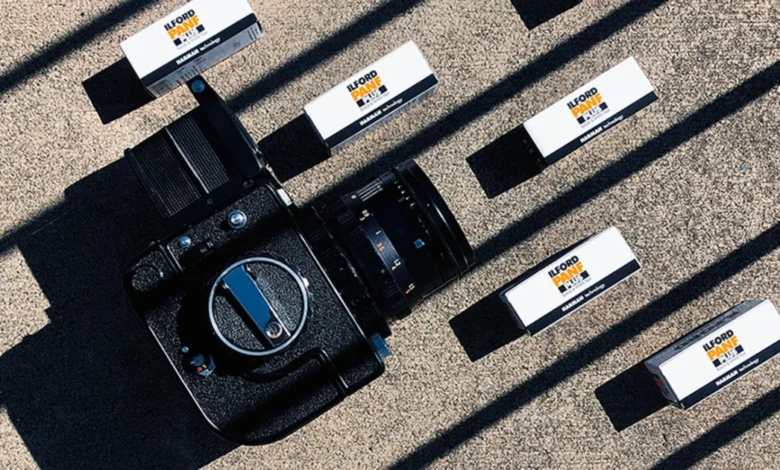
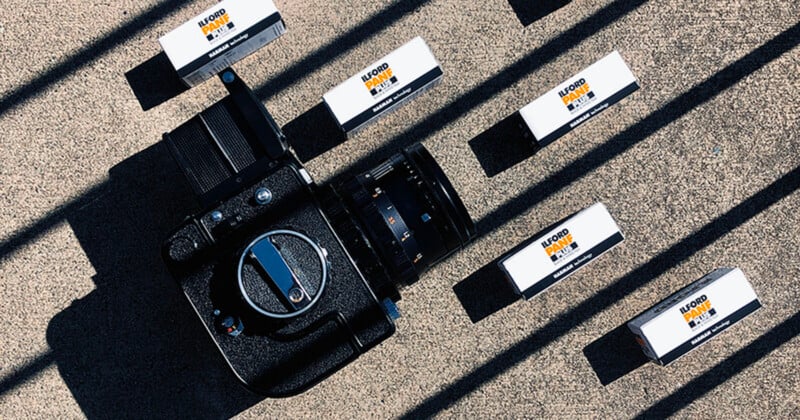
In the contemporary landscape of analog photography, where high-speed emulsions like Kodak T-Max P3200 and Ilford Delta 3200 frequently dominate discussions regarding low-light capabilities, a distinct segment of the market continues to champion ultra-low ISO films. Often referred to colloquially within enthusiast circles as the "Sub-100 Club," these slow-speed panchromatic emulsions occupy a unique space characterized by exceptional resolution, minimal grain, and specialized application requirements. Among the venerable elders of this category stands Ilford Pan F Plus, a black-and-white film stock with a lineage tracing back nearly eight decades. Despite shifting industry standards and the digital revolution, Pan F Plus remains an essential tool for photographers seeking uncompromising sharpness and distinct tonal contrast.
Historical Evolution and Longevity

The origins of the Pan F emulsion date back to 1948, when Ilford introduced the original panchromatic film to a post-war market hungry for high-detail imagery. Over the decades, the formula underwent multiple iterations to improve stability, sharpness, and tonal range. A significant milestone occurred in 1992, when the film was officially designated with the "Plus" suffix, signaling a modern reformulation of the silver halide crystals.

Throughout the 2000s, Ilford continued to refine the emulsion, adapting manufacturing processes to meet modern quality control standards while preserving the distinct aesthetic characteristics that distinguished the original formulation. In a major development for large-format practitioners, Ilford expanded the availability of Pan F Plus beyond traditional 35mm and 120 roll film formats, introducing 4×5 and 8×10 sheet film configurations. This expansion addressed decades of persistent requests from architectural and landscape photographers who demanded ultra-fine grain across larger negative areas.

Technical Characteristics: Grain, Acutance, and Tonality

At the core of Pan F Plus’s appeal are its technical performance metrics, specifically its remarkably fine grain structure. Designed for applications where image degradation must be kept to an absolute minimum, the film allows 35mm shooters to achieve a level of clarity and detail comparable to medium-format captures. Furthermore, the emulsion is exceptionally well-suited for mural-sized enlargements, retaining fine textures without the distraction of heavy grain patterns.

Acutance—the measure of perceived edge sharpness determined by local contrast boundaries between light and dark areas—is another defining attribute of Pan F Plus. While acutance is frequently manipulated during chemical development using specialized high-acutance developers like Rodinal, Pan F Plus is engineered to exhibit pronounced edge contrast intrinsically. This inherent sharpness makes the film a historical favorite among architectural photographers aiming to capture precise structural lines and intricate masonry details.

Conversely, this high degree of resolution and micro-contrast influences its performance in portraiture. While some practitioners avoid the film for portraits because it accentuates skin textures, wrinkles, and blemishes, others deliberately utilize Pan F Plus to impart a dramatic, gritty realism to human subjects.

The aesthetic signature of Pan F Plus is further defined by its contrast profile. The film yields deep, saturated shadows and crisp, luminous highlights, frequently evoking a cinematic film noir aesthetic. Midtones tend to lean toward a darker, brooding atmosphere without sacrificing tonal nuance. However, this high-contrast nature requires careful exposure and development control, leading many experienced darkroom printers to regard Pan F Plus as an unforgiving medium that demands precision.

Practical Considerations: Speed, Reciprocity, and Latent Image Stability
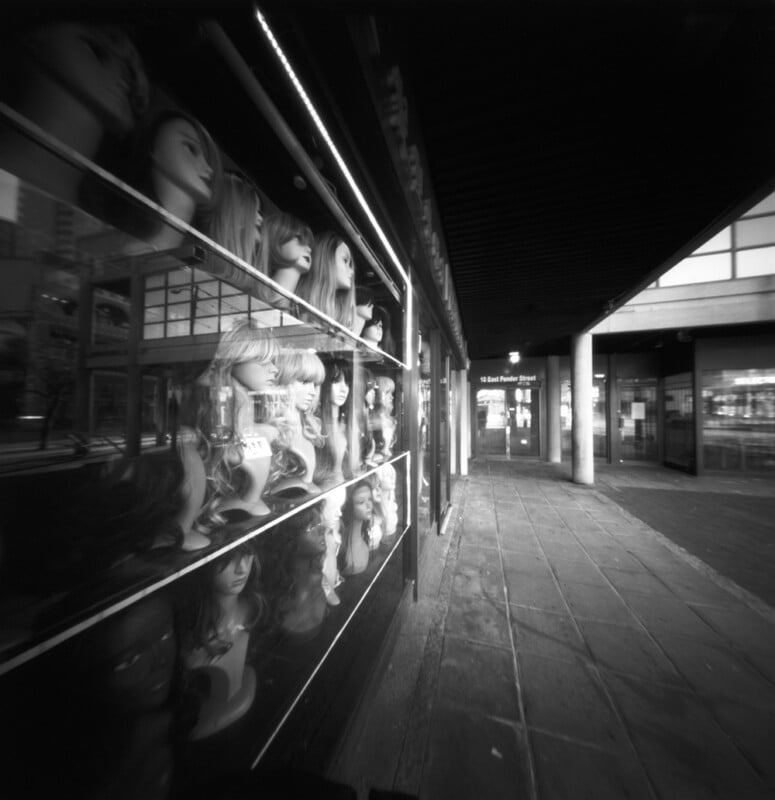
Operating an ISO below 100 introduces distinct operational constraints. Pan F Plus is fundamentally optimized for bright daylight conditions, specialized studio lighting, or long-exposure tripod work. Alternatively, the slow speed enables photographers to utilize ultra-fast apertures, such as f/1.4, under harsh daylight conditions to achieve extremely shallow depths of field, or to intentionally employ slow shutter speeds for creative motion blur and panning effects.

Long-exposure photography with Pan F Plus introduces the physical phenomenon known as reciprocity failure, where the photochemical reaction of the film diminishes under prolonged exposure times. Modern formulations of Pan F Plus exhibit moderate reciprocity characteristics compared to older vintage stocks. For exposures ranging from one to ten seconds, manufacturers and experienced users generally recommend adding between one-half to one full extra stop of light. As exposure times approach 60 seconds, compensation requirements increase to approximately two full stops—meaning a metered reading of 60 seconds requires an actual shutter duration of roughly 240 seconds. These figures reflect improvements made by Ilford over the decades to stabilize low-light performance.

Another critical technical parameter unique to Pan F Plus is latent image retention—the stability of an exposed but undeveloped frame. Historical data and technical sheets emphasize that Pan F Plus possesses relatively poor latent image stability compared to more modern tabular-grain emulsions. If left undeveloped for extended periods, exposed rolls can suffer from thin negatives and apparent underdevelopment. Ilford’s official guidelines recommend processing Pan F Plus within three months of exposure to ensure optimal density and shadow detail, though prompt development immediately following a shoot remains the industry best practice.

Industry Implications and Market Position

The enduring presence of Ilford Pan F Plus in the contemporary marketplace underscores the resilience of traditional film photography. While the mass market transitioned entirely to digital imaging sensors in the late 1990s and 2000s, specialized manufacturers like Harman technology (operating as Ilford Photo) have sustained niche analog production lines by catering to dedicated practitioners.

The introduction of large-format sheet film variants highlights a sustained demand for ultra-low ISO emulsions among fine-art photographers who prioritize archival permanence and maximum optical resolution. Market analysts note that while high-speed films serve photojournalistic and street-photography applications requiring operational flexibility, slow-speed films like Pan F Plus occupy a deliberate, contemplative sector of the market. Photographers utilizing these emulsions typically engage in methodical, slow-paced workflows involving light meters, tripods, and precise chemical processing.

As analogue photography experiences a sustained cultural and commercial resurgence among younger generations and established professionals alike, films that offer distinct stylistic signatures—such as the dramatic contrast and fine grain of Pan F Plus—continue to secure their place in modern darkrooms. Through careful calibration of exposure, strict adherence to development windows, and an understanding of its unique reciprocity behavior, photographers can harness Pan F Plus to produce imagery of striking clarity and atmospheric depth.