ESMA Student Film COWS Leads the 2026 Student Academy Awards Animation Category at the Toronto International Film Festival

The Academy of Motion Picture Arts and Sciences has officially concluded its 2026 Student Academy Awards cycle by announcing the highly anticipated gold, silver, and bronze rankings for its finalists. Following the initial unveiling of the winners last month, the ceremony held this Tuesday at the Toronto International Film Festival (TIFF) served as the definitive platform to honor the next generation of cinematic storytellers. Among the standout achievements, the animation category garnered significant attention for its blend of technical prowess and poignant thematic exploration.
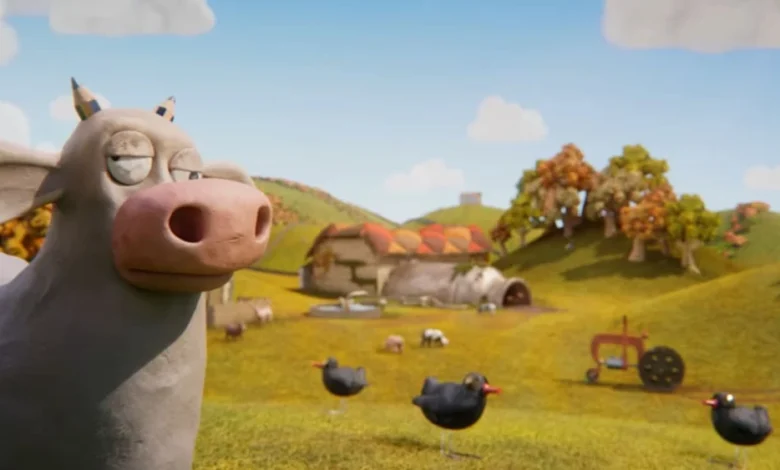
Taking the top honors, the gold medal was awarded to COWS, a graduation film produced by a creative team from ESMA (École supérieure des métiers artistiques). Directed by Jonathan Lally, Elio Molinaro, and Nicolás Acevedo Ferraté, the film depicts the journey of a restless bovine protagonist who ventures beyond the confines of her farm in search of a better existence, ultimately discovering that the idyllic promise of "greener pastures" is often a mirage. The film’s narrative depth and visual execution resonated strongly with the Academy voters, marking another significant milestone for ESMA, an institution that has consistently proven to be a powerhouse in international animation education.
The silver medal was presented to The Panic Inside, directed by Matthias Strasser. This project offers a surrealist look into the internal psyche, focusing on an exhausted individual—a chronic "people-pleaser"—who is forced to confront his own neglected needs within a dreamlike, disorienting realm. The bronze medal went to Gauze, a compelling and somber work by Noran Fikri Alezabi, Xinyue Ma, and Yulin Yue. Set against a backdrop of conflict and humanitarian crisis, the film follows a 14-year-old Palestinian swimmer who must navigate the perils of war and famine to secure sustenance for his younger sibling.
A Global Competition of Unprecedented Scale
The 2026 Student Academy Awards continue to reflect the growing global interest in collegiate filmmaking. According to official data released by the Academy, the competition attracted an impressive 2,972 entries from 894 colleges and universities spanning the globe. This represents a robust increase in participation compared to previous years, underscoring the vital role that film schools play in fostering technical innovation and diverse storytelling.
The selection process is notoriously rigorous, involving a multi-tiered judging system that requires students to submit their work for consideration in specific categories, including Animation, Narrative, Documentary, and Alternative/Experimental film. The international diversity of the entries—hailing from institutions across various continents—highlights the universal language of cinema and the increasing accessibility of high-quality digital animation tools.

The Significance of the Student Academy Awards
Since their inception in 1972, the Student Academy Awards have functioned as more than just an academic accolade; they act as a vital pipeline for the professional film industry. The awards were established to encourage and support student filmmakers, providing them with a platform to gain industry visibility and peer recognition.
The prestige of this specific award is underscored by the subsequent career trajectories of its alumni. Historically, past Student Academy Award winners have collectively earned 70 Oscar nominations and have either won or shared 15 Academy Awards. By winning at the student level, these filmmakers are essentially marked as the "ones to watch" by industry professionals, talent agents, and studio executives who frequent the award ceremonies at festivals like TIFF.
A Gateway to the 99th Academy Awards
Perhaps the most tangible benefit for the 2026 winners is their immediate eligibility to compete in the short-film categories at the 99th Academy Awards. This "fast-track" status is a rare and coveted opportunity. While the path to an Oscar nomination is long and fraught with intense competition, having the backing of a Student Academy Award provides a significant head start.
The transition from a student film to an Oscar-shortlisted project often involves a strategic campaign, festival circuits, and critical acclaim. The recognition in Toronto serves as the official launchpad for these filmmakers as they begin to navigate the professional awards landscape. For creators like Lally, Molinaro, and Ferraté, the gold medal for COWS provides the necessary industry momentum to elevate their work from academic achievement to mainstream critical recognition.
Chronology of the 2026 Selection Process
The 2026 awards cycle followed a structured timeline designed to identify the highest caliber of student work:
- Submission Phase: The process began with an open call for submissions, drawing nearly 3,000 entries from across the globe, showcasing a diverse range of technical styles including 2D, 3D, and stop-motion animation.
- Initial Review: A preliminary panel of industry professionals evaluated the entries to create a shortlist of semi-finalists, focusing on storytelling, direction, and technical execution.
- Finalists Announcement: Last month, the Academy officially unveiled the list of finalists, narrowing the field to the most exceptional projects.
- Gold, Silver, and Bronze Announcement: The final ranking was kept under wraps until the ceremony at the Toronto International Film Festival this Tuesday, where the winners were formally crowned.
Analytical Perspective: Themes and Trends
An analysis of this year’s animation winners reveals a clear trend toward introspective and socially conscious narratives. Unlike the whimsical or purely aesthetic focus of previous decades, contemporary student animation is increasingly preoccupied with the complexities of the human condition.
.png)
COWS utilizes allegory to explore the disillusionment of the "grass is greener" trope, a universal sentiment that transcends cultural boundaries. The Panic Inside addresses the modern epidemic of burnout and the psychological cost of societal pressures, reflecting a growing mental health awareness among younger generations. Finally, Gauze represents the power of animation as a medium for socio-political commentary, providing a visceral look at the impact of geopolitical conflicts on civilian life.
These films suggest that the next generation of animators is not merely concerned with technical mastery—such as advancements in motion capture or rendering technology—but is equally committed to using the medium to process the anxieties of the contemporary world.
Institutional Impact and Industry Reception
The success of ESMA in taking home the gold medal is a testament to the school’s long-standing commitment to high-end animation training. Historically, schools that dominate the Student Academy Awards often see a surge in enrollment and increased recruitment interest from major studios like Pixar, DreamWorks, and Disney.
While the Academy of Motion Picture Arts and Sciences does not provide specific feedback for individual films, the consensus among industry attendees at the Toronto ceremony was that the technical standard of the 2026 cohort has reached an all-time high. The seamless integration of narrative depth with sophisticated animation techniques indicates that the barrier between "student film" and "professional production" is becoming increasingly blurred.
As these filmmakers look toward the future, the industry will be watching closely. Whether they choose to pursue independent film careers or integrate into large-scale animation studios, the recognition they received in Toronto ensures that their voices will be part of the ongoing dialogue within the cinematic community. The 99th Academy Awards will serve as the ultimate test, but for these young animators, the recognition in Toronto is already a historic milestone in their professional lives.
Related posts: