Pelican Products Launches First Major Television Campaign Featuring Photographer Chris Burkard to Promote Aegis Gear Series

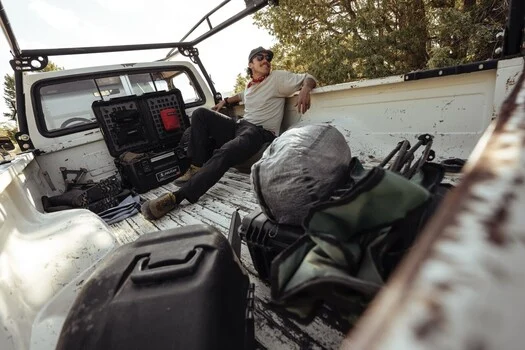
For decades, Pelican Products has maintained a reputation as the industry standard for protective, high-impact storage solutions. Known primarily for its virtually indestructible hard-shell cases, the company has long been the default choice for professionals transporting sensitive instrumentation, medical equipment, and high-end cinema gear across hazardous environments. However, a significant pivot in marketing strategy has recently seen the brand branch out, moving beyond the hard-case aesthetic to introduce a line of lifestyle-oriented camera bags: the Aegis series. To signal this shift toward consumer-facing outdoor gear, Pelican has launched its first-ever major television advertising campaign, headlined by renowned adventure photographer and filmmaker Chris Burkard.
The partnership represents more than a standard celebrity endorsement; it serves as a strategic repositioning of the Pelican brand. By leveraging the credibility of Burkard—a veteran of 20 years who has documented some of the world’s most extreme climates—Pelican is aiming to translate its reputation for military-grade durability into the competitive camera backpack and sling market.
A Strategic Partnership Rooted in Proven Utility
The collaboration between Pelican and Chris Burkard was not a calculated move made in a boardroom, but rather an evolution of a two-decade-long relationship between the photographer and the product. Burkard, who has navigated environments ranging from the frigid Icelandic glaciers to the remote reaches of the Russian wilderness, has long relied on Pelican cases to safeguard his equipment.
According to Pelican leadership, the selection of Burkard as a Global Ambassador was designed to provide authentic testimonials for the Aegis line. The campaign focuses on two specific products: the PX25 Travel Pack and the SX5 Padded Sling. These items are designed to bridge the gap between heavy-duty equipment protection and the agility required by modern outdoor photographers who must balance weight, speed, and safety.
For Burkard, the transition from using hard cases to soft-shell travel gear was initially a test of technical capability. "What I do best is beat the hell out of gear," Burkard noted during a recent interview. "When they came to the table and said they wanted to take that same level of quality they’ve created in these hard cases and place it into a travel line, I was interested. I wanted to see if it could actually handle the field."
Chronology of the Campaign Development
The development of the campaign, titled The Detour, marks a departure from Pelican’s historical reliance on product-centric, utilitarian advertising.
- Initial Concept Phase: Pelican’s internal marketing team, augmented by recent talent acquisitions, sought to move away from purely functional messaging to a narrative-driven approach.
- The Pivot: Initially dubbed "The Side Quest," the narrative evolved to emphasize the philosophy that the most significant creative discoveries occur when a traveler deviates from a planned itinerary.
- Production: The campaign was filmed in the Great Sand Dunes National Park, a location selected for its unique lighting and extreme physical challenges.
- Execution: Filming took place under constrained conditions, requiring the crew to operate at 8,000 feet of altitude and manage volatile weather patterns. The production utilized a mix of RED cinema cameras and smaller, agile DSLR bodies to capture the ruggedness of the terrain.
Technical Analysis of the Aegis Series
The Aegis PX25 and SX5 series occupy a distinct niche in the photography market: semi-rigid protection. While traditional soft bags offer comfort, they often lack the structural integrity to prevent compression damage to lenses or delicate electronics. Conversely, traditional hard cases are cumbersome for long-distance transit.
The Aegis line utilizes semi-rigid panels that provide enough structural resistance to protect gear from impact while remaining light enough for prolonged use. Key features noted by industry testers include:
- Material Durability: The bags utilize weather-resistant fabrics and reinforced zippers designed to withstand abrasion from rocks and debris.
- Ergonomic Integration: Designed for rapid deployment, the packs allow for quick access to internal compartments—a critical requirement for photographers who, like Burkard, often switch between wide-angle and telephoto lenses while on the move.
- Modular Utility: The bags are engineered to hold standard professional kit configurations, such as a primary camera body and a 16-35mm, 24-70mm, or 70-200mm lens setup.
Operational Challenges in Extreme Environments
The production of The Detour served as a stress test for the new gear. Filming at high altitudes in the San Luis Valley presented significant logistical hurdles, specifically regarding thermal updrafts. The crew was restricted to a narrow, 40-minute window of calm weather shortly after sunrise before the heat-driven thermals made flying experimental aircraft unsafe.
Beyond the environmental challenges, the shoot required high-intensity physical labor. Crew members had to transport heavy cinema equipment across high-altitude sand dunes, a feat that highlighted the importance of weight distribution in camera bag design. The experience reinforced the necessity of "the art of packing"—a philosophy Burkard champions, which dictates that if gear is not easily accessible, it will not be used, rendering it effectively useless in the field.
Broader Market Implications
Pelican’s entry into the lifestyle-travel segment is a strategic response to the shifting demographics of the photography industry. As high-end professional equipment has become more portable, the demand for bags that offer "protection without compromise" has grown. By moving into this space, Pelican is competing with established outdoor brands while leveraging its unique heritage in heavy-duty protection.
Market analysts observe that for a brand like Pelican, the primary risk is brand dilution. If the new soft-shell line fails to live up to the "indestructible" reputation of the original hard cases, the company risks alienating its core professional base. However, the use of a high-profile, credible ambassador like Burkard suggests that the company is leaning into its reputation for durability rather than distancing itself from it.
Future Testing and Brand Evolution
Looking forward, Burkard and Pelican have identified volcanic environments—such as the active regions of Iceland—as the ultimate proving ground for the Aegis line. The ability to repel abrasive volcanic ash while providing a quick-access interface for gear is considered the benchmark for professional equipment.
As the campaign for the Aegis series continues to roll out, it serves as a case study in how a legacy manufacturer can modernize its product offering. By focusing on the "story" of the adventurer rather than just the specifications of the bag, Pelican is attempting to transform itself from a provider of protective boxes into a partner in the creative process.
The success of this campaign may well dictate the future direction of the company’s R&D efforts. If the Aegis line gains traction, it is highly probable that Pelican will continue to expand its soft-goods offerings, applying its engineering expertise to further segments of the travel and outdoor gear market. For now, the focus remains on proving that the "Pelican standard" can survive not just in a shipping crate, but on the back of a photographer navigating the world’s most unforgiving landscapes.