Beyond the Baseline: How Self-Improving AI Harnesses and Co-Evolution Frameworks Are Redefining Agent Performance

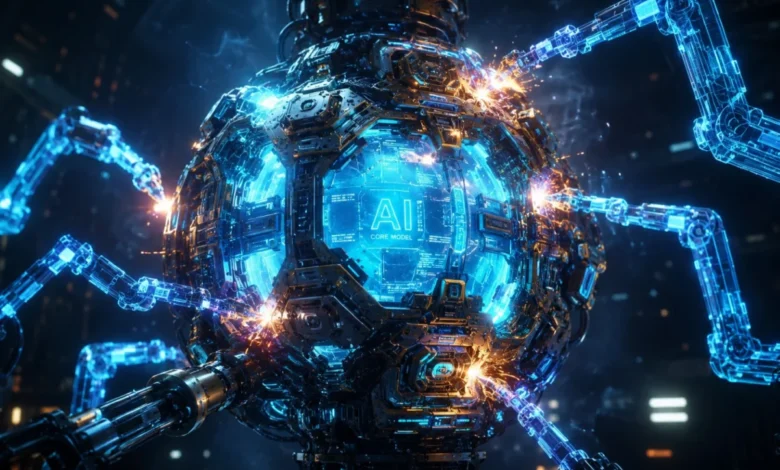
The relentless pursuit of artificial intelligence advancement has long been dominated by conversations surrounding large language models (LLMs), with engineers and researchers continuously striving to scale parameter counts and expand context windows. However, the practical utility of an AI application is rarely determined by the raw model alone. Instead, its performance is fundamentally dictated by its runtime harness—the complex architecture of system prompts, memory management protocols, execution logic, and tool configurations that anchor a model to real-world tasks.
While enterprises demand highly customized behaviors from AI systems, training a model from scratch or fine-tuning open-weight alternatives remains prohibitively expensive, technically complex, and resource-intensive. Consequently, the application harness has emerged as the most accessible and pragmatic lever for developer control. Yet, as foundation models update at a rapid pace, the manual maintenance of these harnesses has become a severe bottleneck. Crafting, updating, and debugging execution scaffolding for every new model iteration scales poorly, leaving harness optimization as a tedious, error-prone manual chore.
This paradigm is undergoing a fundamental transformation. Recent academic frameworks and engineering breakthroughs are reframing this constraint by structuring runtime environments so that AI agents can iteratively analyze, test, and optimize their own scaffolding. By replacing manual developer labor with autonomous, trace-driven optimization loops, the artificial intelligence community is unlocking unprecedented performance gains without altering foundational model weights.
The Anatomical Complexity of Modern Agent Harnesses
To understand the necessity of self-improving frameworks, one must examine the anatomy of a modern agent harness. Functioning essentially as an operating system for an AI model, the harness provides the structural framework necessary to translate raw reasoning capabilities into actionable operations. Popular development environments such as Cursor, Aider, Cline, and Anthropic’s Claude Code serve as primary examples of this architecture in practice.
The true intricacy of these execution systems was thrust into the spotlight following the high-profile source code leak of Claude Code. Security researchers and systems engineers who dissected the architecture discovered a sophisticated, multi-agent orchestrated system rather than a simple conversational wrapper. Rather than relying on a single, overloaded context window to simultaneously handle planning, tool execution, and code comprehension, the architecture deliberately separated planning from execution. A lead agent parses incoming requests, while specialized subagents execute parallel tasks such as testing, documentation, and debugging.
This intricate orchestration is bound together by the "agentic loop"—a continuous execution process where the model gathers contextual information, invokes a tool, observes the resulting output, and adjusts its strategy prior to subsequent iterations. To prevent cognitive drift and maintain user intent over extended sessions, the harness relies on deeply integrated memory and control systems.
While general-purpose harnesses function reliably out of the box, tailoring an agent to specialized enterprise applications requires adjustments across multiple architectural levels. Because these modern harnesses are deeply entangled, manual intervention is fraught with risk. A developer modifying a system prompt to resolve a specific edge case might inadvertently break the agent’s tool-calling loop in an entirely separate domain.
The Self-Harness Framework: Autonomous Scaffolding Optimization
Seeking to eliminate the fragility of manual harness maintenance, researchers introduced the Self-Harness framework, an autonomous loop designed to let AI agents improve their own scaffolding by mining execution traces. Operating across a structured three-stage pipeline, the framework systematically addresses model-specific performance deficiencies.
The first phase involves weakness mining. During this stage, the agent executes against a curated evaluation dataset, generating comprehensive execution traces that log every tool call, error message, and generated response. Rather than identifying generic software bugs, the agent analyzes these logs to pinpoint model-specific failure patterns.
Following weakness mining, the system enters the harness proposal stage. Acting as a proposer, the agent generates minimal, highly targeted code or prompt modifications designed specifically to remediate the identified vulnerability.

The final phase centers on proposal validation. The newly modified harness undergoes rigorous regression testing. If a proposed code edit successfully resolves the targeted edge case but inadvertently impairs a previously passing task, the system automatically rejects the modification, preventing cascading failures across the production environment.
When evaluated on rigorous benchmarks such as Terminal-Bench-2.0, base models frequently encountered failure states driven by ambiguous file errors. Traditionally, rectifying these issues required human engineering intervention. Under the Self-Harness paradigm, however, the loop independently analyzed failure traces and synthesized new executable rules. It dynamically introduced a strict command-retry discipline prohibiting duplicate sequential commands, established mechanisms to force agents to recreate missing artifacts upon encountering file errors, and added instructions to persist environment variables across distinct shell sessions.
These autonomous optimizations yielded dramatic performance enhancements without necessitating adjustments to model weights. For instance, the MiniMax M2.5 model experienced a surge in its benchmark pass rate, jumping from 40.5% to 61.9% as it received execution solutions tailored precisely to its unique operational profile.
Engineering teams can implement foundational elements of this approach today by heavily instrumenting application trace logs, curating robust validation datasets for core operational tasks, leveraging external LLMs to execute the weakness mining phase, and establishing automated evaluation gates to protect production stability against software regressions.
Composable Optimization and Co-Evolution via HarnessX
Expanding upon trace-driven optimization, researchers at Xiaomi developed HarnessX, a framework that approaches the challenge by treating the agent harness as a formal, modular software artifact. HarnessX decomposes agent behavior into distinct, decoupled components: context assembly, memory management, tool ecosystems, and control flow.
Within this architecture, every specific behavioral rule is executed as an independent processor. Utilizing a modular design akin to building blocks, these processors plug into precise lifecycle hooks within the application pipeline. This structural decoupling allows systems to seamlessly swap, add, or remove components without disrupting the surrounding execution flow.
HarnessX adapts these modular blocks using a trace-driven evolution engine designated as AEGIS. Operating as a four-stage multi-agent pipeline, AEGIS comprises:
- Digester: Analyzes execution traces to precisely isolate where the current harness architecture failed.
- Planner: Formulates high-level strategic interventions to bridge identified architectural gaps.
- Evolver: Generates direct code-level modifications to specific harness processors and executes isolated unit tests.
- Critic: Assesses proposed edits to detect reward hacking, deploying a deterministic gating mechanism to reject updates that trigger performance regressions.
The most notable advancement introduced by HarnessX is harness-model co-evolution. Optimizing the harness in isolation eventually hits a structural performance ceiling if the underlying foundation model lacks the advanced reasoning capacity required to leverage newly introduced tools. Conversely, training the model in isolation plateaus if the harness never prompts it to utilize advanced capabilities.
HarnessX resolves this limitation by interleaving harness evolution with model training through a shared replay buffer utilizing cross-harness Group Relative Policy Optimization (GRPO). GRPO functions as a reinforcement learning algorithm that scores AI outputs by generating multiple potential solutions and evaluating their relative performance against the group average. Each time the harness improves its structural strategy, the underlying model simultaneously trains to exploit that enhanced configuration.
Empirical evaluations highlighted the efficacy of this co-evolutionary approach. While optimizing the harness independently delivered a substantial 14.5% average performance improvement across benchmarks such as ALFWorld, GAIA, and SWE-bench Verified, integrating model co-evolution unlocked an additional 4.7% performance boost, successfully shattering traditional deployment capability ceilings.
The research team has open-sourced the complete codebase on GitHub, enabling engineering organizations to clone the repository, execute standardized installation scripts, and define custom agent scaffolding through YAML configurations. The repository includes native integrations for third-party modules such as MemPalace for long-term memory management, alongside connections to distributed training frameworks like VERL, allowing teams to deploy harness-model co-evolution pipelines directly on local enterprise infrastructure.

Paradigm Shifts in Loop Engineering and Continual Learning
These self-improving frameworks intersect directly with two of the most critical movements in production-grade artificial intelligence: loop engineering and continual learning.
Loop engineering involves the deliberate architectural design of agent systems around systematic, multi-step feedback loops rather than traditional single-shot prompt-response interactions. In practical deployments, poorly managed loop engineering frequently devolves into inefficient cycles—colloquially termed "loopmaxxing"—where agents iterate endlessly within application sessions without clear optimization signals, resulting in wasted computational resources and inflated token consumption.
Frameworks like Self-Harness and HarnessX shift the optimization loop away from the immediate application runtime (the user session) and into the meta-runtime (the developer’s deployment environment). Consequently, the system refines its operational code based on verifiable, objective performance signals.
This architectural shift directly facilitates continual learning: the capability of AI systems to adapt dynamically to evolving data environments over time without suffering from catastrophic forgetting—a phenomenon where models overwrite previously acquired capabilities while learning new tasks. By permitting agents to ingest execution traces and safely modify their operational scaffolding without altering foundational base weights, applications improve their behavioral efficacy organically as they process real-world information. The built-in evaluation architecture acts as a stabilizing balance, weighing the integration of new operational features against stringent regression testing to ensure absolute production reliability.
Industry Implications and the Evolving Role of Developers
The commercialization and academic validation of self-improving harnesses signal a definitive evolution in how enterprise AI applications will be conceptualized, constructed, and maintained moving forward.
First, the industry is witnessing a structural transition from artisanal prompt engineering to feedback architecture. The era of manual, trial-and-error prompt tuning is gradually receding. Developers will increasingly shift their focus away from patching individual tool calls and toward engineering the underlying infrastructure, trace logging mechanisms, and evaluation datasets that facilitate autonomous agent self-improvement. The primary engineering responsibility is pivoting toward designing the systems that govern how artificial intelligence learns and adapts.
Second, self-improving harnesses offer a viable alternative to pure parameter scaling. Empirical results from HarnessX demonstrate that smaller, open-weight models—such as Qwen 9B—derived the most dramatic performance gains from dynamic scaffolding enhancements. This democratization of agent capabilities proves that sophisticated, high-level behavioral performance does not exclusively require access to the largest proprietary foundation models.
Finally, these developments point toward a future defined by collaboration rather than replacement. As foundation models expand in scale and absorb broader base capabilities, the application harness does not become obsolete. Instead, its operational scope expands, acting as the critical bridge connecting frontier models to increasingly complex, dynamic enterprise ecosystems.
Nevertheless, enterprise adoption comes with pragmatic caveats. Automating harness optimization demands significant computational overhead during the training and refinement phases, frequently requiring frontier models to function as meta-agents capable of rewriting execution code. For engineering organizations, the core operational challenge is shifting from manually writing rigid execution logic to effectively managing multi-tiered execution costs, validation gates, and compliance checks within these autonomous, self-correcting systems.