Jan Banning Captures the Human Face of Global Administrative Power in Bureaucratics Revisited

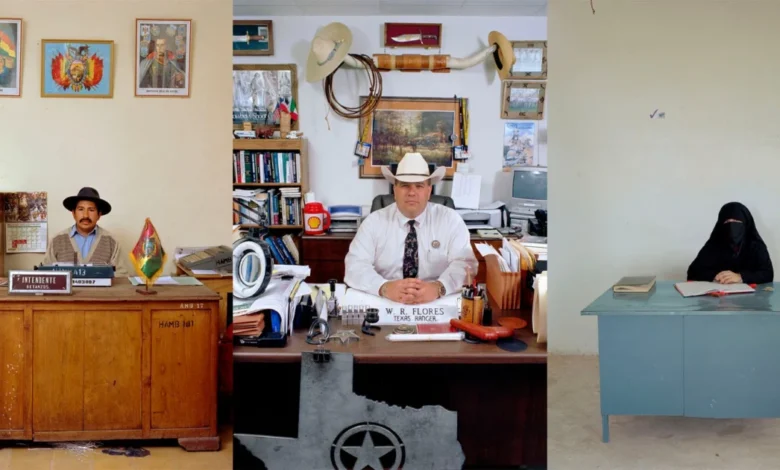
For more than two decades, Dutch documentary photographer Jan Banning has trained his lens on the often-overlooked architects of global governance. His seminal project, Bureaucratics, which originally culminated in an acclaimed 2008 publication, has now been expanded and re-released as Bureaucratics Revisited. This newly minted edition opens up the photographer’s extensive historical archive while introducing fresh visual narratives. Spanning over five years of meticulous fieldwork across eight diverse countries, Banning’s project offers an unprecedented, deeply human examination of the administrative machineries that shape daily life across the globe.
Main Facts of the Project
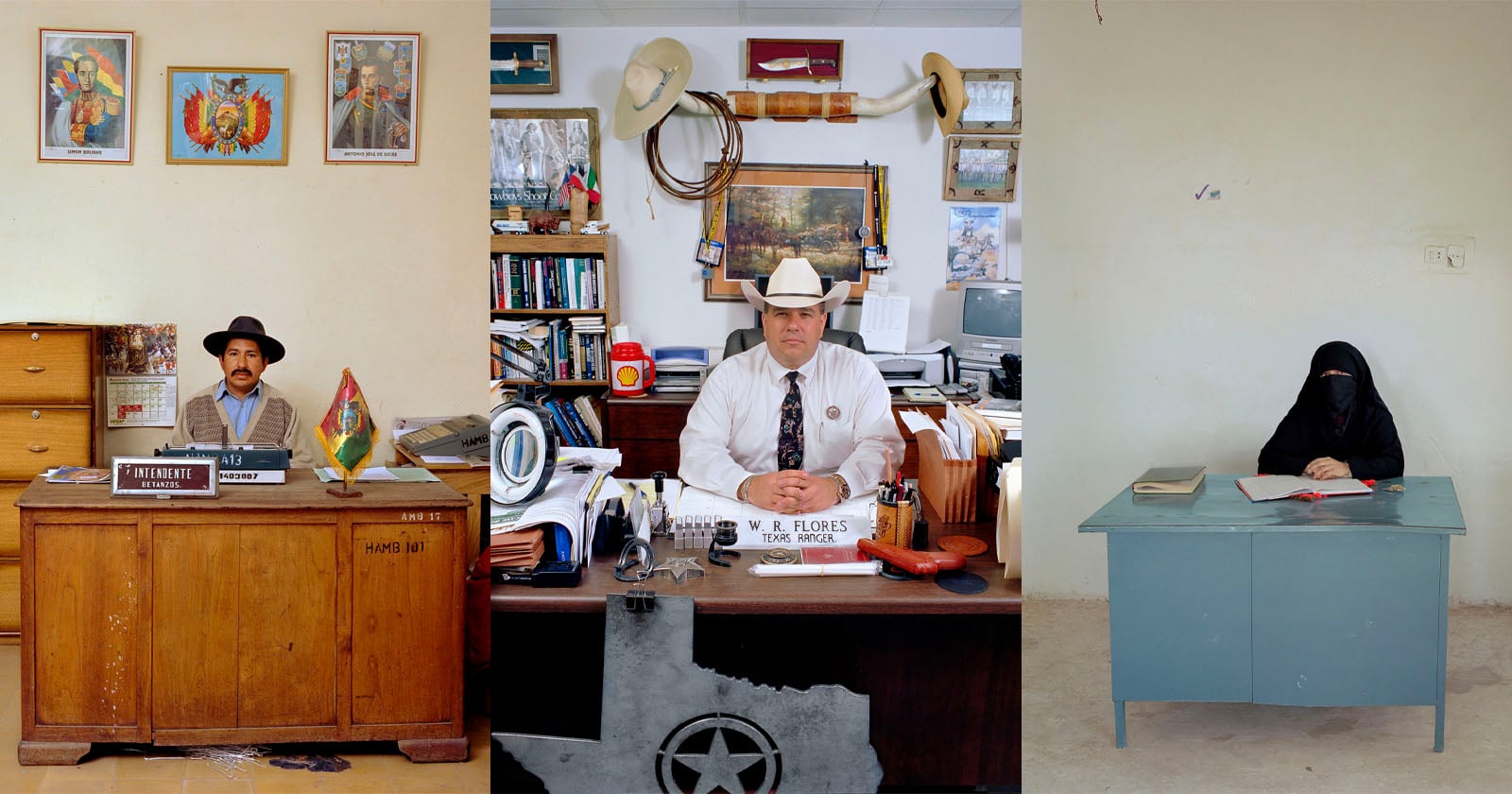
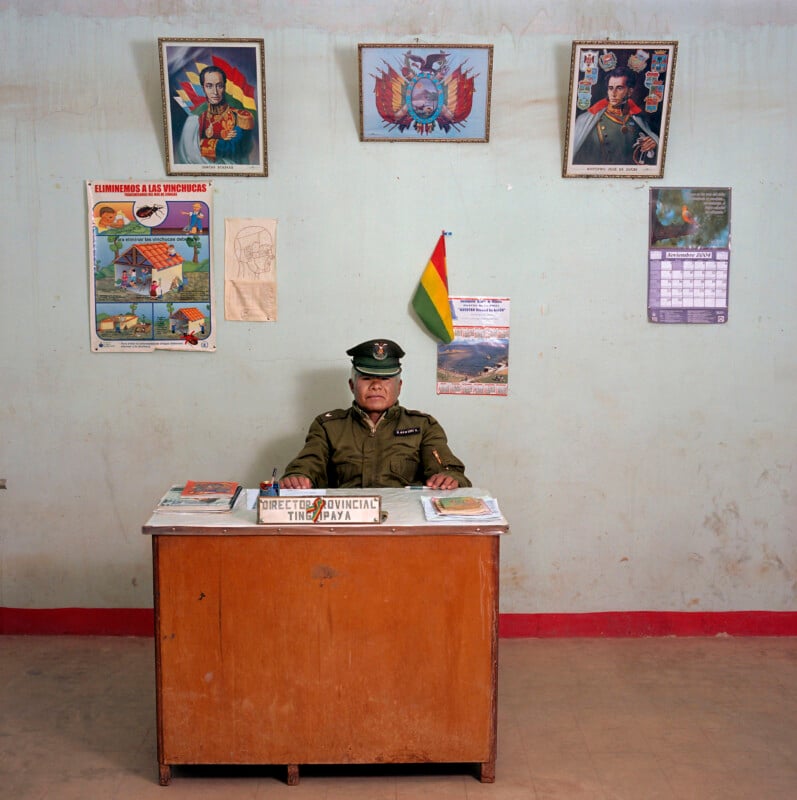
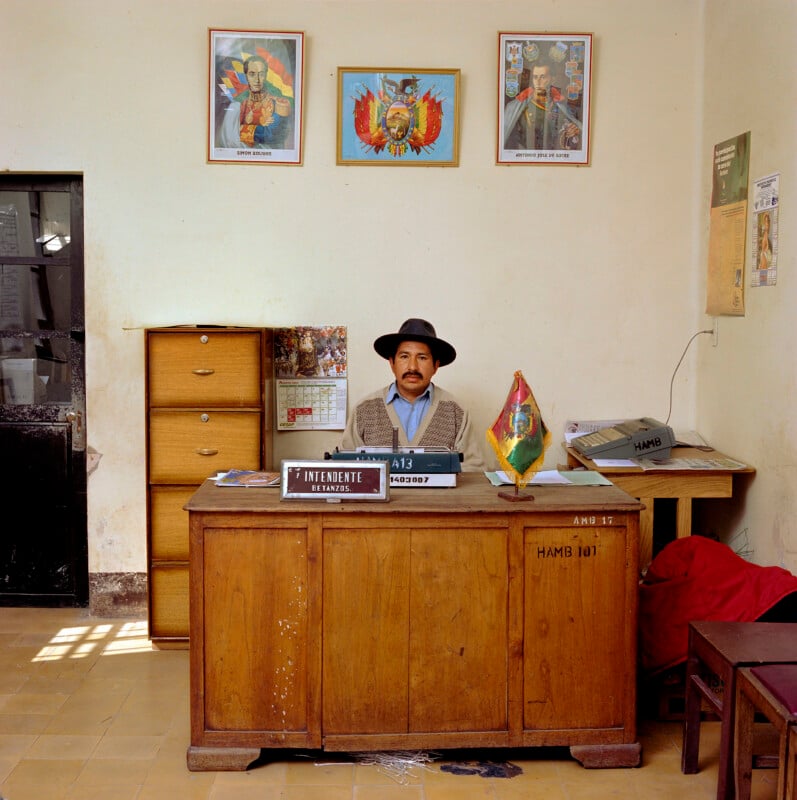
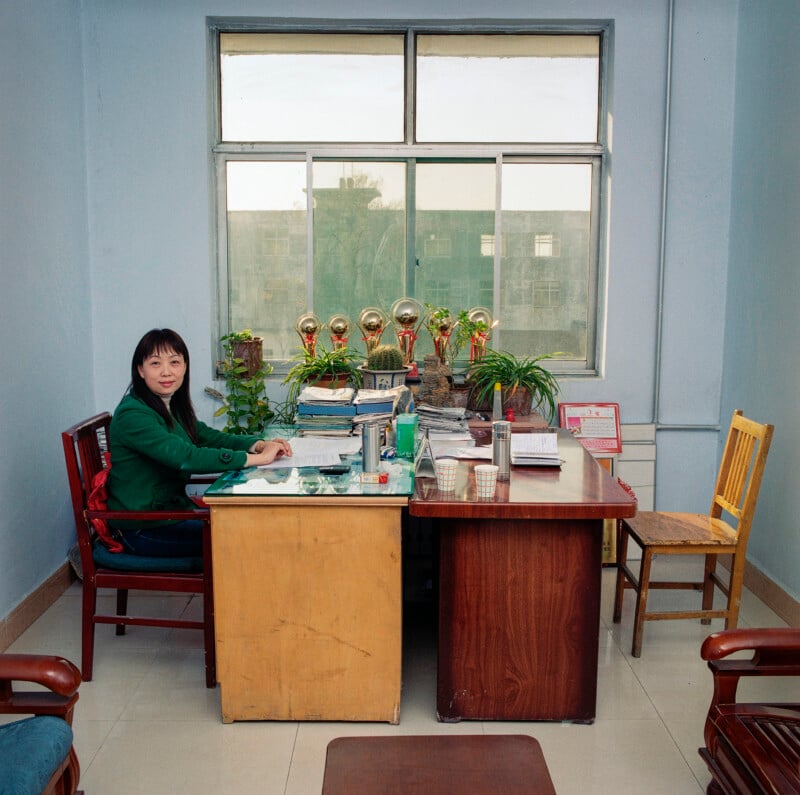
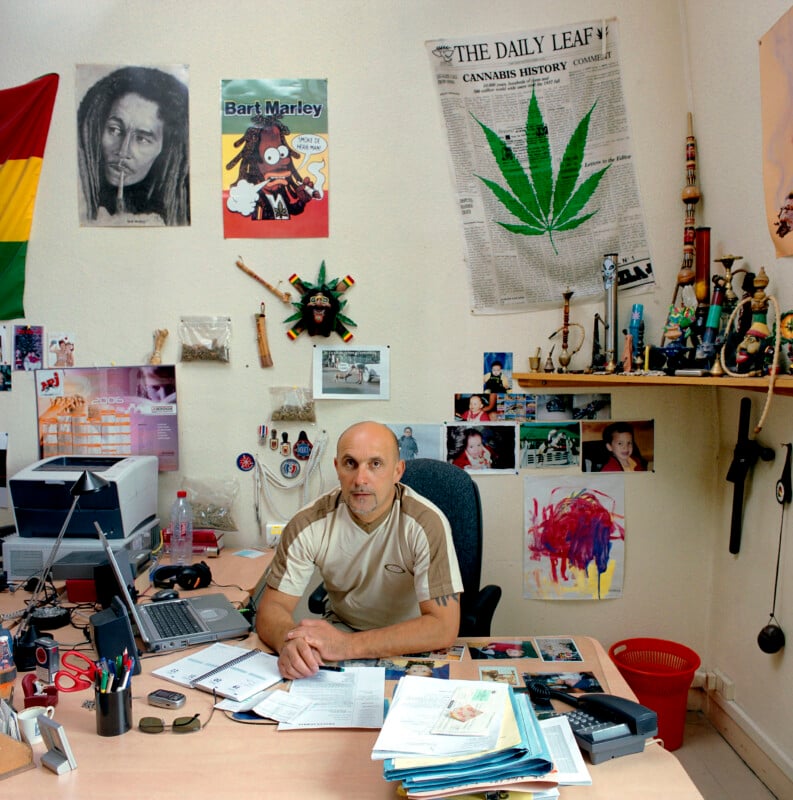
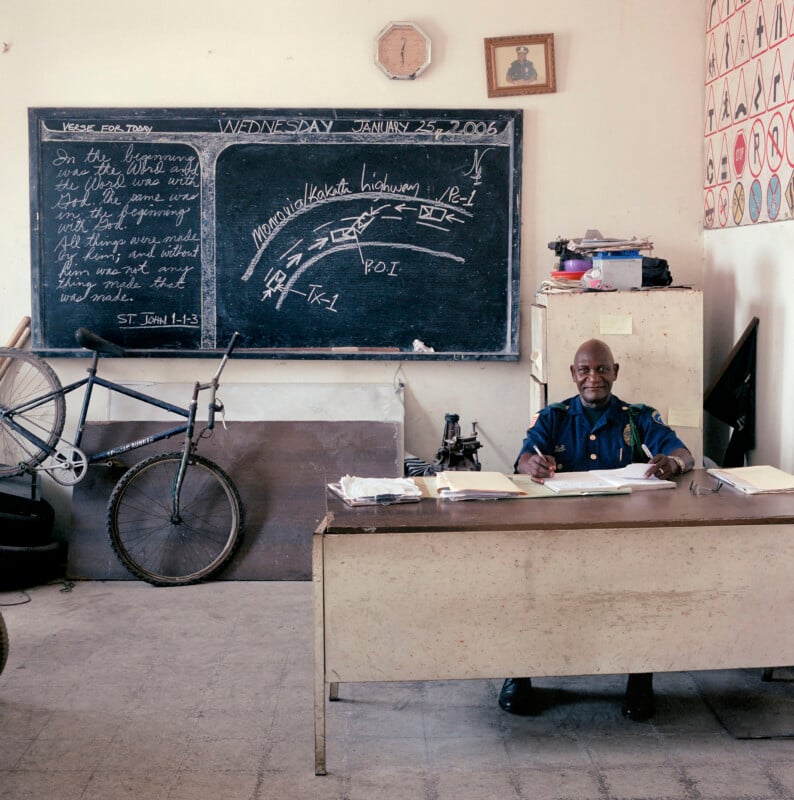
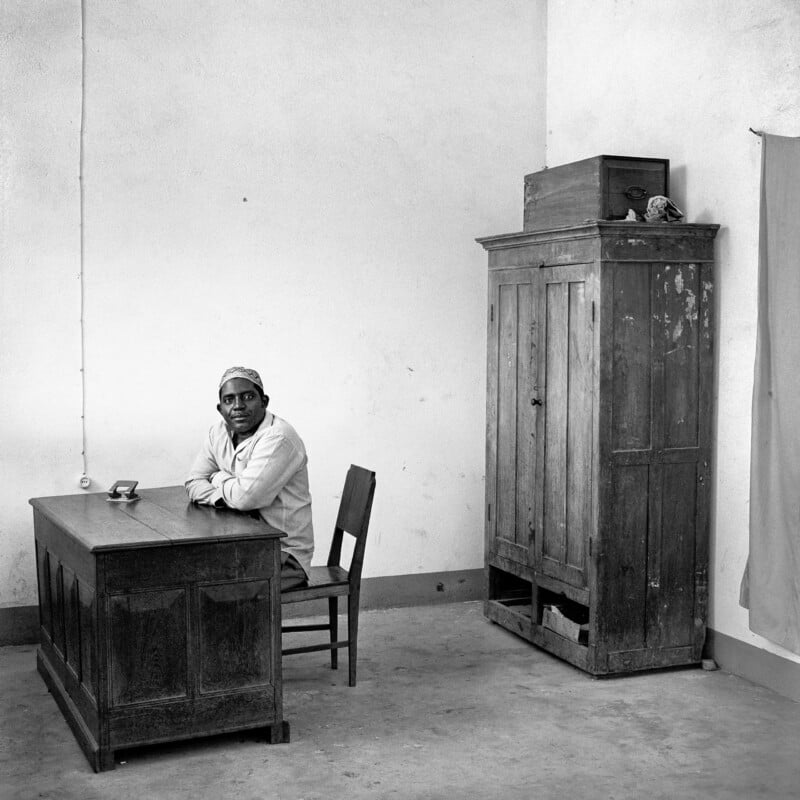
The core of Bureaucratics rests upon a strict, uniform photographic methodology. Banning captured environmental portraits of state officials and civil servants using a square format, a direct frontal perspective, and a stark, deadpan clarity. Crucially, every photograph is taken precisely from the eye-level vantage point of a citizen entering a government office to request services, file paperwork, or seek authorization.
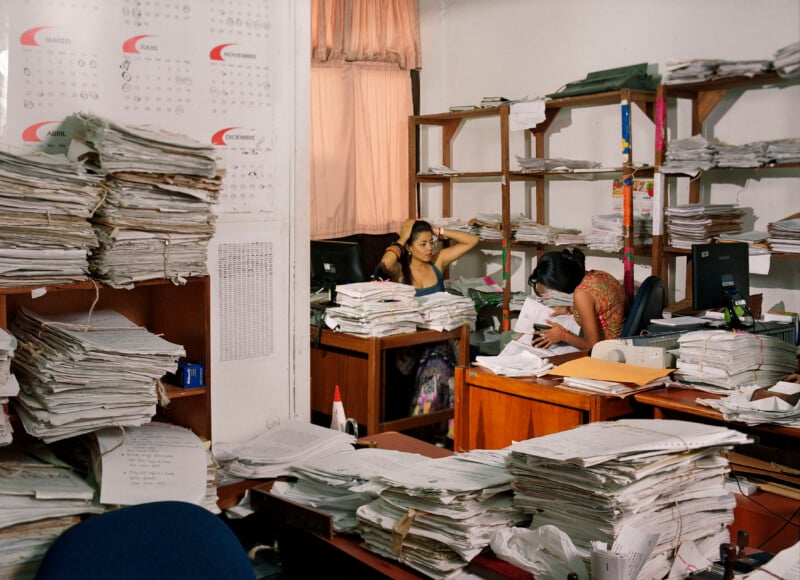
This deliberate stylistic choice establishes a subtle yet powerful dialogue. The images capture the tension between an office’s intended function—a formal, performative monument to state authority and institutional power—and the reality of the space as the civil servant’s private, mundane daily workspace. From high-ranking state clerks in densely packed, paper-strewn rooms to solitary police officers stationed in remote villages devoid of modern communication tools, Banning strips away abstract political theory to reveal the tangible human beings sustaining administrative apparatuses.
Chronology and Evolution of the Project
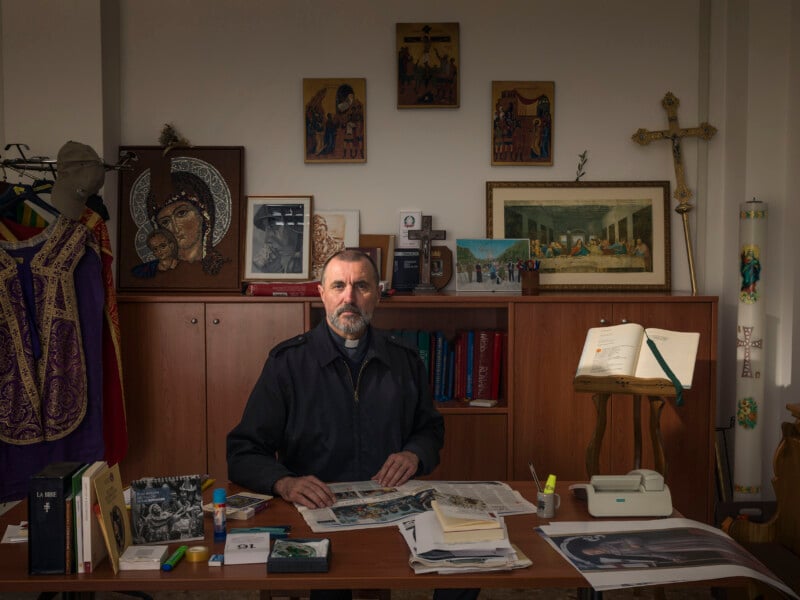
Banning’s journey into the hidden world of state administration began in 2002, marking the formal inception of a multi-year global undertaking. Traveling across continents, the photographer sought out bureaucratic outposts in nations as varied as India, Yemen, Bolivia, China, France, Liberia, Russia, and the United States.
The logistical hurdles of gaining access to state institutions were formidable. Renowned British documentary photographer Martin Parr, who authored the foreword to the project’s publication, emphasized the sheer difficulty of the endeavor. Parr noted that securing permission to photograph state bureaucrats within complex political landscapes—such as Bolivia, Yemen, and India—represented a monumental achievement in its own right, a feat requiring immense diplomatic patience and institutional navigation.
Over the active production phase lasting five years, Banning continuously refined his technical approach. He utilized sophisticated medium-format camera systems to ensure the rigorous architectural framing and crisp detail required for the project. His equipment evolved from a Bronica SQ-Ai to a Fuji GX-680III, ultimately culminating in the use of a Hasselblad H5 for later components of the body of work.
In the years following the 2008 release of the initial book, the archive continued to attract academic and cultural interest, ultimately prompting the compilation of Bureaucratics Revisited. This updated iteration synthesizes his original global survey with newly curated archival materials and subsequent works, providing contemporary audiences with an expanded lens on state power.
Supporting Data and Diverse Global Contexts
The strength of Banning’s project lies in its granular documentation of administrative life across vastly different socioeconomic and political landscapes. The portraits showcase the stark disparities in how state power is resourced and exercised globally.
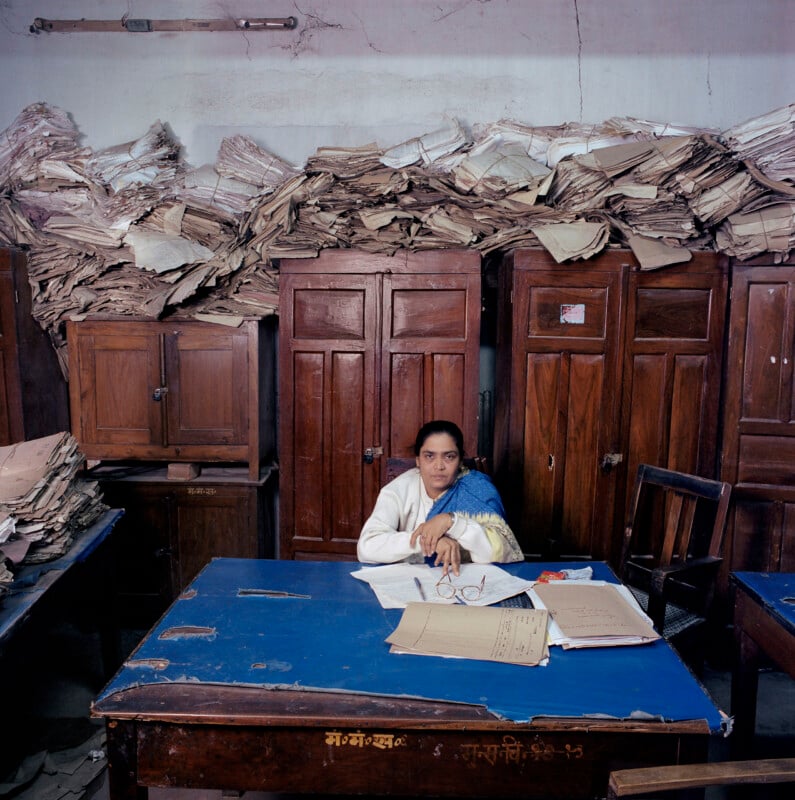
In Patna, the capital of the Indian state of Bihar—home to a population of 83 million—Banning photographed Sushma Prasad in 2004. An assistant clerk working within the Cabinet Secretariat at The Old Secretariat, Prasad was hired under "compassionate grounds" following the death of her husband, who had served in the same department until 1997. Her workspace is defined by towering wooden cabinets stacked precariously high with archival paper files, illustrating an analog administrative system struggling under the weight of monumental populations.
Similarly, resource scarcity is a recurring theme in the Global South. In Tinguipaya, Bolivia, police officer third-class Constantino Aya Viri Castro was photographed in 2005 working in a municipal police station that lacked basic modern utilities, operating without a telephone, a service vehicle, or even a typewriter. In a parallel depiction of rural isolation, Russian police officer Sergej Michailovich Osipchuk was documented in 2004 as the sole law enforcement official for the Siberian village of Oktyabrsky, serving roughly 2,000 residents without access to a police car, personal vehicle, or bicycle.
In contrast, portraits from developed nations highlight specialized bureaucratic niches. In Clermont-Ferrand, France, narcotics agent Roger Vacher was photographed in 2006 surrounded by pop-culture imagery, subverting the archetype of the sterile European bureaucrat. In Texas, state law enforcement official Rudy Flores was captured in 2007 among western memorabilia, representing one of just 118 Texas Rangers tasked with policing 254 counties.
Official Responses and Critical Reception
The artistic and anthropological community has widely praised Bureaucratics for bridging the gap between sociological research and visual art. Critics have noted that Banning’s work avoids caricaturing civil servants, opting instead for a tone that balances irony with profound empathy.
In his foreword to the book, Martin Parr reflected on the intimidating nature of institutional bureaucracy, underscoring the brilliance of Banning’s execution. "Receiving permission to shoot portraits of bureaucrats is in itself an achievement," Parr wrote, praising the photographer’s ability to navigate red tape that would deter most documentary practitioners.
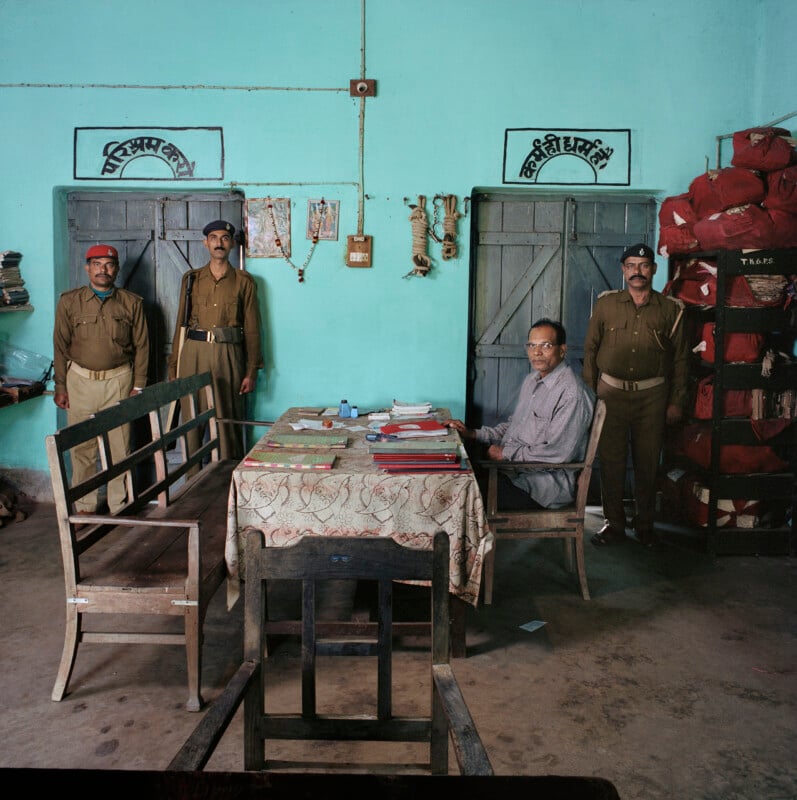
Anthropologists have similarly highlighted the project’s utility in illustrating the material culture of the state. The desks, stamps, archaic filing cabinets, and typewriter ribbons documented by Banning serve as material artifacts of governance, demonstrating how abstract laws and policies are translated into tangible, physical realities through human labor.
Broader Impact and Implications
As global governance increasingly shifts toward digitization, algorithmic decision-making, and automated public services, Bureaucratics Revisited arrives as a timely historical and anthropological archive. The project captures an era—and in many parts of the world, a persisting reality—where state authority was overwhelmingly tactile, mediated through paper, ink, face-to-face interaction, and physical office spaces.
By presenting civil servants not as faceless obstacles of red tape, but as individual humans operating within often-overburdened systems, Banning prompts viewers to reconsider their relationship with authority. The work underscores the reality that behind every state-issued decree, police report, court filing, and municipal permit is an individual worker negotiating the friction between institutional mandates and human limitations.
Bureaucratics Revisited stands as a testament to the quiet endurance of the global civil service, preserving a visual record of the administrative machinery that quietly underpins modern civilization. The publication is currently made available to collectors, researchers, and photography enthusiasts directly through Jan Banning’s official website.