Bringing the Noir Detective to Life: Inside the Groundbreaking Visual Effects of Prime Video’s Spider-Noir


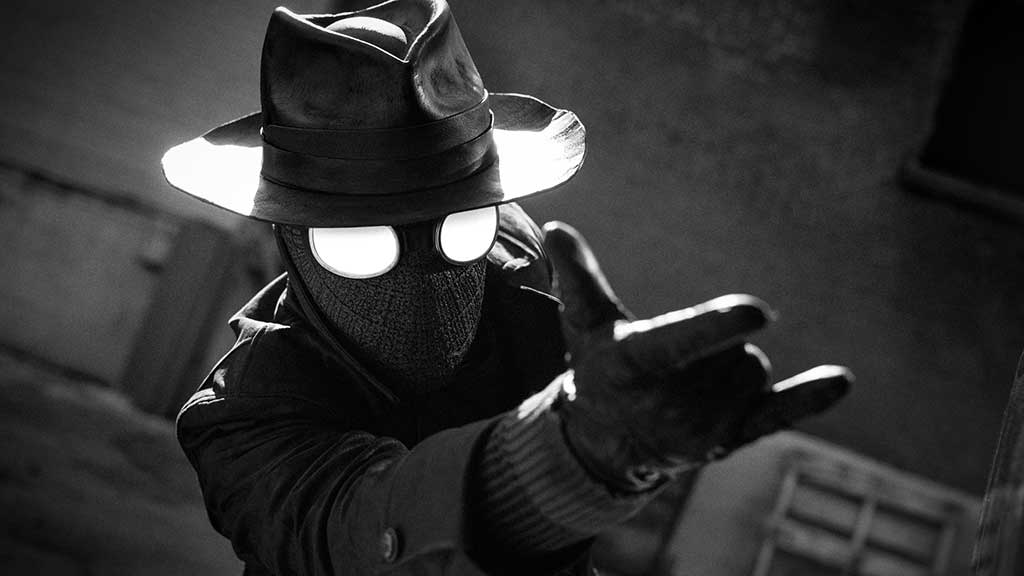
Prime Video’s highly anticipated live-action series Spider-Noir marks a historic milestone for the character of Ben Reilly, bringing the gritty, monochrome-inspired alternate-universe hero from Spider-Man: Into the Spider-Verse into a fully realized live-action realm. Headlined by Academy Award winner Nicolas Cage as a world-weary, middle-aged private investigator navigating 1930s New York City, the series represents a massive technical and creative undertaking. Created by Oren Uziel and produced by visionary filmmakers Phil Lord and Christopher Miller, the show relies on a staggering 3,250 visual effects shots spread across its eight-episode inaugural season. Released simultaneously in distinct black-and-white and color versions, the series required a complete reimagining of how superhero tropes intersect with historical period drama, physical limitations, and modern digital pipelines.
Production and Planning: A Script-First Strategy
The logistical challenge of coordinating 3,250 visual effects shots across eight cinematic television episodes demanded rigorous pre-production planning. Unlike many contemporary streaming series that undergo frantic script revisions and late-stage reshoots during principal photography, Spider-Noir benefited from having all eight scripts fully completed before cameras began rolling.
This rare advantage allowed Visual Effects Supervisor Hnedel Maximore and Visual Effects Producer Brooke Noska to map out the entire season well in advance. Working closely with Line Producer Pavlina Hatoupis, the visual effects leadership team meticulously analyzed the scripts to identify resource-heavy episodes, strategically allocating budgets and targeting specific "bottle episodes" to maintain financial and creative equilibrium.
By securing a clear blueprint from day one, the production avoided the common pitfalls of runaway post-production budgets. Noska noted that while financial adjustments were occasionally necessary to keep the project on track, the core mandate remained uncompromised: storytelling would never take a backseat to budget restrictions. This proactive approach enabled multiple premier visual effects houses—including Alchemy 24, Barnstorm VFX, Cinesite, CoSA VFX, Industrial Light & Magic (ILM), Ingenuity Studios, BOT VFX, and Version Zero—to collaborate seamlessly under a unified vision.
Reinventing a Hero: Age, Pain, and the Organic Web
Developing the live-action aesthetic for a middle-aged superhero required an intentional departure from the hyper-agile, youthful acrobatics traditionally associated with characters like Peter Parker. Showrunner Oren Uziel envisioned a protagonist weighed down by the physical and psychological toll of a hard-boiled life.
Inspired by the universal aches and pains of aging, the creative team deliberately stiffened Ben Reilly’s movements. Rather than executing gravity-defying flips, Cage’s iteration of the hero performs extraordinary feats out of sheer necessity, only to retreat home afterward to cope with his injuries using a handful of painkillers.
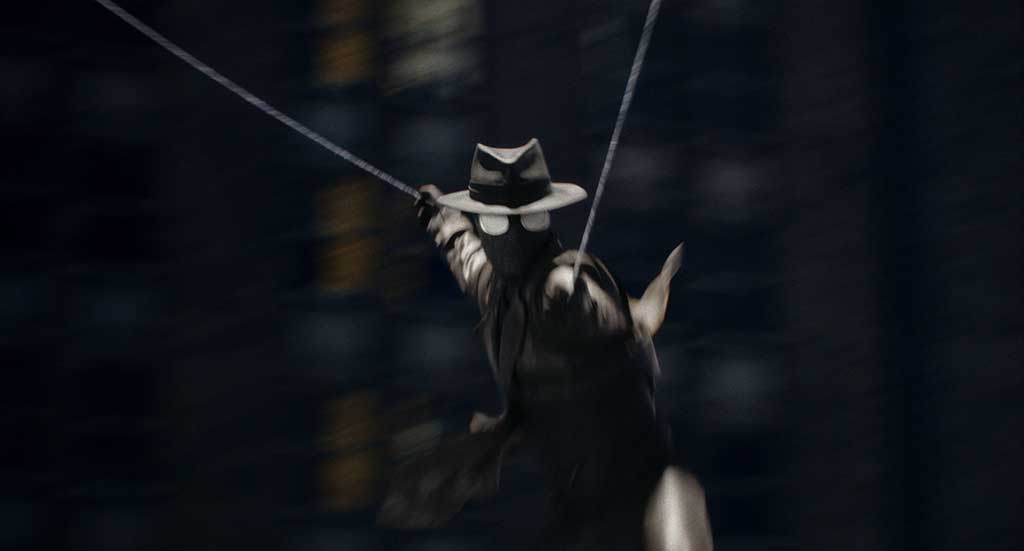
This philosophy of realism heavily influenced the design of Reilly’s organic web-shooters. Consulting with Michael Lasker, Visual Effects Supervisor on the animated Spider-Verse films, Maximore and his team set out to construct a uniquely aged web for an older protagonist. Collaborating with the special effects department, artists built physical prototypes for actors to handle on set, establishing a tactile baseline.
The digital effects team at ILM then elevated these assets, integrating salt-and-pepper textures and gray strands into the black webbing to reflect the character’s wear and tear. The resulting 3D web design diverged sharply from pristine comic-book tropes, offering a gritty, tactile aesthetic that mirrored the protagonist’s weathered reality.
Reconstructing 1930s New York City Without Plate Photography
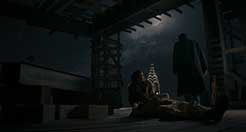
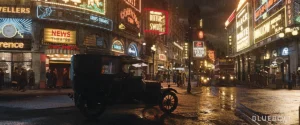
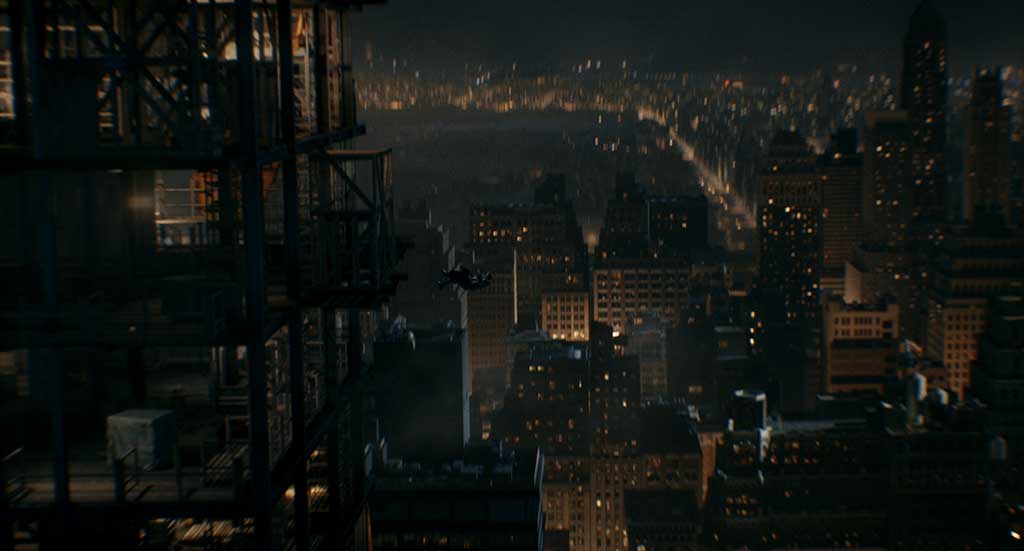
Recreating depression-era Manhattan presented an immense environmental challenge, as modern New York bears little resemblance to the cityscape of the 1930s. Consequently, approximately ninety percent of the sweeping wide cityscapes required entirely computer-generated environments without the aid of traditional live-action plate photography.
To achieve historical accuracy, the visual effects and art departments relied heavily on archival resources, notably the architectural catalog OldNYC.org and the PBS documentary Men at Lunch, which chronicles the construction of Rockefeller Center. These resources provided invaluable panoramic lighting and structural references.
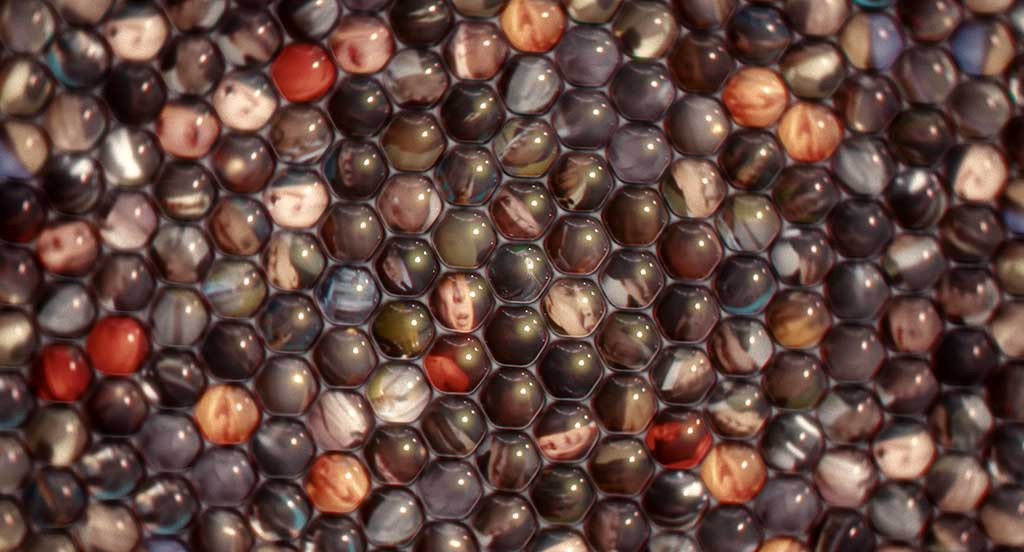
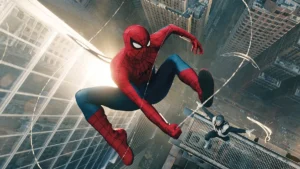
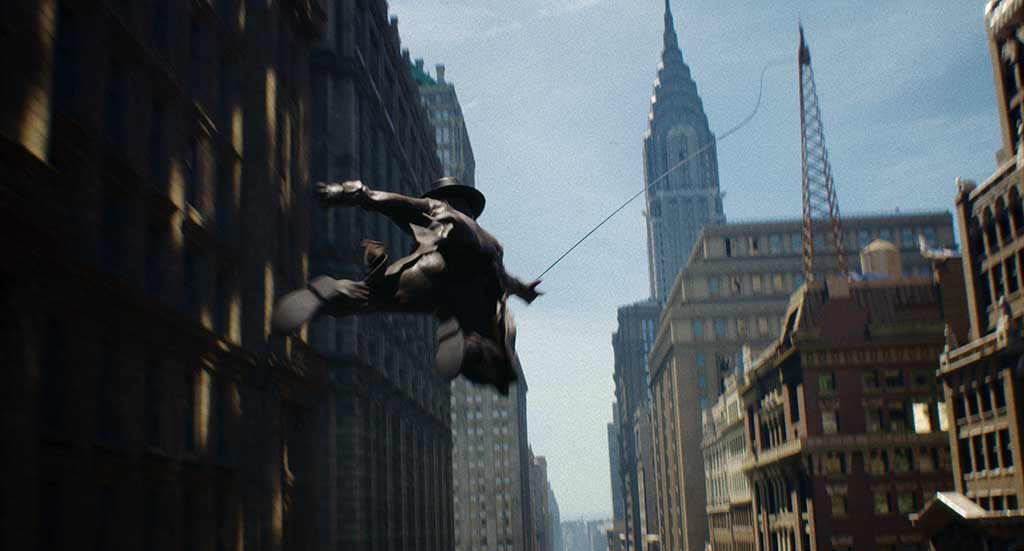
The series opens with an immersive 10-to-12 shot digital sequence introducing Spider-Noir swinging through a meticulously rendered 1930s New York. This opening masterclass not only established the geographic layout of the city but also anchored the narrative tone, blending voiceover narration with the deliberate, heavier momentum of a middle-aged hero in motion.
Practical stunts and special effects complemented the digital environments. Notably, a flashback sequence featuring a sinking period automobile was captured practically inside a 12-foot-deep studio pool maintained by Sony. Stunt performers outfitted in character suits operated underwater while cameras positioned at the pool floor captured genuine aquatic lighting and movement, anchoring the digital enhancements in physical reality.
Crafting Painful, Organic Superpowers for the Rogues Gallery
The antagonists inhabiting Spider-Noir received a similar grounding in biological realism, shifting away from fantastical comic-book tropes toward organic, nature-inspired body horror.

Abraham Popoola’s character, Tombstone (Lonnie Lincoln), features skin that hardens into a protective armor during combat. Rather than relying on traditional stone textures, the visual effects team based the hardening process on biological exoskeletons found in nature, such as tortoises and scorpions.
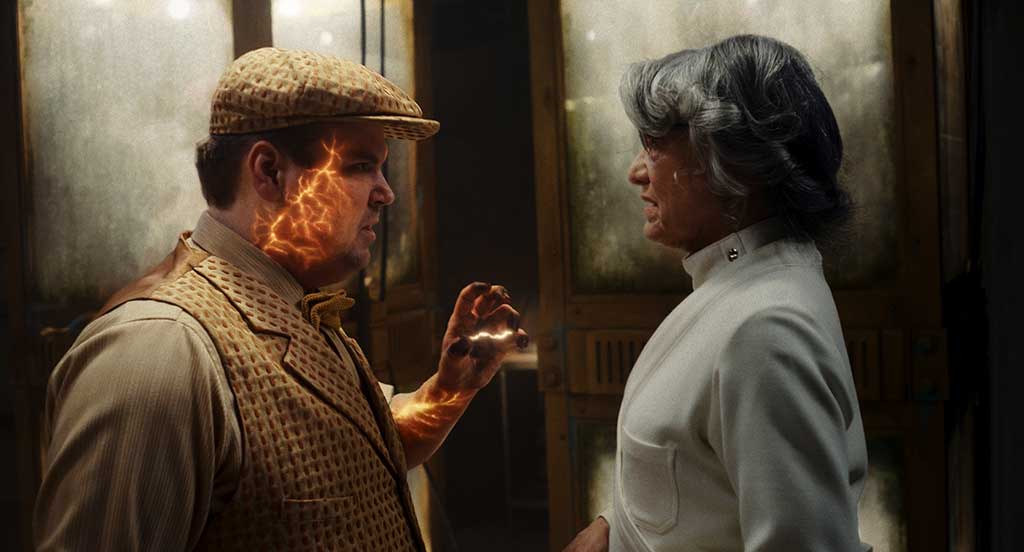
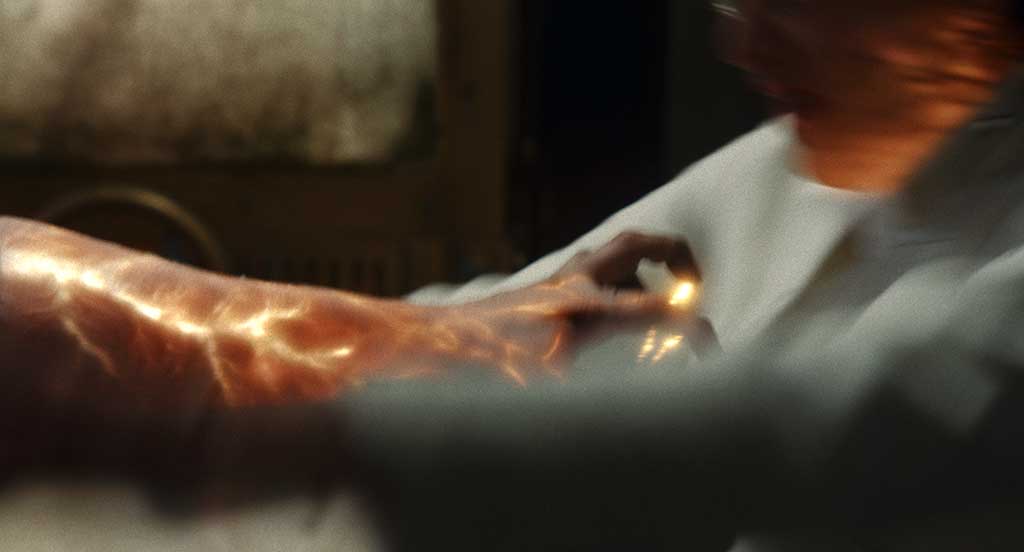
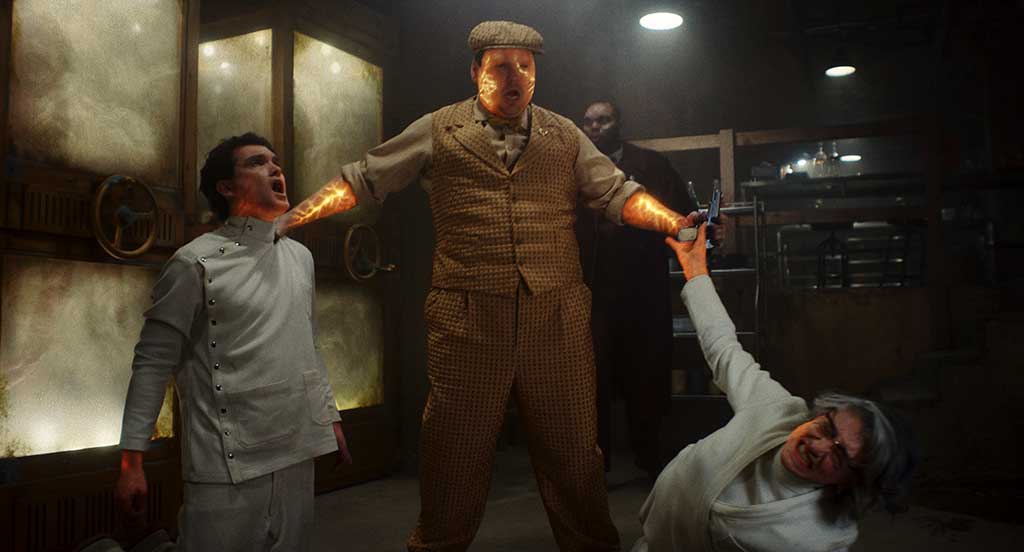
Similarly, Dirk Leyden (portrayed by Andrew Lewis Caldwell), known as Megawatt, wields electrical manipulation powers. To make his electricity feel intrinsic to the body, the visual effects team studied medical photographs of lightning-strike victims, mapping distinct scarring patterns onto the character’s nervous system and veins.
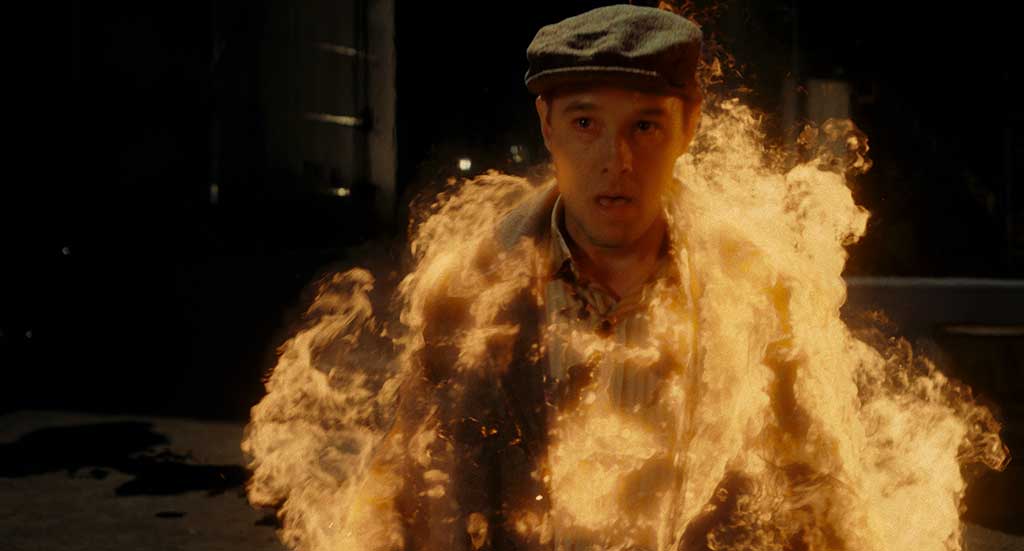
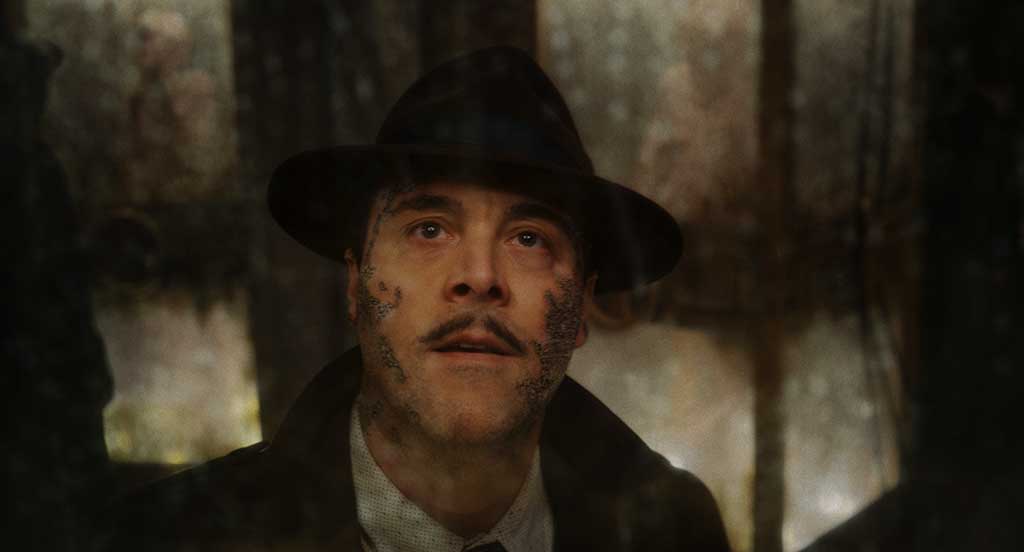
For Jack Huston’s Flint Marko (Sandman), the transformation from human flesh to sand was designed to evoke visceral discomfort. Rather than an instantaneous or magical shift, the visual effects team introduced reddened, irritated skin conditions before the physical disintegration occurred. Working in tandem with the makeup effects department, the artists ensured that every transformation appeared agonizing and organic, originating from deep within the character’s body.
Dual-Delivery Pipeline: Solving the Black-and-White vs. Color Dilemma
One of the most complex technical hurdles of Spider-Noir was its dual-delivery mandate: delivering the entire series in both a stylized black-and-white format and a vibrant color version. Rather than treating the two formats as separate post-production adjustments, the production elected to build a unified pipeline from the outset.
Cinematographer Darran Tiernan spearheaded early camera tests on the Sony backlot, equipping department heads with Sony A7 cameras loaded with two distinct Lookup Tables (LUTs). This allowed production designers, costume supervisors, and makeup artists to evaluate reference photography, material choices, and makeup swatches against both final aesthetics simultaneously.
This rigorous testing proved crucial during editorial refinement. For instance, real spiders brought on set by animal wranglers—while useful for reference scanning and movement studies—frequently vanished into the background noise of the black-and-white conversion. Recognizing that arachnids needed to remain clearly visible to the audience, the production ultimately transitioned to fully computer-generated spiders infused with subtle, non-distracting character animation.
Similarly, makeup effects were carefully calibrated to ensure that elements such as Sandman’s irritated skin or Tombstone’s armored transitions retained their narrative clarity regardless of whether viewers watched the series in monochrome or color.
Balancing Surrealism and Realism in Episode 106’s Dream Sequence
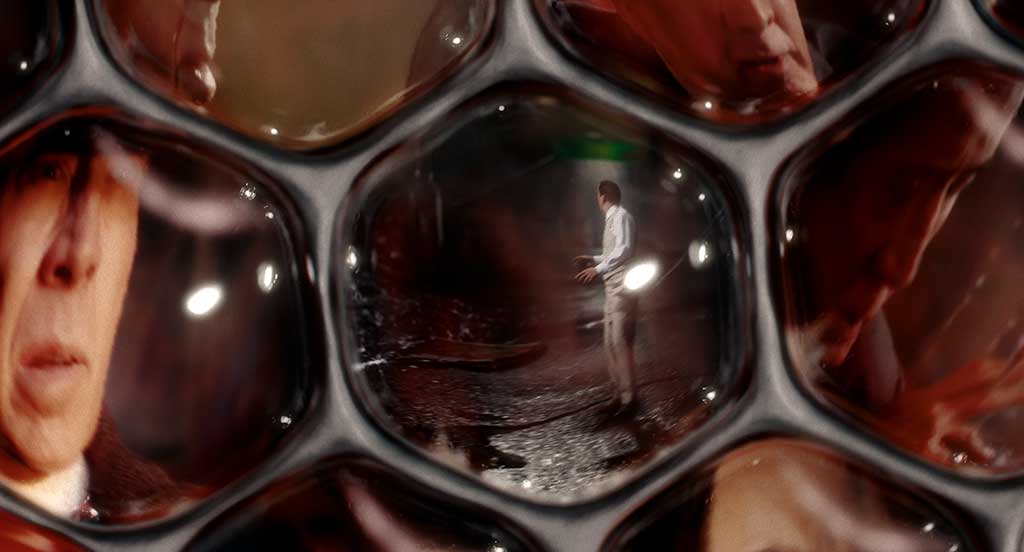
The creative ambitions of Spider-Noir reached a technical crescendo in Episode 106, which features a surreal dream sequence designed to externalize Ben Reilly’s internal guilt and past decisions. Dissatisfied with early iterations of the sequence, showrunner Oren Uziel drew direct inspiration from the legendary collaboration between filmmaker Alfred Hitchcock and artist Salvador Dalí in the 1945 psychological thriller Spellbound.
Because physical reshoots were logistically impossible, the visual effects team was tasked with constructing an entirely CG dreamscape using existing live-action plates of Nicolas Cage and various physical props sourced from the art department.
A primary logistical obstacle was the absence of a digital scan of Nicolas Cage, necessitating the creation of a full digital double for key moments within the sequence. By leaning into an impressionistic, high-contrast visual style, the team successfully bridged the technological gap, delivering a psychologically resonant sequence that advanced Reilly’s character arc while honoring cinematic history.
Implications and Industry Impact
The completion and release of Spider-Noir mark a significant evolution in how streaming television handles stylized prestige content. By committing to a script-first production model, bridging practical stunts with advanced digital environments, and solving the complex challenges of a dual monochrome-and-color delivery pipeline, the creative team established a new benchmark for comic book adaptations on television.
The series demonstrates that audience expectations for superhero narratives have matured, opening the door for character-driven stories that prioritize physical vulnerability, historical texture, and artistic risk over formulaic spectacle. As studios look for innovative ways to differentiate intellectual properties in a crowded media landscape, the technical and narrative achievements of Spider-Noir provide a compelling roadmap for future prestige adaptations.
Related posts: