Global Social Media Bans and Youth Safety Regulations Force Brands to Adapt Their Digital Marketing Strategies

The digital landscape is undergoing a profound structural shift as governments worldwide implement stringent social media regulations and youth protection policies. Driven by growing public concern over digital wellness, mental health crises, and the pervasive nature of online harms, lawmakers across Europe, the Middle East, Asia-Pacific, and the United States are accelerating legislative efforts to restrict minors’ access to mainstream platforms. According to consumer data from Sprout Social’s Q1 Pulse Survey, approximately 68% of consumers support legislation aimed at protecting children through platform bans, with parents of young children forming the most vocal demographic in favor of these measures.
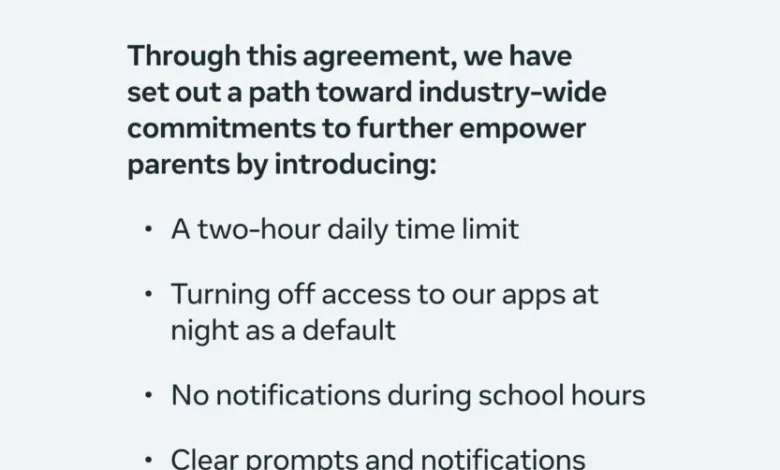
As platforms scramble to comply with international mandates and landmark legal settlements—such as Meta’s recent youth safety agreement—digital marketers face an increasingly complex operational environment. The transition from unregulated digital spaces to formalized, legally compliant media ecosystems requires global brands to overhaul their content distribution, audience targeting, and brand safety protocols. Rather than signaling the decline of social media marketing, industry experts view this regulatory wave as a maturation of the medium, pushing enterprises toward more intentional, legally defensible, and audience-specific engagement strategies.
The Chronology of Global Social Media Restrictions
The momentum behind youth-focused social media restrictions has accelerated dramatically over the past two years, moving rapidly from academic discourse and legislative proposals into actionable, binding law.
In the Asia-Pacific region, Australia established a global precedent by enacting a comprehensive ban preventing minors under the age of 16 from holding personal social media accounts, placing the legal and technical compliance burden squarely on tech platforms. Malaysia and Indonesia quickly followed suit, introducing tiered access models and strict parental consent frameworks. Malaysia enforced a ban on social media registrations for children under 16, while Indonesia established risk-based classifications that restrict high-risk networks entirely to users aged 16 and older, requiring parental verification for younger teens.
Concurrently, countries in Europe, the Middle East, and Africa (EMEA) have introduced aggressive legislative frameworks. The United Arab Emirates established a minimum age threshold of 15 for personal accounts, implementing restricted feature sets for users aged 15 to 16. Turkey and Greece have introduced parallel legislation targeting children under 15, while the United Kingdom continues advancing its comprehensive Online Safety Act, which proposes algorithmic restrictions for users under 16 alongside nighttime curfews for older teens. In France, although a high-profile legislative attempt to ban social media for minors under 15 faced constitutional hurdles regarding freedom of expression, revised legal frameworks are currently being drafted to achieve similar protective objectives. Meanwhile, the European Commission is actively exploring a bloc-wide standard to harmonize youth protection laws across all European Union member states.
In the United States, federal legislative gridlock has prompted individual states to pursue diverse regulatory models. Nearly half of all U.S. states have introduced or passed bills concerning youth social media access. These state-level initiatives generally fall into four distinct categories: age restrictions coupled with mandatory parental consent, algorithmic feed and design limitations, daily usage time caps, and app-store-level age verification requirements that shift compliance obligations onto major technology providers like Apple and Google.
The Catalyst of Judicial Settlements and Platform Self-Regulation
While legislative bodies debate the nuances of statutory bans, judicial actions have catalyzed immediate technical transformations across the digital ecosystem. The landmark Meta youth safety settlement served as a watershed moment for the industry, imposing strict operational constraints on Facebook and Instagram. Under the terms of the settlement, Meta agreed to deploy advanced age-assurance technologies, disable direct messaging between unconnected minors and adults, restrict sensitive content exposure, and enforce default privacy settings for teenage accounts.
Crucially, the ripple effects of the Meta settlement extend far beyond its proprietary networks. Portions of the settlement are contingent upon industry-wide adoption, effectively compelling competitors such as TikTok, YouTube, and Snapchat to accelerate the integration of comparable safety safeguards. Platforms have responded by expanding parental control dashboards, introducing AI chatbot limitations, and designing segregated, family-friendly experiences. These technical adjustments are designed to align with consumer preferences; consumer data indicates a strong baseline preference for parental consent tools and verifiable age-assurance mechanisms over absolute, sweeping bans.
Operational Implications for Global Brands and Social Media Marketers

For corporate communications and social media marketing teams, the proliferation of age-gated networks and regional restrictions introduces unprecedented challenges regarding audience reach, campaign efficiency, and compliance governance. Marketing professionals accustomed to broad, algorithmic content distribution must now adapt to a landscape where underage demographics are legally excised from addressable markets.
Sam Morgan-Smith, Head of Social at the UK-based PR agency The Romans, emphasizes the necessity of strategic evolution. The era of blanket posting and passive reliance on algorithmic distribution has ended, replaced by a requirement for age-aware, legally defensible content. Similarly, Tiffany Sayers, co-founder of Australian agency Loft Social, highlights that diminished organic reach among younger cohorts necessitates heightened rigor in influencer briefing, first-party data collection, and return-on-investment measurement.
To maintain brand relevance and mitigate legal risk, industry leaders recommend a tripartite operational adjustment focusing on refined compliance protocols, precise audience targeting, and real-world experiential marketing.
Enhancing Compliance and Brand Safety Governance
Organizations can no longer treat compliance as an afterthought or an isolated legal function. Integrating regulatory awareness into daily workflows is essential to prevent accidental noncompliance with complex international statutes, such as the United States Children’s Online Privacy Protection Act (COPPA), the UK Online Safety Act, and emerging Australian age-verification mandates.
Sophisticated brand safety protocols now require multi-departmental training, robust governance playbooks, and meticulous audit trails for digital publishing. Brands must implement rigorous vetting processes for creator partnerships, ensure transparent disclosure practices, and conduct comprehensive legal reviews of promotional calls-to-action, community moderation guidelines, and interactive giveaways.
Pivoting Toward Hybrid Ecosystems and Real-World Immersion
As direct organic access to younger demographics contracts across traditional social networks, brands are increasingly diversifying their marketing mix to incorporate hybrid digital ecosystems and real-world immersion strategies.
Forward-thinking organizations are channeling resources into alternative digital environments, including immersive gaming integrations, privacy-compliant instant messaging channels, and youth-safe digital platforms. Concurrently, a creative resurgence in real-world marketing—comprising university campus activations, micro-events, experiential retail installations, and peer-to-peer word-of-mouth campaigns—allows brands to build enduring connections outside the confines of heavily regulated social feeds. Furthermore, user-generated content and ambassador-led initiatives seeded through targeted paid media continue to drive performance even as organic visibility fluctuates.
Outlook: Navigating the Regulated Media Landscape
The transition of social media from a largely unregulated digital frontier into a mature, legally accountable media environment mirrors the historical evolution of broadcast television and digital advertising standards. While compliance demands require operational agility and sophisticated governance from marketing teams, industry leaders maintain that social media remains a high-yielding channel across all stages of the marketing funnel.
By shifting internal corporate metrics away from superficial vanity figures—such as raw impression counts and unverified follower tallies—toward meaningful, compliant, and audience-aligned engagement, enterprises can successfully navigate the complexities of international legislation. Ultimately, proactive adaptation to youth safety regulations enables brands to secure long-term consumer trust, insulate themselves against regulatory penalties, and establish sustainable digital strategies for an increasingly regulated global economy.