OpenAI Terminates Cursor API Contract Following SpaceX Acquisition, Exposing Vulnerabilities in Closed-Model Dependencies


The fault lines dividing the artificial intelligence industry have widened significantly following OpenAI’s official notification to aerospace giant SpaceX that it is terminating its contract to supply frontier AI models to the code-editing platform Cursor. Scheduled to take effect on November 12, 2026, the cutoff was triggered by a stringent change-of-control provision embedded in OpenAI’s enterprise agreements. This legal mechanism was enacted immediately following SpaceX’s massive $60 billion acquisition of Anysphere, the parent company behind Cursor.
This high-stakes corporate maneuver is not an isolated incident. It mirrors a nearly identical playbook executed in June 2025, when rival lab Anthropic abruptly severed Windsurf’s access to its Claude model family amid swirling rumors of an impending OpenAI buyout. Together, these events mark a fundamental paradigm shift for the artificial intelligence landscape. The era of treating closed-model providers as neutral digital utilities is rapidly drawing to a close. For companies operating at the application layer, relying on proprietary, closed frontier models as the primary engine of a product is no longer viewed merely as a technical shortcut; it is recognized as a profound and existential vulnerability.
Chronology of Events and the Anatomy of the Split
The friction between foundational AI labs and application-layer developers has been steadily intensifying as consolidation accelerates across the tech sector. The recent sequence of events underscores how corporate acquisitions can instantly destabilize software ecosystems that rely on external APIs.
The timeline leading to the current crisis reveals a pattern of aggressive defensive positioning by foundational model providers:
- June 2025: Anthropic cuts off code-editing startup Windsurf from Claude model access within days of leaked reports indicating OpenAI was in advanced discussions to acquire Windsurf for approximately $3 billion.
- May 2026: Cursor rolls out advanced native infrastructure improvements, including its Composer 2.5 architecture and specialized routing tools, significantly reducing its dependency on external third-party models.
- Late August 2026: SpaceX finalizes its $60 billion acquisition of Anysphere, the developer behind Cursor, bringing the popular developer tool under the corporate umbrella of Elon Musk.
- August 29, 2026: OpenAI serves formal notice to SpaceX and Cursor, announcing the complete revocation of API access effective November 12, 2026, citing compliance concerns, historical data disputes, and change-of-control clauses.
- November 12, 2026 (Projected Cutoff): The official deadline for the termination of native OpenAI API integration within the Cursor ecosystem.
OpenAI’s leadership framed the contract termination around issues of corporate compliance, security, and trust. In official statements, the company pointed directly to Elon Musk’s historical contract disputes during his tenure at Twitter, as well as his admissions under oath regarding xAI’s data distillation practices. Furthermore, OpenAI confirmed that Cursor would be permanently barred from accessing its highly anticipated, next-generation Astra architecture.
Operational and Technical Fallout for Developers
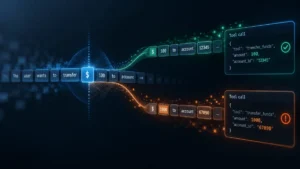
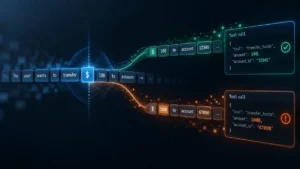
While the corporate fallout plays out in public view, the practical consequences for software engineers and enterprise clients utilizing Cursor are immediate and multifaceted. Although developers retain the technical option to bypass the native ban by utilizing "Bring Your Own Key" (BYOK) functionality—supplying their own standard OpenAI API keys—the operational reality of this workaround diverges sharply from a native integration.
In Cursor’s native software stack, models are deeply woven into the editor’s core mechanics. Under a BYOK arrangement, custom keys are restricted solely to local chat interfaces and manual agent loops. Advanced, high-frequency native features—such as speculative autocompletion via Cursor Tab, dynamic auto-routing, background cloud agents, and automated command-line interface (CLI) tooling—cease to function entirely.
The financial implications for end-users are equally disruptive. Standard Cursor users typically operate under a predictable $20 monthly Pro subscription model that includes pooled, high-speed request quotas. Transitioning to custom keys shifts these users onto raw, per-token API billing. Because iterative, multi-file agentic coding loops consume vast quantities of tokens, developers utilizing BYOK routines can easily incur bills running into dozens or even hundreds of dollars within a matter of days.
Enterprise security and compliance protocols face even more severe roadblocks. Cursor’s native enterprise tiers historically guaranteed strict zero data retention (ZDR) policies for corporate engineering departments. However, under standard API key usage, Cursor’s official documentation explicitly states that these ZDR guarantees do not apply to custom keys, creating potential legal and regulatory hurdles for corporate adopters. Additionally, engineering teams shifting to standard API keys run abruptly into strict organizational rate limits. Heavy, multi-turn coding sessions frequently trigger tokens-per-minute (TPM) throttling that native pooled piping systems previously bypassed.
Industry Precedents: The Anthropic and Windsurf Case Study
The Cursor cutoff closely tracks the precedent set by Anthropic in June 2025. When industry reports indicated that OpenAI was attempting to acquire code-editing rival Windsurf for roughly $3 billion, Anthropic gave Windsurf less than five days’ notice before pulling nearly all first-party API capacity for Claude 3.5 Sonnet and 3.7 Sonnet, while simultaneously withholding access to the newly launched Claude 4 architecture.
Jared Kaplan, co-founder of Anthropic, publicly defended the strategic maneuver at an industry conference, noting the inherent conflict of supplying foundational technology to a direct competitor or an acquiring entity poised to leverage high-value coding telemetry. The primary objective behind Anthropic’s restriction was to prevent proprietary trace logs and fine-tuning data from being funneled into rival model training pipelines.
This short-notice revocation forced Windsurf’s leadership to rapidly scramble for alternative compute resources, ultimately migrating free-tier users to BYOK solutions and heavily subsidizing Google’s Gemini 2.5 Pro credits to maintain platform stability. These twin events—involving Windsurf and Cursor—demonstrate conclusively that application-layer developer platforms are frequently treated as collateral damage in the ongoing proxy wars between dominant foundation-model laboratories.
Strategic Implications and the Pivot to Open Weights
Despite the disruption caused by OpenAI’s decision, Cursor’s underlying architecture mitigated the worst-case operational scenarios. Michael Truell, co-founder of Cursor, addressed the community by noting that OpenAI models currently account for approximately 5% of overall user traffic on the platform. This limited exposure highlights the success of Cursor’s deliberate multi-pool billing and routing architecture, which systematically prioritizes first-party and open models over closed alternatives.
By implementing double quotas and highly competitive pricing for its proprietary Composer 2.5 and Grok models while strictly capping third-party frontier models, Cursor had already engineered a buffer against single-vendor dependency. Core high-volume features, such as Cursor Tab, run entirely on custom-trained, low-latency models that bypass OpenAI endpoints altogether. Furthermore, Cursor’s built-in Auto Router intelligently deflects routine coding tasks to in-house models, successfully reducing overall inference costs by 30% to 60%.
Now bolstered by the immense infrastructure and compute resources of SpaceX’s Colossus supercomputer cluster, Cursor is uniquely positioned to train, fine-tune, and deploy proprietary models without relying on external gatekeepers. Industry analysts note that this dynamic establishes a clear strategic imperative for the broader software development ecosystem: closed frontier labs can serve as useful exploratory tools, but long-term commercial viability requires application-layer platforms to anchor themselves firmly in open weights, private fine-tuning frameworks, and multi-provider failover routing.
The Strategic Value of Telemetry and Market Repercussions
Beyond immediate software performance, the decision by OpenAI to sever ties with Cursor carries significant data implications. Modern foundational models rely heavily on real-world developer telemetry—specifically the acceptance, rejection, and iterative modification of AI-generated code—to drive reinforcement learning and agentic feedback loops. By cutting off Cursor, OpenAI has effectively blinded itself to one of the richest, high-frequency software engineering datasets in existence.
Rather than crippling Cursor, the cutoff has accelerated developer migration toward alternative ecosystems, including Anthropic—which reaffirmed its ongoing support for Cursor users—alongside open-weight alternatives and xAI’s growing technological footprint.
By attempting to isolate corporate rivals through restricted API access, foundational labs have inadvertently proven to enterprise IT decision-makers and application developers that closed APIs represent an unacceptable single point of failure. Consequently, the current crisis serves as the most compelling business case yet for the widespread adoption and maturation of open-source artificial intelligence architectures.
Related posts: