Fire-Toolz on unconventional sound design, go-to plugins, and her new sample pack


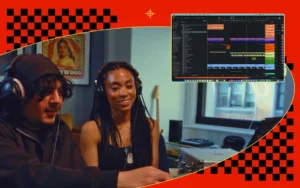
Angel Marcloid, the prolific composer, multi-instrumentalist, and engineer recognized for her transformative work under the moniker Fire-Toolz, has solidified her standing as a central figure in contemporary experimental music. Following a decade of dense, genre-defying production—ranging from progressive metal sensibilities to vaporwave aesthetics and harsh noise—Marcloid has recently pivoted toward a hybrid methodology that merges hardware-based improvisation with sophisticated digital processing. This shift is most notably embodied in her recent release, Lavender Networks, which arrived on the Warp Records label in May 2026, and her newly launched sample pack, infinite slime glitch, hosted on the Splice platform.
A Chronology of Technical Evolution
Marcloid’s creative trajectory has long been defined by an rejection of traditional genre silos. While her early career involved standard band-based configurations, her current production process represents a departure from the reliance on conventional amplification. In recent years, Marcloid has transitioned from using guitar pedals as performance tools within a band context to employing them as complex signal-processing units within a studio environment.
This evolution is not merely a change in equipment but a shift in philosophy. By utilizing a "source-material-first" approach, Marcloid spends significant portions of her creative cycle recording raw input—ranging from contact-mic-recorded household objects to electromagnetic field (EMF) captures. This raw data is then meticulously cataloged and later subjected to aggressive digital manipulation. The chronology of this workflow reveals a move toward high-density sound design, where the distinction between "instrument" and "processor" becomes intentionally blurred.
The Intersection of Hardware and Software
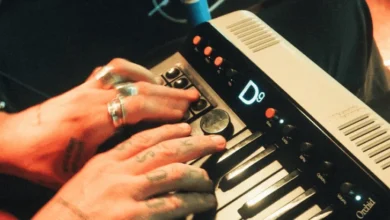
Despite the rapid advancement of virtual studio technology (VSTs), Marcloid maintains a symbiotic relationship with physical hardware. Her current setup includes a strategic reliance on boutique guitar pedals, such as those produced by Chase Bliss and Old Blood Noise Endeavors, which she identifies as bridging the gap between traditional guitar aesthetics and modern experimental soundscapes.
However, the primary goal for Marcloid is the creation of "dry" source material that can be pushed through software chains. This hybrid model allows for a high degree of control over timbre and dynamics. Marcloid’s software arsenal is extensive, featuring a "holy trinity" of melodic emulations: the Korg M1, the Korg Wavestation, and the Roland D-50. For mixing and mastering, she leans on tools that address the challenges of frequency masking in high-density arrangements, specifically citing iZotope Ozone’s Clarity module and FabFilter’s Saturn 2 as essential for maintaining spectral balance.
The Architecture of infinite slime glitch
The launch of the infinite slime glitch sample pack marks a significant moment for Marcloid, as it serves as a public distribution of the experimental methodologies she has developed in private. Produced in collaboration with the sound-design label Moment, the pack represents a curated selection of her personal archives.
The production of this pack involved hours of fumbling with DIY contact-mic instruments—including modified kitchenware, springs, chains, and wind-up toys—that were then subjected to extreme compression and layering. Marcloid argues that the value of these sounds lies in their potential to surprise the end-user. By layering a "corny" digital synth preset from the 1990s alongside organic steel drum samples or high-gain metallic recordings, she constructs sonic environments that defy easy categorization.
Analysis: The Impact of Radical Sound Design
Industry analysts suggest that the rise of high-fidelity, experimental sample packs like those produced by Marcloid signals a shift in the music production ecosystem. As digital audio workstations (DAWs) become more accessible, the demand for "signature" sound libraries has increased. Marcloid’s approach—which treats a "ripped scrap of paper" with the same seriousness as a recorded guitar track—encourages a philosophy of democratization in music production.
By providing professional-grade tools that incorporate "incorrect" techniques—such as intentionally mis-quantized beats or convolution reverbs used to place instruments in clashing acoustic spaces—Marcloid is challenging the standard conventions of mixing. This approach mirrors a broader trend in experimental electronic music where the "glitch" or the "artifact" is no longer a technical error to be cleaned, but a primary aesthetic element to be emphasized.
The Creative Philosophy of Constraint
Marcloid’s work is frequently framed by the concept of "limitations breeding creativity." Despite having access to advanced software, she continues to source inspiration from low-cost, legacy hardware, such as the RadioShack Concertmate-470. Her reliance on the "Tone Edit" functions of such devices highlights a broader, industry-wide appreciation for the "accidental" sounds found in discontinued or budget-tier electronic instruments.
In her analysis of the recent album Lavender Networks, Marcloid describes the work as "Neutral Evil" within a D&D-inspired alignment chart—a reflection of its calculated subversion of musical expectations. This perspective serves as a guiding principle for her advice to the wider production community: that the pursuit of experimentalism should be driven by genuine curiosity rather than adherence to genre-based "principles."
Future Outlook and Industry Reception
As of September 2026, the reception of Marcloid’s latest projects underscores a growing appetite for hybrid, multi-textured electronic music. By integrating influences from deathcore, IDM, and 1980s jazz fusion, she has carved out a niche that remains technically rigorous while staying aesthetically unpredictable.
The implications for producers are clear: the modern studio environment allows for the total synthesis of disparate musical worlds. Marcloid’s ongoing work serves as a case study in how to maintain an authentic voice while leveraging global digital platforms like Warp and Splice. Her insistence on "forgetting about principles" in favor of what feels "the best" serves as a counter-narrative to the increasingly algorithmic and standardized production trends seen in the mainstream music industry.
Data and Technical Insights
- Primary Software Preferences: Marcloid’s current workflow relies on a mixture of Korg legacy emulations for melody and a wide array of experimental plugins from developers such as Glitchmachines, Inear Display, and Aberrant DSP.
- Hardware Integration: Her focus has shifted toward tabletop units and feedback machines, prioritizing devices that can provide unique raw signals for further software processing.
- Methodological Emphasis: The use of "wrong" quantization—specifically applying 9/8 grids to 4/4 tempos—highlights her commitment to creating rhythmic tension that feels organic and "collaborative," as if the DAW is responding to her inputs in unpredictable ways.
Concluding Perspectives
Angel Marcloid’s contribution to the field of experimental music is defined by a refusal to stay static. From the release of Lavender Networks to the distribution of the infinite slime glitch pack, her work demonstrates a consistent effort to push the boundaries of what is possible within a DAW. Her journey from band-based instrumentalist to a master of hybrid digital-analog synthesis offers a roadmap for producers looking to navigate the complexities of modern sound design.
By prioritizing the exploration of sound over the adherence to genre-based expectations, Marcloid has established a framework for creative expression that is both highly technical and deeply personal. As the music industry continues to evolve, the methodologies she champions—collaboration with "accidental" sounds, the embrace of hardware-software hybrids, and the rejection of arbitrary musical limitations—are likely to influence the next generation of composers and sound designers. Her work remains a testament to the idea that within the most chaotic, "glitchy" fragments of sound, there exists the potential for profound musical discovery.